Tag: hydration

  • Be Kind To Your Kidneys

    MEDICAL NEWS

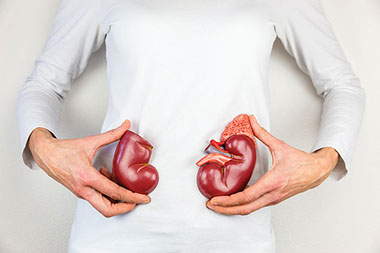
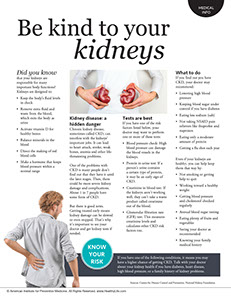
    Image of person holding plastic kidneys.

    Did you know that your kidneys are responsible for many important body functions? Kidneys are designed to:

    *  Keep the body’s fluid levels in check

    *  Remove extra fluid and waste from the blood, which exits the body as urine

    *  Activate vitamin D for healthy bones

    *  Balance minerals in the blood

    *  Direct the making of red blood cells

    *  Make a hormone that keeps blood pressure within a normal range

    Kidney disease: a hidden danger

    Chronic kidney disease, sometimes called CKD, can interfere with the kidneys’ important jobs. It can lead to heart attack, stroke, weak bones, anemia and other life-threatening problems.

    One of the problems with CKD is many people don’t find out that they have it until the later stages. Then, there could be more severe kidney damage and complications. About 1 in 7 people have some form of CKD.

    But there is good news. Getting treated early means kidney damage can be slowed or even stopped. That’s why it’s important to see your doctor and get kidney tests if needed.

    Know your risk

    If you have one of the following conditions, it means you may have a higher chance of getting CKD. Talk with your doctor about your kidney health if you have diabetes, heart disease, high blood pressure, or a family history of kidney problems.

    Tests are best

    If you have one of the risk factors listed below, your doctor may want to perform one or more of these tests:

    *  Blood pressure check: High blood pressure can damage the blood vessels in the kidneys.

    *  Protein in urine test: If a person’s urine contains a certain type of protein, it may be an early sign of CKD.

    *  Creatinine in blood test: If the kidneys aren’t working well, they can’t take a waste product called creatinine out of the blood.

    *  Glomerular filtration rate (GFR) test: This measures creatinine levels and calculates other CKD risk factors too.

    What to do

    If you find out you have CKD, your doctor may recommend:

    *  Lowering high blood pressure

    *  Keeping blood sugar under control if you have diabetes

    *  Eating less sodium (salt)

    *  Not taking NSAID pain relievers like ibuprofen and naproxen

    *  Eating only a moderate amount of protein

    *  Getting a flu shot each year

    Even if your kidneys are healthy, you can help keep them that way by:

    *  Not smoking or getting help to quit

    *  Working toward a healthy weight

    *  Getting blood pressure and cholesterol checked regularly

    *  Annual blood sugar testing

    *  Eating plenty of fruits and vegetables

    *  Seeing your doctor as recommended

    *  Knowing your family medical history

    Sources: Centers for Disease Control and Prevention, National Kidney Foundation
    © American Institute for Preventive Medicine
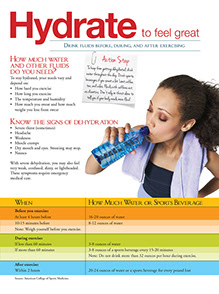
  • Hydrate To Feel Great

    Fitness

    Drink fluids before, during, and after exercising.

    How much water and other fluids do you need?

    To stay hydrated, your needs vary and depend on:

    *  How hard you exercise

    *  How long you exercise

    *  The temperature and humidity

    *  How much you sweat and how much weight you lose from sweat

    Know the signs of dehydration:

    *  Severe thirst (sometimes)

    *  Headache

    *  Weakness

    *  Muscle cramps

    *  Dry mouth and eyes. Sweating may stop.

    *  Nausea

    With severe dehydration, you may also feel very weak, confused, dizzy, or lightheaded. These symptoms require emergency medical care.

    Action Step

    To keep from getting dehydrated, drink water throughout the day. Drink sports beverages if you sweat a lot. Limit coffee, tea, and colas. Don’t rely on thirst alone to tell you if your body needs more fluid.

    Page image from the Ways to Well-Being book by the American Institute for Preventive Medicine. www.HealthyLife.com. All rights reserved.

    © American Institute for Preventive Medicine

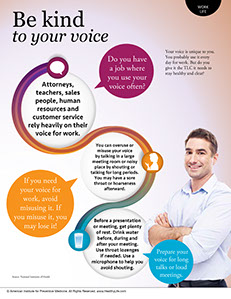
  • Be Kind To Your Voice

    WORK LIFE

    Man smiling.

    Your voice is unique to you. You probably use it every day for work. But do you give it the TLC it needs to stay healthy and clear?

    Do you have a job where you use your voice often?

    Attorneys, teachers, sales people, human resources and customer service rely heavily on their voice for work.

    If you need your voice for work, avoid misusing it. If you misuse it, you may lose it!

    You can overuse or misuse your voice by talking in a large meeting room or noisy place by shouting or talking for long periods. You may have a sore throat or hoarseness afterward.

    Prepare your voice for long talks or loud meetings.

    Before a presentation or meeting, get plenty of rest. Drink water before, during and after your meeting. Use throat lozenges if needed. Use a microphone to help you avoid shouting.

    © American Institute for Preventive Medicine
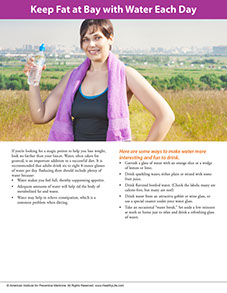
  • Keep Fat At Bay With Water Each Day

    Weight Control

    Image of water bottle.

    If you’re looking for a magic potion to help you lose weight, look no farther than your faucet. Water, often taken for granted, is an important addition to a successful diet. It is recommended that adults drink six to eight 8-ounce glasses of water per day. Reducing diets should include plenty of water because:

    *  Water makes you feel full, thereby suppressing appetite.

    *  Adequate amounts of water will help rid the body of metabolized fat and waste.

    *  Water may help to relieve constipation, which is a common problem when dieting.

    Here are some ways to make water more interesting and fun to drink.

    *  Garnish a glass of water with an orange slice or a wedge of lemon or lime.

    *  Drink sparkling water, either plain or mixed with some fruit juice.

    *  Drink flavored bottled water. (Check the labels; many are calorie-free, but many are not!)

    *  Drink water from an attractive goblet or wine glass, or use a special coaster under your water glass.

    *  Take an occasional “water break.” Set aside a few minutes at work or home just to relax and drink a refreshing glass of water.

    Page from A Year of Health Hints book by the American Institute for Preventive Medicine. www.HealthyLife.com. All rights reserved.

    © American Institute for Preventive Medicine
  • Digging Into Detox Diets

    HEALTHY EATING

    Image of different berries.

    The word “detox” is a popular term in diets today. Many detox diets and plans promise to help your body flush out toxins and get you healthier.

    Some detox diets follow extreme guidelines like:

    *  Fasting (not eating) for long periods

    *  Drinking only special detox drinks or juices

    *  Using supplements or products that claim to detox your body

    *  Using laxatives, enemas or other products to empty the colon

    Safety concerns

    Many detox plans haven’t been proven to be safe. Supplements and extreme diets can cause health problems. The Food and Drug Administration (FDA) has taken action against detox products that are dangerous or contain illegal ingredients.

    Don’t assume that a “natural” detox plan is safe. It may be risky because:

    *  Drinking large quantities of juice can be dangerous for people with kidney disease.

    *  Drinking juices that are “raw” or unpasteurized can cause serious illnesses from bacteria.

    *  People with diabetes often need to eat a healthy diet and need to eat at regular times. Fasting or drinking juice instead of meals can cause dangerous blood sugar levels.

    *  Using too many laxatives can cause dehydration, severe diarrhea and an imbalance in minerals and vitamins.

    *  Fasting for long periods can cause headaches, dehydration and fainting.

    Your body’s own detox

    The human body is already designed to get rid of toxins. Most of this is done by the liver, which processes and removes chemicals, toxins and other unwanted things.

    Supporting your liver is a healthy and safe way to “detox” without extreme or dangerous diets. You can support your liver by:

    *  Eating a healthy diet rich in fruits, vegetables, lean protein and whole grains

    *  Working toward a healthy weight if you’re overweight

    *  Avoiding or limiting processed foods

    *  Drinking plenty of water

    *  Avoiding or limiting alcoholic drinks

    *  Getting exercise regularly

    *  Following directions on medicines and take medicines as your doctor prescribes

    *  Getting vaccines for hepatitis A and B, which are diseases that affect the liver

    Not all diets are safe. Before you start any detox or diet plan, ask your doctor.

    Sources: American Liver Foundation, National Center for Complementary and Integrative Health

    © American Institute for Preventive Medicine
  • Reduce Flight Risks

    Healthy Travel

    Don’t let motion and a long flight ruin your trip.

    Flying can trigger more than anxiety in airplane travelers. Sitting for hours in narrow, cramped seats can cause a decrease in blood flow and poor circulation in the legs. These problems can lead to “economy-class syndrome” which refers to a deep vein thrombosis – a blood clot in the leg. Even if you sit in first class or business class, there are things you can do to help avoid this problem. If your seatmates stare, suggest they join you!

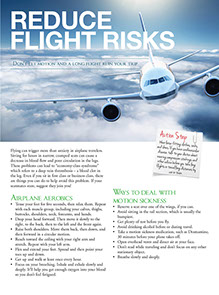
    Image of flying airplane.

    Airplane aerobics:

    *  Tense your feet for five seconds, then relax them. Repeat with each muscle group, including your calves, thighs, buttocks, shoulders, neck, forearms, and hands.

    *  Drop your head forward. Then move it slowly to the right, to the back, then to the left and the front again.

    *  Raise both shoulders. Move them back, then down, and then forward in a circular motion.

    *  Reach toward the ceiling with your right arm and stretch. Repeat with your left arm.

    *  Flex and extend your feet. Spread and then point your toes up and down.

    *  Get up and walk at least once every hour.

    *  Focus on your breathing. Inhale and exhale slowly and deeply. It’ll help you get enough oxygen into your blood so you don’t feel fatigued.

    To deal with motion sickness:

    *  Reserve a seat over one of the wings, if you can.

    *  Avoid sitting in the tail section, which is usually the bumpiest.

    *  Get plenty of rest before you fly.

    *  Avoid drinking alcohol before or during travel.

    *  Take a motion sickness medication, such as Dramamine, 30 minutes before your plane takes off.

    *  Open overhead vents and direct air at your face.

    *  Don’t read while traveling and don’t focus on any other stationary object.

    *  Breathe slowly and deeply.

    Action Step

    Wear loose-fitting clothes, socks, and shoes. If you have cardiovascular disease, talk to your doctor about wearing compression stockings and other advice before you take long flights or travel long distances by car or train.

    Page image from Ways to Well-Being book by the American Institute for Preventive Medicine. www.HealthyLife.com. All rights reserved.

    © American Institute for Preventive Medicine

  • Do Detox Diets Work?

    HEALTHY EATING

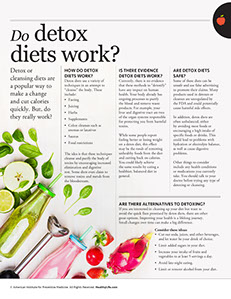
    Two different detox drinks.

    Detox or cleansing diets are a popular way to make a change and cut calories quickly. But, do they really work?

    How do detox diets work?

    Detox diets use a variety of techniques in an attempt to “cleanse” the body. These include:

    *  Fasting

    *  Juicing

    *  Herbs

    *  Supplements

    *  Colon cleanses such as enemas or laxatives

    *  Saunas

    *  Food restrictions

    The idea is that these techniques cleanse and purify the body of toxins by encouraging increased elimination and digestive rest. Some diets even claim to remove toxins and metals from the bloodstream.

    Is there evidence detox diets work?

    Currently, there is no evidence that these methods to “detoxify” have any impact on human health. Your body already has ongoing processes to purify the blood and remove waste products. For example, your liver and digestive tract are two of the organ systems responsible for protecting you from harmful toxins.

    While some people report feeling better or losing weight on a detox diet, this effect may be the result of removing unhealthy foods from the diet and cutting back on calories. You could likely achieve the same results by eating a healthier, balanced diet in general.

    Are detox diets safe?

    Some of these diets can be unsafe and use false advertising to promote their claims. Many products used in detoxes or cleanses are unregulated by the FDA and could potentially cause harmful side effects.

    In addition, detox diets are often unbalanced, either by avoiding most foods or encouraging a high intake of specific foods or drinks. This could lead to problems with hydration or electrolyte balance, as well as cause digestive problems.

    Other things to consider include any health conditions or medications you currently take. You should talk to your doctor before trying any type of detoxing or cleansing.

    Are there alternatives to detoxing?

    If you are interested in cleaning up your diet but want to avoid the quick fixes promised by detox diets, there are other great options. Improving your health is a lifelong journey. Small changes over time can make a big difference.

    Consider these ideas:

    *  Cut out soda, juices, and other beverages, and let water be your drink of choice.

    *  Limit added sugars in your diet.

    *  Increase your intake of fruits and vegetables to at least 5 servings a day.

    *  Avoid late-night eating.

    *  Limit or remove alcohol from your diet.

    © American Institute for Preventive Medicine

  • What To Do If Turista Strikes

    Healthy Travel

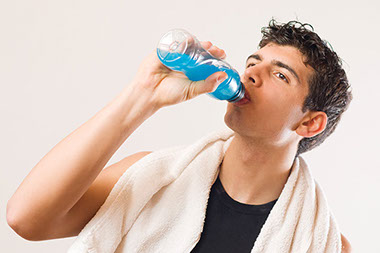
    Image of man rehydrating with liquids.

    If you avoid risky food and water and still come down with traveler’s sickness, do this:

    *  To prevent dehydration, drink plenty of bottled water and rehydrating drinks like Gatorade.

    *  Drink beverages from original containers that you break the seal to open.

    *  Don’t take over-the-counter diarrhea medications like Enterovioform or Mesaform available in foreign countries. According to the Food and Drug Administration, these medicines aren’t safe.

    *  See a doctor if diarrhea continues for more than three days, if you have blood in your stool, or if diarrhea is accompanied by fever. You may need an antibiotic.

    Page image from A Year of Health Hints book by the American Institute for Preventive Medicine. www.HealthyLife.com. All rights reserved.

    © American Institute for Preventive Medicine
  • Does Tea Make You Healthier?

    HEALTHY EATING

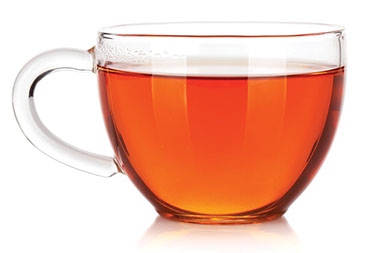
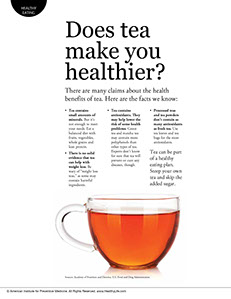
    A cup of tea.

    There are many claims about the health benefits of tea. Here are the facts we know:

    *  Tea contains small amounts of minerals. But it’s not enough to meet your needs. Eat a balanced diet with fruits, vegetables, whole grains and lean protein.

    *  There is no solid evidence that tea can help with weight loss. Be wary of “weight loss teas,” as some may contain harmful ingredients.

    *  Tea contains antioxidants. They may help lower the risk of some health problems. Green tea and matcha tea may contain more polyphenols than other types of tea. Experts don’t know for sure that tea will prevent or cure any diseases, though.

    *  Processed teas and tea powders don’t contain as many antioxidants as fresh tea. Use tea leaves and tea bags for the most antioxidants.

    Tea can be part of a healthy eating plan. Steep your own tea and skip the added sugar.

    Sources: Academy of Nutrition and Dietetics, U.S. Food and Drug Administration

    © American Institute for Preventive Medicine

  • Plan For Summer Safety

    Home Safety

    Group of friends, holding sparklers around a picnic table.

    *  Use a broad-spectrum sunscreen with a sun protection factor (SPF) of 30 or higher.

    *  Wear sunglasses that block both UVA and UVB rays.

    *  Learn to swim and teach your children how to swim.

    * Check the depth of the water before diving into a pool. Don’t dive into water that is less than 9 feet deep. Never dive into an above-ground pool.

    Dos

    *  Watch a professional fireworks display in person or on TV.

    *  Wear and have children wear a personal flotation device when you are on a boat, water ski, etc.

    Don’ts

    *  Don’t play with fireworks or let your children play with fireworks.

    *  NEVER leave a child alone near a pool or water, not even for a few seconds.

    A Year of Health Hints book by the American Institute for Preventive Medicine. www.HealthyLife.com. All rights reserved.

    © American Institute for Preventive Medicine