Tag: hydration

  • Drink Your Fill

    Nutrition

    Hand pouring water into a glass.

    Our bodies continually lose water throughout the day. With water being vital for your body to function optimally, it’s important to stay hydrated. Although water-intake needs differ from person to person, an easy rule to aim for is 8×8 – drink eight-ounce glasses eight times a day. When the air is drier, such as in winter, you may need to drink even more water each day to replenish your skin so that it stays moist. You also need more when you do an activity that makes you sweat.

    Be More Earth-Friendly

    Using less plastic means eliminating it from the start. Choose brands that select non-plastic packaging or buy in bulk, using bags and bottles you bring from home.

    Page from HealthyLife Weigh book by the American Institute for Preventive Medicine. www.HealthyLife.com. All rights reserved.

    © American Institute for Preventive Medicine

  • Ten Ways To Get Rid Of Winter Itch

    Skin Conditions

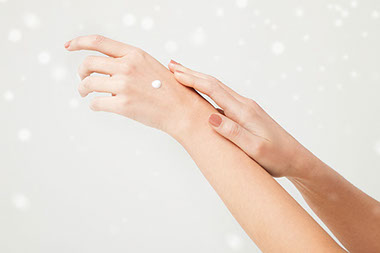
    Image of lotion on hand.

    Oh, that winter itch! Your skin feels as rough and dry as sandpaper. If your skin is chapped, cracked, and inflamed during the coldest months of the year, take heart. Relief is a simple matter of water conservation.

    The basic problem is lack of moisture. Anything that steals moisture from the skin will result in dryness and chapping. The drier the air, the more rapidly moisture evaporates. (In winter, heated indoor air tends to be dry.) Also, soap and excessive bathing or showering strips the skin of its natural oils making the problem worse. Add it up and the dehydrated cells begin to shrink and separate like caked mud in a dry lake bed and a network of painful cracks appear on your skin.

    Dry skin affects everyone, but older people have it worse because oil production gradually declines with age.

    Since you can’t change the weather or your age, try these suggestions if you want to prevent winter itch.

    *  Drink 8 or more glasses of water a day.

    *  Don’t scratch or rub your skin. Do apply moisturizer to your skin daily. Use an oil-based lotion.

    *  Don’t overexpose your skin to water, such as with washing dishes. Wear rubber gloves when you wash dishes.

    *  Right after washing your hands, put hand cream on to seal in moisture.

    *  Use petroleum jelly on very dry skin areas.

    *  Take a shower instead of a bath. Use warm (not hot) water. Pat your skin dry, but not all the way. Apply a moisturizing cream while your skin is damp. Use products with lanolin. If you prefer to bathe, bathe for only 15 to 20 minutes in lukewarm water. Pat yourself dry. Do not rub. Use a bath oil on your skin after bathing. Try sponge baths. Use a washcloth instead of soaping the skin directly. Use a mild liquid cleanser like Cetaphil brand, or use a fatted soap. Avoid deodorant, medicated, or alkaline soaps.

    *  Don’t use moisturizers with fragrances, preservatives, or alcohol.

    *  Use a night cream for the face. Stay out of the strong sun. Do not use tanning salons. Use a sunblock with a sun protection factor (SPF) of at least 15.

    *  Lower the setting on your heating thermostat so you’re comfortable, not toasty.

    *  Use a humidifier to add moisture to the air in a room or have a humidifier connected to your furnace. Also, don’t sit too close to fireplace heat – it’s drying.

    A Year of Health Hints book by the American Institute for Preventive Medicine. www.HealthyLife.com. All rights reserved.

    © American Institute for Preventive Medicine

  • How To Care For Mature Skin

    Mature Health: Over Age 50

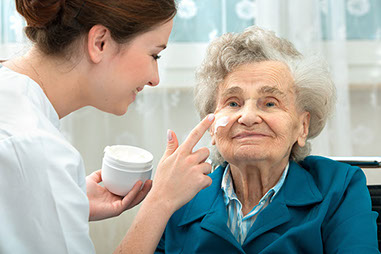
    Image of a caregiver placing cream on a mature women's face.

    As your skin ages, the sebaceous glands produce less oil, and the skin loses elasticity. The result is dry, wrinkled skin-unless you take steps to prevent (or minimize) those effects. Here’s what to do to stay one step ahead of Mother Nature.

    *  Shower or bathe with a mild soap or transparent glycerin soaps to prevent dry, flaky skin. Don’t use deodorant soaps on your face-they’re too harsh for sensitive facial skin.

    *  Avoid alcohol-based astringents, toners, or after-shave lotions, which dry the skin.

    *  Apply a moisturizing lotion immediately after showering or bathing. (Dry skin makes wrinkles more noticeable, so using a moisturizer makes wrinkles less noticeable.)

    *  Use a room or furnace humidifier during the winter months, to further prevent dry skin.

    *  When washing dishes or working with strong detergents, protect your hands with rubber gloves.

    *  Apply sunscreen lotion with a sun protection factor (SPF) of 15 or higher whenever you go outdoors.

    If you’re thinking about having a face lift, chemical peel, or collagen injection for wrinkles, contact your local medical society for the names of board-certified surgeons or dermatologists with experience in the procedure you’re considering.

    A Year of Health Hints book by the American Institute for Preventive Medicine. www.HealthyLife.com. All rights reserved.

    © American Institute for Preventive Medicine

  • Dry Mouth

    Dental & Mouth Concerns

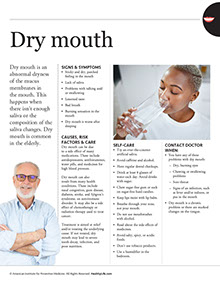
    Dry mouth is an abnormal dryness of the mucus membranes in the mouth. This happens when there isn’t enough saliva or the composition of the saliva changes. Dry mouth is common in the elderly.

    Signs & Symptoms

    *  Dry, parched feeling in the mouth

    *  Lack of saliva

    *  Problems with talking and/or swallowing

    *  Lessened taste

    *  Bad breath

    *  Burning sensation in the mouth

    *  Dry mouth is worse after sleeping

    Causes, Risk Factors & Care

    Dry mouth can be due to a side effect of many medications. These include antidepressants, antihistamines, water pills, and medicines for high blood pressure.

    Dry mouth can also result from many health conditions. These include nasal congestion, gum disease, diabetes, stroke, and Sjögren’s syndrome, an autoimmune disorder.

    Treatment is aimed at relief and/or treating the underlying cause. If not treated, dry mouth may lead to severe tooth decay, infection, and poor nutrition.

    Self-Care

    *  Try an over-the-counter artificial saliva, such as Xerolube.

    *  Avoid caffeine and alcohol.

    *  Have regular dental checkups.

    *  Drink at least 8 glasses of water each day. Avoid drinks with sugar.

    *  Avoid salty, spicy, or acidic foods.

    *  Don’t use tobacco products.

    *  Take a multivitamin that your doc- tor recommends.

    *  Use a humidifier in the bedroom.

    *  Keep your lips moist with lip balm.

    *  Breathe through your nose, not your mouth.

    *  Do not use mouthwashes with alcohol.

    *  Read about the side effects of medicines.

    Medical Care

    Contact Doctor When:

    *  The dry mouth is a chronic problem or there are marked changes on the tongue.

    *  You have any of these problems with dry mouth:

    – Dry, burning eyes

    – Chewing or swallowing problems

    – Sore throat

    – Signs of an infection, such as fever and/or redness, or pus in the mouth

    Health at Home Lifetime book by the American Institute for Preventive Medicine. www.HealthyLife.com. All rights reserved.

    © American Institute for Preventive Medicine

  • Air Travel

    Healthylife® Weigh

    Part 3

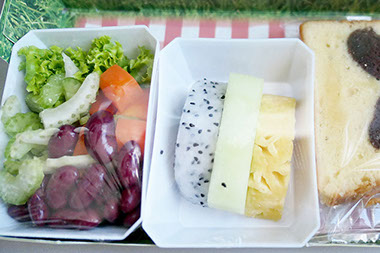
    Snacks for the airplane.

    Air travel can be time consuming because of the time it takes to get to the airport, get through security, wait for a flight, fly, and get to your final destination. Avoid going more than 3 to 4 hours without having something to eat. Plan to have a meal, a snack, or both!

    *  Bring one or more travel snacks with you.

    *  Look for these healthy snack options from to-go vendors. Read the Nutrition Facts on food labels, when available.

    – Fresh fruit

    – Low-sodium soup

    – Wraps and small sandwiches

    – Yogurt with cut-up fruit

    – Cottage cheese with fruit

    *  If you have time, choose a restaurant with healthy options on the menu. Sit and eat slowly to help digestion.

    *  Drink water. Bring an empty water bottle to the airport and re-fill it at a drinking fountain after going through security. Or, buy a water bottle once inside the airport terminal. Water is usually offered on the plane. Altitude and dry air can cause dehydration.

    *  Move around, both at the airport and while on the plane, if you can. Go for walks at the airport if you have a lot of waiting time. Stretch in your seat on the plane or walk to the restroom.

    If you won’t be traveling for a while, come back to this page for tips when it applies in the future. Or, share these tips with a spouse or friend who is traveling soon!

    © American Institute for Preventive Medicine

  • 6 Benefits Of Drinking Water

    WELL-BEING

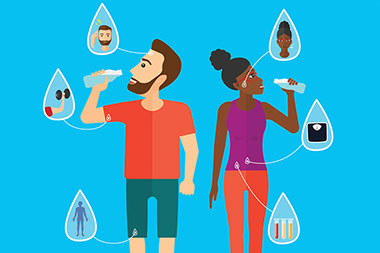
    Illustration of drinking water and it's benefits.

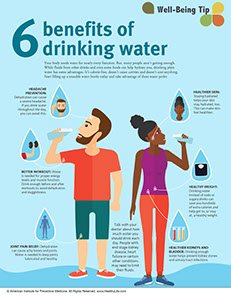
    Your body needs water for nearly every function. But, many people aren’t getting enough. While fluids from other drinks and even some foods can help hydrate you, drinking plain water has some advantages. It’s calorie-free, doesn’t cause cavities and doesn’t cost anything. Start filling up a reusable water bottle today and take advantage of these water perks:

    Headache prevention:Dehydration can cause a severe headache. If you drink water throughout the day, you can avoid this.

    Better workout:Water is needed for proper energy levels and muscle function. Drink enough before and after workouts to avoid dehydration and sluggishness.

    Joint pain relief:Dehydration can cause achy bones and joints. Water is needed to keep joints lubricated and healthy.

    Healthier skin:Staying hydrated helps your skin stay hydrated, too. This can make skin feel healthier.

    Healthy weight:Drinking water instead of soda or sugary drinks can save you hundreds of extra calories and help get to, or stay at, a healthy weight.

    Healthier kidneys and bladder:Drinking enough water helps prevent kidney stones and urinary tract infections.

    Talk with your doctor about how much water you should drink each day. People with end stage kidney disease, heart failure or certain other conditions may need to limit their fluids.

    © American Institute for Preventive Medicine

  • Avoid Summer Headaches

    SELF-CARE CORNER

    Image of women sitting at the beach talking on the phone.

    The sun can be especially bothersome if you suffer from migraine. Looking directly or indirectly at the sun can trigger a migraine attack for some people.

    Don’t forget your shades-sunglasses, visors, or sun hat when you are out and enjoying the sunshine at the beach, tennis court, golf course, or a baseball game, advises the National Headache Foundation.

    Other summer headache triggers include changes in barometric pressure. Watch out for those sudden thunderstorms and windy days.

    Drink plenty of water, not soft drinks, to help prevent those “dehydration” headaches. You don’t want to drink too many soft drinks containing caffeine, which can also contribute to your headaches.

    At backyard barbecues and picnics, you may encounter food items that you wouldn’t normally eat. The sauces and dry rubs on those tasty ribs may contain monosodium glutamate (MSG) to which many headache sufferers are sensitive. The spread at a picnic may include aged cheeses, hot dogs, and other meats with nitrates, and pickles-all possible triggers. Also watch your intake of beer and cocktails.

    © American Institute for Preventive Medicine

  • Avoiding The Afternoon Slump

    WORK LIFE

    Image of a group of co-workers smiling and laughing.

    Do you often feel tired and worn out after lunch? It can be hard to stay productive and get through the workday if you’re fighting fatigue and exhaustion. Often times, this afternoon slump can be avoided by making a few simple changes:

    *Use caffeine sparingly.A cup of coffee or tea can give you a boost in the morning, but drinking too much can cause an energy crash after it wears off. Finish your last caffeinated drink before noon, and limit intake to four 8 oz. cups of coffee.

    *Include lean protein and healthy fats in your lunch.This can help stabilize blood sugar levels and fight fatigue. Examples include turkey, low-fat dairy, avocado, nuts and fish.

    *Drink plenty of water.Even mild dehydration can make you tired. Aim for eight 8 oz. glasses per day.

    *Get moving.If you can, walk outside at lunch and get fresh air, even for just 10 minutes. This can energize and relax you. But even walking indoors or stretching in your office can be helpful. Sitting at a desk for hours without getting up can make you feel tired. Do alternative activities and walk around when you can.

    *Having more energy starts the day before.If you find that you’re tired every day despite these tips, you may need more sleep. Aim for 7 to 9 hours a night.

    Sometimes, ongoing fatigue can be a sign of a health issue. If you find that your energy levels are always low despite making healthy choices, talk to your doctor. Problems such as sleep disorders, anemia, depression, diabetes, and many other conditions can cause energy levels to sag. Certain medications can also cause sleepiness. You and your doctor can discuss your health history and make a plan to address any issues to get you feeling better again.

    © American Institute for Preventive Medicine

  • Fueling Your Workout The Healthy Way

    BE FIT

    Image of man at the gym.

    Food is your body’s fuel. When it comes to exercise, healthy food can power you through a workout session, while less healthy food can leave you feeling flat.

    Finding the right pre-workout foods doesn’t have to be complicated. Listen to your body and keep track of your diet. This can help you discover what you should eat – and avoid eating – when you want to make the most of your exercise time.

    No “quick fixes”

    Though many products on the market claim to boost energy and performance, many of them aren’t as healthy as nutritious, whole foods. Some energy bars and drinks contain high levels of sugar, caffeine and other additives. These may give you a quick “jolt,” but when your blood sugar drops and the caffeine wears off, you could feel sluggish or downright exhausted.

    Is timing everything?

    Some athletes swear by eating 30 minutes before a workout. Others experience cramping or tiredness if they eat too close to when they exercise.

    If you’re doing an intense workout, such as running or high-impact aerobics, you may need to give your body longer to digest a meal. But lower-intensity activities, such as walking or gardening, may be more enjoyable if you’ve had a small meal first.

    Healthy pre-workout choices

    Whole foods are often a great choice pre-workout – and in daily life. But don’t stick to fruits and vegetables only. The body needs some protein and fat to make energy. Try avocados, nuts, seeds, eggs, fish or beans with some fruit or veggies. If you’re going to exercise within the hour, make it a smaller portion.

    Skip sugary treats, sweetened beverages, and energy bars and drinks. Drink plenty of water before your workout and continue to drink during and afterward. If you’ll be sweating excessively, a sports drink may be advised – but make water the drink of choice most of the time.

    Coffee and exercise – a good match?

    Some people find they have a better workout after they’ve had their morning cup of joe. This can be helpful for those who already drink coffee, but it’s not for everyone. Coffee can dehydrate you, so drink plenty of water. And, if you don’t already drink caffeinated beverages, you could end up jittery or anxious. If your doctor has told you to avoid caffeine, don’t try this.

    Consuming the right foods at the right time may help you feel your best during and after your workout.

    © American Institute for Preventive Medicine

  • Get Your Healthy Game Day On

    SELF-CARE CORNER

    Image of football field.

    The excitement of football, and even the activities and feelings of anticipation leading up to games, can be unhealthy in ways many do not realize, according to Jody Gilchrist, a cardiac nurse practitioner at the University of Alabama at Birmingham.

    Critical matchups, tight games, and crushing defeats can trigger adrenaline that reduces blood flow to the heart and other muscles and increases heart rate and blood pressure. Over time, these high levels of stress hormones can hurt your heart-even though a football game may be deemed good stress.

    Adding to the effects of stress on the body would be unhealthier foods at the tailgate party, and heavier eating and drinking during the game. Not a winning combination. Here are some tailgating tips:

    *  Help minimize stress by watching the game with people you enjoy.

    *  Knock out a few pushups and sit ups during commercial breaks.

    *  Chew gum or squeeze a stress ball to reduce anxiety and control your emotions.

    *  Take a brief walk at halftime, or if you are attending the game, take a walk around the stadium or to another section to meet a friend.

    *  Manage your net dietary intake by planning ahead and making healthier choices at other times of the day in anticipation of splurging a bit during the game.

    *  If tailgating at the stadium, try to conserve calories earlier in the day.

    *  If tailgating at home, consider using vegetables in place of chips for dips, and substitute Greek yogurt for sour cream or cream cheese dips.

    *  Because sodium causes fluid retention-something especially bad for heart patients-a good rule of thumb is to avoid foods that have more than 1 mg of sodium per calorie. At about 0.5 mg of sodium per calorie, natural foods such as fresh fruits and vegetables generally contain much less, so opt for them whenever possible.

    *  Do your best to avoid soft drinks, which are extremely high in sugar.

    In the end, your health will win-even if your team does not.

    © American Institute for Preventive Medicine