Tag: hygiene

  • Wash That Lettuce

    HEALTHY EATING

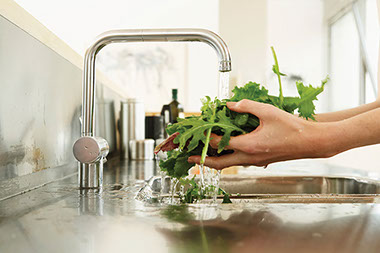
    Close up image of hands washing lettuce.

    While it is important to thoroughly wash most fresh fruits and vegetables, if packaged greens are labeled “ready-to-eat,” “washed,” or “triple washed,” then the product does NOT need to be washed at home.

    Pre-washed greens have been through a cleaning process immediately before going into the bag. Re-washing and handling the greens creates opportunities for contamination.

    Always handle pre-washed greens with clean hands and make sure cutting boards, utensils, and countertops are clean, according to the Partnership for Food Safety Education.

    © American Institute for Preventive Medicine

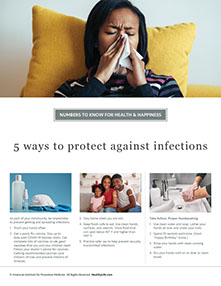
  • 5 Ways To Protect Against Infections

    General Health Conditions

    Parents with child all smiling showing upper arm with vaccine bandage.

    As part of your community, be responsible to prevent getting and spreading infections.

    1.  Wash your hands often.

    2.  Get a yearly flu vaccine. Stay up to date with COVID-19 booster shots. Get complete lists of vaccines atcdc.gov/vaccinesthat you and your children need. Follow your doctor’s advice for vaccines. Getting recommended vaccines save millions of lives and prevent millions of illnesses.

    3.  Stay home when you are sick.

    4.  Keep foods safe to eat. Use clean hands, surfaces, and utensils. Store food that can spoil below 40° F and higher than 140° F.

    5.  Practice safer sex to help prevent sexually transmitted infections.

    Take Action: Proper Handwashing

    1.  Use clean water and soap. Lather your hands all over and under your nails.

    2.  Spend 20 seconds each time. (Hum “Happy Birthday” twice.)

    3.  Rinse your hands with clean running water.

    4.  Dry your hands with an air drier or clean towel.

    Health at Home Lifetime book by the American Institute for Preventive Medicine. www.HealthyLife.com. All rights reserved.

    © American Institute for Preventive Medicine

  • When Petting Pets Causes Disease

    SELF-CARE CORNER

    Image of women with her dog.

    Salmonella, E. coli, and roundworms are among the nearly 20 different diseases that people most commonly get from their pets, said Jason Stull, assistant professor of veterinary preventive medicine at Ohio State. Infants, the elderly, pregnant women, and people with limited immune function are most at risk for animal-borne, or zoonotic, diseases.

    Since different species of pets-dogs, cats, rodents, birds, fish, reptiles, and amphibians-carry different types of diseases and at different stages of life, Stull and his colleagues suggest that families talk to both their doctor and veterinarian about what pet is the safest choice for their family.

    Here are some safe tips for pet ownership:

    *  Wear protective gloves to clean aquariums and cages and to remove feces.

    *  Wash hands after pet contact.

    *  Don’t let your pets lick your face.

    *  Cover playground sandboxes when not in use (cats love them).

    *  Avoid contact with higher risk animals such as reptiles, amphibians, and exotic animals.

    *  Regularly clean and disinfect animal cages, feeding areas, and bedding.

    *  Put litter boxes away from areas where food is eaten and prepared.

    *  Schedule regular veterinary visits.

    © American Institute for Preventive Medicine

  • All About Brushing And Flossing

    Dental & Mouth Concerns

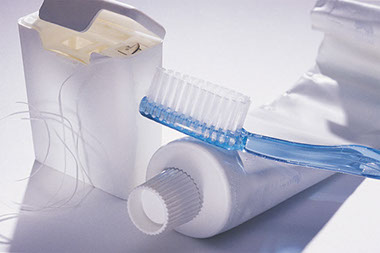
    Image of toothbrush and toothpaste with floss.

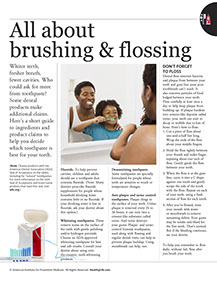
    Whiter teeth, fresher breath, fewer cavities. Who could ask for more from toothpaste? Some dental products make additional claims. Here’s a short guide to ingredients and product claims to help you decide which toothpaste is best for your teeth. (Note: Choose products with the American Dental Association (ADA) Seal of Acceptance on the labels. For more information on the ADA Seal of Acceptance and brand name products that have this seal, accesswww.ada.org.)

    Fluoride. To help prevent cavities, children and adults should use a toothpaste that contains fluoride. (Note: Many dentists prescribe fluoride supplements for people whose household drinking water contains little or no fluoride. If your drinking water is low in fluoride, you might want to ask your dentist about this option.)

    Desensitizing toothpaste. Some toothpastes are specially formulated for people whose teeth are sensitive to touch or temperature changes.

    Anti-plaque and tartar control toothpastes. Plaque is a sticky, bacteria-laden goo that clings to the surface of your teeth. Unless plaque is removed every 24 to 36 hours, it can turn into a cement-like substance called tartar. And tartar destroys your gums. Plaque- and tartar-control formula toothpastes, used along with flossing and regular dental visits, can help to prevent plaque buildup. Mouthwash can help, too.

    Whitening toothpastes. These remove stains on the surface of the teeth with gentle polishing, chemical agents, or other nonbleaching action. (Note: Consult your dentist before using over-the-counter peroxide-containing whiteners or bleaching agents.)

    Don’t Forget to Floss

    Waxed. Unwaxed. Fine. Regular. Plain or fancy, all dental floss does the job: It removes bacteria and plaque from between your teeth and above and below the gum line areas your toothbrush can’t reach. It also removes particles of food lodged between your teeth. Floss carefully at least once a day to help keep plaque from building up. (If plaque hardens into cement-like deposits called tartar, your teeth can start to decay or wobble due to loss of bone.)

    Here’s how to floss.

    1.  Cut a piece of floss about one-and-a-half feet long. Wrap the ends of the floss about your middle fingers.

    2.  Hold the floss tightly between your thumb and index finger, exposing about one inch of floss. Gently guide the floss between your teeth, being careful not to snap it into the gums.

    3.  With the floss at the gum line, curve it into a C shape against one tooth and gently scrape the side of the tooth with the floss. Repeat on each of your teeth, top and bottom, using a fresh section of floss for each tooth.

    4.  After you’ve flossed, rinse your mouth with water or mouthwash to remove remaining debris. Your gums may be tender and bleed for the first week. That’s normal. But if the bleeding continues, see your dentist.

    Here are some additional hints.

    *  If you find flossing awkward and messy, try using a dental floss holder sold in drugstores. Instead of wrapping the floss around your fingers, you insert the floss in a small, plastic fork-like holder.

    *  To help you remember to floss daily, without fail, floss after you brush your teeth.

    A Year of Health Hints book by the American Institute for Preventive Medicine. www.HealthyLife.com. All rights reserved.

    © American Institute for Preventive Medicine

  • When To Brush Your Teeth

    SELF-CARE CORNER

    Image of soda in a glass.

    Consuming acidic foods and beverages, such as sports and energy drinks, citrus fruits, wine, and tomatoes, can erode tooth enamel-the glossy outer layer of the tooth. Brushing your teeth too soon after eating and drinking these items can cause more damage because you are essentially brushing the acid into the teeth, not getting rid of it, say experts at the Academy of General Dentistry. Instead, you should rinse your mouth with water after consuming acidic foods and beverages and wait at least 30 minutes before brushing your pearly whites!

    © American Institute for Preventive Medicine

  • Dental Hygiene

    Dental & Mouth Concerns

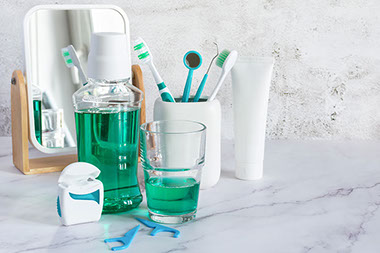
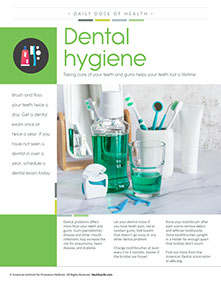
    Dental hygiene products, tooth brush, tooth paste, mouth wash, etc.

    Taking care of your teeth and gums helps your teeth last a lifetime.

    Brush and floss your teeth twice a day. Get a dental exam once or twice a year. If you have not seen a dentist in over a year, schedule a dental exam today.

    Dental problems affect more than your teeth and gums. Gum (periodontal) disease and other mouth infections may increase the risk for pneumonia, heart disease, and diabetes.

    Let your dentist know if you have tooth pain, red or swollen gums, bad breath that doesn’t go away or any other dental problem.

    Change toothbrushes at least every 3 to 4 months; sooner if the bristles are frayed.

    Rinse your toothbrush after each use to remove debris and leftover toothpaste. Store toothbrushes upright in a holder far enough apart that bristles don’t touch.

    Find out more from the American Dental Association atada.org.

    Health at Home Lifetime book by the American Institute for Preventive Medicine. www.HealthyLife.com. All rights reserved.

    © American Institute for Preventive Medicine

  • Guard Against Denture Trouble

    Mature Health: Over Age 50

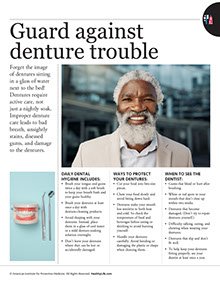
    Close up image of a mature women smiling showing her dentures.

    Forget the image of dentures sitting in a glass of water next to the bed! Dentures require active care, not just a nightly soak. Improper denture care leads to bad breath, unsightly stains, diseased gums, and damage to the dentures. Daily dental hygiene should include these measures.

    *  Brush your tongue and gums with a soft brush to keep your breath fresh and your gums healthy.

    *  Brush your dentures at least once a day with denture-cleaning products.

    *  Rinse your mouth with a mild salt-water solution (1 teaspoon of ordinary table salt in 1/2 cup warm water) after meals and before going to bed.

    *  Don’t leave your dentures where they can be lost or accidentally damaged.

    How you eat can also protect your dentures, so take these precautions.

    *  Cut your food into bite-size pieces.

    *  Chew your food slowly and avoid biting down hard.

    *  Dentures make your mouth less sensitive to both heat and cold. So check the temperature of food and beverages before eating or drinking to avoid burning yourself.

    To help keep your dentures fitting properly, see your dentist at least once a year. See your dentist if you have any of the following problems.

    *  Gums that bleed or hurt after brushing.

    *  White or red spots in your mouth that don’t clear up within two weeks.

    *  Dentures that become damaged. (Don’t try to repair dentures yourself.)

    *  Difficulty talking, eating, and chewing when wearing your dentures.

    *  Dentures that slip and don’t fit well.

    A Year of Health Hints book by the American Institute for Preventive Medicine. www.HealthyLife.com. All rights reserved.

    © American Institute for Preventive Medicine

  • Wash Hands For Health

    General Health Conditions

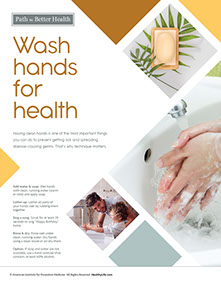
    Bar of soap.

    Having clean hands is one of the most important things you can do to prevent getting sick and spreading disease-causing germs. That’s why technique matters.

    Add water & soap:Wet hands with clean, running water (warm or cold) and apply soap.

    Lather up:Lather all parts of your hands well by rubbing them together.

    Sing a song:Scrub for at least 20 seconds or sing “Happy Birthday” twice.

    Rinse & dry:Rinse well under clean, running water. Dry hands using a clean towel or air-dry them.

    Option:If soap and water are not available, use a hand sanitizer that contains at least 60% alcohol.

    Health at Home Lifetime book by the American Institute for Preventive Medicine. www.HealthyLife.com. All rights reserved.

    © American Institute for Preventive Medicine

  • Keep Food Safe

    Healthylife® Weigh

    Part 3

    Man with frying pan cooking food at home.

    *  Freezing: Keep freezer temperature at or below 0°F. Keep frozen foods in airtight containers.

    *  Refrigerator: Keep refrigerator temperature at or below 40°F. Store foods made from animal products in a drawer or in the back of the refrigerator, where it is cooler.

    *  Thawing: Thaw food on the bottom shelf of the refrigerator. Or, submerge the sealed container in cold water. Or, use the defrost settings on your microwave. Never thaw food on the counter.

    Heat to Safe Temperatures

    Use a food thermometer to make sure foods are safe to eat.

    *  145ºF: Fish, roasts, steaks, chops (beef, pork, veal, and lamb)

    *  160ºF: Egg dishes and ground meats (beef, veal, and lamb)

    *  165ºF: Stuffing, all poultry, casseroles, reheated leftovers

    Simple Cooking Methods

    When you cook vegetables, do so quickly and in little water. Some vitamins, like vitamin C, are lost when soaked in water or overcooked.

    Microwave: Place chopped vegetables in a microwave-safe dish with a lid. Or, use plastic wrap with a few holes poked for venting. Add 2 Tbsp. of water, or enough to cover the bottom of the dish. Microwave on high for 5 minutes. Check firmness. Add time to reach desired softness.

    Stove Top: Add 1 to 2 inches of water to a pot. Add vegetables. Simmer until tender, checking vegetables often after the first 5 minutes. Greens will cook faster, so check these after 2 minutes.

    Oven: Preheat oven to 450ºF. Coat a baking sheet with non-stick cooking spray or use a sheet of parchment paper. Toss vegetables with 1 Tbsp. of canola oil. Spread vegetables evenly and bake for at least 15 minutes. Check for desired softness. Add cooking time, if needed. Experiment with spices to flavor vegetables to your liking.

    © American Institute for Preventive Medicine

  • Are You Washing Your Hands The Right Way?

    MEDICAL NEWS

    Water drop illustration with the words "Wash your hand".

    The Centers for Disease Control and Prevention (CDC) says washing your hands is like a “do-it-yourself” vaccine. Washing your hands properly and at the right time will slash your risk of getting sick with illnesses like colds, flu and stomach bugs that cause diarrhea and vomiting.

    Handwashing seems simple. But, there are some steps you must take to ensure your hands are truly clean.

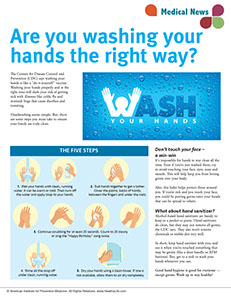
    The five steps

    1.  Wet your hands with clean, running water. It can be warm or cold. Then turn off the water and apply soap to your hands.

    2.  Rub hands together to get a lather. Cover the palms, backs of hands, between the fingers and under the nails.

    3.  Continue scrubbing for at least 20 seconds. Count to 20 slowly or sing the “Happy Birthday” song twice.

    4.  Rinse all the soap off under clean, running water.

    5.  Dry your hands using a clean towel. If one is not available, allow them to air dry completely.

    Don’t touch your face – a win-win

    It’s impossible for hands to stay clean all the time. Even if you’ve just washed them, try to avoid touching your face, eyes, nose and mouth. This will help keep you from letting germs into your body.

    Also, this habit helps protect those around you. If you’re sick and you touch your face, you could be putting germs onto your hands that can be spread to others.

    What about hand sanitizer?

    Alcohol-based hand sanitizers are handy to keep in a pocket or purse. Hand sanitizers do clean, but they may not remove all germs, the CDC says. They also won’t remove chemicals or visible dirt very well.

    In short, keep hand sanitizer with you, and use it when you’ve touched something that may be germy (like a door handle or ATM buttons). But, get to a sink to wash your hands whenever you can.

    Good hand hygiene is good for everyone – except germs. Wash up to stay healthy!
    © American Institute for Preventive Medicine