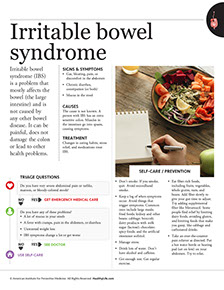
Irritable bowel syndrome (IBS) is a disorder of the digestive system. Experts believe that IBS happens when there is a problem with how the brain and the gut work together. IBS can have bothersome symptoms like stomach pain, diarrhea and constipation. But, IBS does not damage the digestive tract like the effects of ulcerative colitis or Crohn’s disease.
Millions of people in the U.S. have IBS. And some people have severe symptoms that require medication or other medical care. IBS should be diagnosed by a doctor to ensure your symptoms are not caused by other diseases.
Fortunately, mild to moderate symptoms of IBS can often be improved with some self-care and lifestyle changes.
Foods to skip
Some foods are known to cause more cramping and diarrhea. People with IBS may wish to avoid these foods, which include:
* Fried foods or high-fat meals
* Artificial sweeteners
* Caffeine, such as coffee or tea
* Alcohol
You should also avoid eating large meals.
Keep a food diary
It may be a good idea to keep a food diary to identify other problem foods and eating habits, especially during flare-ups.
Feel fiber-fabulous
Fiber is one of the most effective ways to help calm an irritable bowel. Fiber can improve constipation because it softens stool and makes it easier to pass. And, it may help “bulk up” stool to reduce diarrhea.
The 2015-2020 Dietary Guidelines for Americans says that adults should be eating 22 to 34 grams of fiber per day. Soluble fiber may be the best choice for those with IBS.
Good sources of soluble fiber include:
* Oats
* Nuts
* Lentils
* Beans
* Fruits & Vegetables
If you’re not used to eating fiber, don’t eat too much at first. This could lead to gas, bloating, and more IBS symptoms. Gradually increase the amount of fiber you eat by 2 to 3 grams per day until you’re eating the recommended amount. Be sure to drink plenty of fluids to absorb the extra fiber.
Get better sleep
Sleep helps the body restore itself, and poor sleep may aggravate IBS symptoms. Help your body rest by practicing good sleep hygiene. You can do this by:
* Shutting off computers, smart phones and other screens two hours before bedtime
* Going to bed and getting up at the same time every day
* Avoiding alcohol and heavy meals in the evening
* Not smoking
* Getting regular exercise (even light exercise can help you sleep better)
* Avoiding naps if you have trouble sleeping at night
Get help from your doctor
If these self-care steps don’t help, it may be time to talk to your doctor about other solutions. Some people find success by avoiding gluten, a protein found in wheat, barley, rye, oats and many other foods.
A low-FODMAP diet may also be helpful. FODMAPS are carbohydrates that can be harder for the intestines to digest. Avoiding these foods helps some people with IBS. Ask your doctor before you begin any diet that eliminates certain foods.
Sources: International Foundation for Functional Gastrointestinal Disorders, National Institute of Diabetes and Digestive and Kidney Diseases, National Sleep Foundation