Directions:
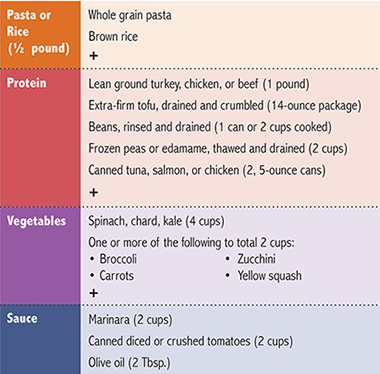
1. Cook pasta or rice according to package directions and drain.
2. Cook protein choice as needed.
3. Cook veggies by steaming, grilling, roasting, sautéing, or adding to boiling pasta water in the last few minutes of cooking.
4. In a large pot, heat sauce over medium heat. If using spices, add them now. Add protein and veggies to heat through. Toss with hot cooked pasta or rice and serve.
For a casserole, follow the directions above. Then, pour into a 9 x 13-inch baking pan and bake for 40-60 minutes until the top is golden brown.
Directions:
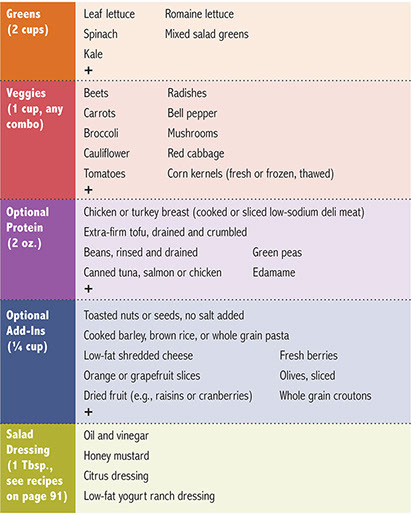
Toss ingredients together when ready to eat. Or, prepare a salad ahead of time in a container, keeping very moist ingredients (like tomatoes and dressing) separate. When you are ready to eat, toss and empty onto a plate or in a large bowl.
Salad Dressing
Salad dressing can be a healthy choice for your salad. Use healthy, unsaturated fats in salad dressing to:
* Help you feel full and more satisfied.
* Help your body get the benefits of other vitamins in your salad, like fat-soluble vitamins A, D, E, and K.
* Add flavor. Dressings are a great place for herbs, spices, and other powerful flavors to make your salad POP!
* Help you eat vegetables that you don’t like plain.
Tips for Selecting a Dressing at a Restaurant:
* Ask for oil-based dressings, such as olive oil and balsamic vinegar.
* Ask for dressing on the side. Toss your salad with half the dressing provided and put the rest to the side. Most restaurants offer much more dressing than you need for your salad.
* If you are worried you may use too much dressing, ask for a half-size salad or order another vegetable as a side dish.
* On bottled dressings, look for ones made without added sugars.
Make Your Own Salad Dressing
Use 1-2 Tbsp. of the dressing on your salad. Store leftovers in a sealed jar.
* Oil and vinegar dressing: 3 Tbsp. olive oil, 2 Tbsp. red wine vinegar, 1/8 tsp. salt (a dash), ¼ tsp. black pepper. Serving size: 1 Tbsp.
* Honey mustard dressing: 6 Tbsp. mustard, ½ Tbsp. fresh lemon juice or cider vinegar, 1½ Tbsp. honey, 1 tsp. olive or canola oil, 1/8 tsp. salt (a dash), ¼ tsp. black pepper. Serving size: 2 Tbsp.
* Citrus dressing: 2 Tbsp. lime, lemon, or orange juice; 3-4 Tbsp. canola or olive oil, 1/8 tsp. salt (a dash), ¼ tsp. black pepper. Serving size: 1 Tbsp.
* Creamy low-fat ranch dressing: 1 (6-ounce) container plain nonfat or low-fat yogurt, 1/3 cup low-fat mayonnaise, 2 Tbsp. white vinegar, 1 Tbsp. dried dill, ¼ tsp. garlic powder, 1/8 tsp. salt (a dash). Serving size: 2 Tbsp.
Meal Ideas: Stir-Fry
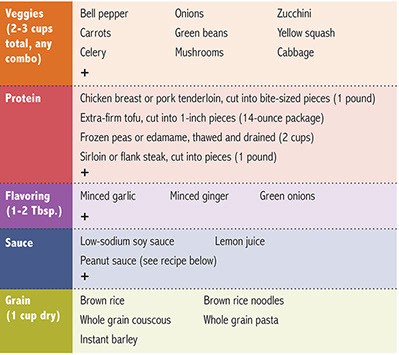
Choose ingredients from the chart below. This recipe makes four servings.
Peanut Sauce:In a small bowl, stir together ¼ cup peanut butter, 1/3 cup water, ¼ cup low-sodium soy sauce, 2 Tbsp. cider vinegar, and 4 tsp. sugar.
Directions
1. Cook grains. Follow package directions and set aside.
2. If using meat: In a large skillet over medium heat, cook meat or poultry in 1 tablespoon canola or olive oil. Set aside.
3. Add veggies to skillet, starting with harder veggies (these take longer to cook). Cook to desired softness. Add flavoring (garlic, ginger, or green onions). If adding tofu, peas, or edamame, add that now.
4. Add sauce and cook for 1-2 more minutes. Stir in cooked meat.
5. Serve over cooked grains.
Meal Ideas: Soup
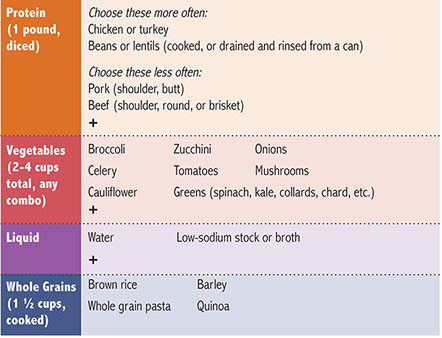
Choose ingredients from the chart below. This recipe makes four servings.
Directions
1. If using meat: Heat 1 Tbsp. of canola or olive oil in a soup pot. Add meat and cook for 5 minutes. If not using meat, skip this step.
2. Add chosen vegetables and sauté for 5 minutes. If using frozen vegetables, thaw in the microwave first.
3. Add liquid and beans or lentils (if using) and bring to a boil. Once boiling, reduce heat and simmer for 25-30 minutes. Stir occasionally.
4. Add grains and seasonings. Cook for an additional 5 minutes.
Snack Ideas: Trail Mix
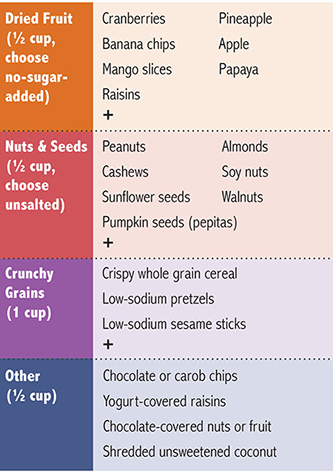
Choose ingredients from the chart below. This recipe makes four servings.