Tag: immune

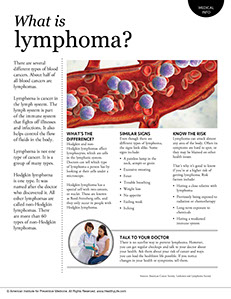
  • What Is Lymphoma?

    MEDICAL NEWS

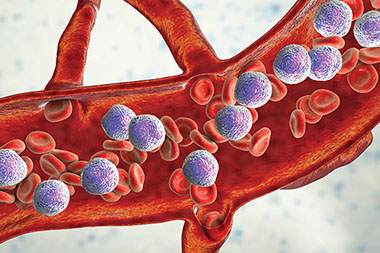
    Illustration of vein with blood cells.

    There are several different types of blood cancers. About half of all blood cancers are lymphomas. Lymphoma is cancer in the lymph system. The lymph system is part of the immune system that fights off illnesses and infections. It also helps control the flow of fluids in the body.

    Lymphoma is not one type of cancer. It is a group of many types.

    Hodgkin lymphoma is one type. It was named after the doctor who discovered it. All other lymphomas are called non-Hodgkin lymphomas. There are more than 60 types of non-Hodgkin lymphomas.

    What’s the difference?

    Hodgkin and non-Hodgkin lymphomas affect lymphocytes, which are cells in the lymphatic system. Doctors can tell which type of lymphoma a person has by looking at their cells under a microscope.

    Hodgkin lymphoma has a special cell with two centers, or nuclei. These are known as Reed-Sternberg cells, and they only occur in people with Hodgkin lymphoma.

    Similar signs

    Even though there are different types of lymphoma, the signs look alike. Some signs include:

    *  A painless lump in the neck, armpit or groin

    *  Excessive sweating

    *  Fever

    *  Trouble breathing

    *  Weight loss

    *  No appetite

    *  Feeling weak

    *  Itching

    Know the risk

    Lymphoma can attack almost any area of the body. Often its symptoms are hard to spot, or they may be blamed on other health issues. That’s why it’s good to know if you’re at a higher risk of getting lymphoma. Risk factors include:

    *  Having a close relative with lymphoma

    *  Previously being exposed to radiation or chemotherapy

    *  Long-term exposure to chemicals

    *  Having a weakened immune system

    Talk to your doctor

    There is no surefire way to prevent lymphoma. However, you can get regular checkups and talk to your doctor about your health. Ask them about your risk of cancer and ways you can lead the healthiest life possible. If you notice changes in your health or symptoms, tell them.

    Sources: American Cancer Society, Leukemia and Lymphoma Society
    © American Institute for Preventive Medicine

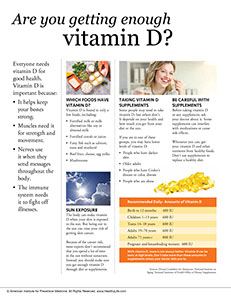
  • Are You Getting Enough Vitamin D?

    SELF-CARE CORNER

    Women holding a glass of water and a vitamin D pill.

    Everyone needs vitamin D for good health. Vitamin D is important because:

    *  It helps keep your bones strong.

    *  Muscles need it for strength and movement.

    *  Nerves use it when they send messages throughout the body.

    *  The immune system needs it to fight off illnesses.

    Which foods have vitamin D?

    Vitamin D is found in only a few foods, including:

    *  Fortified milk or milk alternatives like soy or almond milk

    *  Fortified cereals or juices

    *  Fatty fish such as salmon, tuna and mackerel

    *  Beef liver, cheese, egg yolks

    *  Mushrooms

    Sun exposure

    The body can make vitamin D when your skin is exposed to the sun. But being out in the sun can raise your risk of getting skin cancer.

    Because of the cancer risk, most experts don’t recommend that you spend a lot of time in the sun without sunscreen. Instead, you should make sure you get enough vitamin D through diet or supplements.

    Taking vitamin D supplements

    Some people may need to take vitamin D, but others don’t. It depends on your health and how much you get from your diet or the sun.

    If you are in one of these groups, you may have lower levels of vitamin D:

    *  People who have darker skin

    *  Older adults

    *  People who have Crohn’s disease or celiac disease

    *  People who are obese

    Recommended Daily- Amounts of Vitamin D

    Birth to 12 months: 400 IU

    Children 1-13 years: 600 IU

    Teens 14-18 years: 600 IU

    Adults 19-70 years: 600 IU

    Adults 71 years+: 800 IU

    Pregnant and breastfeeding women: 600 IU

    With vitamin D, more is not always better. Vitamin D can be toxic at high levels. Don’t take more than these amounts in supplements unless your doctor tells you to.

    Be careful with supplements

    Before taking vitamin D or any supplement, ask your doctor about it. Some supplements can interfere with medications or cause side effects.

    Whenever you can, get your vitamin D and other nutrients from healthy foods. Don’t use supplements to replace a healthy diet.

    Sources: Dietary Guidelines for Americans, National Institute on Aging, National Institutes of Health Office of Dietary Supplements

    © American Institute for Preventive Medicine