Tag: impact

  • Consider Low-Impact Or Nonimpact Aerobics

    Fitness

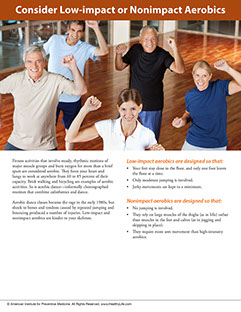
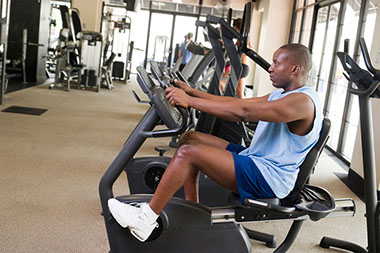
    Image of man exercising at the gym.

    Fitness activities that involve steady, rhythmic motions of major muscle groups and burn oxygen for more than a brief spurt are considered aerobic. They force your heart and lungs to work at anywhere from 60 to 85 percent of their capacity. Brisk walking and bicycling are examples of aerobic activities. So is aerobic dance-informally choreographed routines that combine calisthenics and dance.

    Aerobic dance classes became the rage in the early 1980s, but shock to bones and tendons caused by repeated jumping and bouncing produced a number of injuries. Low-impact and nonimpact aerobics are kinder to your skeleton.

    Low-impact aerobics are designed so that:

    *  Your feet stay close to the floor, and only one foot leaves the floor at a time.

    *  Only moderate jumping is involved.

    *  Jerky movements are kept to a minimum.

    Nonimpact aerobics are designed so that:

    *  No jumping is involved.

    *  They rely on large muscles of the thighs (as in lifts) rather than muscles in the feet and calves (as in jogging and skipping in place).

    *  They require more arm movement than high-intensity aerobics.

    Page image from A Year of Health Hints book by the American Institute for Preventive Medicine. www.HealthyLife.com. All rights reserved.

    © American Institute for Preventive Medicine

  • Give Water Exercise A Try

    Fitness

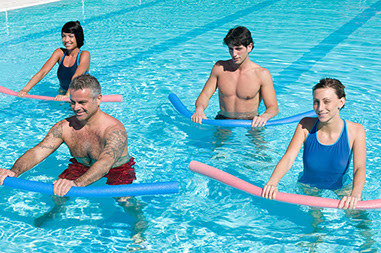
    Water exercise class in session.

    Water exercise (or aquatic exercise, as it’s sometimes called) is popular among people of all ages. Buoyed up by water, you feel light as a feather, and you can move in ways that are otherwise difficult or impossible yet still tone your muscles and improve your circulation, breathing, and endurance. You weigh 90 percent less in water than you do on land, easing the burden on weight-bearing joints like your hips, knees, and back. That means many people who find it difficult or painful to jog or perform other kinds of weight-bearing activities find it easier to work out in water. Water exercises take place in the shallow end of a pool, in waist- to chest-deep water, and you can usually hold on to the side of the pool for safety and comfort.

    Swim the English Channel (or Its Equivalent)

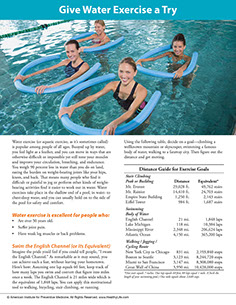
    Imagine the pride you’d feel if you could tell people, “I swam the English Channel.” As remarkable as it may sound, you can achieve such a feat, without leaving your hometown. Here’s how: Assuming one lap equals 60 feet, keep track of how many laps you swim and convert that figure into miles once a week. The English Channel is 21 miles wide which is the equivalent of 1,848 laps. You can apply this motivational tool to walking, bicycling, stair climbing, or running. Using the following table, decide on a goal-climbing a well-known mountain or skyscraper, swimming a famous body of water, walking to a faraway city. Then figure out the distance and get moving.

    Water exercise is excellent for people who:

    *  Are over 50 years old.

    *  Suffer joint pain.

    *  Have weak leg muscles or back problems.

    Page image from A Year of Health Hints book by the American Institute for Preventive Medicine. www.HealthyLife.com. All rights reserved.

    © American Institute for Preventive Medicine

  • Walk Your Way To Fitness

    Fitness

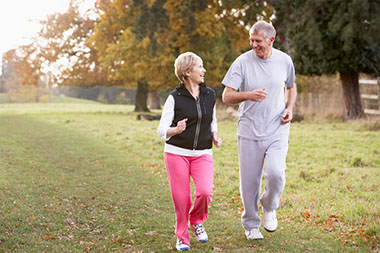
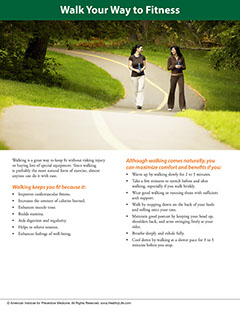
    Image of couple power walking.

    Walking is a great way to keep fit without risking injury or buying lots of special equipment. Since walking is probably the most natural form of exercise, almost anyone can do it with ease.

    Walking keeps you fit because it:

    *  Improves cardiovascular fitness.

    *  Increases the amount of calories burned.

    *  Enhances muscle tone.

    *  Builds stamina.

    *  Aids digestion and regularity.

    *  Helps to relieve tension.

    *  Enhances feelings of well-being.

    Although walking comes naturally, you can maximize comfort and benefits if you:

    *  Warm up by walking slowly for 2 to 3 minutes.

    *  Take a few minutes to stretch before and after walking, especially if you walk briskly.

    *  Wear good walking or running shoes with sufficient arch support.

    *  Walk by stepping down on the back of your heels and rolling onto your toes.

    *  Maintain good posture by keeping your head up, shoulders back, and arms swinging freely at your sides.

    *  Breathe deeply and exhale fully.

    *  Cool down by walking at a slower pace for 3 to 5 minutes before you stop.

    Page image from A Year of Health Hints book by the American Institute for Preventive Medicine. www.HealthyLife.com. All rights reserved.

    © American Institute for Preventive Medicine

  • Can You Take A Hit?

    BE FIT

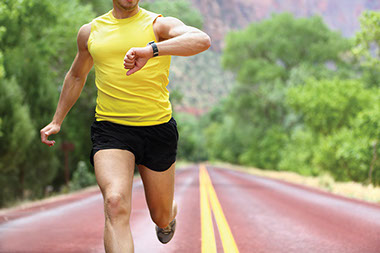
    Image of man running while looking at his watch.

    Short sprints might boost your fitness by significant levels in just 2 weeks. Really short sprints-like 6 seconds.

    Researchers at Abertay University in Scotland have claimed that people can improve their fitness levels with just small amounts of exercise.

    Participants were asked to cycle all out for 6 seconds then rest for one minute, repeating the cycle 10 times. They found that after 2 weeks participants recorded a 10% improvement in fitness.

    The 6-second bursts are one of the shortest sprint durations ever used in high-intensity training (HIT). HIT involves short bursts of intense exercise and achieves similar results to long-distance endurance training.

    However, the method is much less time consuming and comes with a lower risk of injury, making it ideal for athletes wishing to remain injury free.

    © American Institute for Preventive Medicine

  • Kids And Concussions: What To Know

    WELL-BEING

    Image of mom holding child with a bump on the head.

    Many kids get a bump or blow to the head while playing sports or other activities. If the hit is hard enough, a child can have a concussion, which is a type of traumatic brain injury. During a concussion, the brain bumps against the inside of the skull. This can cause changes in the way the brain works and can lead to long-term problems.

    How do I know if my child had a concussion?

    Many people mistakenly think that if the child doesn’t “black out,” then they’re okay. Although losing consciousness is a sign that a concussion is likely, it’s not the only way to know. A concussion can happen even if the child never loses consciousness. Look for:

    *  Nausea and vomiting

    *  Dizziness

    *  Blurred vision

    *  Sensitivity to light

    *  Tiredness

    Some kids don’t show symptoms right away. If your child suffered a hit to the head, look for these problems that can occur days or weeks after a concussion:

    *  Trouble concentrating or problems with schoolwork

    *  Headaches

    *  Memory problems

    *  Confusion or changes in behavior

    *  Changes in their movement, coordination or walking

    Anything that seems unusual after a blow to the head should be checked by a doctor.

    What to do after a concussion

    Right after the injury, the child should:

    *  Stop the sport or activity.

    *  Get medical help immediately.

    *  Lie down on back with head and shoulders slightly raised while waiting for help to arrive.

    Parents or adults should watch the child’s breathing and whether they stay awake. If the child isn’t breathing or doesn’t have a pulse, begin CPR.

    Returning to sports or activities

    The brain needs time to heal after a concussion. If the child starts activities too soon, they are more likely to have another concussion and to suffer more serious brain damage. Ask the child’s doctor when they can gradually begin physical and mental activities again.

    Preventing concussions

    To prevent a brain injury like a concussion, make sure your child:

    *  Wears a helmet during all contact sports, such as football, or in cases where a fall could happen, such as while biking, skating, horseback riding, and skiing.

    *  Wears a seatbelt and/or has the right car seat for riding in a vehicle.

    Concussions can happen to the best athletes with the most careful parents. If it happens to your child, remember to give the child’s brain plenty of time to rest and recover. This can help avoid long-term problems down the road.

    Source: National Institutes of Health
    © American Institute for Preventive Medicine

  • Sugar: Not So Sweet For Your Health

    HEALTHY EATING

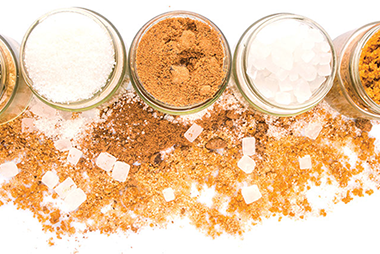
    Image of different types of sugars.

    Cookies, cake, and candy – we all know which foods are high in sugar. Or do we?

    The average American is consuming too much sugar today, and the American Heart Association says this is hurting us. Sugar is loaded with calories, which can cause weight gain and heart problems. A high-sugar diet can also be a factor in diabetes. Sugar can cause cavities and other dental problems.

    You might be surprised to find that many regular or even “healthy” foods have a lot of sugar in them. That’s why the FDA is proposing a change to the food Nutrition Facts label that would list “added sugar.”

    What is added sugar?

    Some healthy foods contain a certain amount of natural sugar. These include fruits, vegetables, dairy, and whole grains. The sugar (simple carbohydrate) naturally occurs in the food.

    On the other hand, many packaged and processed foods contain “added sugar.” This sugar has been added to improve the taste. Many things you wouldn’t suspect, like “diet” foods, soup, yogurt, crackers, and salad dressings can contain a lot of added sugar.

    How do I spot added sugar?

    Sugar can be listed by many different names in the ingredients. So, it’s hard to know how much added sugar you’re getting. Until the nutrition label change takes place, the best thing to do is look at the sugar listing on the Nutrition Facts. Keep track of how many grams are in each serving of food and add them up each day. The AHA recommends:

    *  No more than six teaspoons (25 grams) for women per day

    *  No more than nine teaspoons (37.5 grams) for men per day

    If you eat processed or packaged foods or drinks, look at the Nutrition Facts and see how much sugar each one contains. You may be surprised at how many grams of sugar you consume, even if you’ve been watching your diet. And drinks count too – fruit juice, sports drinks, and sodas are usually loaded with sugar. In fact, a 12- ounce serving of soda contains about 38 grams (nine to 10 teaspoons) of sugar.

    Many food labels don’t list the word “sugar” in the ingredients. In fact, there are more than 50 different names for sugar! These include sucrose, dextrose, maltose, corn syrup, corn syrup solids, dextrin and maltodextrin.

    © American Institute for Preventive Medicine