Tag: injury

  • How To Buy Sports Shoes That Fit

    Fitness

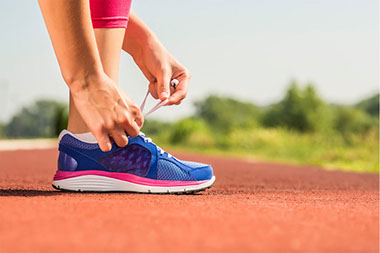
    Image of person lacing tennis shoe.

    A carpenter needs a saw, a painter needs a brush, and an accountant needs a calculator. And anyone who’s serious about fitness needs a good pair of shoes (or several, if you’re active in more than one activity besides swimming). The right shoes can make the difference between comfort and discomfort, between safety and injury, between performing well and not performing well.

    Consider these factors before you buy activewear shoes.

    *  Are the shoes suitable for the sport or activity for which you intend to wear them? Walking, hiking, racquetball, tennis, aerobics, and so forth require differently designed footwear. But you may want to consider cross-training shoes, suitable for several different activities.

    *  Can you wiggle your toes in the shoes while sitting and standing? (You should be able to.)

    *  Does the widest area of your foot correspond to the widest area of the shoe? (To find out, try this: Stand on a piece of paper, bend down, and trace a line around each shoe with a pencil. Then slip off your shoes, stand in the same place, and trace a line around each foot with a different colored pencil. If at any point the outline of your feet is larger than the outline of your shoes, you’re squeezing some or all of the bones, ligaments and muscles in each foot.)

    *  Do the inner seams rub against your foot? (They shouldn’t.)

    *  Does the shoe have a firm heel cradle and arch support?

    *  Does the shoe provide adequate shock absorption?

    *  Are the shoes comfortable when you move from side to side or when you walk or jump? Test these movements before you buy.

    Good shoes don’t need to be “broken in.” The shoes you buy should be comfortable from the start.

    Page image from A Year of Health Hints book by the American Institute for Preventive Medicine. www.HealthyLife.com. All rights reserved.

    © American Institute for Preventive Medicine

  • Youth Sports Safety

    Family Fitness

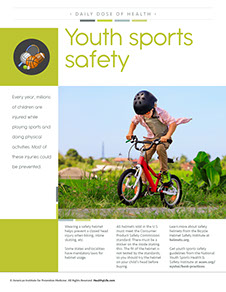
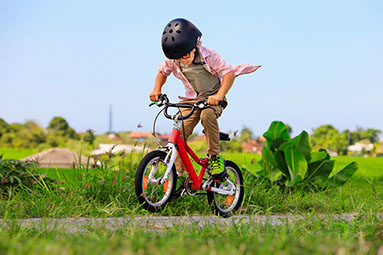
    Young child riding a bike.

    Every year, millions of children are injured while playing sports and doing physical activities. Most of these injuries could be prevented.

    Wearing a safety helmet helps prevent a closed head injury when biking, inline skating, etc.

    Some states and localities have mandatory laws for helmet usage.

    All helmets sold in the U.S. must meet the Consumer Product Safety Commission standard. There must be a sticker on the inside stating this. The fit of the helmet is not tested by the standards, so you should try the helmet on your child’s head before buying.

    Learn more about safety helmets from the Bicycle Helmet Safety Institute athelmets.org.

    Get youth sports safety guidelines from the National Youth Sports Health & Safety Institute atacsm.org/nyshsi/best-practices.

    A Year of Health Hints book by the American Institute for Preventive Medicine. www.HealthyLife.com. All rights reserved.

    © American Institute for Preventive Medicine

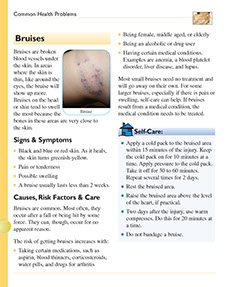
  • Bruises

    Skin Conditions

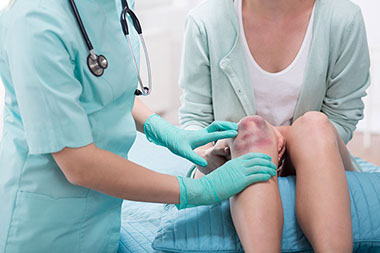
    Image of nurse examing patient bruise on knee.

    Bruises are broken blood vessels under the skin. In areas where the skin is thin, like around the eyes, the bruise will show up more. Bruises on the head or shin tend to swell the most because the bones in these areas are very close to the skin.

    Signs & Symptoms

    *  Black and blue or red skin. As it heals, the skin turns greenish-yellow.

    *  Pain or tenderness

    *  Possible swelling

    *  A bruise usually lasts less than 2 weeks.

    Causes, Risk Factors & Care

    Bruises are common. Most often, they occur after a fall or being hit by some force. They can, though, occur for no apparent reason. The risk of getting bruises increases with:

    *  Taking certain medications, such as aspirin, blood thinners, corticosteroids, water pills, and drugs for arthritis

    *  Being female, middle aged, or elderly

    *  Being an alcoholic or drug user

    *  Having certain medical conditions. Examples are anemia, a blood platelet disorder, liver disease, and lupus.

    Most small bruises need no treatment and will go away on their own. For some larger bruises, especially if there is pain or swelling, self-care can help. If bruises result from a medical condition, the medical condition needs to be treated.

    Self-Care

    *  Apply a cold pack to the bruised area within 15 minutes of the injury. Keep the cold pack on for 10 minutes at a time. Apply pressure to the cold pack. Take it off for 30 to 60 minutes. Repeat several times for 2 days.

    *  Rest the bruised area.

    *  Raise the bruised area above the level of the heart, if practical.

    *  Two days after the injury, use warm compresses. Do this for 20 minutes at a time.

    *  Do not bandage a bruise.

    When to Seek Medical Care

    Contact Doctor When:

    *  You have any of these problems with a bruise:

    – Vision problems with a bruise near the eye

    – Signs of infection (fever; increased pain; redness, and/or swelling; pus)

    – Nosebleeds or excessive bleeding from cuts

    – Loss of weight and appetite

    – Joint pain, fever, or swollen lymph nodes

    *  You have any of these problems:

    – Bruising on the hip after a fall

    – Bruises appear often and easily.

    – Bruises take longer than 2 weeks to go away.

    – Over a year’s time, more than 2 or 3 bruises appear for no apparent reason.
    Health at Home Lifetime book by the American Institute for Preventive Medicine. www.HealthyLife.com. All rights reserved.

    © American Institute for Preventive Medicine

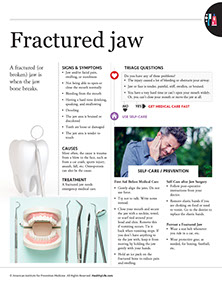
  • Fractured Jaw

    Dental & Mouth Concerns

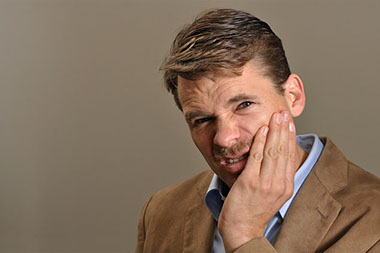
    Image of man holding jaw in pain.

    A fractured (or broken) jaw is when the jaw bone breaks.

    Signs & Symptoms

    *  Jaw and/or facial pain, swelling, or numbness.

    *  Not being able to open or close the mouth normally.

    *  Bleeding from the mouth.

    *  Having a hard time drinking, speaking, and swallowing.

    *  Drooling.

    *  The jaw area is bruised or discolored.

    *  Teeth are loose or damaged.

    *  The jaw area is tender to touch.

    Causes

    Most often, the cause is trauma from a blow to the face, such as from a car accident, sports injury, assault, etc. Osteoporosis can also be the cause.

    Treatment

    A fractured jaw needs emergency medical care.

    Questions to Ask

    Self-Care / Prevention

    First Aid Before Medical Care

    *  Gently align the jaws. Do not use force.

    *  Try not to talk. Write notes instead.

    *  Close your mouth and secure the jaw with a necktie, towel, or scarf tied around your head and chin. Remove this if vomiting occurs. Tie it back when vomiting stops. If you don’t have anything to tie the jaw with, keep it from moving by holding the jaw gently with your hands.

    *  Hold an ice pack on the fractured bone to reduce pain and swelling.

    Self-Care after Jaw Surgery

    *  Follow post-operative instructions from your doctor.

    *  Remove elastic bands if you are choking on food or need to vomit. Go to the dentist to replace the elastic bands.

    To Help Prevent a Fractured Jaw

    *  Wear a seat belt whenever you ride in a car, etc.

    *  Wear protective gear, as needed, for boxing, football, etc.

    Healthier at Home book by the American Institute for Preventive Medicine. www.HealthyLife.com. All rights reserved.

    © American Institute for Preventive Medicine

  • Injury And Disability

    Healthylife® Weigh

    Part 5

    Doctor helping elderly man with fitness.

    Talk to your doctor or physical therapist about exercises you can do at home, at a gym, or in a pool. While there may be activities you can’t do, there are probably many that you can do. Plus, there are many exercises that can be adapted to suit your individual needs and abilities.

    *  Focus on what you CAN do.

    *  Choose low-impact exercises that don’t make an injury worse.

    *  Find a supportive buddy to help motivate you or assist you with exercises.

    *  Use flotation devices in a pool for support.

    *  Try new things as you lose weight. You may find some activities easier when you are carrying less weight on your joints.

    © American Institute for Preventive Medicine

  • Burn Notice

    SELF-CARE CORNER

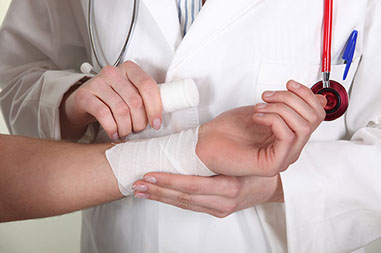
    Close-up image of a doctor wrapping up a burn on a patients arm.

    Follow this simple advice from the Home Safety Council and H2otStop to help reduce the risk of burn and scald injuries at home:

    Bathing

    *  Set your water heater at 120ºF or just below the medium setting.

    *  Fill the bathtub. Run your hand through the water to test for hot spots. Then help children get in. When children are in or near the tub, watch them closely. Young children and older people have thin skin. They burn more quickly.

    *  Install special tub spouts and shower heads that prevent hot water burns. These can sense if the water gets hot enough to cause a burn and shut off the flow of water.

    Cooking

    *  Wear long oven mitts to protect your skin when cooking or handling hot food.

    *  Turn pot handles toward the back of the stove so children cannot pull them down. Use back burners when cooking. Keep children away from the stove when you are cooking. Put tape on the floor around the stove/oven to help children learn to stay out of the “no-kid-zone.”

    *  Food cooked in the microwave can get very hot and cause a burn. Use oven mitts when you take off the lid. Stir and test the food before serving to make sure it is cool enough to eat.

    *  Keep hot drinks away from the edge of tables and counters. Do not use tablecloths or placemats because young children can pull them down. Use a travel mug with a tight-fitting lid for all hot drinks. This can help prevent a burn if the cup tips over.

    *  Do not hold or carry a child while you have a hot drink in your hand. Put only cold drinks in the cup holder of your child’s stroller and child safety seat.

    If a burn occurs:

    *  Cool it with running water. Do this right away.

    *  Keep the burned area in cool water for 3 minutes or longer. Do not put ice, butter, or lotion on the burn. This could make it worse.

    *  Call your doctor or 911 if the burn looks bad.

    © American Institute for Preventive Medicine

  • Can You Take A Hit?

    BE FIT

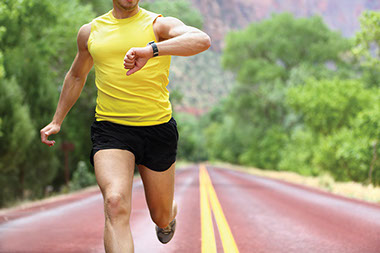
    Image of man running while looking at his watch.

    Short sprints might boost your fitness by significant levels in just 2 weeks. Really short sprints-like 6 seconds.

    Researchers at Abertay University in Scotland have claimed that people can improve their fitness levels with just small amounts of exercise.

    Participants were asked to cycle all out for 6 seconds then rest for one minute, repeating the cycle 10 times. They found that after 2 weeks participants recorded a 10% improvement in fitness.

    The 6-second bursts are one of the shortest sprint durations ever used in high-intensity training (HIT). HIT involves short bursts of intense exercise and achieves similar results to long-distance endurance training.

    However, the method is much less time consuming and comes with a lower risk of injury, making it ideal for athletes wishing to remain injury free.

    © American Institute for Preventive Medicine

  • Ouch! Arm And Shoulder Pain

    MEDICAL NEWS

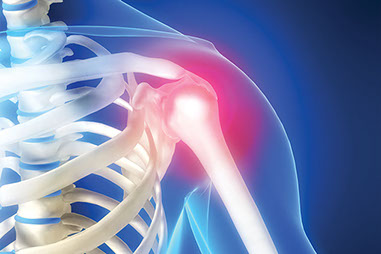
    Illustration of skeleton shoulder highlighted in red for pain.

    Any of these symptoms sound familiar?

    *  Sudden, sharp pain in the upper arm

    *  Popping or snapping you can hear in the shoulder or elbow

    *  Cramping of the biceps muscle with strenuous use of the arm

    *  Bruising from the middle of the upper arm down toward the elbow

    *  Pain or tenderness at the shoulder and the elbow

    *  Weakness in the shoulder and the elbow

    *  Difficulty turning the palm of the hand up or down

    Could be a torn or painful biceps muscle. And if you have that, you may also have a shoulder problem or a rotator cuff tear. Because a torn tendon can no longer keep the biceps muscles tight, a bulge in the upper arm above the elbow (“Popeye Muscle”) may appear, with a dent (signifying absence of muscle) closer to the shoulder.

    The first line of treatment for these types of injuries, according to orthopedic specialists, is a variety of nonsurgical options, such as rest, anti-inflammatory drugs, changing your activity, and physical therapy. Surgery can also be considered. But the best advice is to see your doctor, say experts at the American Academy of Orthopaedic Surgeons.

    © American Institute for Preventive Medicine

  • Pop The Cork, Not Your Eye

    WELL-BEING

    Image of cork popping from a champagne bottle.

    Americans will consume more than a billion glasses of champagne during holiday and New Year celebrations. According to the American Academy of Ophthalmology, the careless handling of champagne is one of the most common causes for holiday-related eye injuries. These injuries are often caused by improperly opening the bottle, as a champagne cork is just less than 90 pounds of pressure-3 times the pressure inside a car tire.

    The Korbel Champagne authorities offer this advice:

    *  The recommended way to properly open a bottle is to ease the cork out slowly, with the sound of a gentle sigh-not a pop, which wastes champagne.

    *  Make sure your champagne is chilled and unshaken. Chill the bottle for at least 4 hours in the refrigerator (a warm bottle is more likely to pop).

    *  Remove the foil cap covering the top of the bottle, exposing a wire hood.

    *  Undo the wire hood with 6 half-turns of the knob.

    *  Hold the bottle at a 45-degree angle while holding the cork firmly with one hand and the base of the bottle with the other. Be sure to point the bottle away from your guests.

    *  Do not twist the cork. Rather, turn the bottle slowly while letting the cork glide out gently, emitting a gentle sigh.

    *  In the did-you-know department: There are more than 50 million bubbles in a standard bottle of champagne.

    © American Institute for Preventive Medicine