Tag: interest

  • Be Smart About Credit Card Offers

    FINANCIAL HEALTH

    Image of man getting mail from mailbox.

    Offers in the mail

    Credit card companies, auto loan companies and other lenders can get a list of names for their credit card offers. They get information from credit reporting agencies about people who have a minimum credit score. Then, they use that list to send out offers for a new card.

    Saying “no” to mail offers

    If you are receiving credit card offers in the mail and don’t want them, there are two things you can do.

    You can opt out of credit card offers for five years. Call 1-888-5-OPTOUT  (1-888-567-8688) or visitoptoutprescreen.com. To opt out forever, you must download and mail a signed paper form. You can get the form on the opt-out website.

    Beware – the opt-out feature only works for certain credit card offers, though. Companies may get your name if they have done business with you before. They may also get your name from other sources that aren’t connected to the credit reporting agencies, such as memberships or subscriptions.

    Why is my child getting a credit card offer?

    Sometimes, a person under 21 years of age gets a credit card offer in the mail. This may happen if the company purchased a list of names and didn’t know that the person was not an adult. But, credit card companies cannot intentionally send their offers to people under 21 years old without permission.

    Phone calls

    Like mail offers, credit card companies can get your name from credit agencies and call you with an offer. You can register your number with the National Do Not Call Registry to stop these calls. Visitwww.donotcall.govor call 1-888-382-1222 to put your phone number on the do not call list.

    What is a prescreened credit card offer?

    Credit card companies can find out if you have a certain credit score. Then, they can offer you a credit card based on that information. This is known as a prescreened offer because they already have some information about your credit. It is not a guarantee that you will get the card. You still have to apply for it and be approved.

    Source: Consumer Financial Protection Bureau

    © American Institute for Preventive Medicine
  • Deal With Debt

    Financial Health

    Get out of debt on your own or with help.

    Whether it’s from living above your means, expensive medical bills, a job loss, or supporting your parents, you can eliminate debt. The first step is to avoid getting deeper in debt. Limit spending to essentials and follow a plan to pay down the debt.

    On your own:

    *  Cut up credit cards or put them away until they are paid off.

    *  Rank order what needs to be paid off – student and other loans, credit cards, etc.

    *  Contact your creditors right away to work out payment plans that you can manage. Do this before debt collectors get involved. If you can’t work out a plan with your mortgage company, contact the local office of the Department of Housing and Urban Development or the housing authority in your state, city, or county for help in finding a legitimate housing counseling agency near you.

    *  Bring in more income from a part time job and selling household items you no longer need at a garage sale or online site, such as Ebay. Consider selling some of your gold and silver jewelry for cash.

    Get professional help from:

    *  A professional financial planner through work

    *  The Financial Planning Association (FPA) at 800.647.6340 orwww.fpanet.org

    *  The National Foundation for Credit Counseling at 800.388.2227 orwww.nfcc.org/FirstStep/firststep_03.cfm.

    Beware of any debt relief service that*:

    *  Charges any fees before it settles your debts

    *  Pressures you to make “voluntary contributions,” another name for fees

    *  Touts a “new government program” to bail out personal credit card debt

    *  Guarantees it can make your debt go away

    *  Tells you it can stop all debt collection calls and lawsuits

    *  Guarantees that your credit card and any other debt not tied to an asset, such as your house, can be paid off for just pennies on the dollar

    *  Offers to enroll you in a debt management program (DMP) without teaching you skills to budget and manage your money

    *  Adapted fromwww.ftc.gov/bcp/edu/pubs/consumer/credit/cre19.shtm

    Action Step

    Pay off the credit card or other debt with the lowest balance first. After this is paid in full, pay down the next debt with the lowest balance.

    Ways to Well-Being book by the American Institute for Preventive Medicine. www.HealthyLife.com. All rights reserved.

    © American Institute for Preventive Medicine
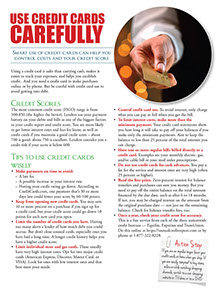
  • Use Credit Cards Carefully

    Financial Health

    Smart use of credit cards can help you control costs and your credit score.

    Using a credit card is safer than carrying cash, makes it easier to track your expenses, and helps you establish credit. And you need a credit card to make purchases online or by phone. But be careful with credit card use to avoid getting into debt.

    Tips to use credit cards wisely:

    *  Make payments on time to avoid: A late fee; a possible increase in your interest rate; having your credit rating go down. According toCreditCards.com, one payment that’s 30 or more days late could lower your score by 60-100 points.

    *  Keep from opening new credit cards. You may save 10 or more percent on a purchase if you sign up for a credit card, but your credit score could go down 10 points for each new card you open.

    *  Limit the number of credit cards you have. Having too many alerts a lender of how much debt you could accrue. But don’t close unused cards, especially ones you have had a long time. A longer credit history helps you have a higher credit score.

    *  Limit individual store and gas cards. These usually have very high interest rates. Opt for two major credit cards (American Express, Discover, Master Card, or VISA). Look for ones with low interest rates and that best meet your needs.

    *  Control credit card use. To avoid interest, only charge what you can pay in full when you get the bill.

    *  To limit interest costs, make more than the minimum payment. Your credit card statements show you how long it will take to pay off your balances if you make only the minimum payments. Aim to keep the balance to less than 25 percent of the total amount you can charge.

    *  Have one or more regular bills billed directly to a credit card. Examples are your monthly electric, gas, and/or cable bill or your mail order prescriptions.

    *  Do not use credit cards for cash advances. You pay a fee for the service and interest rates are very high (often 25 percent or higher).

    *  Read the fine print. Zero-percent interest for balance transfers and purchases can save you money. But you need to pay off the entire balance on the total amount financed by the due date, such as after 6 to 18 months. If not, you may be charged interest on the amount from the original purchase date – not just on the remaining balance. Check for balance transfer fees, too.

    *  Once a year, check your credit score for accuracy. This is a free service from each of the three nationwide credit bureaus – Equifax, Experian and TransUnion. Do this online athttps://annualcreditreport.comor by phone at 1-877-322-8228.

    Credit Scores

    The most common credit score (FICO) range is from 300-850 (the higher the better). Lenders use your payment history on your debts and bills as one of the biggest factors in your credit report and credit score. You are more likely to get lower interest rates and fees for loans, as well as credit cards if you maintain a good credit score – about 700 is good; above 750 is excellent. Lenders consider you a credit risk if your score is below 600.

    Action Step

    If you are an impulse buyer, leave your credit cards at home when you shop. If you are easily tempted to buy items online or while watching shopping channels, switch to a non-shopping website or  TV show, or to a DVD.

    Ways to Well-Being. Published by the American Institute for Preventive Medicine.

    © American Institute for Preventive Medicine

  • Address Boredom

    Healthylife® Weigh

    Part 6

    Man changing channels and feeling bored at home.

    Being bored means being tired of doing the same thing over and over again. It may also mean having nothing to do or nothing that seems interesting to do. Write these ideas on sticky notes. Post reminders in places you often get bored.

    *  Shake up your daily routines! If you normally make dinner immediately after work, go for a short walk instead.

    *  Listen to music or an audio book while commuting, cleaning, or doing another boring task.

    *  Do something that keeps your hands busy! (e.g., cleaning, yard work, polishing your nails)

    *  Take your work outside on a nice day or sit in a conference room instead of at your desk.

    *  Do 10 jumping jacks to get your blood flowing!

    *  Put up with non-exciting tasks but look forward to times when you will be doing something you want to do!

    *  Go to your boredom jar and pick a task!

    Create a Boredom Jar

    Write down the things you want to do and will feel proud of doing when you complete them. These activities can be big or small, but try to write down at least a dozen activities. Write down some activities that take a short amount of time and some activities that take longer. Write these down on individual slips of paper and put them in a jar. When you feel boredom could lead to an unhealthy food choice, pick an activity from your jar. Do the activity written on the slip. Write down things you like to do:

    *  Short Activities (10-30 minutes)

    *  Longer Activities (30+ minutes)

    © American Institute for Preventive Medicine
  • Are Payday Loans Worth It?

    FINANCIAL HEALTH

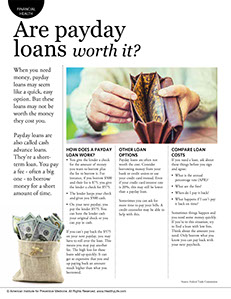
    Person holding open empty wallet.

    When you need money, payday loans may seem like a quick, easy option. But these loans may not be worth the money they cost you.

    Payday loans are also called cash advance loans. They’re a short-term loan. You pay a fee – often a big one – to borrow money for a short amount of time.

    How does a payday loan work?

    *  You give the lender a check for the amount of money you want to borrow plus the fee to borrow it. For instance, if you borrow $500 and their fee is $75, you give the lender a check for $575.

    *  The lender keeps your check and gives you $500 cash.

    *  On your next payday, you pay the lender $575. You can have the lender cash your original check or you can pay in cash.

    If you can’t pay back the $575 on your next payday, you may have to roll over the loan. This means you may pay another fee. The high fees for these loans add up quickly. It can get so expensive that you end up paying back an amount much higher than what you borrowed.

    Other loan options

    Payday loans are often not worth the cost. Consider borrowing money from your bank or credit union or use your credit card instead. Even if your credit card interest rate is 20%, this may still be lower than a payday loan.

    Sometimes you can ask for more time to pay your bills. A credit counselor may be able to help with this.

    Compare loan costs

    If you need a loan, ask about these things before you sign and agree:

    *  What is the annual percentage rate (APR)?

    *  What are the fees?

    *  When do I pay it back?

    *  What happens if I can’t pay it back on time?

    Sometimes things happen and you need some money quickly. If you’re in this situation, try to find a loan with low fees. Think about the amount you need. Only borrow what you know you can pay back with your next paycheck.

    Source: Federal Trade Commission

    © American Institute for Preventive Medicine

  • Avalanche Your Debt

    FINANCIAL HEALTH

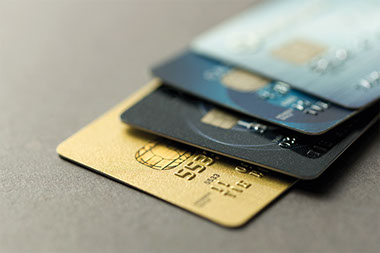
    Four credit cards layed on top of eachother.

    If you carry multiple credit card balances, reducing your debt can feel overwhelming. But there are many techniques to help you tackle your debt. One strategy is to create a debt avalanche.

    Here’s how it works:

    *  Make a list of your credit cards, their balances, interest rates, and minimum payments.

    *  Evaluate your budget to determine how much money you have available to pay toward your debts.

    *  If you don’t have much extra beyond your minimum debt payments, consider ways to bring in extra money to get your avalanche started.

    *  Identify the credit card with the highest interest rate. This is the one to pay off first.

    *  Each month pay the minimum balance on ALL your cards.

    *  Use any extra from your budget to pay more on your highest interest rate card.

    *  Once that card is paid off, move on to the card with the next highest interest rate while continuing to make minimum payments on all other cards.

    *  Each time you pay off a card, the amount of extra you can put towards your highest interest rate card goes up, creating a debt-paying avalanche.

    *  Your avalanche will pick up speed over time until you are credit card debt-free.

    *  Put away your cards, and don’t use credit unless you know you have the money to pay the bill in full.

    © American Institute for Preventive Medicine