Tag: intervention

  • If You Suspect A Narcotics Overdose, Act Fast

    Substance Use & Abuse

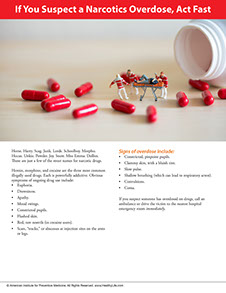
    Horse. Harry. Scag. Junk. Lords. Schoolboy. Morpho. Hocus. Unkie. Powder. Joy. Snow. Miss Emma. Dollies. These are just a few of the street names for narcotic drugs. Heroin, morphine, and cocaine are the three most common illegally used drugs. Each is powerfully addictive. Obvious symptoms of ongoing drug use include:

    *  Euphoria.

    *  Drowsiness.

    *  Apathy.

    *  Mood swings.

    *  Constricted pupils.

    *  Flushed skin.

    *  Red, raw nostrils (in cocaine users).

    *  Scars, “tracks,” or abscesses at injection sites on the arms or legs.

    Signs of overdose include:

    *  Constricted, pinpoint pupils.

    *  Clammy skin, with a bluish tint.

    *  Slow pulse.

    *  Shallow breathing (which can lead to respiratory arrest).

    *  Convulsions.

    *  Coma.

    If you suspect someone has overdosed on drugs, call an ambulance or drive the victim to the nearest hospital emergency room immediately.

    Page from A Year of Health Hints book by the American Institute for Preventive Medicine. www.HealthyLife.com. All rights reserved.

    © American Institute for Preventive Medicine

  • Suicidal Thoughts 2

    Mental Health

    Signs & Symptoms

    *  Writing a suicide note.

    *  Suicidal threats, gestures, or attempts.

    *  Thoughts of suicide that don’t go away or occur often.

    Causes

    *  Depression.

    *  Bipolar disorder.

    *  Schizophrenia.

    *  Grief. Loss of a loved one.

    *  A side effect of some medicines. One is isotretinoin. This is prescribed for severe acne. Some antidepressants have this effect, too. This is more of a risk in the first days to the first month they are taken.

    *  A family history of suicide or depression.

    *  Money and relationship problems.

    *  Increasing use of alcohol and/or drugs.

    *  Withdrawing from others.

    *  Showing rage or seeking revenge.

    *  Behaving recklessly.

    *  Talking about feeling trapped, hopeless, or in unbearable pain.

    Treatment

    *  Emergency care.

    *  Treating the mental and/or physical problems that lead to thoughts and attempts of suicide. Examples are bipolar disorder and depression.

    *  Counseling.

    *  Talking with family and friends often.

    Questions to Ask

    Self-Care / Prevention

    For Suicidal Thoughts

    *  Call the National Suicide Prevention Lifeline at 800.273.8255.

    *  Let someone know. Talk to your doctor, a trusted family member, friend, or teacher. If it is hard for you to talk to someone, write your thoughts down. Let someone else read them.

    To Help Prevent a Suicide

    *  Keep firearms, drugs, etc., away from persons at risk.

    *  Take courses that teach problem solving, coping skills, and suicide awareness.

    *  If you think the person is serious about suicide, get help. Watch and protect him or her until you get help. Keep the person talking. Ask questions such as, “Are you thinking about hurting or killing yourself?”

    *  Urge the person to call for help (e.g., his or her health care provider, a suicide prevention hotline, EMS, etc.) Make the call yourself if the person can’t or won’t.

    *  Express concern. The person needs to know that someone cares. Most suicidal persons feel alone. Tell the person how much he or she means to you and others. Talk about reasons to stay alive. Don’t judge. The person needs someone to listen, not preach moral values.

    *  Tell the person that depression and thinking about suicide can be treated. Urge him or her to get professional care. Offer help in seeking care.

    Resources

    Mental Health America (MHA)

    800.969.6642

    mentalhealthamerica.net

    National Suicide Prevention Lifeline

    800.273.TALK (273.8255)

    suicidepreventionlifeline.org

    Healthier at Home book by the American Institute for Preventive Medicine. www.HealthyLife.com. All rights reserved.

    © American Institute for Preventive Medicine

  • Suicidal Thoughts

    Student Health

    For persons 15 to 24 years old, suicide is the third leading cause of death, behind unintentional injury and homicide. More teenagers and young adults die from suicide than from cancer, heart disease, AIDS, birth defects, stroke, pneumonia, influenza, and chronic lung disease combined. Young women attempt suicide 4 to 8 times more often than young men, but males are 4 times more likely than females to die from suicide.

    Signs & Symptoms

    A lot of people think about suicide or say things like, “I wish I was dead,” at times of great stress. For most people, these thoughts are a way to express anger and other emotions. They may not, in and of themselves, be a sign of a problem. The signs and symptoms that follow need medical care.

    *  Writing a suicide note.

    *  Suicidal threats, gestures, or attempts.

    *  Thoughts of suicide that don’t go away or that occur often.

    (Note: In some suicides, no warning signs are shown or noticed.)

    Causes

    *  Depression.

    *  Bipolar disorder.

    *  Schizophrenia.

    *  Grief. Loss of a loved one.

    *  A side effect of some medicines. One is isotretinoin. This is prescribed for severe acne. Some antidepressant medicines can increase the risk for suicidal thoughts and behaviors, too. This is especially noted in children and adolescents. This risk may be higher within the first days to a month after starting the medicine. Persons who take antidepressants should be closely monitored.

    *  A family history of suicide or depression.

    *  Money and relationship problems.

    Treatment

    Suicidal threats and attempts are a person’s way of letting others know that he or she needs help. They should never be taken lightly or taken only as a “bluff.” Most people who threaten and/or attempt suicide more than once usually succeed if they are not stopped. Emergency care and hospitalization are necessary after an attempted suicide. Persons with suicidal thoughts should seek medical treatment.

    Questions to Ask

    Self-Care / Prevention

    If You Are Having Thoughts of Suicide

    *  Let someone know. Talk to a trusted family member, friend, or teacher. If it is hard for you to talk directly to someone, write your thoughts down and let someone else read them.

    *  Call your school’s Mental Health Service, your local Crisis Intervention Center or the National Suicide Prevention Lifeline at 800.273.8255. Follow up with a visit to your health care provider or your school’s Mental Health Service.

    How to Help a Friend Who May Be Suicidal

    *  Take him or her seriously. If your friend informs you of suicidal intentions, believe the threats.

    *  Keep firearms, drugs, etc. away from persons at risk.

    *  Take courses that teach problem solving, coping skills, and suicide awareness.

    *  If you think the person is serious about suicide, get help. Watch and protect him or her until you get help. Keep the person talking. Ask questions, such as, “Are you thinking about hurting or killing yourself?”

    *  Urge the person to call for help. If he or she is already under the care of a health care provider, have the person contact that provider first. If not, other places to contact are listed in the box below. Make the call yourself if the person can’t or won’t.

    *  Express concern. The person needs to know that someone cares. Most suicidal persons feel alone. Tell the person how much he or she means to you and others. Talk about reasons to stay alive. Don’t judge. The person needs someone to listen, not to preach moral values.

    *  Tell the person that depression and suicidal tendencies can be treated. Urge him or her to get professional care. Offer help in seeking care.

    Resources

    Your school’s Student Counseling or Mental Health Service or Student Health Service

    American Foundation for Suicide Prevention

    888.333.AFSP (2377)

    www.afsp.org

    (This is not a crisis hotline.)

    Metanoia Communications

    www.metanoia.org/suicide

    National Suicide Prevention Lifeline

    800.273.TALK (273.8255)

    www.suicidepreventionlifeline.org
    Student Self-Care book by the American Institute for Preventive Medicine. www.HealthyLife.com. All rights reserved.

    © American Institute for Preventive Medicine