Tag: joy

  • Create Self-Enhancing Feelings

    Healthylife® Weigh

    Part 4

    Man thinking.

    Take responsibility for your thoughts, feelings, and actions. You will feel better about yourself and your life. Blaming others is a natural, child-like reaction. It is more adult-like to figure out the amount of control you have in a given situation and respond to it in a mature way. You may not have control in every situation, but you can choose how to respond to others.

    One reason to become more accountable for your responses is that a “victim” response forms negative, draining feelings. Self-responsibility creates positive energy. With it you can manage every event in a more positive, self-nurturing manner. One way to do this is to look at your language and see if you use “victim” or “accountability” phrases.

    Example “victim” phrase:I can’t lose weight until my family also tries to lose weight.

    Example “accountability” phrase:I can talk with my family about how they can be supportive of my efforts. I can help with family meal planning so I have more control over the foods kept in the house and served during meals.

    Complete the chart on the next page to practice taking responsibility for your thoughts, feelings, and actions.
    © American Institute for Preventive Medicine

  • Keep Habits Rewarding

    Healthylife® Weigh

    Part 4

    Happy, young woman cooking dinner with grandmother.

    When you are rewarded for an action, you are more likely to repeat it. If you eat a piece of chocolate and enjoy the taste and how you feel afterwards, you are probably going to eat chocolate again.

    Managing your weight does not mean giving up rewarding feelings. If it did, it would be VERY hard for you to stick with it. People are wired to seek rewards and to stick to habits that give rewards. There are two types of rewards:

    Intrinsic Rewards

    *  Something intangible (you can’t touch it)

    *  Arise from within you

    *  Examples: a feeling or emotion, such as joy, pride, or satisfaction

    *  Feeling like you are living your values

    *  Are strong motivators

    Extrinsic Rewards

    *  Something tangible (you can touch it)

    *  Are physically received from someone else

    *  Examples: money, a trophy

    *  Get weaker over time

    Your habit change plan starts with two basic questions:

    1. What is the reward for my current habit?

    2. How can I still get the reward with a healthier habit? You may need to learn a new skill, such as time management. Or, you may need help from others.

    Example: My morning habit of rushing out the door with a cup of coffee-no breakfast-helps me be on time for work. Every time I am on time for work, I feel relieved and proud of myself. (Feeling relieved and proud is the reward for being on time for work.)

    Ideas to Keep Rewards: I could make a breakfast-to-go snack the night before and keep it next to my coffee maker. Or, I could wake up earlier to prepare a breakfast. Or, I could keep a breakfast snack at work to have once I get there.

    Plan to Keep Rewards:

    Pick a habit that is part of your everyday routine and that you want to change.

    *  Planning Step 1: What is the reward for this habit?

    *  Planning Step 2: How can I still get the reward with a healthier habit?

    Try this again for another habit.

    *  Planning Step 1: What is the reward for this habit?

    *  Planning Step 2: How can I still get the reward with a healthier habit?

    Use this tool often to change how you think about adopting healthy habits.

    © American Institute for Preventive Medicine

  • 3 Ways To Find Joy At Work

    WORK LIFE

    Image of co-workers talking and smiling.

    Your job is a part of your life. But if you’re less than happy with it, your health could take a hit. The U.S. Surgeon General states that mental and emotional well-being are critical to your overall health. Not to mention, if you find ways to be happy at work, you may find more success and satisfaction with your career. Here are a few ways to make work more enjoyable each day:

    1.Think about your motivation.Write down two reasons why you go to work each day. Look at those reasons each day to remind yourself why you’re doing it.

    2.Take note of daily progress.Big or small, think about something good that you did at work each day. Congratulate yourself for achievements or ways you’ve improved in certain areas or abilities.

    3.Find healthy outlets.Sometimes work stress can’t be avoided. If you can accept the fact that stress will happen, the next step is to find a way to cope. Find a fun new hobby, take a class, go for a walk, or try meditation.

    © American Institute for Preventive Medicine

  • Learn To Love Exercise

    BE FIT

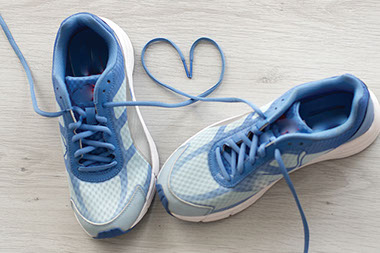
    Image of gym shoes with laces shaped as a heart.

    We know exercise improves our health and well-being. So why do so many of us struggle to get and stay active?

    Maybe we need to look at exercise in a different way. Look at it as something you want to do for yourself and not as a chore or something you have to do. You can look forward to exercise, and even learn to love it, with these tips:

    *Think about who you are.If you are social, look into group classes and activities. “Home bodies” might enjoy using exercise DVDs or online programs in their living room. If you enjoy nature, use your neighborhood or local walking paths to get fresh air. Sports fans might like to join a softball or soccer team.

    *Branch out.Take a chance on a new activity such as dance classes, rock climbing or water aerobics. You may discover a new way to get exercise that is fun and exciting for you.

    *Be a kid again.If you loved basketball, skating or swimming as a child, who says you can’t do it now? Look for local adult clubs or gatherings that include your favorite childhood activities.

    *Add variety.Being bored with exercise will lower your motivation. Change things up, such as walking two days a week and an aerobics or swimming class on the weekend.

    *Find your rhythm.Your favorite music can help you enjoy a walk, jog or weight lifting session. Load your favorite upbeat songs on a music player or smartphone and take it along for your workout. Be careful not to turn it up too loud. You still need to hear what is going on around you. And, prolonged use of headphones at high volumes can cause hearing loss.

    Source: National Institutes of Health

    © American Institute for Preventive Medicine

  • Unexpected Ways To Be Happy (And Healthy)

    WELL-BEING

    Image of a couple jumping in a puddle while it's raining.

    *It’s easy being green.Make vegetables a central part of your diet. Dark green foods provide essential vitamins and nutrients to your body that protect you from many of life’s worst diseases. The FDA recommends 3 to 5 servings a day for pristine health. This is not as hard to accomplish as it sounds. Examples of one serving include 2 broccoli spears, 3 tablespoons of green beans, or 3 sticks of celery.

    *Brush your teeth.Brushing and flossing your teeth not only prevents tooth decay but gum disease, which has been linked to heart attacks and strokes. Healthy gums are one more way to keep that heart pumping strong.

    *Hear ye, hear ye!Pick up your local newspaper once in a while. There is more information out there than you can imagine. Sift through the bounty of news because when it comes to your health and health care, no one is more responsible than you are. Take time to understand what’s going on in the world.

    *Be a small fry.Order smaller portions. Even the small fries at fast food drive-throughs.

    *Give yourself a break.Not only are vacations an important part of maintaining your sanity, but there are many other positives about getting away. Studies  have shown that employees come back  to work post-vacation more creative and more productive.

    *Scrub a dub dub.The easiest way to avoid infectious diseases-a common cold, the flu-is by washing your hands often.

    *Then lend a hand.A study at Vanderbilt University found that volunteer work was good for both mental and physical health. People of all ages who volunteered were happier and had better physical health and less depression. Think about something you like to do in your spare time and find a match atwww.volunteermatch.org.

    © American Institute for Preventive Medicine