SUCCESS OVER STRESS

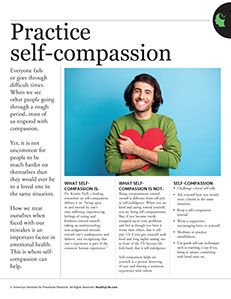
Everyone fails or goes through difficult times. When we see other people going through a rough period, most of us respond with compassion.
Yet, it is not uncommon for people to be much harder on themselves than they would ever be to a loved one in the same situation.
How we treat ourselves when faced with our mistakes is an important factor in emotional health. This is where self-compassion can help.
What self-compassion is:
Dr. Kristin Neff, a leading researcher on self-compassion, defines it as: “being open to and moved by one’s own suffering, experiencing feelings of caring and kindness toward oneself, taking an understanding, non-judgmental attitude toward one’s inadequacies and failures, and recognizing that one’s experience is part of the common human experience.”
What self-compassion is not:
Being compassionate toward oneself is different from self-pity or self-indulgence. When you are kind and caring toward yourself, you are being self-compassionate. But, if you become overly wrapped up in your problems and feel as though you have it worse than others, that is self-pity. Or if you give yourself junk food and long nights zoning out in front of the TV because life feels hard, that is self-indulgence.
Self-compassion helps see yourself as a person deserving of care and sharing a common experience with others.
Ways to practice self-compassion
* Challenge critical self-talk.
* Ask yourself how you would treat a friend in the same situation.
* Keep a self-compassion journal.
* Write a supportive, encouraging letter to yourself.
* Meditate or practice mindfulness.
* Use gentle self-care techniques such as enjoying a cup of tea, being in nature, connecting with loved ones, etc.
© American Institute for Preventive Medicine