HEALTHY EATING
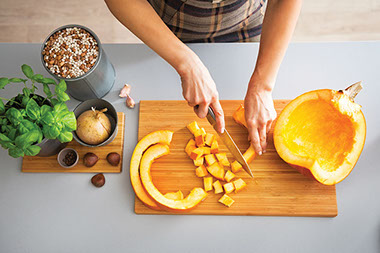
Cutting boards are useful for all types of slicing, dicing and chopping. They can save your countertops and make meal prep easier. But without careful cleaning, your cutting board could contaminate your foods and make you sick. Every surface your food touches needs to be clean, especially those that touch raw meat, poultry and seafood.
When to clean your cutting board
For a clean surface, remember to wash your board:
* Before using it for the first time.
* After it has held raw meat, poultry, seafood, eggs or flour.
* Before switching foods and moving on to the next step, even if it’s for the same meal.
* After you’re done using it.
How to clean your cutting board
* Scrub your board thoroughly with hot, soapy water and a clean cloth or brush. Then rinse with hot water.
* If your board touched meat, fish or poultry, disinfect it after you wash it. You can do this by using a diluted bleach solution. Combine one tablespoon of bleach with one gallon of water. Pour the solution all over the board and let it sit for five minutes. Finally, rinse it well.
* Let it air dry or dry it with a clean towel if you need to dry it quickly.
* If it’s dishwasher safe, put your cutting board in the dishwasher. Be aware that some cutting boards may crack or split in the dishwasher, so follow the manufacturer’s directions.
Other tips for clean cutting
Buy two different boards. Use one board for meats and the other for ready-to-eat foods like fruits and breads. Get different colors so you can tell them apart.
Replace your cutting board if it has a lot of wear, cuts or grooves. It can be hard to clean in the small grooves, which can be a hiding spot for germs.
© American Institute for Preventive Medicine