Tag: labels

  • Medication Safety

    Medication

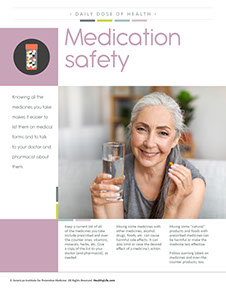
    Smiling women holding a glass of water in one hand and a pill in the other hand.

    Knowing all the medicines you take makes it easier to list them on medical forms and to talk to your doctor and pharmacist about them.

    Keep a current list of all of the medicines you take. Include prescribed and over-the-counter ones, vitamins, minerals, herbs, etc. Give a copy of the list to your doctor (and pharmacist), as needed.

    Mixing some medicines with other medicines, alcohol, drugs, foods, etc. can cause harmful side effects. It can also limit or raise the desired effect of a medicine’s action.

    Mixing some “natural” products and foods with prescribed medicines can be harmful or make the medicine less effective.

    Follow warning labels on medicines and over-the-counter products, too.

    A Year of Health Hints book by the American Institute for Preventive Medicine. www.HealthyLife.com. All rights reserved.

    © American Institute for Preventive Medicine

  • Over-The-Counter Medication Safety

    Medication

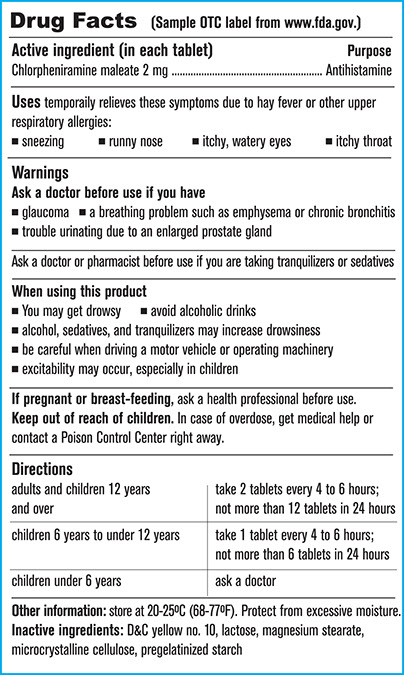
    Over-the-counter (OTC) medications are ones that you can get without a prescription. Often, they are less potent than prescribed ones. When taken in large amounts, though, an OTC medicine might equal or exceed the dose of a prescribed medicine. Read the information on the label. To learn more about OTC medicine labels, accesswww.fda.gov. Search for “over-the-counter medicine label.”

    Use OTC Medicines Wisely

    *  Ask your doctor or health care provider what OTC products are safe for you to use and what you should take for pain and fever.

    *  To prevent harmful side effects and interactions, review all of the OTC medicines, supplements, and herbal remedies that you take with your doctor.

    *  Do not take OTC medicines on a regular basis unless your doctor tells you to.

    *  Read the package labels. Heed the warnings listed. If you are unsure whether or not an OTC medication will help or harm you, check with your doctor or pharmacist.

    *  Store medicines in a dry place and out of children’s reach. Do not call medicine “candy.”

    *  Before you take a medicine, check the expiration date. Discard expired medicines. Crush pills. Dissolve them in water. Mix this with used coffee grounds or kitty litter and put it in the garbage in a sealed bag.

    *  If you have an allergy to a medicine, check the list of ingredients on OTC medicine labels. Find out if what you are allergic to is in them. Some labels will warn persons with certain allergies to avoid taking that medicine.

    *  Do not take any OTC product if you are pregnant or nursing a baby unless your doctor or health care provider says it is okay.

    *  Before taking herbal remedies and supplements, check with your doctor.

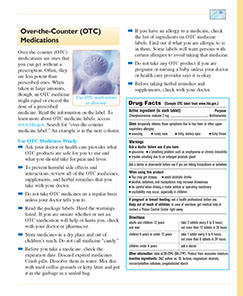
    Drug fact chart.

    Resources

    U.S. Food and Drug Administration

    www.fda.gov

    Page from the Healthier at Home book by the American Institute for Preventive Medicine. www.HealthyLife.com. All rights reserved.

    © American Institute for Preventive Medicine

  • The Skinny On Processed Foods

    HEALTHY EATING

    Turkey deli on cutting board.

    White bread, packaged cookies and turkey bacon. What do these foods have in common? They are all processed foods. Processed food is the opposite of “whole food,” or food in its natural state.

    What does “processed foods” mean?

    It means the food has been changed from its natural state. White bread, for instance, may contain wheat flour that has been bleached and stripped of some of its nutrients. Packaged cookies may have bleached and stripped flour in addition to added sweeteners, artificial colors, preservatives and flavors. Turkey bacon is cured, processed and packaged.

    Not all processed  foods are bad

    There is a difference between foods that are minimally processed and “junk foods.” Frozen vegetables, for instance, may be considered “minimally processed.” They are not quite the same as picking the vegetables right from a garden. But if they don’t have added sugar or salt, frozen vegetables are a very healthy option.

    In addition, some foods that are considered “processed” can help people eat better. Canned fruit (without added sugar) or bagged salads are a convenient option for many people. They eliminate the extra work of gathering the food, washing it and cutting it.

    Sugar & salt overload

    Many processed “junk” foods contain too much added sugar or salt. Also, they may have little to no fiber or vitamins.

    Processed foods, including crackers and packaged snacks, are a major reason that people get too much sodium in their diets. Too much sodium raises the risk of high blood pressure and heart disease.

    Many processed foods also contain added sugars. The American Heart Association says we should limit added sugars to 6 teaspoons a day for women and 9 teaspoons for men. One 12-ounce soda exceeds that amount. Too much added sugar increases risk for type 2 diabetes and heart disease.

    Processed = weight gain?

    A recent study by the National Institutes of Health suggests that processed foods can cause weight gain. Participants who were given processed foods ate about 500 calories more per day than people who ate unprocessed foods. They also gained weight, while the people who ate unprocessed foods lost weight. You don’t have to cut all processed foods out of your diet. But cutting back on them – and eating more whole foods – will help you work toward a healthier weight.

    Sources: Academy of Nutrition and Dietetics, American Academy of Family Physicians, American Heart Association, National Institutes of Health

    © American Institute for Preventive Medicine

  • Develop Supermarket Savvy

    Weight Control

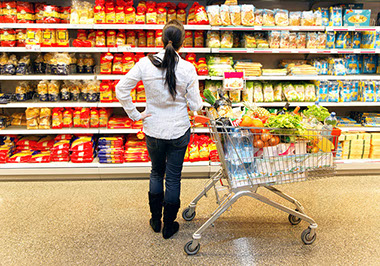
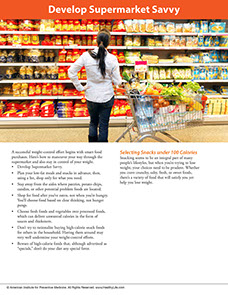
    A successful weight-control effort begins with smart food purchases. Here’s how to maneuver your way through the supermarket and also stay in control of your weight.

    *  Plan your low-fat meals and snacks in advance, then, using a list, shop only for what you need.

    *  Stay away from the aisles where pastries, potato chips, candies, or other potential problem foods are located.

    *  Shop for food after you’ve eaten, not when you’re hungry. You’ll choose food based on clear thinking, not hunger pangs.

    *  Choose fresh foods and vegetables over processed foods, which can deliver unwanted calories in the form of sauces and thickeners.

    *  Don’t try to rationalize buying high-calorie snack foods for others in the household. Having them around may very well undermine your weight-control efforts.

    *  Beware of high-calorie foods that, although advertised as “specials,” don’t do your diet any special favor.

    Selecting Snacks under 100 Calories

    Snacking seems to be an integral part of many people’s lifestyles, but when you’re trying to lose weight, your choices need to be prudent. Whether you crave crunchy, salty, fresh, or sweet foods, there’s a variety of food that will satisfy you yet help you lose weight. The table below lists 25 snacks that are all less than 100 calories each!

    Page from A Year of Health Hints book by the American Institute for Preventive Medicine. www.HealthyLife.com. All rights reserved.

    © American Institute for Preventive Medicine

  • Food Labels 2.0

    Healthylife® Weigh

    Part 7

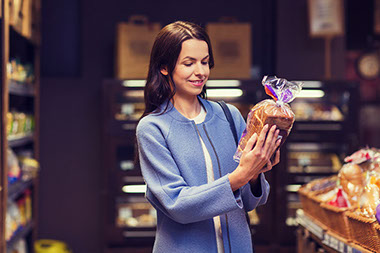
    Woman choosing and reading label on bread in market.

    You have learned the clues on a food label that can point you toward a healthy choice or away from an unhealthy one. Here are some other common labels on food packaging and what they mean.

    Organic produceis grown without synthetic pesticides, herbicides, fertilizers, ionizing radiation, or genetically modified organisms (GMOs).

    Organic meat, poultry, eggs, and dairy productsare produced without antibiotics or growth hormones.

    Benefits of Organic Food

    *  Organic food may be tastier to you.

    *  Organic growing practices may be more sustainable and produce more nutritious food, though this is not always the case.

    *  You may avoid potentially harmful chemicals that may be added during conventional growing and processing.

    The Environmental Working Group publishes a list each year of the “Dirty 12™” and “Clean 15™.” Many plants, like avocados and corn, are naturally disease resistant and hardy. This means fewer pesticides are used on these plants, even when conventionally grown. These plant foods make up the “Clean 15™.” Other plants are less hardy and conventional growing tends to apply more synthetic pesticides. Prioritize buying the “Dirty 12™” organically. Go towww.ewg.orgto learn more about organic farming and see the year’s list.

    Clean all produce before use, whether it is grown organically or conventionally.

    Make your own veggie wash:Mix 2 cups cold tap water with ¼ cup white wine vinegar and 2 tbsp. lemon juice. Pour into a spray bottle. Squirt on your produce and let rest for 2 minutes. Rinse in tap water.

    Non-GMO Project Verifiedfoods do not contain GMOs. This means that the plant was not derived through genetic engineering. The most common products containing GMOs are corn, soy, sugar, and products made from these plants.

    Few studies have been done testing the long-term effects of consuming GMOs. However, GMO farming practices have led to increased use of synthetic pesticides and herbicides. Labeling laws and regulations surrounding GMOs are in development at the time of this guide’s publishing.

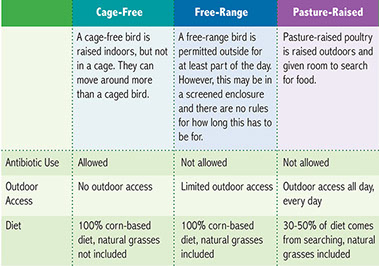
    Cage-Free, Free-Range, and Pasture-Raisedlabels refer to the living conditions of poultry. These labels indicate standards for animal welfare.

    Chart showing Cage-Free, Free-Range, and Pasture Raised definitions.

    © American Institute for Preventive Medicine

  • Grocery Shop With Confidence

    Healthylife® Weigh

    Part 3

    Couple grocery shopping.

    Grocery stores can be wonderful places to explore new foods. The average grocery store has over 10,000 different items. Some of these foods are healthy “everyday” food choices. Add these more often to your cart. Others are “sometimes” or “once in a while” foods. Add these foods less often.

    Tips for Healthy Grocery Shopping:

    1. Choose a low-stress time to grocery shop, if possible. Make sure you have enough time to do your shopping. Stressed grocery shopping can make it harder to stick to your healthy list.

    2. Have a healthy snack before going to the grocery store. This will help you avoid buying less healthy foods on impulse.

    3. Shop the outer edges of the grocery store. This is where you will find fresh produce, dairy, eggs, meats/poultry/seafood, and frozen fruits and vegetables. Go into inner aisles for specific items on your list, but not to browse.

    4. Look for recipes or tips in the produce department. Stores often provide tips for cooking vegetables or a chart showing which fruits and vegetables are in season.

    5. Look for products locally grown or raised. Locally grown produce and livestock can be more nutritious and tasty. Nutrients and flavor can break down during storage and transport. Locally grown food may also be grown more sustainably and buying it supports the community.

    6. Sample healthy foods. Samples, such as cheese cubes or crackers with dip, can take the edge off in a portion-controlled serving. A bite-sized sweet treat can satisfy a craving and help you avoid picking up a larger version of that treat.

    7. Avoid your weak areas. Avoid an aisle that has many unhealthy foods that you have difficulty resisting. Or, keep your eyes forward when walking by these foods.

    8. Buy treats in small portions. Avoid the super-size trap of large portions of unhealthy food. Rather than buying a full tub of ice cream or a boxed brownie mix that will yield a full pan of brownies, get small-sized versions. Choose a single-serving ice cream or an individual brownie at the bakery.

    9. Read labels. Many of the healthiest foods, such as fruits and vegetables, won’t have food labels at all. If they do, they only give a snapshot of the true value of the food.

    © American Institute for Preventive Medicine

  • Use Food Labels

    Healthylife® Weigh

    Part 3

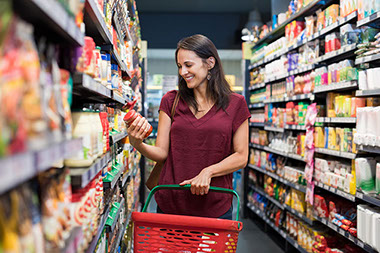
    Smiling woman shopping in supermarket and reading food label.

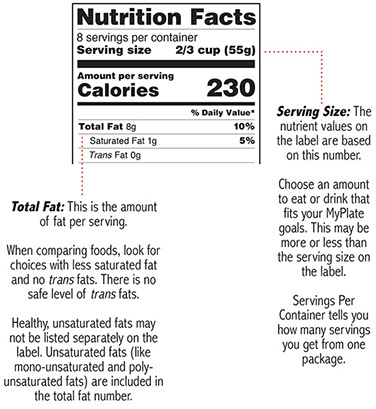
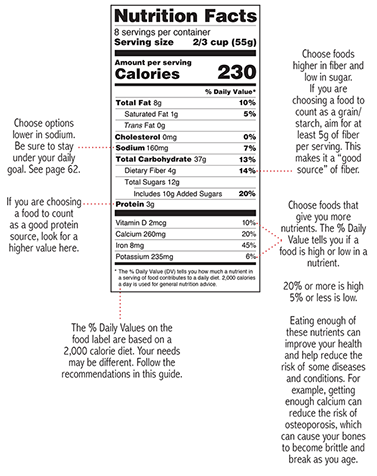
    Information on food labels can help you choose healthy foods and drinks and avoid less healthy options. Some of the healthiest foods, like fruits and vegetables, don’t have a label at all! Practice reading food labels with the foods you have at home or the next time you grocery shop.

    Chart breaking down how to read a food label.

    What seems “normal” as a portion is influenced by what you have eaten in the past, what you see others eat, what you have been served at a restaurant, and what is on a food label. Part of adopting a balanced diet may be creating a new “normal” for yourself that is pleasing, filling, AND the right amount for your body.

    Chart breaking down how to read a food label.

    © American Institute for Preventive Medicine

  • 6 Things To Know Before Taking Any Medicines

    SELF-CARE CORNER

    Image of women reading medication information.

    The Centers for Disease Control and Prevention (CDC) says that adverse drug events (ADEs) are a serious public health problem. An ADE is when an injury occurs after taking medicine. With 82 percent of Americans taking at least one medication, ADEs could happen to almost anyone.

    ADEs can be serious, and even deadly. They may include:

    *  Side effects from a medicine

    *  Interactions with other medicines or supplements

    *  Allergic reactions to a medicine

    *  Overdoses

    *  Taking the wrong dose or type of medicine

    You can avoid ADEs with a few simple steps. Do these things today to keep yourself and loved ones safe:

    1.Be aware of any interactions before you take a medicine.Some medicines should not be taken with certain foods, such as grapefruit or grapefruit juice. Others can cause side effects if taken with certain herbs and supplements. Because of possible interactions, be sure your doctor knows everything you take, including natural supplements, vitamins and herbs. If you’re caring for an aging family member, keep track of all their medications and show the list to their doctors during appointments. If you see more than one doctor, make sure all your doctors know which medications you take.

    2.Keep them secure, out of reach from others.Something that’s safe for you to take could be dangerous – or even deadly – to a child or pet. Keep all medicines out of reach of kids and pets, preferably with child-proof packaging.

    3.Take only the dose you are prescribed.If you feel your medication isn’t working, talk to your doctor about options. Taking a higher dose than what’s prescribed or mixing it with other medications can lead to serious side effects or overdoses.

    4.Don’t share your medicines.It can be dangerous to give someone a prescription drug that wasn’t prescribed to them. Even over-the-counter medicines should be used with caution, especially if a person has health conditions or is taking other medicines.

    5.Keep medicines in their original bottles.Putting medicines in other containers could lead to someone accidentally taking the wrong medicine. It also makes it more difficult to keep track of what you’re taking.

    6.Dispose of expired or unneeded medicines correctly.Using a drug “take-back” program is a safe option. If you must throw them away, don’t flush them. Put them in the household trash with kitty litter or coffee grounds. For complete information on medicine disposal, visit the FDA website atwww.fda.gov.

    © American Institute for Preventive Medicine

  • Choosing Healthy Oats

    HEALTHY EATING

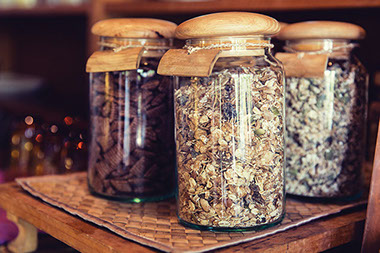
    Image of oats in jars.

    Even healthy foods can be made unhealthy through processing and adding unnecessary sugar and fat. How do you know which oats are best for your family?

    Steel-cut, rolled or instant?

    You can choose any type of oatmeal that is made with whole oats. They all contain very similar nutritional value. Instant oats are precooked and cut thinner to reduce cooking time. Steel-cut oats tend to be chewier than “old fashioned” or rolled oats, but both are equally nutritious. The best type of oat is the one you like and cook regularly.

    Look at ingredients and the nutrition label before you buy.

    Many commercially made oatmeals, especially ones that appeal to children, contain 12 grams of sugar or more. Some also contain artificial colors, sweeteners or flavors. Buy plain instant oatmeal packets and sweeten your child’s portion with a little honey, fruit or jelly.

    © American Institute for Preventive Medicine

  • Decoding Sunscreen Labels

    MEDICAL NEWS

    Image of a man placing sunscreen on his face.

    You may already know you should wear sunscreen to decrease your risk of skin cancer and sun damage. In fact, the Skin Cancer Foundation says that wearing sunscreen regularly can decrease your chance of getting melanoma (the deadliest skin cancer) by 50 percent. Wearing sunscreen regularly will also help you avoid signs of aging like wrinkles and dark spots.

    But the sunscreen aisle at the store leaves many people feeling overwhelmed. There are so many choices, different labels, numbers and ingredients. How do you choose one?

    The best sunscreen is one you like, because you should use it every day, says the American Academy of Dermatology (AAD). Here’s how to narrow it down and choose the sunscreen that’s right for you:

    BROAD SPECTRUM

    Always look for the words “broad spectrum.” This means it protects against both kinds of UV rays, and it’s important for proper protection.

    SPF

    Choose an SPF of at least 30.

    SPF NUMBERS

    Don’t let high numbers fool you. The Skin Cancer Foundation says higher SPF sunscreens do protect more, but not by much. No matter what the SPF number says, you still need to reapply at least every two hours, and always after toweling off, sweating or swimming.

    WATER RESISTANT

    If you’re going to be sweating or swimming, choose one that says “water resistant.” There is no such thing as “waterproof” sunscreen. The bottle will say how long the sunscreen will remain water resistant. It may say “40 minutes” or “80 minutes.” That’s how often you need to reapply it when you’ve been in the water.

    LIPS

    Choose a sunscreen for your lips too. A lip balm with broad spectrum SPF 30 is also important. Skin cancer can – and does – affect the lips.

    GELS vs CREAMS

    Sunscreen gels are great for oily skin, while creams work well for dry skin.

    SENSITIVE SKIN

    If you have sensitive skin, consider a physical-only sunscreen. This means the active ingredients on the bottle will only include titanium dioxide or zinc oxide, or both. While chemical sunscreens work well, they can irritate some sensitive-skin types.

    PRICE TAG

    Expensive doesn’t always mean better. A higher price tag may be due to the brand name or certain extra ingredients that make it feel nicer or smell good. It doesn’t mean it will protect you more than a cheaper bottle.

    NO COMBINATION

    Don’t choose a combination sunscreen and insect repellant. The AAD says sunscreen should be reapplied liberally every two hours. But insect repellant should only be applied lightly every several hours as needed.

    BABIES

    Most sunscreens are only approved for babies over 6 months of age. Look for a physical-only sunscreen or one formulated for babies. Babies younger than 6 months should be kept in the shade and covered with lightweight protective clothing and hats, says the American Academy of Pediatrics.

    © American Institute for Preventive Medicine