Tag: labels

  • Read The Labels, Again

    WELL-BEING

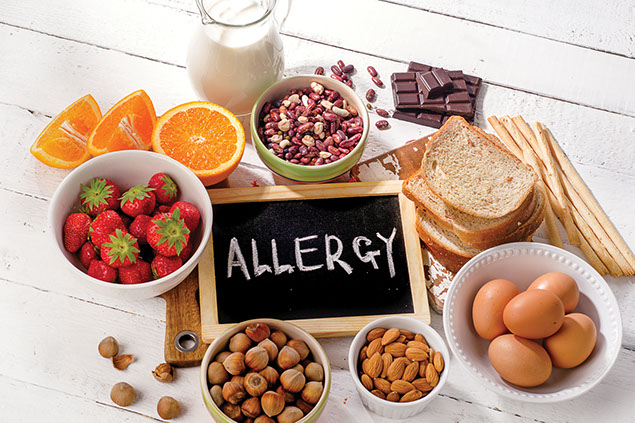
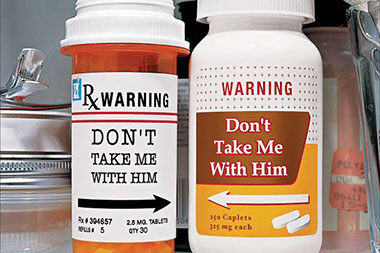
    Image of medicine bottles.

    Any box or bottle of over-the-counter (OTC) medicine lists its active ingredients prominently on the label. But are consumers using that information to make wise choices about taking two or more OTC drugs at the same time? Probably not, suggests a study in the Journal of Public Policy & Marketing.

    A consumer who takes a cold medicine containing, for instance, acetaminophen, may see nothing wrong with taking an additional medicine that also contains acetaminophen. In other words, the typical consumer, who is unlikely to have any medical expertise, may very well believe that there is no danger in taking any two OTC medications at the same time-even medications with the same active ingredients.

    Avoid double dosing. OTC drugs are not risk-free. Read labels.

    FYI

    According to the FDA, more than 600 OTC and prescription medicines contain the active ingredient acetaminophen. Taking acetaminophen is safe and effective when you follow the label information. But you can get severe liver damage if you take:

    *  More acetaminophen than directed

    *  More than one medicine that has acetaminophen

    *  3 or more alcoholic drinks every day while using acetaminophen

    For more information, ask your pharmacist, doctor, or nurse.

    © American Institute for Preventive Medicine
  • The Rise Of Food Allergies

    HEALTHY EATING

    Image of an older Asian couple stretching.

    The body’s immune system is designed to fight off unwanted invaders, such as viruses, bacteria and fungi. But when the immune system reacts to something that isn’t usually harmful, such as pollen, dust, or certain foods, it’s considered an allergy.

    The Centers for Disease Control and Prevention (CDC) says 5 out of every 100 children in the U.S. have a food allergy today. About 4 percent of all adults also have food allergies.

    While some reactions may be mild, such as hives or tingling, other food allergies can cause a life-threatening allergic reaction known as anaphylaxis.

    Increase in allergies – and questions

    The Centers for Disease Control and Prevention reports that food allergies increased 18 percent among children from 1997 to 2007.

    Researchers are still trying to find out why food allergies continue to increase. However, they do know a few key facts about food allergies:

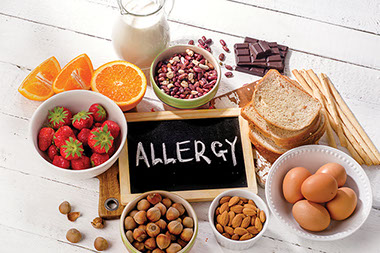
    *  Up to 90 percent of all food allergies involve eggs, dairy, peanuts, tree nuts, fish, shellfish, wheat and soy.

    *  Food allergies can occur at any age, not just during childhood. Even if you’ve eaten a food before without problems, you can become allergic to it later.

    *  If you have a parent with allergies, asthma, or eczema, you are more likely to have food allergies.

    *  Kids with food allergies are up to 4 times more likely to have asthma and other allergies, such as hay fever.

    *  Allergies to fish, shellfish, peanuts, and tree nuts tend to last a person’s entire life. Dairy, egg, and soy allergies are sometimes outgrown.

    *  There is no cure for allergies: the allergic food must be avoided.

    A recent analysis in the Journal of the American Medical Association shows that introducing some allergenic foods to a baby earlier in life could lower the risk of food allergies. Talk to your pediatrician before giving your child new foods, especially if allergies run in the family.

    Severe allergic reactions: WHAT TO DO

    Anaphylaxis is a severe allergic reaction that can be deadly. Symptoms include facial or lip swelling, paleness, weakness, difficulty breathing, vomiting and fainting. If someone is having anaphylaxis, it’s important to:

    *  Ask if the person has epinephrine (EpiPen or another injector) and see if they need help injecting it. It is usually injected into a person’s thigh. This should be done quickly.

    *  Call 911 immediately.

    *  Even if the person starts to feel better, he or she should still go to the hospital and seek medical care. The epinephrine delays the reaction, but the allergy must still be treated by a doctor right away.

    © American Institute for Preventive Medicine

  • What Is A Serving Size, Anyway?

    HEALTHY EATING

    Image of family eating dinner.

    Even if you know you need to eat smaller portions, that’s only part of the battle. You’ll need to learn how to recognize serving sizes of foods so you can put the right amount on your plate each day. Here’s a list of food group servings to help:

    Vegetables

    Fresh, frozen or canned: 5 servings per day

    Leafy greens: 1 cup

    Cut-up vegetables: ½ cup

    Cooked beans or peas: ½ cup

    100% vegetable juice: ¼ cup

    Fruits

    Fresh, frozen, canned, or dried: 4 servings per day

    Whole fruit: 1 medium fruit

    Cut-up fruit: ½ cup

    100% fruit juice: ¼ cup

    Dried fruit: ¼ cup

    Grains

    6 servings per day

    Bread: 1 slice (a 2-slice sandwich is 2 servings of grains)

    Pasta or rice uncooked: 1 oz (⅛ cup)

    Cooked rice, pasta, or cereal: ½ cup

    Popcorn: 1 oz. (⅛ cup) uncooked

    At least half should be whole grain and high in fiber.

    Dairy

    (or non-dairy milks with added calcium and vitamin D): 3 servings per day

    1 cup milk or yogurt

    1.5 oz. cheese (size varies depending on the type of cheese)

    Meat & poultry

    8 to 9 servings per week

    3 oz. cooked meat or poultry, about the size of a deck of cards

    1 egg or 2 egg whites

    Choose lean meats with skin and fat removed.

    Nuts, seeds, beans & legumes

    5 servings per week

    Nut butter: 1 Tbsp.

    Nuts or seeds: 2 Tbsp.

    Seafood/fish

    2-3 servings a week

    3 oz. cooked seafood, about the size of a checkbook

    Choose fish that provides omega-3 fatty acids. Pregnant women should ask their doctors about safe types of fish to eat.

    Fats & oils

    3 servings per day

    Vegetable oil, margarine, dressing: 1 Tbsp.

    To help with portion sizes, you may wish to find out how many calories you should be eating. Use the National Institutes of Health Body Weight Planner atwww.supertracker.usda.gov. Keep this number in mind as you eat throughout the day.

    Source: American Heart Association

    © American Institute for Preventive Medicine