Tag: lactose

  • Easy Ways To Tolerate Milk

    Nutrition

    For millions of people, drinking milk isn’t so easy. People with lactose intolerance can’t digest lactose (the sugar in milk), so they can’t drink milk or eat milk products without suffering some or all of the following symptoms.

    *  Gas in the lower intestine.

    *  Abdominal pain and cramps.

    *  Bloating.

    *  Diarrhea.

    *  Nausea.

    Intestinal distress may occur within minutes of consuming a food containing lactose and sometimes lasts for hours. The cause is a deficiency of lactase, the enzyme responsible for digesting lactose. The only “cure” for lactose intolerance is a milk-free diet. But because milk and milk products are important sources of calcium, avoiding these foods can deprive you of that essential mineral.

    To have your milk and digest it, too, try these maneuvers.

    *  Learn which foods are the most difficult for you to digest and avoid them. Some people with lactose intolerance can tolerate certain dairy products if they eat small portions at a time.

    *  Read food labels carefully. Avoid products containing milk, milk solids, or whey solids. Items marked “parve” are milk free.

    *  Pretreat milk with the enzyme lactase, available over-the-counter in powder or capsule form as Lactaid. Added to milk 24 hours before you drink it, lactase predigests most of the lactose so you don’t have to. Lactase tablets, taken as a digestive aid, are also available.

    *  Purchase Lactaid brand milk, ice cream, and cheese products, which have been treated with lactase, and are available in many supermarkets. Or use soy milks, yogurts, etc.
    Page from A Year of Health Hints book by the American Institute for Preventive Medicine. www.HealthyLife.com. All rights reserved.

    © American Institute for Preventive Medicine

  • Lactose Intolerance

    Abdominal & Urinary Conditions

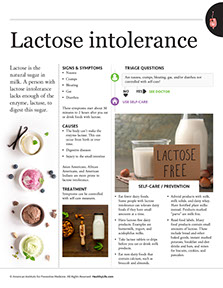
    Image of various of different dairy products.

    Lactose is the natural sugar in milk. A person with lactose intolerance lacks enough of the enzyme, lactase, to digest this sugar.

    Signs & Symptoms

    *  Nausea.

    *  Cramps.

    *  Bloating.

    *  Gas.

    *  Diarrhea.

    These symptoms start about 30 minutes to 2 hours after you eat or drink foods with lactose.

    Causes

    *  The body can’t make the enzyme lactase. This can occur from birth or over time.

    *  Digestive diseases.

    *  Injury to the small intestine.

    Asian Americans, African Americans, and American Indians are more prone to lactose intolerance.

    Treatment

    Symptoms can be controlled with self-care measures.

    Questions to Ask

    Self-Care / Prevention

    *  Eat fewer dairy foods. Some people with lactose intolerance can tolerate dairy foods if they have small amounts at a time.

    *  Have lactose-free dairy products. Have ones that reduce lactose with bacterial cultures. Examples are buttermilk, yogurt, and acidophilus milks.

    *  Take over-the-counter drops or pills that have the enzyme lactase when you have dairy foods.

    *  If the above measures don’t help, don’t have products with milk, milk solids, and dairy whey. Have soy milk instead. Products marked “parve” are milk free.

    *  Read food labels. Many food products contain small amounts of lactose. These include bread and other baked goods, instant mashed potatoes, breakfast and diet drinks and bars, and mixes for biscuits, cookies, and pancakes.

    Healthier at Home book by the American Institute for Preventive Medicine. www.HealthyLife.com. All rights reserved.

    © American Institute for Preventive Medicine