Tag: lifestyle

  • Diet Changes: Simple And Doable

    HEALTHY EATING

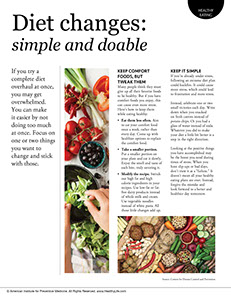
    Hand over table with bowls of different, healthy ingredients.

    If you try a complete diet overhaul at once, you may get overwhelmed. You can make it easier by not doing too much at once. Focus on one or two things you want to change and stick with those.

    Keep comfort foods, but tweak them

    Many people think they must give up all their favorite foods to be healthy. But if you have comfort foods you enjoy, this can cause even more stress. Here’s how to keep them while eating healthy:

    *Eat them less often.Aim to eat your comfort food once a week, rather than every day. Come up with healthier options to replace the comfort food.

    *Take a smaller portion.Put a smaller portion on your plate and eat it slowly. Enjoy the smell and taste of each bite, truly savoring it.

    *Modify the recipe.Switch out high fat and high calorie ingredients in your recipes. Use low-fat or fat-free dairy products instead of whole milk and cream. Use vegetable noodles instead of white pasta. All those little changes add up.

    Keep it simple

    If you’re already under stress, following an extreme diet plan could backfire. It could cause more stress, which could lead to frustration and more stress.

    Instead, celebrate one or two small victories each day. Write down when you snacked on fresh carrots instead of potato chips. Or you had a glass of water instead of soda. Whatever you did to make your diet a little bit better is a step in the right direction.

    Looking at the positive things you have accomplished may be the boost you need during times of stress. When you have slip-ups or bad days, don’t view it as a “failure.” It doesn’t mean all your healthy eating plans are over. Instead, forgive the mistake and look forward to a better and healthier day tomorrow.

    Source: Centers for Disease Control and Prevention
    © American Institute for Preventive Medicine

  • Healthy Weight, Healthy Kids

    HEALTHY EATING

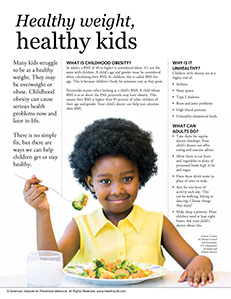
    Young child smiling eating vegetables.

    Many kids struggle to be at a healthy weight. They may be overweight or obese. Childhood obesity can cause serious health problems now and later in life.

    There is no simple fix, but there are ways we can help children get or stay healthy.

    What is childhood obesity?

    In adults, a BMI of 40 or higher is considered obese. It’s not the same with children. A child’s age and gender must be considered when calculating their BMI. In children, this is called BMI-for-age. This is because children’s body fat amounts vary as they grow.

    Percentiles matter when looking at a child’s BMI. A child whose BMI is at or above the 95th percentile may have obesity. This means their BMI is higher than 95 percent of other children of their age and gender. Your child’s doctor can help you calculate their BMI.

    Why is it unhealthy?

    Children with obesity are at a higher risk of:

    *  Asthma

    *  Sleep apnea

    *  Type 2 diabetes

    *  Bone and joint problems

    *  High blood pressure

    *  Unhealthy cholesterol levels

    What can adults do?

    *  Take them for regular doctor checkups. Your child’s doctor can offer eating and exercise advice.

    *  Allow them to eat fruits and vegetables in place of processed foods high in fat and sugar.

    *  Have them drink water in place of juice or soda.

    *  Aim for one hour of activity each day. This can be walking, biking or dancing. Choose things they enjoy!

    *  Make sleep a priority. Most children need at least eight hours. Ask your child’s doctor about this.

    Sources: Centers for Disease Control and Prevention, U.S. Department of Health and Human Services

    © American Institute for Preventive Medicine
  • Lower Your Breast Cancer Risk

    MEDICAL NEWS

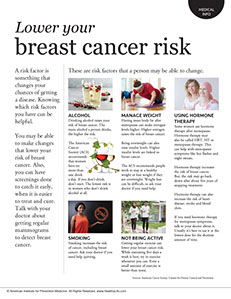
    Couple jogging on side walk.

    A risk factor is something that changes your chances of getting a disease. Knowing which risk factors you have can be helpful.

    You may be able to make changes that lower your risk of breast cancer. Also, you can have screenings done to catch it early, when it is easier to treat and cure. Talk with your doctor about getting regular mammograms to detect breast cancer.

    These are risk factors that a person may be able to change.

    Alcohol

    Drinking alcohol raises your risk of breast cancer. The more alcohol a person drinks, the higher the risk.

    The American Cancer Society (ACS) recommends that women have no more than one drink a day. If you don’t drink, don’t start. The lowest risk is in women who don’t drink alcohol at all.

    Manage weight

    Having more body fat after menopause can make estrogen levels higher. Higher estrogen raises the risk of breast cancer. Being overweight can also raise insulin levels. Higher insulin levels are linked to breast cancer.

    The ACS recommends people work to stay at a healthy weight or lose weight if they are overweight. Weight loss can be difficult, so ask your doctor if you need help.

    Using hormone therapy

    Some women use hormone therapy after menopause. Hormone therapy may also be called HRT, HT or menopause therapy. This can help with menopause symptoms like hot flashes and night sweats.

    Hormone therapy increases the risk of breast cancer. But, the risk may go back down after about five years of stopping treatment. Hormone therapy can also increase the risk of heart disease, stroke and blood clots.

    If you need hormone therapy for menopause symptoms, talk to your doctor about it. Usually it’s best to use it at the lowest dose for the shortest amount of time.

    Smoking

    Smoking increases the risk of cancer, including breast cancer. Ask your doctor if you need help quitting.

    Not being active

    Getting regular exercise can lower your breast cancer risk. While exercising five days a week is best, try to exercise whenever you can. Even a small amount of exercise is better than none.

    Sources: American Cancer Society, Centers for Disease Control and Prevention

    © American Institute for Preventive Medicine

  • Healthy Weight

    Weight Control

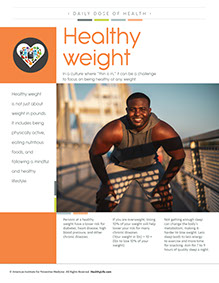
    Smiling man outside exercising.

    In a culture where “thin is in,” it can be a challenge to focus on being healthy at any weight.

    Healthy weight is not just about weight in pounds. It includes being physically active, eating nutritious foods, and following a mindful and healthy lifestyle.

    Persons at a healthy weight have a lower risk for diabetes, heart disease, high blood pressure, and other chronic diseases.

    If you are overweight, losing 10% of your weight will help lower your risk for many

    chronic diseases.

    (Your weight in lbs) ÷ 10 =

    (lbs to lose 10% of your weight)

    Not getting enough sleep can change the body’s metabolism, making it harder to lose weight. Less sleep leads to less energy to exercise and more time for snacking. Aim for 7 to 9 hours of quality sleep a night.

    Page from HealthyLife Weigh book by the American Institute for Preventive Medicine. www.HealthyLife.com. All rights reserved.

    © American Institute for Preventive Medicine
  • Save By Staying Healthy. Prevention Is Worth More Than A Pound Of Cure.

    Medical Care

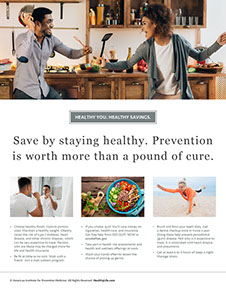
    Couple play dueling in the kitchen, laughing.

    *  Choose healthy foods. Control portion sizes. Maintain a healthy weight. Obesity raises the risk of type 2 diabetes, heart disease, and other chronic diseases, which can be very expensive to treat. Persons who are obese may be charged more for life and health insurance.

    *  Be fit at little or no cost. Walk with a friend.  Join a mall walkers program.

    *  If you smoke, quit! You’ll save money on cigarettes, health care, and insurance. Get free help from 800.QUIT. NOW orsmokefree.gov.

    *  Take part in health risk assessments and health and wellness offerings at work.

    *  Wash your hands often to lessen the chance of picking up germs.

    *  Brush and floss your teeth daily. Get a dental checkup once or twice a year. Doing these help prevent periodontal (gum) disease. Not only is it expensive to treat, it is associated with heart disease and pneumonia.

    *  Get at least 6 to 8 hours of sleep a night. Manage stress.

    A Year of Health Hints book by the American Institute for Preventive Medicine. www.HealthyLife.com. All rights reserved.

    © American Institute for Preventive Medicine

  • Simple Steps To Prevent Diabetes

    MEDICAL NEWS

    Image of man with bicycle along the beach.

    The good news is that many cases of type 2 diabetes, which account for between 90 and 95% of all adult cases of the disease, can be prevented by leading a healthy lifestyle, according to the CDC. So whether you’re flirting with pre-diabetes or just want to lower your risk, the American Diabetes Association suggests eating a balanced diet and getting regular exercise.

    Follow these tips on how to fit healthy eating and exercise into your busy day.

    *Sneak some exercise into your day.Being physically fit can lower blood sugar, blood pressure, and cholesterol by helping insulin work better. All of these factors help reduce your risk for diabetes, heart disease, and stroke. Plus, being in shape helps you feel better both physically and mentally.

    *Add exercise to your daily routine.If you don’t currently exercise on a regular basis, start with small amounts of physical activity. For instance, take a brisk 15-minute walk in the morning. Have a walking meeting with co-workers instead of meeting in a conference room.

    *Make exercise fun.Any kind of physical activity is exercise. This includes doing yard work, dancing, or walking the dog. Choose a few activities you enjoy, and take steps to fit them into your schedule. Find a workout buddy to do a few laps around the neighborhood after dinner. Make bike riding or hiking regular family activities.

    *Choose foods with a low glycemic index.The glycemic index is a measure of the effects of carbohydrates on blood sugar levels. These foods include white pasta, cookies, and crackers. They are typically made with processed white flour. When we eat these foods, it causes a spike in blood sugar. Eating these foods also tends to result in weight gain since they are often high in calories. Plus, they are often high in sodium and not very nutritious. Most Americans eat foods with a high glycemic index.

    *Cut back on your sugar intake.If you eat a lot of sugar in your diet, try to reduce sugary foods and beverages. For example, instead of soda and juice, try seltzer or water. When the craving for a cookie or piece of cake hits, try a piece of fruit instead. Some studies have shown that the natural sugar in fruit can help decrease sugar cravings.

    *Incorporate more fresh fruits and vegetables into your diet.Eating more fruits and vegetables keeps your blood pressure stable and gives you much-needed nutrients and fiber. Plus, most fruits and vegetables are low in fat and calories.

    *Choose healthy snacks.Before having a high-sugar or high-fat snack, reach for a handful of nuts, some low-fat popcorn, or whole-wheat crackers. Keep healthy snacks on hand whether you are at home, at work or on the go.

    *Remember these tips when eating out.Think of your plate as a pie chart. You should fill up half of your plate with vegetables, a fourth with protein, and a fourth with a starch or carbohydrate.

    © American Institute for Preventive Medicine
  • Small Changes Your Heart Will Love

    MEDICAL NEWS

    Image of a basket filled with fruits and vegetables.

    You may know the basics of heart health that include a healthy diet, exercise, healthy weight, and avoiding tobacco. But, don’t let these major goals overwhelm you. Instead, take small steps each day that add up to big heart-healthy benefits.

    Say bye-bye to beige and eat the rainbow.

    Look at your plate’s color before you eat a meal. If it’s mostly browns, such as breads, pasta and meat, see if you can brighten it up with fruits and vegetables. Leafy greens, yellow peppers, carrots, blueberries and strawberries are just a few of the brightly colored foods that are great for your heart.

    Cut back on sodium when you can.

    If you’ve been eating salt for years, it can be hard to cut it out completely. But you may not taste the difference if you gradually replace some of the salt in your diet with herbs and spices without sodium. Cutting back on sodium can reduce your risk of heart attack, heart failure, and stroke. Many processed foods already contain high amounts of sodium, and adding salt to food greatly increases sodium intake for many people.

    Walk, if you can’t run.

    For many people, jogging, running, or other high-intensity workouts aren’t possible. Fortunately, you don’t have to choose a tough workout to get heart benefits. Start walking just a few minutes a day. Increase the amount of time you walk when you can until you are walking 30 minutes a day most days of the week. Brisk walking can be just as beneficial to your heart as running.

    If you use tobacco, keep trying to quit.

    Quitting tobacco is hard, and many people struggle to succeed. You may have strong urges to use tobacco or you may slip up and start again after you’ve quit. When this happens, be patient with yourself. Understand that many people have to quit several times before they’ve quit for good. When you quit, your heart – and your entire body – will start to heal. You’ll reduce your risk of heart disease, lung cancer, and many other serious diseases. Talk with your health care provider about prescription medication or nicotine replacement therapy.  Many of these treatments are now covered by insurance.

    Source: American Heart Association

    © American Institute for Preventive Medicine

  • Top Ten Recommendations For Cancer Prevention

    MEDICAL NEWS

    Image of doctor checking a women for skin cancer.

    1. Be as lean as possible without becoming underweight.

    2. Be physically active for at least 30 minutes every day.

    3. Avoid sugary drinks. Limit consumption of energy-dense foods.

    4. Eat more of a variety of vegetables, fruits, whole grains and legumes such as beans.

    5. Limit consumption of red meats (such as beef, pork and lamb) and avoid processed meats.

    6. If consumed at all, limit alcoholic drinks to 2 for men and 1 for women a day.

    7. Limit consumption of salty foods and foods processed with salt (sodium).

    8. Don’t use supplements to protect against cancer.

    9. It is best for mothers to breastfeed only for up to 6 months and then add other liquids and foods.

    10. After treatment, cancer survivors should follow these recommendations for cancer prevention.

    Source: American Institute for Cancer Research

    © American Institute for Preventive Medicine
  • Ways To Improve Heart Health

    HEALTHY EATING

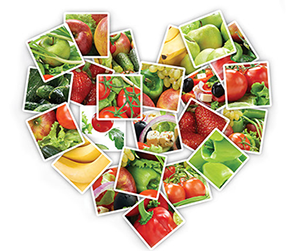
    Images of fruits and vegetables shaped into a heart.

    (With ingredients in the foods you already eat)

    Poor diet increases the risk of high blood pressure, high cholesterol, and poor circulation-3 major factors that affect overall heart health. Know which nutrients and foods in your diet may decrease risk for heart disease-the number one cause of death in the U.S.

    Phytosterols:Compounds similar to cholesterol that are found in all edible plants. They help reduce low density lipoprotein (LDL) cholesterol, which is a main risk factor for heart disease.

    Cocoa flavanols:Can help maintain the elasticity of blood vessels, which contributes to normal blood flow. Quite simply: dark chocolate.

    Omega-3 fatty acids:Primarily found in fish. Have been shown to decrease triglyceride levels, potentially lowering blood pressure.

    Hydroxytyrosol:An antioxidant found in olive oil, protects blood lipids (fats) from oxidative damage.

    Blueberries: May reduce high blood pressure.

    Oat beta-glucan:Daily consumption of at least 3 grams (your morning cereal) effectively lowers cholesterol.

    Grape seed extract:Shown to support blood pressure within a normal range. This is ground up seeds from red wine grapes.

    Vitamin K:Helps to keep excess calcium out of blood vessel walls and improve cardiovascular health. Found in green leafy vegetables.

    Dairy:Daily consumption of low-fat milk products decreases the risk of high blood pressure.

    Almonds:Improves serum fatty acid profiles and decreases the overall risk of heart disease (a handful a day).

    Walnuts:Good source of omega-3 fatty acids and alpha linolenic acid (ALA) which help your heart by preventing dangerous heart rhythms that can lead to heart attacks.

    © American Institute for Preventive Medicine

  • Healthy Aging

    Mature Health: Over Age 50

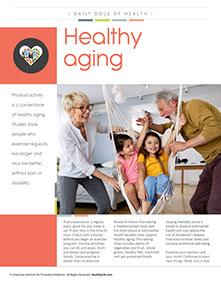
    Grandparents playing with 2 young grandkids.

    Physical activity is a cornerstone of healthy aging. Studies show people who exercise regularly live longer and may live better, without pain or disability.

    If you exercise on a regular basis, good for you! Keep it up! If not, now is the time to start. Check with a doctor before you begin an exercise program. Choose activities you can do and enjoy. Start out slowly and progress slowly. Some exercise is better than no exercise.

    Research shows that eating a Mediterranean-style diet has both physical and mental health benefits that support healthy aging. This eating style includes plenty of vegetables and fruit, whole grains, healthy fats, more fish and less processed foods.

    Staying mentally active is linked to physical and mental health and may reduce the risk of Alzheimer’s disease. Find ways to lower stress and increase emotional well-being.

    Exercise your memory and your mind. Continue to learn new things. Read. Join a club.

    Health at Home Lifetime book by the American Institute for Preventive Medicine. www.HealthyLife.com. All rights reserved.

    © American Institute for Preventive Medicine