Tag: light

  • How Your Surroundings Affect Your Health

    WELL-BEING

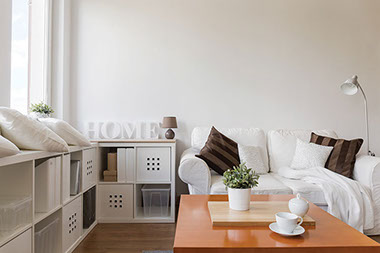
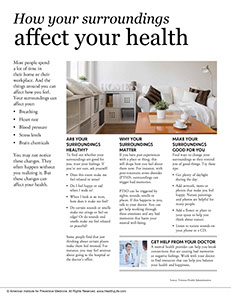
    Clean organzied room.

    Most people spend a lot of time in their home or their workplace. And the things around you can affect how you feel. Your surroundings can affect your:

    *  Breathing

    *  Heart rate

    *  Blood pressure

    *  Stress levels

    *  Brain chemicals

    You may not notice these changes. They often happen without you realizing it. But these changes can affect your health.

    Are your surroundings healthy?

    To find out whether your surroundings are good for you, trust your feelings. If you’re not sure, ask yourself:

    *  Does this room make me feel relaxed or tense?

    *  Do I feel happy or sad when I walk in?

    *  When I look at an item, how does it make me feel?

    *  Do certain sounds or smells make me cringe or feel on edge? Or do sounds and smells make me feel relaxed or peaceful?

    Some people find that just thinking about certain places make them feel stressed. For instance, you may feel anxious about going to the hospital or the doctor’s office.

    Why your surroundings matter

    If you have past experiences with a place or thing, this will shape how you feel about them now. For instance, with post-traumatic stress disorder (PTSD), surroundings can trigger bad memories.

    PTSD can be triggered by sights, sounds, smells or places. If this happens to you, talk to your doctor. You can get help working through these emotions and any bad memories that harm your mental well-being.

    Make your surroundings good for you

    Find ways to change your surroundings so they remind you of good things. Try these tips:

    *  Get plenty of daylight during the day.

    *  Add artwork, items or photos that make you feel happy. Nature paintings and photos are helpful for many people.

    *  Add a flower or plant to your space to help you think about nature.

    *  Listen to nature sounds on your phone or a CD.

    Get help from your doctor

    A mental health provider can help you break connections that are causing bad memories or negative feelings. Work with your doctor to find resources that can help you balance your health and happiness.

    Source: Veterans Health Administration
    © American Institute for Preventive Medicine
  • Stay Healthy With Shift Work

    WORK LIFE

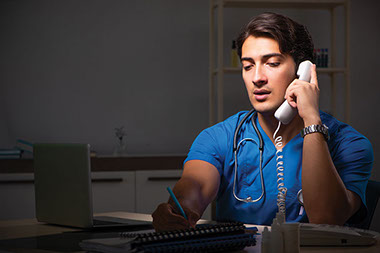
    Doctor on phone working the night shift.

    For many people, shift work is a great way to get in hours around family commitments. For some people, shift work is simply part of their profession. Nurses, doctors, first responders and many others work shifts because it’s necessary.

    When you don’t work a 9 to 5 shift, it can be harder to find time to eat well and exercise. In the middle of the night, most restaurants and stores are closed. You may also feel tired and less motivated to exercise and eat well. But there are some ways to get around these obstacles.

    Try these healthy tips if you work a shift schedule:

    1.  Stock up on healthy food. When you’re tired, it’s easy to simply reach for convenience foods. Instead, keep your favorite fresh foods on hand at home or work and make them convenient. Washed and cut fruits and vegetables are a great snack anytime. You may also try nuts or seeds, oatmeal and hummus.

    2.  Make meals before your shift. Many times, the only choice during shift work is a vending machine. Try cooking large meals in a crock pot and freezing individual portions.

    3.  Avoid large portions. Many people feel tired and sluggish after a large meal. Pack portions that will fill you up without making you feel stuffed. Between meals, choose pre-packed, healthy snacks.

    4.  Take a break to eat. Sit down at a table, if possible. Enjoy your food and eat slowly. This can help you avoid overeating or mindless snacking.

    5.  Watch the caffeine.  Many people need at least six hours or more to process caffeine so they can sleep. If you’re feeling sluggish, try drinking plenty of water instead of coffee or tea.

    6.  Move your body when you can. Walk up and down stairs or hallways on breaks. Try stretching at your desk. You can even do some jumping jacks if you don’t have time for anything else. Any kind of physical activity can give you more energy and lift your mood.

    7.  Remember that sleep is important. Even if you don’t have a typical work schedule, you can still make sleep a priority. Aim for seven to nine hours per 24-hour period. If you can’t get that much at once, see if you can still get that much by using naps.

    Source: National Sleep Foundation

    © American Institute for Preventive Medicine
  • After-Dark Joggers, Heed This Advice

    Personal Safety

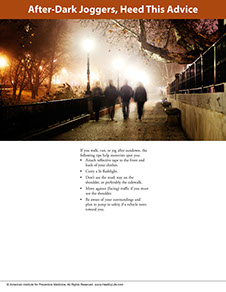
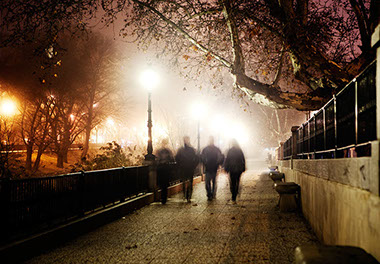
    Image of people walking/jogging in the dark.

    If you walk, run, or jog after sundown, the following tips help motorists spot you.

    *  Attach reflective tape to the front and back of your clothes.

    *  Carry a lit flashlight.

    *  Don’t use the road; stay on the shoulder, or preferably the sidewalk. Move against (facing) traffic if you must use the shoulder.

    *  Be aware of your surroundings and plan to jump to safety if a vehicle veers toward you.

    A Year of Health Hints book by the American Institute for Preventive Medicine. www.HealthyLife.com. All rights reserved.

    © American Institute for Preventive Medicine
  • See The Light In Healthy Ways

    Eye Conditions

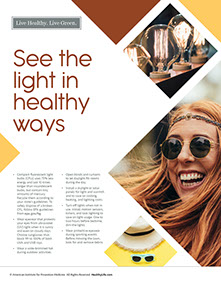
    Women wearing sunglasses with a huge smile.

    *  Compact fluorescent light bulbs (CFLs) uses 75% less energy and last 10 times longer than incandescent bulbs, but contain tiny amounts of mercury. Recycle them according to your state’s guidelines. To safely dispose of a broken CFL, follow EPA guidelines fromepa.gov/hg.

    *  Wear eyewear that protects your eyes from ultraviolet (UV) light when it is sunny and even on cloudy days. Choose sunglasses that block 99 to 100% of both UVA and UVB rays.

    *  Wear a wide-brimmed hat during outdoor activities.

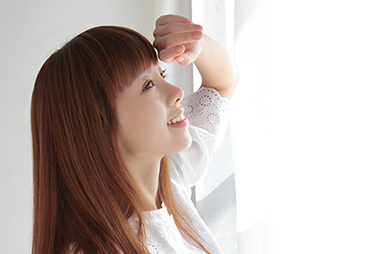
    *  Open blinds and curtains to let daylight fill rooms during the day.

    *  Install a skylight or solar panels for light and warmth and to save on cooling, heating, and lighting costs.

    *  Turn off lights when not in use. Install motion sensors, timers, and task lighting to save on light usage. One to two hours before bedtime, dim the lights.

    *  Wear protective eyewear during sporting events. Before mowing the lawn, look for and remove debris.

    Health at Home Lifetime book by the American Institute for Preventive Medicine. www.HealthyLife.com. All rights reserved.

    © American Institute for Preventive Medicine