Dental & Mouth Concerns
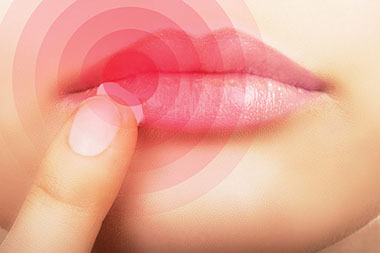
Cold sores appear on or near the lips. They are painful and unpleasant. Nearly 1 in 3 people will have them. Cold sores are also called fever blisters.
Signs & Symptoms
* Tingling feeling on or near the lips for 36 to 48 hours before the sore appears
* Itching at the site (early sign)
* Small, red blisters with pus-filled centers
* Blisters form a yellow crust that lasts about 10 days
* One sore or a cluster of sores
Causes, Risk Factors & Care
Cold sores are caused by the herpes sim- plex virus (HSV), either HSV-1 (this is most often the cause) or HSV-2 (the usual cause of genital herpes). The virus lies dormant in the body and can return. A fever, cold, stress, cold or windy weather, and strong sun exposure are triggers for outbreaks.
Cold sores are very contagious, especially when the blisters rupture and weep.
Cold sores are treated with self-care and antiviral medications, such as acyclovir and penciclovir. Prompt treatment may reduce the discomfort.
Self-Care / Prevention
* Keep the sore clean and dry.
* Apply antiviral medication, if prescribed, to the affected area at the first sign of a cold sore.
* Try an over-the-counter treatment, such as Abreva antiviral cream, Campho-Phenique, Blistex, or make a paste with cornstarch and water. Dab some on the sore with a cotton swab.
* Dab aloe vera or petroleum jelly on the sore. Use a cotton swab.
* Apply ice to the sore or suck on a frozen popsicle.
* Take an over-the-counter medicine for pain.
* Learn to relax. Meditate, practice yoga, etc. Learn to deal with stress, too.
* Avoid foods that are sour, spicy, or acidic. These may irritate the sores.
* Take vitamin C and/or zinc supplements, as directed by your doctor.
* Apply cool compresses when the sores have crusted over.
* Try not to worry or be too self-conscious. This only makes the situation worse.
Prevention
To avoid getting or spreading cold sores:
* Don’t share drinking glasses, towels, or cooking utensils.
* Don’t touch cold sores with your fingers. If you do touch the cold sores, do not touch your eyes. This could cause a serious eye infection.
* Wash your hands often.
* Avoid kissing or direct skin contact with the sores. This includes oral sex. The virus that causes cold sores can cause genital herpes, too.
* When in the sun, wear a hat and use a sunblock with a sun-protective factor (SPF) of 15 or more on the lips.
* Use a lip balm on cold or windy days.
* Ask your doctor about a prescribed antiviral medicine to take or apply when you feel a cold sore coming on.
* Try to figure out what triggers the sores. Once you identify a trigger, do what you can to avoid it.
* Get regular exercise.
Medical Care
Contact Doctor When:
* You have eye pain with the cold sore. Pain from the sore limits normal activity.
* The cold sore has lasted longer than 2 weeks.
* Cold sores appear 4 or more times a year.
* Cold sores appeared after you started a new medicine or are present while taking steroid medicines.
* Eczema
© American Institute for Preventive Medicine