Tag: list

  • Save At The Supermarket

    FINANCIAL HEALTH

    Couple at the grocery store.

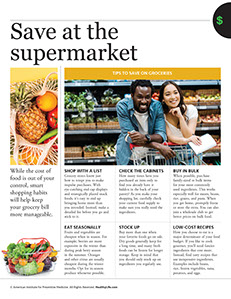
    While the cost of food is out of your control, smart shopping habits will help keep your grocery bill more manageable.

    Tips to save on groceries

    Shop with a list

    Grocery stores know just how to tempt you to make impulse purchases. With eye-catching end cap displays and strategically placed snack foods, it’s easy to end up bringing home more than you intended. Instead, make a detailed list before you go and stick to it.

    Check the cabinets

    How many times have you purchased an item only to find you already have it hidden in the back of your pantry? As you make your shopping list, carefully check your current food supply to make sure you really need the ingredients.

    Buy in bulk

    When possible, purchase family-sized or bulk items for your most commonly used ingredients. This works especially well for meats, beans, rice, grains, and pasta. When you get home, promptly freeze or store the extra. You can also join a wholesale club to get better prices on bulk food.

    Eat seasonally

    Fruits and vegetables are cheapest when in season. For example, berries are more expensive in the winter than during peak berry season in the summer. Oranges and other citrus are usually cheapest during the winter months. Opt for in-season produce whenever possible.

    Stock up

    Buy more than one when your favorite foods go on sale. Dry goods generally keep for a long time, and many fresh foods can be frozen for longer storage. Keep in mind that you should only stock up on ingredients you regularly use.

    Low-cost recipes

    How you choose to eat is a major determinant of your food budget. If you like to cook gourmet, you’ll need fancier ingredients that cost more. Instead, find tasty recipes that use inexpensive ingredients. Examples include beans, rice, frozen vegetables, tuna, potatoes, and eggs.
    © American Institute for Preventive Medicine
  • To Market, To Market, Shop Smart

    Nutrition

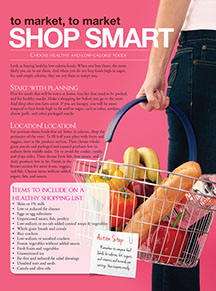
    Choose healthy and low-calorie foods.

    Look at buying healthy, low-calorie foods. When you buy them, the more likely you are to eat them. And when you do not buy foods high in sugar, fat, and empty calories, they are not there to tempt you.

    Start with planning.

    Plan for meals that will be eaten at home, lunches that need to be packed, and for healthy snacks. Make a shopping list before you go to the store. And shop after you have eaten. If you are hungry, you will be more tempted to buy foods high in fat and/or sugar, such as cakes, cookies, cheese puffs, and other packaged snacks.

    Location! location!

    For nutrient-dense foods that are lower in calories, shop the perimeter of the store. To fill half your plate with fruits and veggies, start at the produce section. Then choose whole-grain cereals and packaged and canned products low in sodium from middle aisles. Try to avoid the cookie, candy, and chips aisles. Then choose fresh fish, lean meats, and dairy products low in fat. Finish in the freezer section for more fruits, veggies, and fish. Choose items without added sugars, fats, and sauces.

    Items to include on a healthy shopping list:

    *  Skim or 1% milk

    *  Low or reduced-fat cheeses

    *  Eggs or egg substitute

    *  Unprocessed meats, fish, poultry

    *  Low-sodium or no-salt added canned soups & vegetables

    *  Whole grain breads and cereals

    *  Rice crackers

    *  Low-sodium or unsalted crackers

    *  Frozen vegetables without added sauces

    *  Fresh fruits and vegetables

    *  Unsweetened tea

    *  Fat-free and reduced-fat salad dressings

    *  Unsalted nuts and seeds

    *  Canola and olive oils

    Action Step

    Remember to compare food labels for calories, fat, sugars, and vitamins and minerals per serving. Use coupons wisely.

    Page from Ways to Well-Being book by the American Institute for Preventive Medicine. www.HealthyLife.com. All rights reserved.

    © American Institute for Preventive Medicine
  • Write A Grocery List

    Healthylife® Weigh

    Part 3

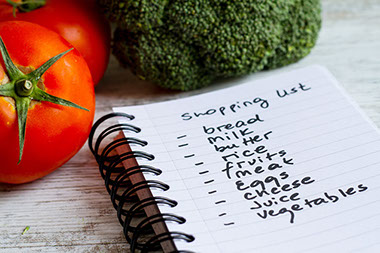
    Shopping list of groceries.

    1. Look at your weekly menu. Make a list of all of the ingredients you will need. Calculate how much you will need for the week. Example:

    *  2 oz. chicken breast x 5 meals = 10 oz. chicken breast

    *  2 cups greens x 3 meals = 6 cups greens

    2. What do you already have? Cross off what you don’t need to buy.

    3. On a fresh piece of paper, make a list of the ingredients you need to buy. Organize by section of the store to save time shopping.

    *  Fresh Fruits & Veggies

    *  Whole Grains (e.g., bread, pasta, rice, cereals), Beans & Lentils

    *  Meat/Poultry/Seafood/Tofu

    *  Misc. Aisles: Canned vegetables and fruits, nuts & seeds, dried fruit, oils

    *  Frozen Fruits & Veggies

    *  Dairy/Eggs

    Family Fun: Have your children help you write the grocery list each week. Practice math skills by adding the amounts you need for each item. Invite children to add a fruit or vegetable of their choice to the list. Have older children select a recipe and add ingredients to your list.

    © American Institute for Preventive Medicine