Tag: liver

  • Cirrhosis: Be Kind To Your Liver

    Abdominal & Urinary Conditions

    The liver is probably the most versatile organ you’ve got. It performs many tasks, including:

    *  Producing bile (a substance that aids digestion of fats).

    *  Producing blood proteins.

    *  Helping blood clot.

    *  Metabolizing cholesterol.

    *  Maintaining normal blood sugar levels.

    *  Forming and storing glycogen (the body’s short-term energy source).

    *  Manufacturing more than 1,000 enzymes necessary for various bodily functions.

    *  Detoxifying substances such as alcohol and many drugs.
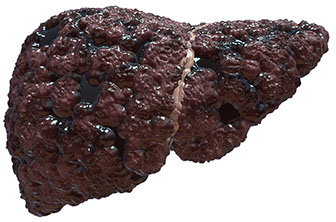
    Image of liver with cirrhosis.

    Liver with Cirrhosis

    The liver is equipped to handle a certain amount of alcohol without much difficulty. But drink too much alcohol, too often, for too long, and the vital tissues in the liver break down. Fatty deposits accumulate and scarring occurs. This is known as cirrhosis. It’s most commonly found in men over 45, yet the number of women developing cirrhosis is steadily increasing.

    To make matters worse, people who drink too much generally have poor nutritional habits. Since alcohol replaces food, essential vitamins and minerals are missing from the diet. Malnutrition aggravates cirrhosis.

    While alcohol abuse is the most common cause of cirrhosis, hepatitis, taking certain drugs, or exposure to certain chemicals can also produce this condition.

    Doctors recognize the following as signs of advanced cirrhosis.

    *  Enlarged liver.

    *  Yellowish eyes and skin, and tea-colored urine (indicating jaundice). Bleeding from the gastrointestinal tract.

    *  Itching.

    *  Hair loss.

    *  Swelling in the legs and stomach (indicating fluid accumulation).

    *  Tendency to bruise easily.

    *  Mental confusion.

    Cirrhosis can be life threatening, so get medical attention if you suspect your drinking habits may have gotten out of hand or you have any of the above symptoms. And needless to say, you (or anyone you suspect of having cirrhosis) should abstain from alcohol.
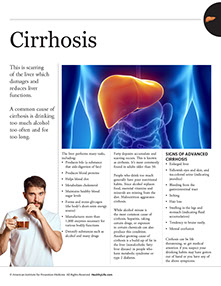
    A Year of Health Hints book by the American Institute for Preventive Medicine. www.HealthyLife.com. All rights reserved.

    © American Institute for Preventive Medicine
  • Hepatitis

    General Health Conditions

    Hepatitis is liver inflammation. With hepatitis, the liver has trouble screening poisons from the blood. Also, the liver can’t regulate bile. This is a liquid that helps digest fats.

    Signs & Symptoms

    Signs and symptoms depend on the cause. Some persons have no symptoms. When symptoms first occur, they include fatigue, fever, appetite loss, nausea and vomiting, and joint pain.

    Later, symptoms are dark urine, pale, clay-colored stools, and jaundice. This is a yellow color to the whites of the eyes and/or the skin.

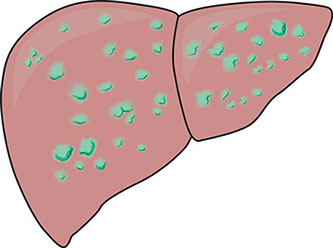
    Illustration of hepatitis in the liver.

    Hepatitis in the Liver

    Causes

    One or More Types of Viral Hepatitis

    *  Hepatitis A. This is spread through food or water contaminated by the feces of an infected person that has the virus.

    *  Hepatitis B. This is caused by contact with infected blood or bodily fluids from an infected person. Examples are sharing drug needles or having sex. A mother can pass this virus to her baby during childbirth, too.

    *  Hepatitis C. Most often, the cause is contact with infected blood on needles, razors, toothbrushes, etc. Blood transfusions given before July, 1992 could be the cause, if the blood had the virus. Sexual contact may spread the virus, too.

    *  Hepatitis D. Sharing drug needles or having sexual contact with an infected person can cause this type, but only in persons who already have hepatitis B. It is not common in the U.S.

    *  Hepatitis E. This is caused by contact with food, water, or something contaminated with the feces of an infected person. This type is not common in the U.S. It is more common in Africa and India.

    Non-Viral Causes of Hepatitis

    *  Some immune system disorders, such as Wilson’s disease. With this, too much copper is stored in the liver and other body organs.

    *  Chronic alcohol or drug use.

    *  Reaction to certain medicines. One example is long-term use or an overdose of acetaminophen. Heavy drinkers are more prone to this.

    *  Some herbs may cause hepatitis. Examples are kava and chaparral.

    In some cases, the cause is not known.

    Treatment

    Treatment depends on the type of hepatitis and how severe it is. For non- viral forms, this includes treating the disorder or stopping the use of the substance that caused it. For viral forms, treatment includes self-care measures and medications.

    Questions to Ask

    Self-Care / Prevention

    To Help Prevent Hepatitis A and E

    *  Get a hepatitis A vaccine if advised by your doctor or health department. There is no vaccine for hepatitis E.

    *  When you travel to countries where the virus is widespread, wash your hands often. Drink boiled water. Don’t eat unpeeled or uncooked fruits or foods rinsed with water. Don’t use ice.

    *  If exposed to hepatitis A, contact your doctor to get immune globulin (IG) within 2 weeks of exposure.

    To Help Prevent Hepatitis B, C, and D

    *  Get 3 doses of hepatitis B vaccine if advised by your doctor. There is no vaccine for hepatitis C.

    *  Practice Safer Sex.

    *  Don’t share IV drug needles.

    *  Don’t share razors or toothbrushes. See that sterilized items are used for ear piercing, etc.

    To Help Prevent Non-Viral Forms

    *  Use alcohol in moderation, if at all.

    *  Don’t combine alcohol and acetaminophen. Take products that contain acetaminophen, such as Tylenol, as directed. Heed warnings listed on the label.

    To Treat Hepatitis

    *  Follow your doctor’s advice for medicines, etc.

    *  Rest.

    *  Drink at least 8 glasses of fluids a day.

    *  Avoid alcohol and any drugs or medicines that affect the liver, such as acetaminophen.

    *  Follow a healthy diet. Take vitamins and minerals as advised by your doctor.

    Resources

    National Center for HIV/AIDS, Viral Hepatitis, STD, and TB Prevention

    800.CDC.INFO (232.4636)

    www.cdc.gov/nchhstp

    Healthier at Home book by the American Institute for Preventive Medicine. www.HealthyLife.com. All rights reserved.

    © American Institute for Preventive Medicine
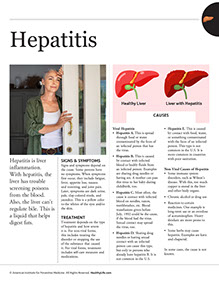
  • Signs Of Reye’S Syndrome

    Children’s Health

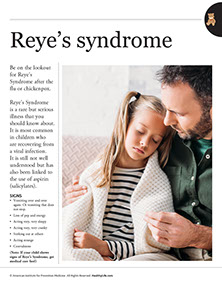
    Be on the lookout for Reye’s Syndrome after the flu or chickenpox. Reye’s Syndrome does not happen very often. But you should know about it. Look for these signs:

    *  Vomiting over and over again. Or vomiting that does not stop.

    *  Loss of pep and energy.

    *  Acting very, very sleepy.

    *  Acting very, very cranky.

    *  Striking out at others.

    *  Acting strange.

    *  Convulsions.

    (Note: If your child shows signs of Reye’s Syndrome, get medical care fast!)

    Children's Self-Care book by the American Institute for Preventive Medicine. www.HealthyLife.com. All rights reserved.

    © American Institute for Preventive Medicine
  • The Abcs Of Hepatitis

    MEDICAL NEWS

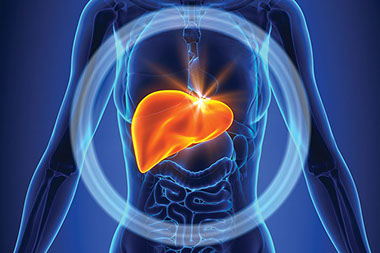
    Illustration of liver.

    Millions of Americans are living with hepatitis today, and many don’t know they have it. Hepatitis can be serious and can lead to lifelong health problems. To help fight this dangerous disease, it’s important to know how it is spread and what you can do to prevent it.

    What is hepatitis?

    Hepatitis is an inflammation of the liver. Without the liver, the body cannot process nutrients, fight infection, or filter the blood. Hepatitis can make someone very sick. Some people with viral hepatitis can get liver cancer or severe scarring of the liver, known as cirrhosis.

    How does someone get hepatitis?

    The three most common types of viral hepatitis are spread in different ways:

    *  Hepatitis A can spread if a person eats or drinks something that has been contaminated with the virus. A person with hepatitis A spreads the virus through their stool.

    *  Hepatitis B can spread when blood, semen or other body fluids from an infected person get into the body of another person. This can happen during childbirth, sexual contact, getting tattoos or piercings, sharing needles or medical equipment, or sharing personal items, such as razors.

    *  Hepatitis C spreads through blood. Sharing needles or personal equipment that comes into contact with blood is the main way it gets spread. It may also spread during sexual contact. Like hepatitis B, Hep C can infect a baby during childbirth if the mother has it.

    How do I prevent hepatitis?

    Many people don’t have symptoms of hepatitis and don’t know they are infected. This means they can spread it to others without knowing it.

    The best ways to help prevent the spread of hepatitis are:

    *  Getting the vaccine, if needed. Vaccines are available for hepatitis A and B.

    *  Getting screened for hepatitis if you are at risk and getting treatment when available.

    *  Being aware of risk factors and avoiding them whenever possible. This may include not sharing needles or other personal equipment as listed on this page. Use latex condoms during sexual activity.

    Is there a cure for viral hepatitis?

    Most people who get hepatitis A will recover after a few weeks or months. People with hepatitis B may need to be checked regularly for liver damage, and the infection may be lifelong. Hepatitis C can often be cured with today’s advanced medications.

    Ask your doctor if you are at risk for hepatitis and whether you should be screened or vaccinated.

    Sources: Centers for Disease Control, World Health Organization

    © American Institute for Preventive Medicine
  • You May Need To Get Tested For Hepatitis C

    MEDICAL NEWS

    Image of doctor talking to a patient.

    An estimated 3.2 million Americans are infected with chronic hepatitis C, a viral infection of the liver. Among those are larger numbers of Veterans and baby boomers.

    The CDC recently recommended that all baby boomers in the U.S. (those born between 1945 and 1965) get a simple one-time blood test for hepatitis C. They estimate that this testing could identify more than 800,000 additional people with the disease.

    Here’s what we know:

    *  Chronic hepatitis C won’t go away on its own.

    *  Many people living with hepatitis C are not aware they have the condition and may go years without showing symptoms. Hepatitis C is treated with a combination of medications.

    *  The rate of hepatitis C among people born in 1945 through 1965 is about 4%, compared to about 1% among other Americans. That difference is likely due to risky behaviors among this group.

    *  You can get hepatitis C from infected blood or body fluids. Today, the most common way people get infected is by needle-sharing during intravenous drug use. Most new infections occur among drug users. In addition, an infected pregnant woman can infect her unborn baby.

    *  Since 1992, when reliable blood screening procedures became available, the risk of transmission of hepatitis C by blood transfusion has fallen to less than one per million units of transfused blood, according to the CDC. Rarely, the virus can be transmitted through sexual intercourse.

    *  Hepatitis C is not transmitted through shaking hands, coughing, sneezing, breastfeeding, or sharing cups and utensils.

    *  Hepatitis C can cause serious liver problems.

    © American Institute for Preventive Medicine