Tag: locks

  • Secure Your Home For Vacation

    WELL-BEING

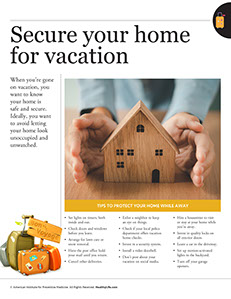
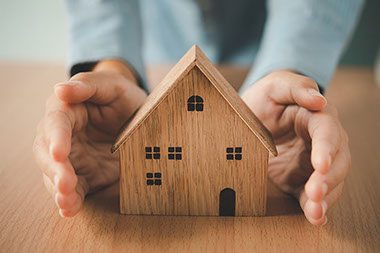
    Small wooden home on table with hands protecting it.

    When you’re gone on vacation, you want to know your home is safe and secure. Ideally, you want to avoid letting your home look unoccupied and unwatched.

    Tips to protect your home while away

    *  Set lights on timers, both inside and out.

    *  Check doors and windows before you leave.

    *  Arrange for lawn care or snow removal.

    *  Have the post office hold your mail until you return.

    *  Cancel other deliveries.

    *  Enlist a neighbor to keep an eye on things.

    *  Check if your local police department offers vacation home checks.

    *  Invest in a security system.

    *  Install a video doorbell.

    *  Don’t post about your vacation on social media.

    *  Hire a housesitter to visit or stay at your home while you’re away.

    *  Invest in quality locks on all exterior doors.

    *  Leave a car in the driveway.

    *  Set up motion-activated lights in the backyard.

    *  Turn off your garage openers.

    © American Institute for Preventive Medicine

  • Burglarproof Your Home

    Home Safety

    Don’t be an easy target for thieves.

    Most home burglaries are the work of amateurs who are looking for a quick in and out. Make it look like someone is at home, especially while you are away.

    Dos:

    *  Inspect all locks on exterior doors. If they can be opened with a screwdriver or a credit card, replace them with single cylinder deadbolt locks.

    *  Install outside lighting with motion sensors around the house and garage.

    *  Consider installing an alarm system. Make sure the sign for it can be easily seen from the street.

    *  Close and lock windows. Put a metal or wooden rod between windows and frames, especially in door walls.

    *  Keep shrubs in front of windows no higher than three feet tall. This makes it hard for a burglar to hide in them.

    *  Engrave a personal contact code on your TV and other valuables to make them harder to sell and easier to trace.

    *  Join or start a neighborhood watch group.

    If your home will be vacant for several days or longer:

    *  Ask a relative or a neighbor you trust to watch your house. Consider leaving a key with one of them and ask them to do a periodic walk-through.

    *  Put a stop on delivery of mail and newspapers.

    *  Arrange for someone to mow the lawn or clear snow from the driveway and sidewalk. Ask a neighbor to park in your driveway.

    *  Preset automatic light timers to keep the house   well-lit during the evening and make it look like someone is home.

    *  Keep a radio on while you are gone. Set it to a 24-hour news or talk station.

    *  Find out if your local police department keeps a “vacant house list.” This alerts police to drive by and check on your house if you are gone for a week or longer.

    Action Step

    Store valuable items in places not easily seen. As an extra preventive measure, put valuable jewelry in a bank safety deposit box.

    Ways to Well-Being book by the American Institute for Preventive Medicine. www.HealthyLife.com. All rights reserved.

    © American Institute for Preventive Medicine

  • Home Security

    Home Safety

    Do This, Not That

    According to the FBI:

    *  13% of homes are burglarized a year.

    *  A home is invaded every 12 seconds.

    *  Most home burglaries occur between 9 a.m. and 5 p.m.

    *  85% of all break-ins occur through the door.

    *  67% of all burglaries involved forcible entry. Door frame failure is usually the cause.

    Most home burglaries are the work of amateurs who are looking for a quick way in and out. Follow tips in this section to keep your home as secure as possible. Also, keep others from finding out when you will be on vacation. For example, do not post your whereabouts on social networks. It is best to not leave a spare key under the doormat, in a fake rock, or in a flower pot next to the door. Instead, give a spare key to a trusted neighbor or nearby friend.

    General Guidelines

    Safe at Home - Do This, Not That Book. Published by the American Institute for Preventive Medicine. www.HealthyLife.com. All rights reserved.

    © American Institute for Preventive Medicine

  • Easy Ways To Childproof Your Home

    Child Safety

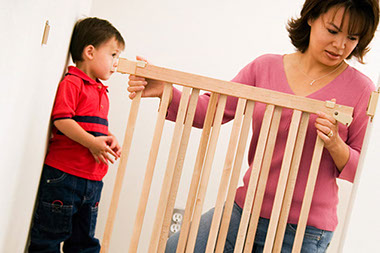
    Image of mom placing a safety gate on stairs.

    Is your home safe for curious children?

    To see your home from a toddler’s point of view, get down on your hands and knees and crawl around. Look for conditions that can lead to burns, falls, electric shock, entrapment, or poisoning. Then take steps to prevent harm. Some suggestions:

    *  Cover all toddler-height electrical outlets with plastic outlet covers.

    *  Install childproof locks on cabinets where household cleaners, chemicals, and other items that could harm children are stored.

    *  To prevent scalding burns, lower the thermostat on the water heater to 120ºF or lower.

    *  Store medicines and alcohol in high, out-of-reach places. Never leave them on a countertop, a table, or other places children can get them.

    *  Toddlers should eat and drink from plastic dishes and cups only.

    *  Don’t place a child’s crib or bed next to a window. An active or curious toddler could accidentally fall out.

    *  Keep all sharp objects like scissors, knives, or pins out of a toddler’s reach.

    A Year of Health Hints book by the American Institute for Preventive Medicine. www.HealthyLife.com. All rights reserved.

    © American Institute for Preventive Medicine

  • Childproofing

    FAMILY LIFE

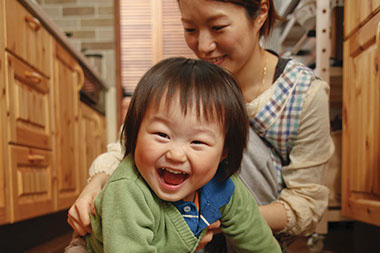
    Image of mother with toddler.

    Chase a toddler around for a day. Now that’s exercise. Any new parent quickly learns that a toddler is into everything. It only takes a quick second for that child to get out of your sight and around something potentially dangerous.

    The nation’s emergency physicians treat children every day who are injured by something in their own home or someone else’s home. Now is the time to childproof it, advises the American College of Emergency Physicians.

    What you can do in your home right now to protect young children

    *  Use safety latches for drawers and cabinets in kitchens, bathrooms, and other rooms that may contain dangerous products like cleaning supplies, knives and sharp objects, and medicines.

    *  Use safety gates to help prevent falls down stairs and to help prevent children from going in areas that may have potential dangers. Make sure these gates meet current safety standards. (Gates that only press against walls, called pressure-mounted gates, are not secure enough.)

    *  Place protective childproof covers on all electrical outlets that are in reach of children.

    *  Make sure all electrical cords are out of a child’s reach and properly secure.

    *  Fasten all heavy bookshelves, televisions, cabinets, or anything that could pose a potential tipping hazard to a secure wall, making sure it cannot fall on a child.

    *  Use toilet seat lid-locking devices on all toilet seats to decrease drowning hazards.

    *  Use cordless window coverings to help prevent strangulation.

    *  Use corner or edge bumpers on anything with sharp edges, like furniture and fireplaces.

    *  Create a protective barrier around pools and spas that include at least a 4-foot-tall fence with self-closing and self-latching gates. It’s also a good idea to look into getting pool alarms as an additional layer of protection.

    But the best device of all? Make sure a responsible person is with children at all times.
    © American Institute for Preventive Medicine