Tag: love

  • Positive Parenting Hacks

    FAMILY LIFE

    Parents with son, smile.

    Don’t focus on mistakes or bad behavior. Catch your child doing good things and point them out.

    Chores don’t have to be a punishment. Chores at home can help children learn life skills and independence.

    Spend a little time connecting each day. Take a few minutes to talk to your child without phones or screens.

    © American Institute for Preventive Medicine

  • Family Matters 2

    Social Health

    Well-being relates to relatives.

    Your family is where you learn who you are and how to relate to others. It plays a vital role in fulfilling the human need to belong and have close, long-term relationships. Whether you are a child, teen, or adult, family experiences can promote or hinder your well-being.

    Tips to foster family well-being:

    *  Live a healthy lifestyle together.

    – Plan for, shop, and eat healthy foods.

    – Exercise as a family if you can. Or, promote physical activity suited for each family member.

    – Get enough sleep.

    *  Plan to eat at least one meal a day together. Have each person talk about his or her day, such as stating the best part and worst part.

    *  Spend time together. Attend important events for each family member.

    *  Express care and concern. Be available to help each other out. Listen, listen, listen.

    *  Practice good manners. Say, “Thank you” and “You’re welcome.” Make it a practice to send thank you calls, notes, letters, or emails to others for gifts and other acts of kindness.

    *  Express affection. Say, “I love you,” “I care about you,” and “You mean a lot to me.”

    *  Discuss the value of the family as a whole. Encourage individual expression and development.

    *  Define clear, yet flexible roles for family members. Assign family chores.

    *  Keep the house as organized as possible.

    *  Discuss the need to adapt to changes and deal with stressful events.

    *  Seek professional help for problems the family cannot deal with on its own.

    Factors that promote well-being:

    *  Being well cared for and feeling secure

    *  Receiving trust, love, support, and hugs

    *  Spending quality time together

    *  Listening well to each other

    *  Solving problems in a positive way

    *  Positive mood of family members

    *  Satisfaction with job and/or being a parent

    *  Being involved with partner and children

    *  Higher income and/or financial security

    Action Step

    This week, let at least two family members know how much you love them. Visit or call a relative who is alone or would be happy to hear from you.

    ays to Well-Being book by the American Institute for Preventive Medicine. www.HealthyLife.com. All rights reserved.

    © American Institute for Preventive Medicine

  • Love Is Healthy For Your Heart

    Heart & Circulation Problems

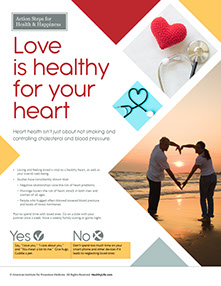
    Couple on beach making heart shape with their arms.

    Heart health isn’t just about not smoking and controlling cholesterol and blood pressure.

    *  Loving and feeling loved is vital to a healthy heart, as well as your overall well-being.

    *  Studies have consistently shown that:

    – Negative relationships raise the risk of heart problems.

    – Marriage lowers the risk of heart attack in both men and women of all ages.

    – People who hugged often showed lowered blood pressure and levels of stress hormones.

    Plan to spend time with loved ones. Go on a date with your partner once a week. Have a weekly family outing or game night.

    Say, “I love you,” “I care about you,” and “You mean a lot to me.” Give hugs. Cuddle a pet.

    Don’t spend too much time on your smart phone and other devices if it leads to neglecting loved ones.

    Health at Home Lifetime book by the American Institute for Preventive Medicine. www.HealthyLife.com. All rights reserved.

    © American Institute for Preventive Medicine

  • Family Matters

    FAMILY LIFE

    Image of family sitting on a couch with their pet dog.

    Your family is where you learn who you are and how to relate to others. It plays a vital role in fulfilling the human need to belong and have close, long-term relationships. Whether you are a child, teen, or adult, family experiences can promote or hinder your well-being.

    Tips to foster family well-being

    *  Live a healthy lifestyle together.

    – Plan for, shop, and eat healthy foods.

    – Exercise as a family if you can. Or, promote physical activity suited for each family member.

    – Get enough sleep.

    *  Plan to eat at least one meal a day together. Have each person talk about his or her day, such as stating the best part and worst part.

    *  Spend time together. Attend important events for each family member.

    *  Express care and concern. Be available to help each other out. Listen, listen, listen.

    *  Practice good manners. Say, “Thank you” and “You’re welcome.” Make it a practice to send thank you calls, notes, letters, or emails to others for gifts and other acts of kindness.

    *  Express affection. Say, “I love you,” “I care about you,” and “You mean a lot to me.”

    *  Discuss the value of the family as a whole. Encourage individual expression and development.

    *  Define clear, yet flexible roles for family members. Assign family chores.

    *  Keep the house as organized as possible.

    *  Discuss the need to adapt to changes and deal with stressful events.

    *  Seek professional help for problems the family cannot deal with on its own.

    © American Institute for Preventive Medicine

  • Heart-Shaped Foods Help Your Heart

    HEALTHY EATING

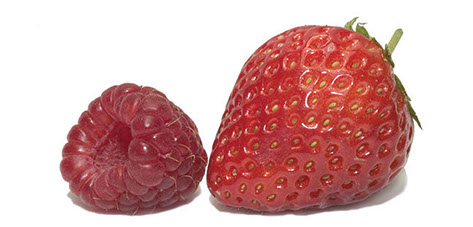
    Image of a berry and strawberry.

    While some dietitians extol the virtues of red wine, dark chocolate, and salmon for heart health, Dr. Katie Eliot, assistant professor of nutrition and dietetics at Saint Louis University, has a different plan.

    Keep it simple. Look to heart-shaped foods to protect your heart.

    “Being red and heart shaped can be a tip off that some foods are good for your heart,” Dr. Eliot said. “Many heart-shaped fruits and vegetables are great sources of antioxidants. These compounds act like shields, taking the hit from free radicals that otherwise damage the body and cause heart disease and cancer.”

    For instance, strawberries and raspberries are loaded with vitamin C and an antioxidant that prevents plaque from forming in arteries. Cherries contain an antioxidant that is thought to protect the blood vessels and is high in potassium, which helps lower blood pressure.

    Tomatoes and red peppers are rich in the antioxidant lycopene, which is in many red fruits and vegetables and works magic by neutralizing free radicals. And acorn squash and apples contain a type of fiber, which reduces bad cholesterol that can clog up your arteries to cause heart attacks and stroke.

    © American Institute for Preventive Medicine