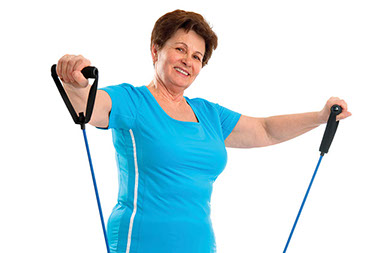
Tag: low impact

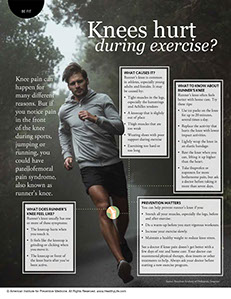
  • Knees Hurt During Exercise?

    BE FIT

    Man running.

    Knee pain can happen for many different reasons. But if you notice pain in the front of the knee during sports, jumping or running, you could have patellofemoral pain syndrome, also known as runner’s knee.

    What does runner’s knee feel like?

    Runner’s knee usually has one or more of these symptoms:

    *  The kneecap hurts when you touch it.

    *  It feels like the kneecap is grinding or clicking when you move it.

    *  The kneecap or front of the knee hurts after you’ve been active.

    What causes it?

    Runner’s knee is common in athletes, especially young adults and females. It may be caused by:

    *  Tight muscles in the legs, especially the hamstrings and Achilles tendons

    *  A kneecap that is slightly out of place

    *  Thigh muscles that are too weak

    *  Wearing shoes with poor support during exercise

    *  Exercising too hard or too long

    What to know about runner’s knee

    Runner’s knee often feels better with home care. Try these tips:

    *  Use ice packs on the knee for up to 20 minutes, several times a day.

    *  Replace the activity that hurts the knee with lower impact activities.

    *  Lightly wrap the knee in an elastic bandage.

    *  Rest the knee when you can, lifting it up higher than the heart.

    *  Take ibuprofen or naproxen for more bothersome pain, but ask a doctor before taking it more than seven days.

    Prevention matters

    You can help prevent runner’s knee if you:

    *  Stretch all your muscles, especially the legs, before and after exercise.

    *  Do a warm-up before you start vigorous workouts.

    *  Increase your exercise slowly.

    *  Maintain a healthy weight to reduce knee stress.

    See a doctor if knee pain doesn’t get better with a few days of rest and home care. Your doctor can recommend physical therapy, shoe inserts or other treatments to help. Always ask your doctor before starting a new exercise program.

    Source: American Academy of Orthopedic Surgeons
    © American Institute for Preventive Medicine
  • Tips For Exercise After Knee Replacement

    BE FIT

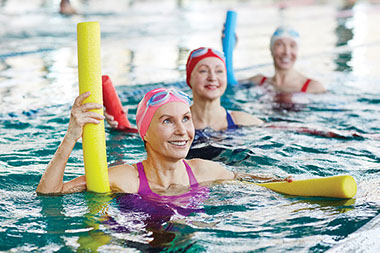
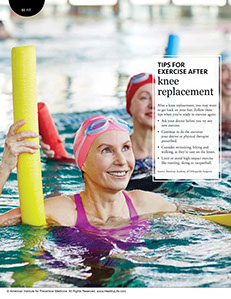
    Three older women doing water exercises.

    After a knee replacement, you may want to get back on your feet. Follow these tips when you’re ready to exercise again:

    *  Ask your doctor before you try any new exercise.

    *  Continue to do the exercises your doctor or physical therapist prescribed.

    *  Consider swimming, biking and walking, as they’re easy on the knees.

    *  Limit or avoid high-impact exercise like running, skiing or racquetball.

    Source: American Academy of Orthopaedic Surgeons

    © American Institute for Preventive Medicine
  • Best Exercise For People With Diabetes

    BE FIT

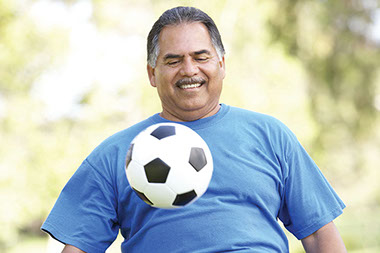
    Image of middle-aged Hispanic man playing with a soccer ball.

    The best exercise for anyone with diabetes may be a notch above a casual walk, according to Jamie Cooper, assistant professor of nutritional sciences at Texas Tech University.

    “A person should exercise to the point when they’re breathing a little bit harder and sweating a little bit-then they know they’re working more intensely,” Cooper said.

    The type of exercise really doesn’t matter as long as you’re moving and getting some exercise on a regular basis. Finding something you enjoy and are motivated to do is probably more important than a specific type of exercise to treat diabetes.

    “It’s not something you just do once a month or for a couple of weeks and quit. It has to be something you adapt into your new, healthier lifestyle and do on a regular basis,” Cooper said.

    © American Institute for Preventive Medicine
  • Boomers Beware

    BE FIT

    Image of older women with exercise equipment.

    Boomers are now age 50 and older. And they are getting lots of injuries to backs, knees, hips, ligaments and tendons (the structures that attach muscles to bones).

    Regular exercise is critical for maintaining and improving bone and muscle strength. And yet if not done properly, exercise can result in pain and injury, sprains and strains. The American Academy of Orthopaedic Surgeons offers the following exercise safety advice for anyone older than 50:

    Warm up and stretch.Walking, bending, jumping jacks, and running in place before exercise gets and keeps the circulatory system moving and helps prevent injury. Stretching can be done before or after a workout.

    Exercise consistently.Don’t be a weekend warrior. Try to get at least 30 minutes of moderate physical activity every day.

    Take lessons.Consider taking lessons for the sport you love. Whether you’re new to a sport or have been taking part in it a long-time, proper form and instruction reduce the chance of an overuse injury like tendonitis or stress fractures.

    Wear the proper equipment.Select the proper gear and shoes for your sport.

    Listen to your body.As you age, you may find that you are not as flexible as you once were, or that you cannot tolerate the same types of activities. If so, modify your exercise routine to accommodate your body’s needs. For example, if you’ve been a daily runner for many years, consider replacing a day or two of that activity with swimming, biking, or another sport that puts less impact on your joints.

    Use the 10% rule.When changing your activity level, increase it in increments of no more than 10% per week. Slowly build up each week until you reach your higher goal. This will prevent overuse injuries that may keep you from exercising or enjoying your favorite sport for some time.

    Develop and maintain a balanced fitness program.Include cardiovascular exercise, strength training, and flexibility. A balanced exercise program will provide a total body workout. This keeps you from getting bored and lessens your chances for injury.

    Take a break.Hard workouts can take a toll on your body and thus require strategies aimed at recovery. Learn to take a day off or cut back your training to allow your body to adapt and recover. Gentle stretching, light aerobic exercises, and proper nutrition and hydration are all helpful to the recovery process.

    Consult your doctor.If you develop or have had a sports or orthopedic injury like tendonitis, arthritis, stress fracture, or low back pain, consult an orthopedic surgeon who can help design or modify your fitness routine to promote wellness and minimize the chance of injury.

    © American Institute for Preventive Medicine

  • Just A Little Exercise Helps With Arthritis

    BE FIT

    Image of couple jogging.

    Regular exercise can help with the joint pain and stiffness of arthritis. But, many older adults with arthritis aren’t getting the recommended 150 minutes per week of exercise. Exercise can be painful for those who aren’t used to being active. But over time, not exercising can cause even more pain and stiffness, creating a vicious cycle.

    A recent study shows that even a little exercise can help. Older adults who exercised for just 45 minutes per week saw benefits over those who didn’t exercise at all. Overall, they had better physical ability than the non-exercisers. If you’re not sure how to get started, ask your doctor.

    Though 150 minutes per week is still ideal, some exercise is better than none. Get moving – even just a little – to start feeling better.

    © American Institute for Preventive Medicine