Tag: Lung Cancer

  • Lung Cancer

    Respiratory conditions

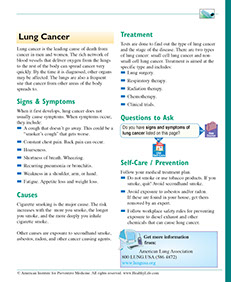
    Lung cancer is the leading cause of death from cancer in men and women. The rich network of blood vessels that deliver oxygen from the lungs to the rest of the body can spread cancer very quickly. By the time it is diagnosed, other organs may be affected. The lungs are also a frequent site that cancer from other areas of the body spreads to.

    Signs & Symptoms

    When it first develops, lung cancer does not usually cause symptoms. When symptoms occur, they include:

    *  A cough that doesn’t go away. This could be a “smoker’s cough” that gets worse.

    *  Constant chest pain. Back pain can occur.

    *  Hoarseness.

    *  Shortness of breath. Wheezing.

    *  Recurring pneumonia or bronchitis.

    *  Weakness in a shoulder, arm, or hand.

    *  Fatigue. Appetite loss and weight loss.

    Causes

    Cigarette smoking is the major cause. The risk increases with the  more you smoke, the longer you smoke, and the more deeply you inhale cigarette smoke.

    Other causes are exposure to secondhand smoke, asbestos, radon, and other cancer causing agents.

    Treatment

    Tests are done to find out the type of lung cancer and the stage of the disease. There are two types of lung cancer: small cell lung cancer and non-small cell lung cancer. Treatment is aimed at the specific type and includes:

    *  Lung surgery.

    *  Respiratory therapy.

    *  Radiation therapy.

    *  Chemotherapy.

    *  Clinical trials.

    Questions to Ask

    Self-Care / Prevention

    Follow your medical treatment plan.

    *  Do not smoke or use tobacco products. If you smoke, quit! Avoid secondhand smoke.

    *  Avoid exposure to asbestos and/or radon. If these are found in your house, get them removed by an expert.

    *  Follow workplace safety rules for preventing exposure to diesel exhaust and other chemicals that can cause lung cancer.
    Healthier at Home book by the American Institute for Preventive Medicine. www.HealthyLife.com. All rights reserved.

    © American Institute for Preventive Medicine
  • 5 Things To Know About Lung Cancer

    MEDICAL NEWS

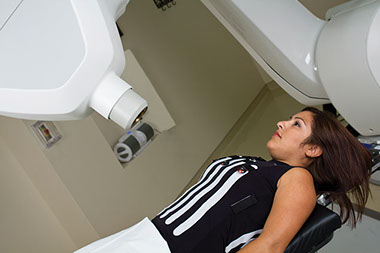
    Image of women getting a lung scan.

    Lung cancer is the country’s leading cause of cancer death. Many of the 160,000 deaths from lung cancer in the U.S. can be prevented. Dr. Bruce Johnson, the director of the Lowe Center for Thoracic Oncology at Dana-Farber Cancer Institute, sorts out the facts about lung cancer and offers simple ways to reduce risk.

    1. Lung cancer targets more than just smokers. The greatest risk factor for lung cancer is smoking, but nonsmokers can also develop lung cancer. About 10 to 15 percent of lung cancer cases occur in nonsmokers, many of them women.

    2. Know the warning signs. They can be subtle but symptoms to be aware of include a cough that does not go away, shortness of breath, back and shoulder pain, and coughing up blood. This could be a sign of something serious and should be discussed with a doctor.

    3. It’s never too late to quit smoking. People who stop and remain a nonsmoker for at least 10 to 20 years can cut their risk of developing lung cancer by 50 to 75 percent.

    4. CT screenings can save lives. Lung cancer can be difficult to detect and, until recently, there has not been a good screening test. But results from the National Lung Screening Trial suggest that screening high-risk people with low-dose CT scans can detect tumors at an earlier stage, resulting in improved lung cancer survival. Screening is currently recommended for people who are between the ages of 55 and 74 and who have smoked a pack a day for 30 years and quit fewer than 15 years ago.

    5. New therapies show promise. Thanks to advances in the last decade, new targeted therapies offer more treatment options for patients.

    © American Institute for Preventive Medicine

  • Is Your Home Safe From Radon?

    MEDICAL NEWS

    Image of hand holding an illustration of a home.

    Indoor radon is the second leading cause of lung cancer in the U.S. Breathing it over long periods can present a significant health risk to families all over the country.

    Radon is an invisible radioactive gas that seeps into homes undetected through foundation cracks. It can reach harmful levels if trapped indoors. It travels up from underground sources of uranium in the earth’s crust.

    The radon threat is preventable with some simple steps. In existing homes, families can begin protecting themselves by buying an easy-to-use radon test kit to find out if a high level exists. If so, a high level might be lowered simply with a straight-forward radon venting system installed by a contractor.

    In new homes, builders can easily and economically include radon-resistant features during construction. Home buyers should ask for these. The EPA also recommends that home buyers ask their builder to test for radon gas before they move in.

    According to the EPA, 1 in every 15 homes nationwide has a high radon level. Test your home for radon every 2 years. Retest for it any time you move, make structural changes to your home, or occupy a previously unused level of a house.

    © American Institute for Preventive Medicine