Tag: lungs

  • Cystic Fibrosis Awareness

    MEDICAL NEWS

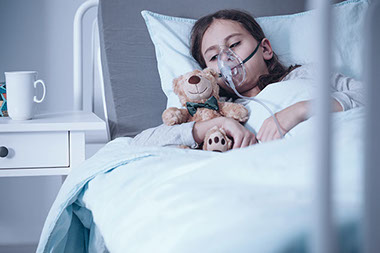
    Girl in bed with breathing mask on while holding a teddy bear.

    Cystic fibrosis (CF) is an inherited disease that affects 70,000 people worldwide. People who have CF have a gene mutation. This gene mutation causes mucus in the body to become thick and sticky.

    With CF, thick mucus in the lungs can cause infections and make it hard to breathe. The pancreas, which helps digest food, becomes clogged. Then the body can’t absorb nutrients from food. This can cause malnutrition and poor growth. CF affects other organs, too.

    CF and genetics

    People with CF have two copies of the CF gene. They get one copy from each parent. Both parents must have at least one copy of the CF gene.

    People with only one copy of the CF gene are called carriers. They don’t have the disease and may not know that they have the CF gene. Each time two CF carriers have a child, the chances are:

    *  25 percent (1 in 4) the child will have CF

    *  50 percent (1 in 2) the child will be a carrier but will not have CF

    *  25 percent (1 in 4) the child will not be a carrier and will not have CF

    People with CF can also pass copies of their CF genes to their children. If someone with CF and a CF carrier have a child together, the chances are:

    *  50 percent (1 in 2) the child will be a carrier but will not have CF

    *  50 percent (1 in 2) the child will have CF

    Getting tested for the CF gene

    People who are considering pregnancy may wish to get a CF genetic test. This tells you if you have CF or if you could be a carrier. This test looks for the most common CF genes, but it doesn’t test for all of them. If you’re not sure if you need the test, ask your doctor. The decision to get CF testing is a personal one and is different for everyone.

    Longer lives  for CF

    There is no cure for CF. But with proper medical care, people with CF are living longer than ever before. Today, more than half of people who live with CF are over age 18.

    Sources: Cystic Fibrosis Foundation, National Institutes of Health

    © American Institute for Preventive Medicine

  • Avoid Secondhand Smoke

    Tobacco Cessation

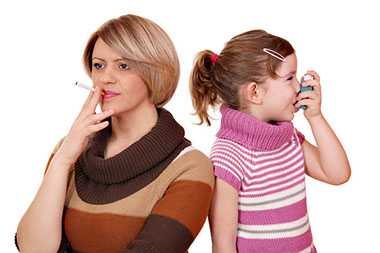
    Image of women smoking and child using an asthma inhaler.

    Somebody else’s habit can destroy your health.

    All that smoke that gets in your eyes is also getting in your airways and lungs, causing potentially fatal heart disease and cancer. It is also blamed for increased risk of sudden infant death syndrome, ear infections, colds, pneumonia, bronchitis, and more severe asthma. Researchers report that there is no safe level of exposure.

    What is secondhand smoke?

    Secondhand smoke is the combination of smoke given off a burning tobacco product and the smoke exhaled by a smoker. People can be exposed to secondhand smoke in homes, cars, the workplace, and public places, such as bars, restaurants, and leisure settings. It contains at least 250 harmful chemicals including hydrogen cyanide, carbon monoxide, and ammonia.

    Laws protect your air.

    Federal law bans smoking on most public transportation and in federally owned buildings. Many states and local governments have passed laws that ban smoking in public facilities, such as schools, hospitals, airports, bus terminals, parks, and beaches, as well as private workplaces, including restaurants and bars.

    Health risks of secondhand smoke:

    *  Breast cancer

    *  Cancers of the nose, throat, and sinus cavity

    *  Leukemia

    *  Lymphoma

    *  Brain tumors in children

    *  Sudden infant death syndrome (SIDS)

    *  Ear infections

    *  Colds

    *  Pneumonia

    *  Bronchitis

    *  Severe Asthma

    *  Coughing and wheezing

    Avoid thirdhand smoke, too!

    Thirdhand smoke is the residue left from tobacco smoke that lingers on a person’s clothing, skin, hair, and on carpet, drapes, walls, and furniture. And it does this long after the tobacco use has stopped. Thirdhand smoke has the same harmful chemicals as secondhand smoke.

    Even if you do not allow tobacco use in your home, avoid or limit being in homes and other places where smoking is allowed. And reserve nonsmoking hotel rooms and rental cars.

    Action Step

    Don’t let anyone, including your mate, smoke in your home. Never eat at restaurants that allow smoking or travel in a car with others who are smoking.

    Page from Ways to Well-Being book by the American Institute for Preventive Medicine. www.HealthyLife.com. All rights reserved.

    © American Institute for Preventive Medicine

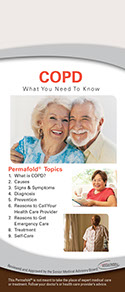
  • Copd

    Respiratory conditions

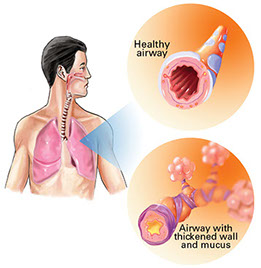
    The letters COPD are for chronic obstructive pulmonary disease. This is lung disease that worsens over time. With COPD, airways are narrowed and blocked. The lungs are damaged. Having COPD makes it hard to breathe in and out. In the U.S. and throughout the world, COPD is a major cause of illness and death. Most often, COPD is due to one or both of these problems:

    *  Chronic bronchitis. This causes swelling and the build-up of mucus in the lungs.

    *  Emphysema. This damages the walls of the air sacs in the lungs.

    Illustration of COPD.

    Signs & Symptoms

    *  A chronic cough. The cough brings up mucus or phlegm.

    *  Shortness of breath. This is usually worse with exercise or when you exert yourself.

    *  Feeling like you can’t take a full, deep breath

    *  Chest tightness

    *  Wheezing. This is a whistling sound when you breathe.

    *  Frequent colds and other respiratory infections

    *  Swelling in the legs, ankles, and feet

    Symptoms of COPD usually start after 40 years of age and slowly worsen over time.

    Diagnosis

    COPD is usually diagnosed with a breathing test called spirometry. Spirometry measures how much air your lungs can hold and how fast you can blow air out of your lungs. It is a simple and fast test. Your doctor or nurse technician will ask you to take a deep breath and then breathe out as hard and as fast as you can into a mouthpiece. The spirometer will measure and record the results.

    A chest X-ray or CT scan can also diagnose COPD. Sometimes, a blood sample is taken  to test levels of oxygen and carbon dioxide in the blood.

    Causes

    *  Smoking. This is the main cause. More than 90 percent of people with COPD are smokers or former smokers.

    *  Breathing in other lung irritants over a long period of time. These include air pollution and dust or chemicals used in the mining and textile industries.

    *  In some rare cases, having a genetic disorder called Alpha-1 antitrypsin deficiency. This is due to a defective protein in the blood.

    When to Seek Medical Care

    Reasons to Call Your Health Care Provider

    *  You have a much harder time catching your breath.

    *  You have sudden tightness in your chest.

    *  You cough a lot more, it becomes difficult to cough, or you cough up yellow, green, brown or red-colored mucus.

    *  You have a fever.

    *  You have heart palpitations or a faster pulse   than usual.

    *  You have a sudden increase or loss of appetite.

    *  You have blurry vision or see double.

    *  You become unusually dizzy or sleepy or you can’t think clearly.

    *  You are anxious or depressed.

    Reasons to Get Emergency Care

    *  Your lips or fingernails are blue or gray.

    *  It is hard for you to talk or walk.

    *  Your breathing is fast and hard, even after taking medicine.

    *  Your heart is beating very fast or irregularly.

    Prevention

    The best way to prevent COPD is to not smoke. If you smoke, commit to quit! Talk to your doctor about over-the-counter or prescribed medications that can help you quit. To increase your chances of success, take part in a stop smoking class or program.

    *  Avoid secondhand smoke and other lung irritants.

    *  If you work in an at-risk industry, wear protective clothing and equipment. Follow the safety measures of your workplace.

    You can get help to quit smoking from:

    1-877-44U-QUIT (448-7848)

    1-800-QUIT-NOW (784-8669)

    www.lungusa.org

    www.smokefree.gov

    Treatment

    Work with your health care provider to develop and follow a treatment plan to meet your needs.

    Medications

    *  Bronchodilators relieve shortness of breath and keep airways open.

    *  Anticholinergics relax airway muscles.

    *  Inhaled steroids reduce swelling in the airways.

    *  Antibiotics and antiviral drugs treat infections that occur with COPD and that make it worse.

    Oxygen Therapy

    Your doctor may prescribe oxygen therapy if oxygen levels in your blood are too low. Oxygen is provided by an oxygen cylinder or concentrator and delivered through a nasal tube. It can help you be more active and lead a better life.

    *  Use your oxygen, as advised by your doctor or care specialist.

    *  Do not smoke or let people around you smoke while oxygen is in use.

    *  Before you travel, ask your doctor how to have your oxygen needs met. Discuss where you plan to go and your method of travel. If you are flying, check with the airline for rules about traveling with oxygen. You may need a letter from your doctor or copies of your oxygen prescription, so plan ahead.

    Vaccines

    People who have COPD are more likely to be sicker longer and may have more serious health problems when they get the flu or pneumonia.

    *  Get a yearly flu shot. Get information fromwww.cdc.gov/fluor 1-800-CDC-INFO (232-4636).

    *  Get a pneumonia vaccine, as advised by your doctor.

    *  Lower your risk of illness. Wash your hands often with soap and water and keep them away from your eyes, nose, and mouth. When you can’t wash your hands, use alcohol-based hand cleaners. Avoid crowded places when possible.

    Pulmonary Rehabilitation

    You work with a team of health care providers to create a personal treatment plan and set goals. You learn to manage your COPD to live a more normal life. Pulmonary rehabilitation includes:

    *  Exercise. This strengthens your muscles and improves your endurance. It makes it easier for you to move, do activities, and take care of yourself. You will find out how often to exercise, for how long, and how hard to push yourself.

    *  Emotional Support. Many people who have COPD also deal with depression, anxiety, and low self-esteem. Some programs offer emotional support, group counseling, and/or relaxation training.

    *  Disease Education. You will learn how to quit smoking, eat healthy, and manage symptoms.

    Self-Care

    Quit smoking! This is the most important thing you can do to manage your COPD.

    Learn your triggers and know how to avoid them.

    *  Don’t smoke.

    *  Control household triggers, such as dust. Wear a filter mask when you vacuum, dust, and do hobbies or work that involve dust and other irritants. Use a damp (not dry) cloth for dusting.

    *  Keep your home well-ventilated.

    *  Do not use aerosols, ammonia, lye, kerosene, powders or solvents. Find out about products that are safe for you and the environment at Indoor Air Quality (IAQ) House atwww.epa.gov/iaqandwww.epa.gov.

    *  Stay inside when air quality is poor. Find Air Quality Index forecasts fromwww.airnow.gov.

    *  Follow your health care provider’s advice for using air filters and air purifiers.

    Manage your coughing.

    *  Do not take over-the-counter cough or other medicines unless your doctor tells you to. Your health care provider can teach you techniques for coughing comfortably and productively.

    *  Unless you are told by your doctor to limit your fluids, drink at least 8 glasses of water a day to keep mucus thin and easier to cough up.

    Practice pursed lip breathing to relieve shortness of breath:

    *  Relax. Close your mouth. Breathe in through your nose. Do this slowly and count: one, two.

    *  Purse your lips like you are going to whistle. Breathe out slowly and count: one, two, three, and four.

    *  Do not do this tight-lipped.

    Resources

    The Asthma and Allergy Foundation of America

    800.7.ASTHMA (727.8462)

    www.aafa.org

    National Heart, Lung, and Blood Institute

    301.592.8573

    www.nhlbi.nih.gov
    COPD brochure by the American Institute for Preventive Medicine. www.HealthyLife.com. All rights reserved.

    © American Institute for Preventive Medicine

  • Emphysema

    Respiratory conditions

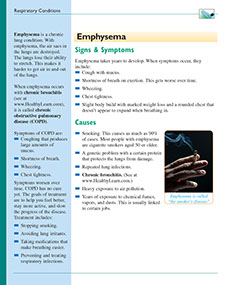
    Emphysema is a chronic lung condition. With emphysema, the air sacs in the lungs are destroyed. The lungs lose their ability to stretch. This makes it harder to get air in and out of the lungs.

    When emphysema occurs with chronic bronchitis it is called chronic obstructive pulmonary disease (COPD).

    Signs & Symptoms

    Emphysema takes years to develop. When symptoms occur, they include:

    *  Cough with mucus.

    *  Shortness of breath on exertion. This gets worse over time.

    *  Wheezing.

    *  Chest tightness.

    *  Slight body build with marked weight loss and a rounded chest that doesn’t appear to expand when breathing in.

    Symptoms of COPD are:

    *  Coughing that produces large amounts of mucus.

    *  Shortness of breath.

    *  Wheezing.

    *  Chest tightness.

    Symptoms worsen over time. COPD has no cure yet. The goals of treatment are to help you feel better, stay more active, and slow the progress of the disease. Treatment includes:

    *  Stopping smoking.

    *  Avoiding lung irritants.

    *  Taking medications that make breathing easier.

    *  Preventing and treating respiratory infections.

    Causes

    *  Smoking. This causes as much as 90% of cases. Most people with emphysema are cigarette smokers aged 50 or older.

    *  A genetic problem with a certain protein that protects the lungs from damage.

    *  Repeated lung infections.

    *  Chronic bronchitis.

    *  Heavy exposure to air pollution.

    *  Years of exposure to chemical fumes, vapors, and dusts. This is usually linked to certain jobs.

    Treatment

    *  A program, medication, and/or nicotine replacement to stop smoking.

    *  Physical therapy to loosen mucus in the lungs for chronic bronchitis.

    *  Medicines, such as bronchodilators, corticosteroids, and antibiotics.

    *  Flu and pneumonia vaccines.

    *  Surgery that removes the most severely diseased parts of the lung. A lung transplant may be needed for some persons with very severe disease.

    Emphysema can’t be reversed. By the time it is found, 50% to 70% of lung tissue may already be destroyed. Prevention is the only way to avoid permanent damage.

    Questions to Ask

    Self-Care / Prevention

    *  Don’t smoke. If you smoke, quit. Avoid secondhand smoke.

    *  Limit exposure to air pollution and lung irritants. Follow safety measures when working with materials that can irritate your lungs.

    *  Use a cool-mist vaporizer indoors.

    *  Drink plenty of fluids.

    *  Avoid dust, fumes, pollutants, etc.

    *  Do breathing exercises as advised by your doctor.

    *  Exercise daily as prescribed by your doctor or exercise therapist.

    Resources

    American Lung Association

    800.LUNG.USA (586.4872)

    www.lungusa.org

    National Cancer Institute’s Smoking Quitline

    877.44U.QUIT (448.7848)

    National Heart, Lung, and Blood Institute

    www.nhlbi.nih.gov

    Smokefree.Gov

    800.QUIT.NOW (748.8669)

    www.smokefree.gov

    Healthier at Home book by the American Institute for Preventive Medicine. www.HealthyLife.com. All rights reserved.

    © American Institute for Preventive Medicine

  • Quit Smoking

    Healthylife® Weigh

    Part 3

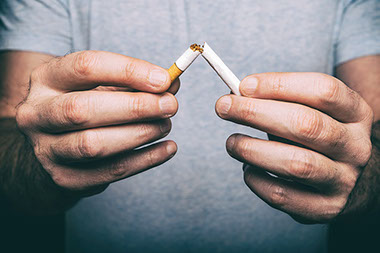
    Hands breaking a cigarette in half.

    Smoking and the use of other tobacco products causes serious harm to the body, including cancer, cardiovascular disease, and emphysema. Smoking can also complicate diabetes and other health conditions.

    If you are smoking, try to quit. Talk to your doctor about tools to help you quit. Call 800-QUIT-NOW (800-784-8669) to talk to someone who can help you quit.

    Quitting smoking may cause some weight gain as your body learns to regulate blood sugar and appetite normally again. Smoking can also be a coping strategy for stress, so you will need to learn new ways to manage stress. It is worth it to quit smoking.

    © American Institute for Preventive Medicine

  • Another Reason To Stop Smoking

    SELF-CARE CORNER

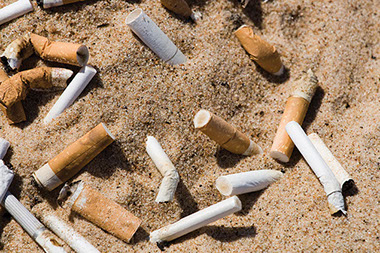
    Image of cigarettes butts.

    Each year Americans buy nearly 300 billion cigarettes. A vast number of those cigarette butts, including the filters, will be flicked into the environment, landing along waterways, parks, beaches, and public roads. This makes cigarettes the number one littered item in the nation, according to Legacy, the nonprofit created in the wake of tobacco lawsuits. Cigarette butts are made mostly of plastic, which can take years to decompose, and they only break up into small particles of plastic. Join a cleanup event and help build awareness around your community and workplace.

    © American Institute for Preventive Medicine

  • Harmful Hookahs

    WELL-BEING

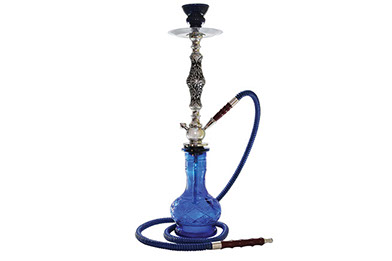
    Image of a hookah.

    Despite warnings from the CDC that hookah smoking can be just as dangerous as cigarettes, many young adults believe that using the water pipes is not harmful to their health, according to a UCLA School of Nursing study.

    Researchers visited three Southern California hookah lounges and asked patrons between the ages of 18  and 30, “Do you believe smoking a hookah is harmful  to your health?”

    Fifty-seven percent said they thought that it was not. When asked why they thought hookahs were not harmful, 47% said they believed that the smoke gets filtered through water, and 35% said they thought that fruit used to flavor the tobacco would detoxify tobacco’s harmful chemicals. Still others, 16%, said they assumed hookahs are not harmful because the tobacco is not addictive and does not contain nicotine.

    Unfortunately, none of those beliefs is true.

    © American Institute for Preventive Medicine

  • Kick Cigarettes Out Of Your House

    SELF-CARE CORNER

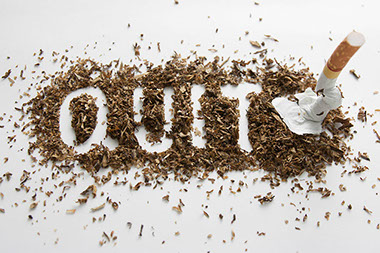
    Image of the word "Quit" spelled within a pile of tobacco with a crused cigarette.

    You know that smoking can cause health problems, including heart disease and cancer. But if you smoke inside your home, you could be hurting everyone who lives with you. Anyone who is around cigarette smoke is exposed to secondhand smoke.

    *  Secondhand smoke contains more than 4,000 chemicals. Many of these have been proven to cause cancer and irritate the lungs.

    *  Secondhand smoke can trigger asthma attacks and they happen more often and with more severity in children.

    *  Children whose parents smoke have more ear infections, bronchitis and pneumonia.

    You and your family can be healthier if you don’t allow any smoking in your home. And don’t allow guests to smoke in your home or around your children. If your children regularly visit another home, such as a child care provider, make sure no one smokes in that home.

    If you need help quitting, call 1-800-QUIT-NOW or visitsmokefree.govfor free resources.

    Source: Asthma and Allergy Foundation of America

    © American Institute for Preventive Medicine

  • After You Quit Smoking

    WELL-BEING

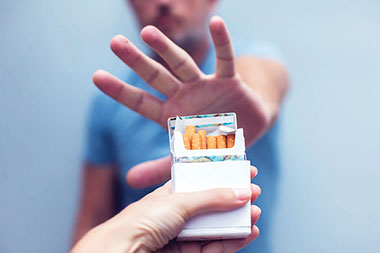
    Hand refusing cigarettes.

    No matter what your age is, or how long you’ve smoked, you can reap benefits of quitting today!

    Here’s what happens in your body after you quit:

    *  12 hours later, carbon monoxide in your blood drops to normal levels.

    *  2 weeks to 3 months later, your circulation improves and your lungs work better.

    *  1 year later, your risk of developing heart disease is slashed in half.

    You’ll also lower your risk for lung cancer when you quit. And the health benefits continue the longer you stay smoke-free. Visitsmokefree.govto start your quit journey!

    © American Institute for Preventive Medicine