Systematic Stress Management Program
Step 1: Understanding Stress Section
Introduction
Common Symptoms of Distress
Life Events Questionnaire
Types of Stressors
Daily Hassles and Uplifts
Identification of Stressors
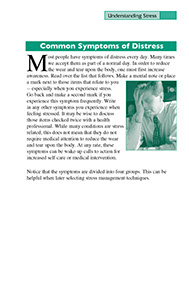
Most people have symptoms of distress every day. Many times we accept them as part of a normal day. In order to reduce the wear and tear upon the body, one must first increase awareness. Read over the list that follows. Make a mental note or place a mark next to those items that relate to you — especially when you experience stress. Go back and make a second mark if you experience this symptom frequently. Write in any other symptoms you experience when feeling stressed. It may be wise to discuss those items checked twice with a health professional. While many conditions are stress related, this does not mean that they do not require medical attention to reduce the wear and tear upon the body. At any rate, these symptoms can be wake-up calls to action for increased self-care or medical intervention.
Notice that the symptoms are divided into four groups. This can be helpful when later selecting stress management techniques.
Skeletal Muscles
Physical Symptoms of Distress Involving Skeletal Muscles
1. Tension headaches
2. Frowning
3. Gritting or grinding of teeth
4. Jaw pain
5. Stuttering or stammering
6. Trembling of lips or hands
7. Muscle tenseness, bracing, and aches
8. Neck aches
9. Back pain
10. Aggressive body language
Nervous System
Physical Symptoms of Distress Involving the Autonomic Nervous System
1. Migraine headaches
2. Increased sensitivity to light and sound
3. Lightheadedness, faintness, or dizziness
4. Ringing in ears
5. Enlarged pupils
6. Blushing
7. Dry mouth
8. Problems swallowing
9. Frequent colds or bouts with the flu
10. Hives
11. Rashes
12. “Cold chills,” or “goose bumps”
13. Heartburn, stomach cramping, or nausea
14. Uneven or rapid heartbeat without exercising
15. Difficulty breathing
16. Sudden, suffocating panic, as if you are about to die
17. Heart and chest pain
18. Increased perspiration
19. Night sweats
20. Cold, sweaty hands
21. Painfully cold hands and feet
22. Gaseousness or belching
23. Frequent urination
24. Constipation
25. Nervous diarrhea
26. Lowered sexual desire
27. Difficulty with sexual orgasm
Mental Symptoms of Distress
1. Anxiety, worry, guilt, or nervousness
2. Increased anger and frustration
3. Moodiness
4. Depression
5. Increased or decreased appetite
6. Racing thoughts
7. Nightmares
8. Problems concentrating
9. Trouble learning new information
10. Forgetfulness
11. Disorganization or confusion
12. Difficulty making decisions
13. A sense of being overloaded or overwhelmed by problems
14. More frequent crying
15. Suicidal thoughts
16. Fear of getting close to people
17. Loneliness
Behavioral Symptoms of Distress
1. Inattention to dress or grooming
2. More frequent lateness
3. A more “serious” appearance
4. Unusual behavior
5. Nervous habits, such as finger or foot tapping
6. Rushing around or pacing the floor
7. Increased frustration and irritability
8. Edginess
9. Overreaction to small things
10. Increased number of minor accidents
11. Perfectionism
12. Reduced work efficiency or productivity
13. Lies or excuses to cover up poor work
14. Fast or mumbled speech
15. Defensiveness or suspiciousness
16. Strained communication with others
17. Social withdrawal
18. Constant tiredness
19. Sleep problems
20. Frequent use of over-the-counter drugs
21. Weight gain or loss without diet
22. Increased smoking
23. Recreational drug use
24. Increased alcohol use
25. Gambling or overspending
(Taken from: “The Doctor’s Guide to Instant Stress Relief: A Psychological and Medical System” by Ronald G. Nathan, Ph.D., Albany Medical College, New York, Thomas E. Staats, Ph.D., Louisiana State University School of Medicine in Shreveport, Paul J. Rosch, M.D., The American Institute of Stress, New York.)
© American Institute for Preventive Medicine
Step 1: Understanding Stress
Step 3: Type A & B Behavior Patterns
Step 5: Thinking Differently
Step 7: Communication & Stress
Step 2: Stress Management at Work
Step 4: Biofeedback Training & Relaxation
Step 6: Time Management
Steps to Systematic Stress Management™
RELATED ARTICLES
© American Institute for Preventive Medicine – All Rights Reserved.Disclaimer|www.HealthyLife.com