Tag: medical

  • Medical Loans: The Good, Bad, And The Alternatives

    FINANCIAL HEALTH

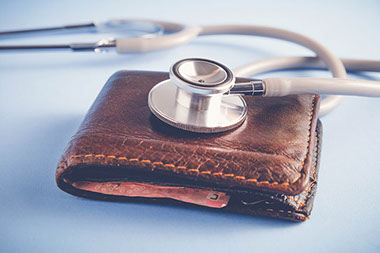
    Wallet with stethoscope.

    A medical loan is a specific type of personal loan that can only be used to cover healthcare expenses. For people facing significant out-of-pocket medical expenses, this type of loan can seem ideal. However, there are a few things you should know.

    The Good

    *  No collateral is required to secure the loan.

    *  Can be easy to qualify for if you have good credit.

    *  Enables you to undergo elective procedures quickly.

    The Bad

    *  Hard to get if you have poor credit.

    *  High interest rates can mean a very high monthly payment.

    *  May involve expensive initiation fees upfront.

    The Alternatives

    *  Talk to your doctor’s office or hospital about a payment plan.

    *  Find help through a medical charity or hospital program.

    *  Talk to your doctor about cost-effective treatment options.
    © American Institute for Preventive Medicine
  • The Id Card That Can Save Your Life

    Medical Care

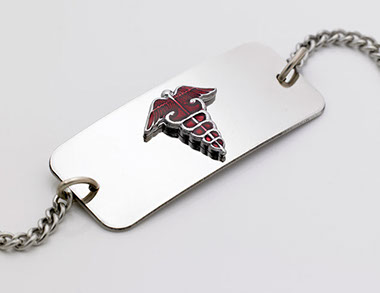
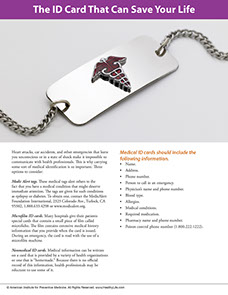
    Image of a medical alert tag.

    Heart attacks, car accidents, and other emergencies that leave you unconscious or in a state of shock make it impossible to communicate with health professionals. This is why carrying some sort of medical identification is so important. Three options to consider:

    *  Medic Alert tags. These medical tags alert others to the fact that you have a medical condition that might deserve immediate attention. The tags are given for such conditions as epilepsy or diabetes. To obtain one, contact the MedicAlert Foundation International, 2323 Colorado Ave., Turlock, CA 95382, 1.888.633.4298 orwww.medicalert.org.

    *  Microfilm ID cards. Many hospitals give their patients special cards that contain a small piece of film called microfiche. The film contains extensive medical history information that you provide when the card is issued. During an emergency, the card is read with the use of a microfilm machine.

    *  Nonmedical ID cards. Medical information can be written on a card that is provided by a variety of health organizations or one that is “homemade.” Because there is no official record of this information, health professionals may be reluctant to use some of it.

    Medical ID cards should include the following information.

    *  Name.

    *  Address.

    *  Phone number.

    *  Person to call in an emergency.

    *  Physician’s name and phone number.

    *  Blood type.

    *  Allergies.

    *  Medical conditions.

    *  Required medication.

    *  Pharmacy name and phone number.

    *  Poison control phone number (1.800.222.1222).

    Page from A Year of Health Hints book by the American Institute for Preventive Medicine. www.HealthyLife.com. All rights reserved.

    © American Institute for Preventive Medicine
  • Protect Yourself From Medical Identity Fraud

    MEDICAL NEWS

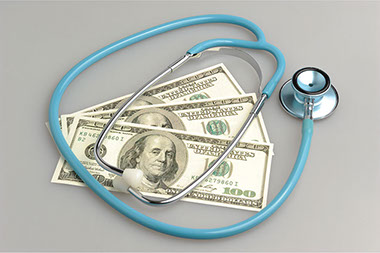
    Image of money and a stethoscope.

    It’s America’s fastest growing identity crime. DHHS says health care data hacking has affected more than 34 million Americans. Stolen records provide information for tax and insurance fraud.

    “When someone steals your medical identity, they corrupt your individual health record, so the next time you receive care your doctor can be working off a file riddled with bad information,” say ID Experts, a medical software provider.

    Use these wise fraud protection tips.

    *  Protect your health insurance card as carefully as you would your Social Security or credit cards. Theft of these cards allows someone to assume your identity to receive care. Treat their loss as seriously as a missing credit card; notify your insurance company and include it on any police report you file.

    *  Never share your insurance with a friend or family member. When someone pretends to be you to receive health care, your lifetime medical records become compromised. This can lead to a future misdiagnosis, a prescription mistake, or other inappropriate treatment.

    *  Use strong passwords on patient portals and change them often.

    *  Be observant in medical offices. Don’t just fill out the HIPAA policy form and then assume your provider is being careful. Raise concerns, like medical records sitting open on desks or unattended and unlocked computer terminals.

    *  Do NOT provide your medical information to someone who calls or emails you about your “possible involvement in a recent breach.”

    © American Institute for Preventive Medicine