Tag: Medical Exams & Tests

  • When In Doubt, Get A Second Opinion

    Medical Care

    Image of doctor and patient talking.

    The very first thing you should do if a doctor suggests surgery is to get the opinion of a second doctor. Programs to encourage patients to pursue other options have been established all over the country in an effort to curtail unnecessary surgery.

    Ask your physician or someone else you trust to recommend a non-surgeon or another surgeon, not affiliated with the same hospital as your physician, who will review your case and offer an opinion. Generally, you should not submit to surgery on the basis of one medical opinion alone.

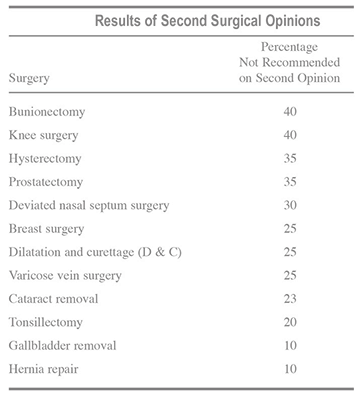
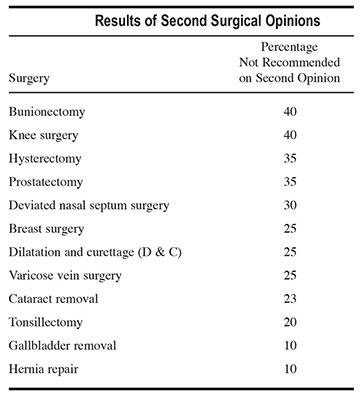
    The following table indicates the percentage of surgeries not recommended by the physician giving a second opinion.

    Always check with your insurance company to see if (and how much of) the cost of a second opinion will be covered. Most policies include this feature. If you have Medicare, call 1.800.MEDICARE (633.4227) for information on second surgical opinions.

    Page from A Year of Health Hints book by the American Institute for Preventive Medicine. www.HealthyLife.com. All rights reserved.

    © American Institute for Preventive Medicine

  • When To Refuse Tests Or Surgery

    Medical Care

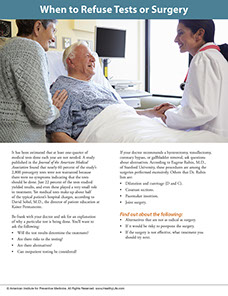
    Image of doctor talking to hospital patient and spouse.

    It has been estimated that at least one-quarter of medical tests done each year are not needed. A study published in the Journal of the American Medical Association found that nearly 60 percent of the study’s 2,800 pre-surgery tests were not warranted because there were no symptoms indicating that the tests should be done. Just 22 percent of the tests studied yielded results, and even these played a very small role in treatment. Yet medical tests make up about half of the typical patient’s hospital charges, according to David Sobel, M.D., the director of patient education at Kaiser Permanente.

    Be frank with your doctor and ask for an explanation of why a particular test is being done. You’ll want to ask the following:

    *  Will the test results determine the treatment?

    *  Are there risks to the testing?

    *  Are there alternatives?

    *  Can outpatient testing be considered?

    If your doctor recommends a hysterectomy, tonsillectomy, coronary bypass, or gallbladder removal, ask questions about alternatives. According to Eugene Rubin, M.D., of Stanford University, these procedures are among the surgeries performed excessively. Others that Dr. Rubin lists are:

    *  Dilatation and curettage (D and C).

    *  Cesarean sections.

    *  Pacemaker insertion.

    *  Joint surgery.

    Find out about the following:

    *  Alternatives that are not as radical as surgery.

    *  If it would be risky to postpone the surgery.

    *  If the surgery is not effective, what treatment you should try next.

    Page from A Year of Health Hints book by the American Institute for Preventive Medicine. www.HealthyLife.com. All rights reserved.

    © American Institute for Preventive Medicine

  • Telemedicine: Pros & Cons

    SELF-CARE CORNER

    Doctor smilng and waving Hi while on a telemedicine call.

    For some people, seeing their doctor from the comfort of their own home has made accessing care easier. But, for others, the lack of in-person care makes managing their health difficult.

    Telemedicine is unlikely to go away. As a patient, you need to know how to get the most out of virtual visits and when an in-person visit might be the way to go.

    Pros of telemedicine

    *  Fast and flexible access to care

    *  Decreased exposure to other ill patients

    *  No need to leave home when dealing with a minor illness or concern

    *  Less time spent driving

    *  Ease of follow-up for existing health issues

    *  Less time lost at work

    Cons of telemedicine

    *  Insurance may not cover video visits; check your plan carefully

    *  Not everyone has access to technology

    *  Diagnosing a new condition may not be possible over video

    *  Challenges in monitoring vital signs, like blood pressure, etc.

    *  Loss of meaningful relationship with healthcare providers

    *  Important symptoms may get missed

    Get the most from telemedicine

    *  Check your technology set-up in advance.

    *  Keep your doctor’s phone number handy in case you get disconnected.

    *  Write down a list of symptoms and questions.

    *  Write down measurements your doctor may need (height, weight, blood pressure, etc.).

    *  Have your medication list on-hand.

    *  Choose a quiet room where you won’t be interrupted.

    *  Be on time.

    *  If your doctor recommends any tests or follow-ups, make those appointments right away.

    When in-person is best

    Not every situation is right for a telemedicine visit. Here are times when in-person may be recommended:

    *  Pediatric visits

    *  Emergency situations

    *  Yearly physicals

    *  Situations where a physical exam is needed

    © American Institute for Preventive Medicine

  • The Facts About Donating Organs

    MEDICAL NEWS

    Illustration of organs.

    Thousands of children and adults are in need of an organ transplant. The biggest needs are for kidneys, followed by livers.

    Being an organ donor

    Adults over the age of 18 can register at organdonor.gov. Select your state and register. Organ donors who are under age 18 will need authorization from their parents. You can always go back to the website later and change your organ donation status, too.

    People with health conditions can donate

    Having a health issue doesn’t mean you can’t be an organ donor. People with many different health conditions have been successful organ donors. The transplant team can decide which organs can be used – and even one organ can save a life.

    Tell friends & family

    Sometimes a person is registered to be a donor, but their loved ones don’t know. Then, they don’t allow the organs to be donated when a person dies. If you’re serious about donating your organs, make sure you tell your close relatives and friends.

    Medical care

    The medical team who cares for a person at a hospital is separate from the organ transplant team. Every possible effort is made to save a person’s life, regardless of their organ donation wishes.

    No costs to an organ donor’s family

    Any costs related to an organ transplant are paid by the recipient. Their costs are usually paid by their insurance.

    Organ donation doesn’t interfere with funeral wishes

    Organs are carefully removed with surgery. People who are organ donors can still have an open casket funeral.

    Source: U.S. Department of Health & Human Services

    © American Institute for Preventive Medicine

  • How To Avoid Hospital Germs

    Medical Care

    Image of nurse using antibacterial dispenser.

    Florence Nightingale once said, “The first requirement of a hospital is that it should do no harm.”

    Unfortunately, that goal has still not been totally achieved. There is a good deal of research that shows spending time in a hospital can make you sick-for several reasons.

    *  There are a number of viruses and bacteria brought into hospitals by patients, employees, and visitors.

    *  The hospital rounds made by the staff can transmit viruses and bacteria from one patient to another.

    *  Hospital procedures, such as injections and I.V. therapy, penetrate the skin, bypassing the body’s first line of defense against disease.

    Nosocomial (hospital-linked) infections are on the rise due to hospital cutbacks, carelessness and violations of infection-control standards. Here’s what you can do to protect yourself.

    *  Try to be as well-rested and as well-nourished as possible before you’re admitted to the hospital.

    *  Ask that hospital personnel wash their hands before providing care to you.

    *  If a hospital roommate becomes infected with pneumonia, ask to have your room changed.

    Page from A Year of Health Hints book by the American Institute for Preventive Medicine. www.HealthyLife.com. All rights reserved.

    © American Institute for Preventive Medicine

  • A Dozen Rights Every Patient Should Expect

    Medical Care

    Image of doctor talking to patient.

    What rights and privileges can you expect from a hospital when you become a patient? According to the American Hospital Association (AHA), there are specific standards of care that all patients are entitled to. The AHA has developed a voluntary code-the Patient’s Bill of Rights-that presents guidelines for both staff and patients.

    1.  You have the right to considerate and respectful care.

    2.  You have the right to obtain from your physician complete, current information concerning your diagnosis, treatment, and prognosis in terms you can reasonably be expected to understand.

    3.  You have the right to receive from your physician information necessary to give informed consent prior to the start of any procedure and/or treatment.

    4.  You have the right to refuse treatment to the extent permitted by law, and to be informed of the medical consequences of your action.

    5.  You have the right to privacy concerning your own medical care program.

    6.  You have the right to expect that all communications and records pertaining to your care should be treated as confidential.

    7.  You have the right to expect that, within its capacity, a hospital must make a reasonable response to your request for services.

    8.  You have the right to obtain information about any relationship of your hospital to other health care and educational institutions insofar as your care is concerned.

    9.  You have the right to be advised if the hospital proposes to engage in or perform human experimentation affecting your care or treatment.

    10. You have the right to expect reasonable continuity of care.

    11. You have the right to examine and receive an explanation of your bill regardless of the source of payment.

    12. You have the right to know what hospital rules and regulations apply to your conduct as a patient.

    Page from A Year of Health Hints book by the American Institute for Preventive Medicine. www.HealthyLife.com. All rights reserved.

    © American Institute for Preventive Medicine

  • The Ins And Outs Of Ambulatory Surgery

    Medical Care

    Ambulatory surgery is surgery done on an outpatient basis. This can be done in a hospital. It can also be done at a freestanding center. One reason ambulatory surgeries are more common now than in the past is advanced medical practices. This includes the use of anesthesias that wear off quicker and have fewer side effects. Common ambulatory surgeries include:

    *  Endoscopy procedures.

    *  Hernia repair.

    *  Some plastic surgeries.

    *  Tubal ligation.

    *  Dilation and curettage (D & C).

    *  Breast biopsy.

    *  Tonsillectomy.

    *  Cataract and glaucoma procedures.

    *  Orthopedic procedures (such as arthroscopy of a knee).

    *  Benign and cancerous tumor procedures.

    Ambulatory or outpatient surgery has many advantages:

    *  Hospitalization poses the risk of exposure to infections and may also keep patients bedridden longer than is necessary.

    *  Ambulatory surgery gets you in and out quickly.

    *  The patient has a good deal of choice as to when the surgery will occur. The surgery is scheduled by appointment for patient convenience.

    *  Most people prefer healing at home in their own beds to staying in a hospital. The home can be a more comfortable place in which to heal than a hospital with its hectic schedules.

    *  Medical bills are much lower if you don’t have to stay in a hospital overnight.

    Things to consider:

    *  Many procedures need special preparation ahead of time. Follow your doctor’s orders exactly.

    *  You may need someone to drive you home and stay with you as you recover.

    *  Do not bring valuables with you when you have outpatient surgery.

    Page from A Year of Health Hints book by the American Institute for Preventive Medicine. www.HealthyLife.com. All rights reserved.

    © American Institute for Preventive Medicine

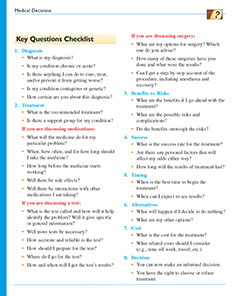
  • Key Questions Checklist

    Medical Care

    Diagnosis

    *  What is my diagnosis?

    *  Is my condition chronic or acute?

    *  Is there anything I can do to cure, treat, and/or prevent it from getting worse?

    *  Is my condition contagious or genetic?

    *  How certain are you about this diagnosis?

    Treatment

    *  What is the recommended treatment?

    *  Is there a support group for my condition?

    If you are discussing medications:

    *  What will the medicine do for my particular problem?

    *  When, how often, and for how long should I take the medicine?

    *  How long before the medicine starts working?

    *  Will there be side effects?

    *  Will there be interactions with other medications I am taking?

    If you are discussing a test:

    *  What is the test called and how will it help identify the problem? Will it give specific or general information?

    *  Will more tests be necessary?

    *  How accurate and reliable is the test?

    *  How should I prepare for the test?

    *  Where do I go for the test?

    *  How and when will I get the test’s results?

    If you are discussing surgery:

    *  What are my options for surgery? Which one do you advise?

    *  How many of these surgeries have you done and what were the results?

    *  Can I get a step-by-step account of the procedure, including anesthesia and recovery?

    Benefits vs. Risks

    *  What are the benefits if I go ahead with the treatment?

    *  What are the possible risks and complications?

    *  Do the benefits outweigh the risks?

    Success

    *  What is the success rate for the treatment?

    *  Are there any personal factors that will affect my odds either way?

    *  How long will the results of treatment last?

    Timing

    *  When is the best time to begin the treatment?

    *  When can I expect to see results?

    Alternatives

    *  What will happen if I decide to do nothing?

    *  What are my other options?

    Cost

    *  What is the cost for the treatment?

    *  What related costs should I consider (e.g., time off work, travel, etc.).

    Decision

    *  You can now make an informed decision.

    *  You have the right to choose or refuse treatment.

    Page from the Healthier at Home book by the American Institute for Preventive Medicine. www.HealthyLife.com. All rights reserved.

    © American Institute for Preventive Medicine

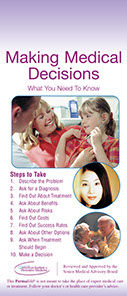
  • Making Medical Decisions

    Medical Care

    Describe the Problem

    Be Able to Answer These Questions About Your Current Problem and Complaints

    *  What do you think the problem is?

    *  Are you in pain? If yes:

    – What does the pain feel like? Is it a sharp, dull, and/or throbbing pain?

    – Where is the pain?

    *  When did the problem(s) start? Has it changed since then?

    *  What makes it go away?

    *  Have you felt like this before? Is so, when? What made it go away then?

    *  Have you had any other symptoms or signs lately? Examples are:

    – Fever.

    – Blood in the urine.

    – Shortness of breath.

    – Anxiety.

    – Insomnia.

    Be Able to Give This Information About Your Health

    *  Your medical history and your family’s medical history.

    *  Allergies you have.

    *  Medications you take.

    *  Your daily habits.

    *  Your work.

    *  Pressures you are under.

    Ask for a Diagnosis

    Your Doctor or Health Care Provider Makes a Diagnosis From

    *  Symptoms (things you feel, such as pain).

    *  Signs (things that can be seen or measured, such as swelling).

    *  Exams and tests.

    When Your Doctor or Health Care Provider Gives You A Diagnosis

    *  Ask him or her to explain the diagnosis in detail.

    *  Ask questions if you don’t understand. If you need to, bring a trusted family member or friend with you to help ask questions.

    *  Find out if your condition is chronic or acute. A chronic one lasts a long time. An acute one comes on suddenly and doesn’t last long. If your condition is chronic, find out how it will affect your life.

    *  Ask if the diagnosis increases your risk for any other problems. If so, find out what they are and what you can do to prevent them.

    Other Things to Ask

    *  Is my condition contagious? If so, how do I not spread it?

    *  Is my condition genetic? If so, what does this mean for others in my family?

    *  How certain are you about this diagnosis? Are there are other symptoms to look for that would help confirm or disprove the diagnosis?

    *  What books, pamphlets, and computer Web sites can I use to find out more about my condition? What organizations can I contact? Is there a support group in my area for this condition?

    Find Out About Treatment

    Ask your doctor or health care provider to state clearly and simply what the proposed treatment is. If medication is prescribed, ask these questions:

    *  What is the name of the medicine? Write down the name and dose.

    *  What will the medicine do?

    *  Is there a less expensive, generic form?

    *  When, how often, and for how long, should I take the medicine?

    *  Do I take this medicine until I feel better or until it is used up?

    *  When will the medicine start to work?

    *  Could there be side effects? What should I do if they occur? What side effects should I let you know about?

    *  Is this medicine okay to use with other medications I take?

    *  Is there anything else I should or should not do while taking the medicine?

    – Should I take this medicine with or without food?

    – Is there anything I should not eat or drink when I take this medicine? Can I take this medicine with grapefruit juice?

    – Can I have alcohol?

    – Do I need to stay out of the sun?

    *  What should I do if I miss a dose?

    If Surgery is Prescribed

    *  Find out about the alternatives to surgery.

    *  Consider getting a second opinion. Your health insurance may require this.

    *  Find out if your health insurance plan will pay for the surgery.

    *  Ask what types of surgery there are for your condition.

    *  Ask for a step-by-step account of the procedure. Find out what you need to do before surgery. Find out what is done during and after surgery. This includes anesthesia and recovery.

    Questions to Ask if A Test is Prescribed

    *  What is the test called? How will it help tell what is wrong?

    *  Will it give specific or general information?

    *  If the answer is general, where do we go from here?

    *  How accurate and reliable is the test?

    *  Is the test invasive or noninvasive? Invasive means something, such as a catheter, chemical dye, etc., is inserted into the body. Nothing is inserted into the body with an noninvasive test. Examples are blood pressure readings and simple chest x-rays.

    *  What will I have to do to prepare for the test?

    *  Where do I go for the test?

    *  How and when will I get the test’s results?

    *  Will more tests be needed?

    Ask About Benefits

    Medical treatments change over time as researchers learn more and technology improves. Make certain that you and your health care provider have access to the latest and best information.

    *  Find out how the proposed treatment will improve your condition.

    – Will it cure the problem?

    – Will it help with symptoms?

    – Can it lead to other problems?

    *  Discuss with your health care provider what you expect the proposed treatment will do. Make sure you are being realistic about what you expect.

    *  Find out what will happen if you don’t have the treatment.

    A good rule of thumb is to make sure one strong reason can stand alone to justify going ahead with the treatment. In many cases, two or more not-so-strong reasons may not be enough. Discuss your concerns with your health care provider and loved ones.

    Ask About Risks

    If surgery is prescribed, ask about the risks for these things, during and after surgery:

    *  Pain.

    *  Anesthesia.

    *  Infection.

    *  Accidental injury.

    *  Heavy bleeding (hemorrhage).

    *  Another unplanned operation.

    *  Death.

    *  Weigh the risks versus the benefits before you decide to proceed with treatment. Discuss your concerns with your health care provider and others close to you.

    *  With your health care provider, chart the risks and benefits. On a sheet of paper, draw a line down the center. List the risks on one side. List the benefits on the other. Weigh each item on a scale from 1 to 5 (1 = not so important; 5 = very important). Add up the columns to see which one has a higher score.

    *  Ask about risks before you get any test or X-ray, no matter how minor it may be. If you are not asked about allergies, state them ahead of time. If you are female, tell your health care provider if you are or may be pregnant. If so, you should not get X-rays unless they are absolutely necessary.

    Find Out Costs

    *  What is the cost of the proposed treatment?

    *  Does this include the cost for follow-up? If so, how much is covered?

    *  Check with your insurance plan to see what it will pay and how much you will have to pay.

    *  Ask what you need to do to get maximum benefits. An example is pre-authorization for surgery. Find out if your health care provider and hospital accept your insurance.

    *  What related costs do I need to consider? Look into costs of medication, costs for time off work and child care and transportation costs.

    Find Out Success Rates

    The success rate is how often a treatment works compared to how many times it is done. For example, if a certain surgery has been done 100 times and was successful 80 times, it has a success rate of 80%.

    If surgery is prescribed, ask your health care provider and the medical facility where you will have the surgery these questions:

    *  What is the national success rate?

    *  What is the success rate at the hospital/medical facility where my treatment is planned?

    *  What is the surgeon’s success rate and experience with the surgery?

    *  How many procedures are the above success rates based on?

    *  Are there any personal factors that will affect my odds either way?

    *  How long will the results of my surgery/treatment last?

    According to several studies, you are less likely to die or suffer complications from surgery or other procedures if you go to an accredited hospital that performs a large number of that procedure each year. Some experts advise at least 200 surgeries. If you are given a success rate percentage, find out how many procedures the percentage is based on. A success rate of 80% doesn’t mean much if it is based on only 5 surgeries. For more information on hospital surgical success rates, read the book Best Medicine by Bob Arnot, M.D.

    Ask About Other Options

    Discuss other options that can diagnose and/or treat your condition. There is usually more than one option. Sometimes, the best choice at the time may be no choice. This is called “wait and see.” If this doesn’t work for you, make a list of other options. Ask your doctor or health care provider these questions:

    *  What might happen if I decide to do nothing?

    *  What are my other options?

    – Ask about options that don’t need surgery, such as lifestyle changes (diet, exercise, stopping smoking, etc.).

    – If surgery is proposed, ask about outpatient surgery, laser treatment, laporascopic surgery, and the newest ways to treat your condition.

    *  If you are not satisfied with your options, discuss this with your provider. If you are still not satisfied, consider consulting another health care provider.

    *  Look into every option in depth.

    Ask When Treatment Should Begin

    When you decide to go ahead with a treatment plan, ask these questions:

    *  When is the best time to get started with the plan?

    *  Do I have to undergo treatment right away? If not, how long can I safely wait? Don’t assume that it has to be done as soon as possible. You may be able to delay the treatment until a time that best fits your schedule.

    *  Decide the best time for you to begin the treatment.

    Make a Decision

    After you get the answers from steps 1 to 9, decide what to do.

    *  You can also decide to refuse treatment, but you should ask your health care provider what can happen if you do this.

    *  If you feel rushed or uncomfortable when you discuss your decision with your doctor or health care provider, tell him or her how you feel.

    *  Read about “Informed Consent” and “Advanced Directives” on the last 2 panels. If you have not already done so, consider writing a living will or signing a durable power of attorney for health care.

    Informed Consent

    Informed consent is a legal issue in medicine. It means that you agree to treatment only after it has been explained to you and that you understand it. You should know:

    *  The nature of the treatment.

    *  Its benefits and risks.

    *  The likelihood of the treatment’s success.

    *  If your treatment is experimental in nature.

    The physician should review any options you can get instead of surgery or other procedures. There are no guaranteed outcomes in medicine, but informed consent enables YOU to make a rational and educated decision about your treatment. It also promotes greater understanding and joint decision making between you and your health care provider. With informed consent:

    *  You cannot demand services that go beyond what are considered “acceptable” practices of medicine or that violate professional ethics.

    *  You must recognize that you may be faced with some uncertainties or unpleasantness.

    *  You should, if competent, be responsible for your choices. Don’t have others make decisions for you.

    *  You should also know about “Advance Directives.”

    Advance Directives

    Advance directives are a legal way for you to state your wishes to choose or refuse medical treatment. There are two types of advance directives:

    *  Durable Power of Attorney for Health Care – This document names a person(s) who would make treatment decisions for you if you are not able to make them yourself. This person would state your wishes. Your condition does not have to be terminal or irreversible to have someone speak on your behalf.

    *  Living Will – This written document states what medical treatment you would want or not want. A living will applies only when you can’t express your wishes on your own and you suffer from a terminal illness or condition and aren’t expected to survive.

    In writing, you may choose or refuse:

    *  Measures to Support Life, such as a respirator (a machine to breathe for you).

    *  Measures to Sustain Life, such as tube feedings and kidney dialysis (a machine that does the work of your kidneys).

    *  Measures to Enhance Life. These keep you comfortable, but don’t prolong life. Examples are pain medications and hospice care.

    Each state has its own laws on advance directives. Get forms for them from your lawyer, local hospital or library, or from your state’s Web site. You can also get forms and information from these Web sites:www.putitinwriting.organdwww.uslivingwillregistry.com.

    After you complete advance directives, discuss them with your family and close friends. Give your doctor a copy, too.

    Cover image to the Making Medical Decision brochure by the American Institute for Preventive Medicine. www.HealthyLife.com. All rights reserved.

    © American Institute for Preventive Medicine

  • Patient Rights

    Medical Care

    Image of male patient.

    There are a variety of patient’s rights and providers of them. One, called “The Patient Care Partnership” is from the American Hospital Association (AHA). It gives guidelines for both patients and staff to let you know your rights in a hospital. These include:

    *  High-quality hospital care.

    *  A clean and safe environment.

    *  Involvement in your care.

    *  Protection of your privacy.

    *  Preparing you and your family for when you leave the hospital.

    *  Help with your bill and with filing insurance claims.

    Get a copy of this fromwww.aha.org/advocacy-issues/communicatingpts/pt-care-partnership.shtml.

    Certain hospitals, hospice care providers, U.S. states, and health insurance plans have their own patient’s bill of rights. A Federal Patient’s Bill of Rights to protect the right of patients using health insurance was created at the same time as the Affordable Care Act. Its measures include:

    *  Certain preventive screenings at no cost to patients.

    *  The right to get health insurance in spite of pre-existing medical conditions.

    *  Removal of annual and lifetime dollar limits for essential health care benefits.

    *  The right to an easy-to-understand summary of benefits and coverage.

    Find out more about these rights atwww.healthcare.gov/how-does-the-health-care-law-protect-me.

    Page from the Healthier at Home book by the American Institute for Preventive Medicine. www.HealthyLife.com. All rights reserved.

    © American Institute for Preventive Medicine