Tag: Medication Safety

  • Polypharmacy: What To Know

    MEDICAL NEWS

    Wooden spoon filled with variety of pills.

    Medications improve the quality of life for many people. When you have a medical condition, the right medication can make all the difference.

    Polypharmacy refers to the use of multiple medications, generally in the range of 5-10 each day. It is common in older adults; however, anyone who struggles with more than one chronic condition may be at risk.

    While taking medication to protect your health is essential, you should be aware of the danger associated with polypharmacy and how to prevent it.

    The danger of polypharmacy

    Every drug is studied to make sure it is safe and effective to treat the condition it is used for. But, once you start mixing multiple medications together, the side effects may be less known and hard to predict.

    Anyone taking more than five medications is at risk for:

    *  Adverse drug reactions

    *  Balance issues

    *  Cognitive impairment

    *  Harmful drug interactions

    *  Drug-disease interactions

    Taking a lot of different medications also creates a burden on you, the patient, to manage and keep track of everything you are taking.

    Ways to decrease your risk

    *  Keep an updated list of all your medications. Take it with you to every doctor’s appointment. If you see multiple doctors, this is especially critical.

    *  Talk to the pharmacist every time you are prescribed a new medication. Make sure to show them your medication list so they can check for any drug interactions.

    *  If possible, fill all your prescriptions at one pharmacy.

    *  Don’t stop taking a medication on your own. Always talk to your doctor if you are concerned about the amount of medicine you are taking.

    Questions to ask your doctor

    Your doctor is your best resource to decrease your risk of polypharmacy. Always review your medications with them at each visit and ask detailed questions. Here are some questions to ask:

    *  Is there one medication that could help with multiple conditions?

    *  Do the benefits of the drug outweigh the risks?

    *  Should I keep taking a medicine that doesn’t seem to be working?

    *  Can the dosage be adjusted to decrease the risk of side effects?

    *  Could a new symptom be a side effect of my medication?

    © American Institute for Preventive Medicine

  • Should You Be Taking Daily Aspirin?

    SELF-CARE CORNER

    An open pill bottle with aspirin spilled out.

    Taking a low dose aspirin every day can lower the chance of a heart attack. But that doesn’t mean that a daily aspirin is right for everyone. The National Institutes of Health says some people take aspirin each day – but they shouldn’t. The NIH has new guidelines about who should or should not take it.

    What does aspirin do?

    Aspirin is a non-steroidal anti-inflammatory drug (NSAID). It is a pain reliever for headaches and other aches and pains.

    Aspirin also thins the blood. This can prevent clots that can lead to a heart attack or stroke. Taking a low-dose aspirin every day can be life-saving for many people. However, aspirin also has risks. It can cause bleeding in the stomach and brain bleeding in rare cases.

    New guidelines to follow

    Researchers think many people are taking aspirin without their doctor’s approval. This can mean they could put themselves in danger of bleeding or stomach problems. Aspirin can also interact with other medications or supplements.

    Experts no longer think everyone over age 70 should take daily aspirin. People who have a low risk of heart attack or stroke may not need it. Also, people who have a higher risk of bleeding – no matter what age – should not take it.

    People who benefit from daily aspirin have a higher risk of heart attack or stroke. They may have already had a heart attack or stroke in the past. They may have a family history of heart problems or other risk factors.

    The best protection

    If you don’t need daily aspirin, you can help prevent heart disease with simple healthy habits.

    *  Get more exercise.

    *  Eat a heart-healthy diet.

    *  Don’t smoke.

    *  Get regular cholesterol and blood pressure checks.

    What’s the bottom line?Don’t start taking daily aspirin unless your doctor says you should. And, tell your doctor and pharmacist about all medications and supplements you take.

    Sources: American Heart Association, National Institutes of Health

    © American Institute for Preventive Medicine

  • 6 Things To Know Before Taking Any Medicines

    SELF-CARE CORNER

    Image of women reading medication information.

    The Centers for Disease Control and Prevention (CDC) says that adverse drug events (ADEs) are a serious public health problem. An ADE is when an injury occurs after taking medicine. With 82 percent of Americans taking at least one medication, ADEs could happen to almost anyone.

    ADEs can be serious, and even deadly. They may include:

    *  Side effects from a medicine

    *  Interactions with other medicines or supplements

    *  Allergic reactions to a medicine

    *  Overdoses

    *  Taking the wrong dose or type of medicine

    You can avoid ADEs with a few simple steps. Do these things today to keep yourself and loved ones safe:

    1.Be aware of any interactions before you take a medicine.Some medicines should not be taken with certain foods, such as grapefruit or grapefruit juice. Others can cause side effects if taken with certain herbs and supplements. Because of possible interactions, be sure your doctor knows everything you take, including natural supplements, vitamins and herbs. If you’re caring for an aging family member, keep track of all their medications and show the list to their doctors during appointments. If you see more than one doctor, make sure all your doctors know which medications you take.

    2.Keep them secure, out of reach from others.Something that’s safe for you to take could be dangerous – or even deadly – to a child or pet. Keep all medicines out of reach of kids and pets, preferably with child-proof packaging.

    3.Take only the dose you are prescribed.If you feel your medication isn’t working, talk to your doctor about options. Taking a higher dose than what’s prescribed or mixing it with other medications can lead to serious side effects or overdoses.

    4.Don’t share your medicines.It can be dangerous to give someone a prescription drug that wasn’t prescribed to them. Even over-the-counter medicines should be used with caution, especially if a person has health conditions or is taking other medicines.

    5.Keep medicines in their original bottles.Putting medicines in other containers could lead to someone accidentally taking the wrong medicine. It also makes it more difficult to keep track of what you’re taking.

    6.Dispose of expired or unneeded medicines correctly.Using a drug “take-back” program is a safe option. If you must throw them away, don’t flush them. Put them in the household trash with kitty litter or coffee grounds. For complete information on medicine disposal, visit the FDA website atwww.fda.gov.

    © American Institute for Preventive Medicine

  • Drugs That May Affect Your Driving

    MEDICAL NEWS

    Image of women at store reading the medicine label.

    Certain over-the-counter medicines, known as OTC or nonprescription drugs, may affect your ability to drive.

    Read the Drug Facts label and use the medicine exactly as directed, advises the FDA.

    Look for such statements as “you may get drowsy,” “marked drowsiness will occur,” “be careful when driving a motor vehicle or operating machinery,” or “do not drive a motor vehicle or operate machinery when using this product.”

    Some of these seemingly harmless drugs for allergies or an upset stomach are not harmless at all, even though you can buy them without a prescription.

    Certain medications may make you drowsy fairly quickly. Their effects can last several hours. Others may cause “hangover-like” effects, even the next day.

    Common OTC medicines that can cause drowsiness or impaired driving are antihistamines (often used for a runny nose or watery eyes), antidiarrheals (used to treat or control diarrhea), and anti-emetics (taken for nausea, vomiting, or dizziness).

    © American Institute for Preventive Medicine

  • Keeping Track Of Medicines

    WELL-BEING

    Close up image of hands holding medications.

    Did I take my medicine? If you find yourself asking that question often, try these tips to help you keep track.

    *Keep them in an accessible spot.As long as they’re out of reach of children or pets, the best place for your medicine is a place you’ll see it.

    *Write it down.Purchase a small notebook and write down each medicine as you take it. Be sure to record the date, time, and what you have taken.

    *Use technology.Today’s smartphones have alarms you can use to remember your medicines. Set separate alarms for each medicine and have them repeat daily. Don’t have a smartphone? Check out “talking” pill boxes. Take the medicine as soon as the alarm goes off. Don’t wait – or you may forget!

    *Know what to do if you miss a dose.Some medicines should be “made up” at the next dose, but others should not. It may be dangerous if you forget certain life-saving medicines.

    Medicines we use the most

    The most frequently prescribed medicines in the U.S. are:

    *  Pain relievers

    *  Lipid-lowering medicines (to lower cholesterol or triglycerides)

    *  Antidepressant medicines

    © American Institute for Preventive Medicine

  • Read The Labels, Again

    WELL-BEING

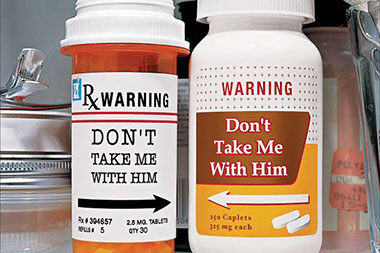
    Image of medicine bottles.

    Any box or bottle of over-the-counter (OTC) medicine lists its active ingredients prominently on the label. But are consumers using that information to make wise choices about taking two or more OTC drugs at the same time? Probably not, suggests a study in the Journal of Public Policy & Marketing.

    A consumer who takes a cold medicine containing, for instance, acetaminophen, may see nothing wrong with taking an additional medicine that also contains acetaminophen. In other words, the typical consumer, who is unlikely to have any medical expertise, may very well believe that there is no danger in taking any two OTC medications at the same time-even medications with the same active ingredients.

    Avoid double dosing. OTC drugs are not risk-free. Read labels.

    FYI

    According to the FDA, more than 600 OTC and prescription medicines contain the active ingredient acetaminophen. Taking acetaminophen is safe and effective when you follow the label information. But you can get severe liver damage if you take:

    *  More acetaminophen than directed

    *  More than one medicine that has acetaminophen

    *  3 or more alcoholic drinks every day while using acetaminophen

    For more information, ask your pharmacist, doctor, or nurse.

    © American Institute for Preventive Medicine

  • Rx Painkiller Deaths On The Rise

    MEDICAL NEWS

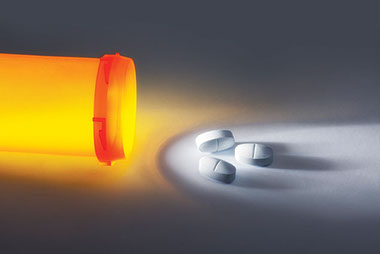
    Image of open pill bottle with 3 pills next to the bottle.

    From 1999 to 2010, deaths from prescription pain relief drugs increased more than 400 percent in women and 265 percent in men. These facts are from a recent report from the Centers for Disease Control and Prevention (CDC).

    “Prescription painkiller deaths have skyrocketed in women (6,600 in 2010), four times as many as died from cocaine and heroin combined,” said CDC Director Tom Frieden, M.D., M.P.H. “Stopping this epidemic in women – and men – is everyone’s business. Doctors need to be cautious about prescribing and patients about using these drugs.”

    Use Rx pain relief medicines wisely

    *  Let your doctor know about all prescribed and OTC medicines you take. This includes ones that treat depression, anxiety, or sleep problems. It includes vitamins and herbal products, too.

    *  Ask your doctor the risk of addiction when he or she prescribes sleeping pills, strong painkillers, etc. Find out how long you should take the medicines. Ask if there are ways to help treat your problem without them.

    *  Find out how much alcohol, if any, can be taken with your prescribed medicines.

    *  Follow the guidelines that your doctor and pharmacist provide with every prescription.

    *  Do not take another person’s prescribed medicines.

    *  Do not share your medicines with others.

    © American Institute for Preventive Medicine

  • The Grapefruit Effect

    MEDICAL NEWS

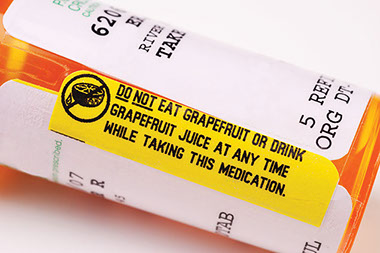
    Image of pill bottle with warning about grapefruit.

    Grapefruit can interact with your drugs. And your doctor may not be aware of it. An article in the Canadian Medical Association Journal points out that drug interactions with grapefruit were noted more than 20 years ago.

    Recently, more and more commonly prescribed newer drugs are found to interact with grapefruit (the fruit and the juice) and can cause serious side effects. Problems can occur even if the grapefruit is eaten hours before taking certain medications.

    Adverse effects include sudden death, acute kidney failure, respiratory failure, gastrointestinal bleeding, bone marrow suppression in ill people, and other serious side effects.

    There are more than 85 drugs that may interact with grapefruit, and 43 can have serious side effects. Other citrus fruits such as Seville oranges, often used in marmalade, limes and pomelos also contain the active ingredients (furanocoumarins) that interact with grapefruit.

    The best advice is to discuss all your medications with your doctor and pharmacist and ask about interactions with grapefruit.

    © American Institute for Preventive Medicine
  • Use Antibiotics Wisely

    MEDICAL NEWS

    Image of mother with sick child in bed.

    Antibiotics do not fight infections caused by viruses such as colds, flu, most sore throats, bronchitis, and many sinus and ear infections. Instead, symptom relief might be the best treatment option for viral infections, advises the CDC.

    Get smart about when antibiotics are needed-to fight bacterial infections. When you use antibiotics appropriately, you do the best for your health, your family’s health, and the health of those around you.

    Know that antibiotics

    *  Will not cure a viral infection

    *  Will not keep other people from getting sick

    *  Will not help you or your child feel better

    *  May cause unnecessary and harmful side effects

    *  May contribute to antibiotic resistance, which is when bacteria are able to resist the effects of an antibiotic and continue to cause harm

    Rest, fluids, and over-the-counter products may be your or your child’s best treatment option against viral infections.

    © American Institute for Preventive Medicine

  • Using Decongestants Safely

    SELF-CARE CORNER

    Image of man sneezing into a tissue.

    As we approach the peak season for colds and flu, many people turn to over-the-counter medicines for relief. And if you have a stuffy nose (known as nasal congestion), you may be thinking about taking a decongestant.

    What are decongestants?

    Decongestants are medicines designed to relieve stuffiness and pressure in the nose and sinuses. The two over-the-counter decongestants available are phenylephrine (i.e., Sudafed PE) and pseudoephedrine. Pseudoephedrine are stocked behind a pharmacy counter, but you don’t need a prescription. Both medicines work by shrinking blood vessels in the nose, allowing air to pass through more easily.

    Are decongestants safe?

    Decongestants are safe when they are used properly. Here’s what to know before you take one:

    *  Read the label and be sure you understand how much you can take and how often to take it. If you’re not sure, ask your pharmacist or doctor.

    *  Know the active ingredients. Many cold and flu products contain several active ingredients. They are listed on the drug facts label at the top. Be sure you don’t accidentally take too much of one ingredient. For instance, many cold products contain acetaminophen, a pain reliever that can be toxic in high doses. If you’ve already taken a pain reliever with acetaminophen and you take the cold medicine too, you could take too much acetaminophen.

    *  Talk to your doctor before taking a decongestant if you have diabetes, heart conditions, high blood pressure, glaucoma, prostate problems or thyroid disease.

    *  If you take other over-the-counter or prescription medicines, ask your doctor if decongestants can be safely taken with your other medicines.

    *  Do not give decongestants or any cough or cold product to kids under 4 years of age. Ask your child’s pediatrician before giving them any medicines.

    *  Talk to your doctor if you need to take a decongestant for longer than a week.

    What about nasal sprays?

    Saline nasal sprays with no medicine in them are safe to use daily, as often as needed. These can help flush out allergens and mucus so you can breathe easier. Not sure if it’s just saline? Look at the drug facts label and be sure it contains only sodium chloride as the active ingredient.

    But, decongestant sprays that contain active ingredients are not safe to take for more than three days in a row. This is because your body can become dependent on them. When this happens, your nose may become even stuffier over time, and you’ll have to use more and more spray to get relief.

    Medicines can help you cope with bothersome cold and flu symptoms. But, be safe and savvy before you take them – and keep them in a locked cabinet out of children’s reach!

    Sources: American Academy of Family Physicians, Food and Drug Administration

    © American Institute for Preventive Medicine