After a long and exhausting day, you probably just want to get some much needed rest. And, there may be some simple things you can begin doing today to ensure you wake up feeling refreshed and energized. Try these tips to start getting the sleep your body needs:
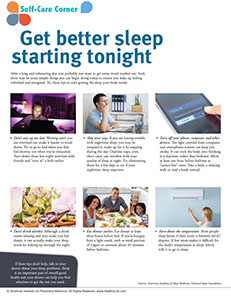
* Don’t stay up too late. Waiting until you are overtired can make it harder to wind down. Try to go to bed when you first feel drowsy, not when you’re exhausted. Turn down those late-night activities with friends and “turn in” a little earlier.
* Skip your nap. If you are having trouble with nighttime sleep, you may be tempted to make up for it by napping during the day. Daytime naps, even short ones, can interfere with your quality of sleep at night. Try eliminating them for a few days to see if your nighttime sleep improves.
* Turn off your phone, computer and other devices. The light emitted from computer and smartphone screens can keep you awake. It can trick the body into thinking it is daytime, rather than bedtime. Allow at least one hour before bedtime as “screen-free” time. Take a bath, a relaxing walk or read a book instead.
* Don’t drink alcohol. Although a drink seems relaxing and may make you feel sleepy, it can actually make your sleep worse by waking up through the night.
* Eat dinner earlier. Eat dinner at least three hours before bed. If you’re hungry, have a light snack, such as small portion of yogurt or oatmeal, about 45 minutes before bedtime.
* Turn down the temperature. Most people sleep better if their room is between 60-67 degrees. A hot room makes it difficult for the body’s temperature to drop, which tells it to go to sleep.
If these tips don’t help, talk to your doctor about your sleep problems. Sleep is an important part of overall good health and your doctor can help you find solutions to get the rest you need.
Sources: American Academy of Sleep Medicine, National Sleep Foundation