Tag: memory

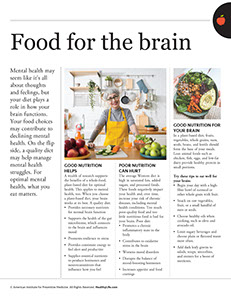
  • Food For The Brain

    HEALTHY EATING

    Women in kitchen with fresh food on counter.

    Mental health may seem like it’s all about thoughts and feelings, but your diet plays a role in how your brain functions. Your food choices may contribute to declining mental health. On the flip side, a quality diet may help manage mental health struggles. For optimal mental health, what you eat matters.

    Good nutrition helps

    A wealth of research supports the benefits of a whole-food, plant-based diet for optimal health. This applies to mental health, too. When you choose a plant-based diet, your brain works at its best. A quality diet:

    *  Provides necessary nutrients for normal brain function

    *  Supports the health of the gut microbiome, which connects to the brain and influences mood

    *  Promotes resilience to stress

    *  Provides consistent energy to feel alert and productive

    *  Supplies essential nutrients to produce hormones and neurotransmitters that influence how you feel

    Poor nutrition can hurt

    The average Western diet is high in saturated fats, added sugars, and processed foods. These foods negatively impact your health and, over time, increase your risk of chronic diseases, including mental health conditions. Too much poor-quality food and too little nutritious food is bad for your brain. Poor diet:

    *  Promotes a chronic inflammatory state in the body

    *  Contributes to oxidative stress in the brain

    *  Worsens mood disorders

    *  Disrupts the balance of mood-boosting hormones

    *  Increases appetite and food cravings

    Good nutrition for your brain

    In a plant-based diet, fruits, vegetables, whole grains, nuts, seeds, beans, and lentils should form the base of your meals. Lean animal foods such as chicken, fish, eggs, and low-fat dairy provide healthy protein in small portions.

    Try these tips to eat well for your brain:

    *  Begin your day with a high-fiber bowl of oatmeal or other whole grain with fruit.

    *  Snack on raw vegetables, fruit, or a small handful of nuts or seeds.

    *  Choose healthy oils when cooking, such as olive and avocado oil.

    *  Limit sugary beverages and choose plain or flavored water most often.

    *  Add dark leafy greens to salads, soups, smoothies, and entrees for a boost of nutrients.
    © American Institute for Preventive Medicine

  • Keeping Your Brain Healthy

    WELL-BEING

    Elderly female painting.

    Brain health is your ability to learn, remember, plan and concentrate on things. Exercise is good for your brain – but it’s a different type of workout. Here are some things to know about boosting your own brain health.

    Puzzles are great – but they don’t fight dementia.

    There is no evidence that crosswords and sudoku puzzles can prevent Alzheimer’s disease. But they’re still great brain exercise, so keep doing them!

    Bring out your creative side.

    Recent studies show that doing a creative art can help improve memory, comprehension and problem-solving abilities as you age. So pick up that musical instrument, paintbrush or whatever is fun and creative for you to do.

    Talk to your doctor.

    If you’re worried about memory loss or brain changes, talk to your doctor. They can help you find out the cause of any brain changes and work toward a solution. For instance, lack of sleep and certain medications can cause changes in mood or memory.

    Source: National Institute on Aging

    © American Institute for Preventive Medicine
  • Self-Care For Your Brain

    SELF-CARE CORNER

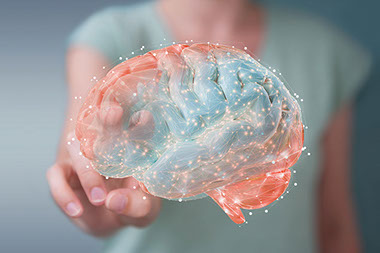
    Photo illustration of brain with hands reaching out to touch it.

    Your brain needs care just like any other part of the body. As you age, your brain naturally shrinks, and certain hormones and neurotransmitters decline. It’s not uncommon for people to notice changes in their memory, thinking, and other cognitive abilities.

    Healthy lifestyle choices can reduce cognitive decline. When you care for your brain, you protect your ability to focus, remember, and learn new things.

    Your brain needs

    A healthy brain relies on a healthy lifestyle:

    *  Quality nutrients that support brain cells

    *  Omega 3 fats from fatty fish, nuts, seeds, and plant oils such as flaxseed

    *  Vitamins D, E, K, and B vitamins from a variety of fruits, vegetables, and sunshine (Vitamin D)

    *  Minerals such as iron, copper, and magnesium from leafy greens and other plant foods

    *  7-9 hours of good quality sleep each night

    *  Regular exercise and movement to promote blood flow and protect blood pressure

    *  Time to relax and de-stress

    *  Regular mental stimulation and challenge

    Brain drainers

    Some unhealthy choices or physical conditions can worsen mental decline over time. Anything that negatively impacts the health of the body affects the health of the brain, such as:

    *  Smoking and other tobacco and nicotine products, such as chewing tobacco

    *  Excessive alcohol intake

    *  High blood pressure

    *  Being overweight or obese

    *  Lack of physical activity

    *  Poor diet, especially processed foods and lots of red meat

    *  Social isolation and loneliness

    Brain self-care

    Eating a healthy diet that focuses on plants, getting enough physical activity, and sleeping well is good for every part of your body. But, your brain also benefits from self-care to meet its unique needs. Here are some ideas:

    *  Meditate to promote calming brain waves

    *  Learn an instrument to introduce a new skill

    *  Read daily to expand your knowledge

    *  Do a crossword or other type of puzzle to challenge your brain

    *  Pick up a new hobby

    *  Explore a new place

    *  Volunteer for a cause you believe in

    *  Be social and meet new people

    © American Institute for Preventive Medicine
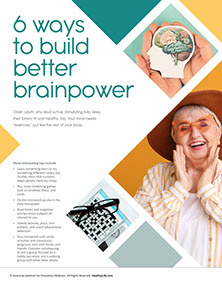
  • Six Ways To Build Better Brainpower

    Mature Health: Over Age 50

    Image of adults writing and using a computer.

    Research shows that older adults who lead active, stimulating lives keep their brains fit and healthy, too. Your mind needs “exercise,” just like the rest of your body.

    Some mind-stimulating tips include:

    *  Learn something new-or try something different-every day. Studies show that curiosity keeps people mentally sharp.

    *  Play mind-stretching games such as Scrabble, chess, and cards.

    *  Do the crossword puzzle in the daily newspaper.

    *  Read books and magazine articles about subjects of interest to you.

    *  Attend lectures, plays, and exhibits, and watch educational television.

    *  Use memory aids, such as appointment calendars, “to do” lists, and Post-it notes.

    Also, concentrate on what people say, repeat what you want to remember out loud, and associate an action with an object (like leaving your tote bag near the door so you remember to take it with you when you leave).

    A Year of Health Hints book by the American Institute for Preventive Medicine. www.HealthyLife.com. All rights reserved.

    © American Institute for Preventive Medicine
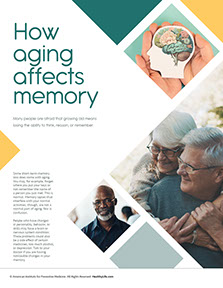
  • How Aging Affects Memory

    Brain & Nervous System

    Image of 2 elderly male friends hugging.

    Many people are afraid that growing old means losing the ability to think, reason, or remember.

    Some short-term memory loss does come with aging. You may, for example, forget where you put your keys or not remember the name of a person you just met. This is normal. Memory lapses that interfere with your normal activities, though, are not a normal part of aging. Nor is confusion.

    People who have changes in personality, behavior, or skills may have a brain or nervous system condition. These problems could also be a side effect of certain medicines, too much alcohol, or depression. This chapter gives information on common brain and nervous conditions in older persons.

    Health at Home Lifetime book by the American Institute for Preventive Medicine. www.HealthyLife.com. All rights reserved.

    © American Institute for Preventive Medicine

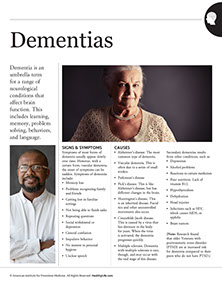
  • Dementias

    Brain & Nervous System

    Dementias are brain diseases. They result in a decline of all areas of mental ability. This includes learning, memory, problem solving, behaviors, and language.

    Signs & Symptoms

    Symptoms of most forms of dementia usually appear slowly over time. However, with a certain form, multi- infarct dementia, the onset of symptoms can be sudden. Symptoms of dementia include:

    *  Poor memory of recent events, etc.

    *  Making up stories to explain memory loss

    *  Getting lost in familiar settings

    *  Not being able to finish tasks

    *  Decreased energy

    *  Social withdrawal or depression

    *  General confusion

    *  Behaviors that are paranoid, anxious, irritating, childlike, or rigid

    *  No interest in personal hygiene, grooming, or dressing oneself

    *  Unclear speech

    Causes & Care

    Primary or True Dementias

    The origin of the dementia is in the brain itself. Examples of this type are:

    *  Alzheimer’s disease. This is the most common type of dementia.

    *  Multi-infarct dementia. This is due to blocked blood vessels in the brain. Often the cause is a stroke.

    *  Parkinson’s disease

    *  Pick’s disease. This is like Alzheimer’s disease, but has different changes in the brain.

    *  Huntington’s disease. This is an inherited disease. Dementia symptoms usually start in middle age. Facial tics and other uncontrolled movements also occur.

    *  Creutzfeldt-Jacob disease. This is caused by a virus that lies dormant in the body for years. When the virus is activated, the dementia progresses quickly.

    *  Multiple sclerosis. With this, scar tissue in the brain can prevent the normal travel of nerve impulses used for mental function. Dementia with multiple sclerosis is rare, though, and may occur with the end stage of this disease.

    Secondary Dementias

    *  Depression

    *  Alcohol problems

    *  Reactions to certain medicines

    *  Poor nutrition. Lack of vitamin B12.

    *  Hypothyroidism

    *  Dehydration

    *  Head injuries

    *  Infections, such as HIV which causes AIDS or syphilis

    *  Brain tumors

    {Note: A recent study found that older Veterans with posttraumatic stress disorder (PTSD) are nearly two times as likely to have dementia than their peers who do not have PTSD.}

    Dementias need medical diagnosis and treatment. When another condition, such as depression, is the cause and is treated with success, the dementia can be cured. For others, such as Alzheimer’s disease, there is no cure. The goal of treatment is to treat symptoms and provide safety and comfort.

    Self-Care

    The person with dementia needs to:

    *  Follow a simple daily routine

    *  Limit activities

    *  Wear an ID tag

    *  Be kept in a safe environment

    *  Have labels put on objects

    *  Eat a well balanced diet and drink plenty of fluids

    *  Have regular sensory stimulation, like touching, exercising, etc.

    Caretakers should:

    *  Assume a non-combative approach to difficult behaviors. Steer the person into another activity.

    *  Give medicines as advised by the person’s doctor and report and review medicines with the doctor and/or pharmacist.

    *  Get home care, respite care, hospital, or nursing home care, if needed.

    When to Seek Medical Care

    Contact Doctor When:

    *  You are unable to care for someone with dementia or he or she is too agitated or hostile to control.

    *  A medical evaluation is needed for a person with symptoms of dementia.

    Get Immediate Care When:

    Any of the “Stroke Warning Signs” are present.

    Delirium

    Delirium is mental confusion, behavior changes, etc. that develop in a matter of hours to a day or so. Delirium is a symptom of another condition, such as:

    *  A high fever

    *  Pneumonia or other infection

    *  Diabetes

    *  Substance abuse or withdrawal

    *  Misuse or withdrawal of certain medicines

    Immediate medical care is needed for delirium so the cause can be found and treated.

    Health at Home Lifetime book by the American Institute for Preventive Medicine. www.HealthyLife.com. All rights reserved.

    © American Institute for Preventive Medicine
  • Healthy Aging

    Mature Health: Over Age 50

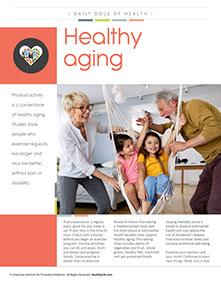
    Grandparents playing with 2 young grandkids.

    Physical activity is a cornerstone of healthy aging. Studies show people who exercise regularly live longer and may live better, without pain or disability.

    If you exercise on a regular basis, good for you! Keep it up! If not, now is the time to start. Check with a doctor before you begin an exercise program. Choose activities you can do and enjoy. Start out slowly and progress slowly. Some exercise is better than no exercise.

    Research shows that eating a Mediterranean-style diet has both physical and mental health benefits that support healthy aging. This eating style includes plenty of vegetables and fruit, whole grains, healthy fats, more fish and less processed foods.

    Staying mentally active is linked to physical and mental health and may reduce the risk of Alzheimer’s disease. Find ways to lower stress and increase emotional well-being.

    Exercise your memory and your mind. Continue to learn new things. Read. Join a club.

    Health at Home Lifetime book by the American Institute for Preventive Medicine. www.HealthyLife.com. All rights reserved.

    © American Institute for Preventive Medicine

  • Memory Loss

    Brain & Nervous System

    With short-term memory loss, you can’t recall things learned in the past seconds to minutes. With long-term memory loss, you forget things learned in the distant past, such as in childhood. It is normal to have some memory loss as you age. It is common to forget where you put your eyeglasses or keys. You may have a hard time recalling the name of a person or place, and say, “It is on the tip of my tongue.” This memory loss is temporary and not severe. When it persists or interferes with your daily life, it can be a sign of a problem.

    Signs & Symptoms

    Signs and symptoms of serious memory loss, such as amnesia, depend on the cause. The memory loss can be partial or complete. It can occur for a short time or persist. It can also come on suddenly or slowly.

    Causes

    Other than the normal memory loss that comes with aging, causes include:

    *  Depression.

    *  Excess alcohol. Drug use.

    *  Side effects of some medicines.

    *  Alzheimer’s disease and other forms of dementia. Dementias result in a decline of all areas of mental ability. This includes learning, problem solving, language, behaviors, and memory loss.

    *  Mild cognitive impairment. This is a medical illness. With this, people have abnormal memory for their age and education. They have a harder time learning new information or recalling things.

    *  Posttraumatic stress disorder.

    *  Seizures. Head trauma.

    *  Stroke.

    *  Brain infections or tumors.

    Treatment

    Memory loss that persists, is severe, or that interferes with daily life needs a medical diagnosis. When another problem is the cause and is treated with success, memory loss improves. For other causes, such as Alzheimer’s disease, there is no cure. The goal is to treat symptoms and provide safety and comfort.

    Questions to Ask

    Self-Care / Prevention

    To Help Prevent Memory Loss

    *  Keep the brain active. Read, do puzzles, etc.

    *  Eat a balanced diet. Take vitamins and minerals, as advised by your doctor.

    *  Get regular exercise.

    *  Protect the head from injury.

    *  Follow tips under Prevention for Stroke (Brain Attack).

    *  Don’t smoke or use illegal drugs. Limit alcohol.

    *  Manage stress.

    *  Get regular eye exams. Get your hearing checked. If needed, wear eyeglasses and/or a hearing aid.

    To Help Remember Things

    *  Follow a routine for daily and weekly activities.

    *  Listen carefully. Link newly learned things to past memories.

    *  Repeat what you want to remember out loud. Write it down if you need to.

    *  Keep track of important things to do, phone numbers, etc. Use a calendar, planner, PDA, etc.

    *  Set up a system to remind you of daily medications to take, bills to pay, appointments to keep, etc.

    *  Put your keys, eyeglasses, etc. in the same place.

    Healthier at Home book by the American Institute for Preventive Medicine. www.HealthyLife.com. All rights reserved.

    © American Institute for Preventive Medicine
  • Busting Myths About Alzheimer’S

    MEDICAL NEWS

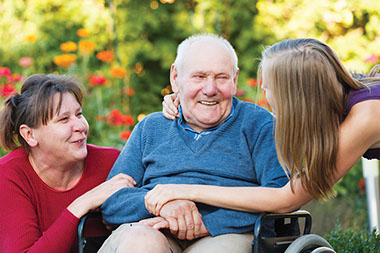
    Image of eldery man in wheelchair with daughter and granddaughter.

    More than 5 million Americans are living with Alzheimer’s and many myths still exist about it.

    MYTH: Alzheimer’s and dementia mean the same thing.

    FACT:Dementia is a group of symptoms that can be caused by Alzheimer’s and other diseases. Up to 80 percent of dementia cases are caused by Alzheimer’s disease. But, dementia can be caused by other conditions, such as Parkinson’s disease.

    MYTH: Everyone gets forgetful with age, so Alzheimer’s is no big deal.

    FACT:Alzheimer’s is not a normal part of aging. Alzheimer’s gets worse over time. Eventually, someone with Alzheimer’s will be unable to have a conversation or do normal everyday tasks. The earlier Alzheimer’s is diagnosed, the sooner treatment can start. This may help delay the disease’s progression.

    MYTH: Alzheimer’s won’t hurt you physically. You can live with the memory loss and other symptoms.

    FACT:Alzheimer’s is the sixth leading cause of death in the United States. Some people may live up to 20 years after diagnosis, but there are no survivors.

    MYTH: Medicine can cure Alzheimer’s.

    FACT:Treatments can help slow down the disease, but there is no cure. Alzheimer’s will eventually progress, even with treatment. The treatments may help improve quality of life for those with Alzheimer’s and their caregivers. Research is underway to find ways to prevent the disease and hopefully cure it.

    Source: Alzheimer’s Association

    Look for early signs of Alzheimer’s

    Detecting Alzheimer’s early is important. Since everyone forgets things from time to time, it can be hard to know what’s normal forgetfulness and what’s something more serious. People in the early stages may still work, drive and do daily tasks. They may think they are fine, and deny they have any memory issues.

    Look for these signs as possible flags that could mean early Alzheimer’s and talk to a doctor if you notice them:

    *  Problems coming up with the right word for something

    *  Can’t remember names when introduced to new people

    *  Trouble performing tasks at work or home

    *  Forgetting something that was just read or told

    *  Losing a valuable or important item

    *  Having trouble planning or organizing

    Though these signs don’t mean a person has Alzheimer’s for sure, it’s best to see a doctor.

    © American Institute for Preventive Medicine
  • Remember This: You Can Improve Your Memory

    WELL-BEING

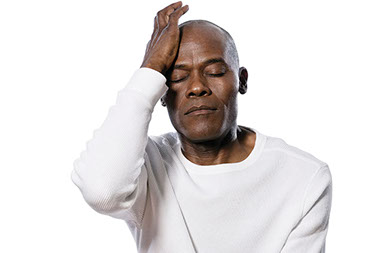
    Image of man with hand on his head.

    Worried because you searched a half hour before finding your reading glasses or car keys? Concerned that it took a couple minutes to remember the name of the familiar-looking woman who said hello to you in the restaurant?

    You probably don’t have much to worry about, said Dr. George Grossberg, an internationally recognized Alzheimer researcher and director of geriatric psychiatry at Saint Louis University School of Medicine. As annoying as it may be, temporary “tip of the tongue” forgetfulness is one of the changes that happens as we age.

    “If, on the other hand, the information is important to us, isn’t there when we want it, and doesn’t ever come back to us, that’s a more serious problem. The person who has Alzheimer’s disease and misplaces her reading glasses probably won’t even remember that she needs them to see. She knows the man next to her is familiar, but can’t remember that he’s her grandson and his name is Mark.”

    “In our society, we’re all on chronic systems overload. We’re multi-tasking – talking on our cell phones, listening for beepers to go off, walking into a store to shop,” he said. “It’s very easy for certain things to get lost in the shuffle. That’s not Alzheimer’s disease.”

    Dr. Grossberg offers this recipe for brain health:

    *  Try to figure out what is causing your forgetfulness. Did you make a wrong turn while driving while you were talking on a cell phone and listening to the radio? Maybe you’re trying to do too many things at once and need to put down the phone or turn off  the tunes.

    *  Exercise your body. Aerobic exercise improves your cardiovascular health. Exercise also increases your “feel-good” brain chemicals, which improve your mood and prevents depression which is a risk factor for Alzheimer’s disease.

    *  Exercise your mind. Research shows mental challenge can help rewire connections in the brain. So find a new hobby, learn to play chess, use your left hand if you’re right-handed, or study a foreign language.

    *  Take care of yourself. Control risk factors for cardiovascular disease such as high blood pressure, smoking, high cholesterol, and obesity to help decrease your risk.

    *  Get a good night’s sleep. Not getting enough deep, restful sleep causes mental impairment later in life. Besides, if you’re sleep deprived, you won’t think clearly and are more likely to forget in the present time.

    *  Feed your brain. Some research shows antioxidant vitamins have protective powers against Alzheimer’s disease. Some B vitamins, especially B-12 and folate, are very important in how brain cells function. Talk with your doctor about taking vitamin supplements.

    *  Check your meds. Discuss, with your doctor, if any prescribed and over-the-counter medications you take could cause memory or concentration problems.

    © American Institute for Preventive Medicine