Tag: Mental Health

  • Helping A Depressed Family Member

    FAMILY LIFE

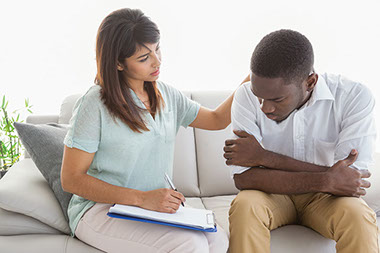
    Image of man talking with a counselor.

    Depression is a medical condition that can be serious. The National Institutes of Mental Health say depression can affect how you feel, think and cope with daily life. Eating, sleeping, socializing and working can all be difficult for someone with depression.

    If a member of your family has depression, there are ways to support them.

    Tip #1:

    Don’t tell them to “just snap out of it.” Experts believe depression is caused by a chemical imbalance in the brain. This may be due to genetics or it may be triggered by a stressful event such as death of a family member, divorce or abuse. Sometimes, a cause cannot be found. It’s important to understand that the person’s everyday actions may be affected by this disease, and they can’t make it just go away.

    Tip #2:

    Take medical care seriously. Treatment for depression often involves medication  and/or therapy. It can take some time to find the treatment that works for your family member. Whenever possible, offer to go with them to doctor appointments. Support them in following their treatment plan. Do what you can to make sure they take medications as prescribed without forcing or arguing.

    Tip #3:

    Offer to take them out, but don’t push. Many people with depression struggle to get out of bed each day or leave the house. But, with treatment, it is possible to start enjoying life again. Ask the family member if they’d like to do something simple, such as go to the store or park. If they decline, wait a few days and offer again. Eventually, they may say yes.

    Tip #4:

    Listen when they want to talk. If your family member wishes to talk about his or her feelings, let them do so without judging or offering advice. Simply listen to their thoughts and feelings without trying to “fix” anything.

    Take loved ones’ comments about suicide or self-harm seriously. Many times a person will confide in a loved one prior to committing a harmful act.

    With help from a doctor, depression can be treated. Let your family member know you care, and ask them to get the medical help they need. Proper medical care can help them get on the path to a healthier, happier life.

    © American Institute for Preventive Medicine

  • Improve Your Mood With Exercise

    BE FIT

    Image of older women walking on bridge along a lake.

    You probably know that exercise has many health benefits. It can reduce your risk of heart disease, type 2 diabetes, and even cancer. But, did you know it can also help your mental health?

    Studies have shown that regular exercise such as walking can improve your mood, according to the American Psychological Association. And it doesn’t take long to feel the effects. Within just a few minutes of starting that walk, many people report more positive mental health. It has also been shown to improve mild to moderate depression.

    If that’s not enough, the APA also says exercise can help people who have anxiety. Regular exercise can help your body calm the “fight-or-flight” feelings that occur when someone gets anxious or overly stressed. And, it can help combat everyday stress by releasing chemicals called endorphins. These effects also help you sleep better, which can help you feel better mentally.

    With all the benefits of exercise, get moving!

    © American Institute for Preventive Medicine

  • Eating Disorders

    Student Health

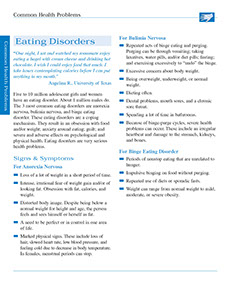
    Five to 10 million adolescent girls and women have an eating disorder. About 1 million males do. The 3 most common eating disorders are anorexia nervosa, bulimia nervosa, and binge eating disorder. These eating disorders are a coping mechanism. They result in an obsession with food and/or weight; anxiety around eating; guilt; and severe and adverse effects on psychological and physical health. Eating disorders are very serious health problems.

    Signs & Symptoms

    For Anorexia Nervosa

    *  Loss of a lot of weight in a short period of time.

    *  Intense, irrational fear of weight gain and/or of looking fat. Obsession with fat, calories, and weight.

    *  A need to be perfect or in control in one area of life.

    *  Distorted body image. The person feels and sees herself or himself as fat despite being a normal weight for height and age.

    *  Marked physical signs. These include loss of hair, slowed heart rate, and low blood pressure. The person feels cold due to decreased body temperature. In females, menstrual periods can stop.

    For Bulimia Nervosa

    *  Repeated acts of binge eating and purging. Purging can be through vomiting; taking laxatives, water pills, and/or diet pills; fasting; and exercising a lot to “undo” the binge.

    *  Excessive concern about body weight.

    *  Being underweight, normal weight, or overweight.

    *  Dieting often.

    *  Dental problems. Mouth sores. Chronic sore throat.

    *  Spending a lot of time in bathrooms.

    *  Because of binge-purge cycles, severe health problems can occur. These include an irregular heartbeat and damage to the stomach, kidneys,  and bones.

    For Binge Eating Disorder

    *  Periods of nonstop eating that are not related to hunger.

    *  Impulsive binging on food without purging.

    *  Dieting and/or fasting over and over.

    *  Weight can range from normal weight to mild, moderate, or severe obesity.

    Causes

    An exact cause has not been found. Persons from all backgrounds, ages, and genders are affected. Risk factors include:

    *  A family history of eating disorders.

    *  Pressure from society to be thin.

    *  Personal and family pressures.

    *  Sexual, physical, or alcohol abuse in the past.

    *  Fear of starting puberty.

    *  Fear of having sex.

    *  Pressure for athletes to lose weight or to be thin for competitive sports.

    *  Chronic dieting.

    Treatment

    *  Counseling. This can be individual, family, group, and/or behavioral therapy.

    *  Support groups.

    *  Medication.

    *  Nutrition therapy.

    *  Outpatient treatment.

    *  Hospitalization, if needed.

    Treatment varies with the disorder and how severe it is. The earlier the condition is diagnosed and treated, the better the outcome.

    Questions to Ask

    Self-Care

    Eating disorders need professional treatment.

    To Help Prevent an Eating Disorder

    *  Learn to accept yourself and your body. You don’t need to look like anyone else. Spend time with people who accept you as you are, not people who focus on “thinness.”

    *  Know that self-esteem does not have to depend on body weight.

    *  Eat nutritious foods. Focus on whole grains, beans, fresh fruits and vegetables, low-fat dairy foods, and low-fat meats.

    *  Commit to a goal of normal eating. Realize that this will take time. It will also take courage to fight fears of gaining weight.

    *  Don’t skip meals. If you do, you are more likely to binge when you eat.

    *  Avoid white flour, sugar and foods high in sugar and fat, such as cakes, cookies, and pastries. Bulimics tend to binge on junk food. The more they eat, the more they want.

    *  Get regular, moderate exercise 3 to 4 times a week. If you exercise more than your doctor advises, do non-exercise activities with family and friends.

    *  Find success in things you do. Hobbies, work, school, etc. can promote self-esteem.

    *  Learn as much as you can about eating disorders from books and organizations that deal with them.

    *  To help their children avoid eating disorders, parents should promote a balance between their child’s competing needs for independence and family involvement.

    To Treat an Eating Disorder

    *  Follow your treatment plan.

    *  Attend counseling sessions and/or support group meetings as scheduled.

    *  Identify feelings before, during, and after you overeat, binge, purge, or restrict food intake. What is it that you are hoping the food will do?

    *  Set small goals that you can easily reach. Congratulate yourself for every success. This is a process. Accept set backs. Learn from them.

    *  Talk to someone instead of turning to food.

    *  Work toward the point where weight is no longer a way you rate your success. Think about your accomplishments, positive personal qualities, and valued relationships.

    *  Learn to express your rights. You have the right to say no and the right to express your feelings and your opinions. You have the right to ask that your needs are met.

    *  Keep a journal of your progress, feelings, thoughts, etc., but not about what you eat. The journal is just for you, not for others to read or judge. This is a safe place to be honest with yourself. The journal can also help you identify your “triggers” so that you can deal with them in the future.

    *  Don’t let the scale run your life. Better yet, throw out the scale!

    Resources

    Your school’s Student Health Service, Student Counseling or Mental Health Service

    National Eating Disorders Association (NEDA)Information and Referral Helpline

    800.931.2237

    www.nationaleatingdisorders.org

    Student Self-Care book by the American Institute for Preventive Medicine. www.HealthyLife.com. All rights reserved.

    © American Institute for Preventive Medicine

  • Eating Disorders 2

    Women’s Health

    Image of women sitting alone.

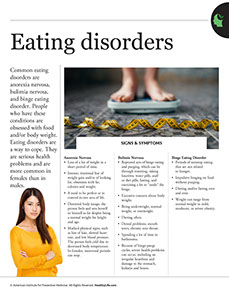
    Common eating disorders are anorexia nervosa, bulimia nervosa, and binge eating disorder. People who have these conditions are obsessed with food and/or body weight. Eating disorders are a way to cope. They are serious health problems and are more common in females than in males.

    Signs & Symptoms

    Anorexia Nervosa

    *  Loss of a lot of weight in a short period of time.

    *  Intense, irrational fear of weight gain and/or of looking fat, obsession with fat, calories and weight.

    *  A need to be perfect or in control in one area of life.

    *  Distorted body image; the person feels and sees herself or himself as fat despite being a normal weight for height and age.

    *  Marked physical signs, such as loss of hair, slowed heart rate, and low blood pressure. The person feels cold due to decreased body temperature. In females, menstrual periods can stop.

    Bulimia Nervosa

    *  Repeated acts of binge eating and purging, which can be through vomiting, taking laxatives, water pills, and/or diet pills, fasting, and exercising a lot to “undo” the binge.

    *  Excessive concern about body weight.

    *  Being underweight, normal weight, or overweight.

    *  Dieting often.

    *  Dental problems, mouth sores, chronic sore throat.

    *  Spending a lot of time in bathrooms.

    *  Because of binge-purge cycles, severe health problems can occur, including an irregular heartbeat and damage to the stomach, kidneys and bones.

    Binge Eating Disorder

    *  Periods of nonstop eating that are not related to hunger.

    *  Impulsive binging on food without purging.

    *  Dieting and/or fasting over and over.

    *  Weight can range from normal weight to mild, moderate, or severe obesity.

    Causes & Risk Factors

    An exact cause has not been found. Persons from all backgrounds, ages and genders are affected. Risk factors include:

    *  A family history of eating disorders.

    *  Pressure from society to be thin.

    *  Personal and family pressures.

    *  Sexual, physical, or alcohol abuse in the past.

    *  Fear of starting puberty.

    *  Fear of having sex.

    *  Pressure for athletes to lose weight or to be thin for competitive sports.

    *  Chronic dieting.

    Treatment

    *  Counseling. This can be individual, family, group, and/or behavioral therapy.

    *  Support groups.

    *  Medication.

    *  Nutrition therapy.

    *  Outpatient treatment.

    *  Hospitalization, if needed.

    Treatment varies with the disorder and how severe it is. The earlier the condition is diagnosed and treated, the better the outcome.

    Questions to Ask

    Self-Care

    Eating disorders need professional treatment.

    Prevent an Eating Disorder

    *  Learn to accept yourself and your body. You don’t need to look like anyone else. Spend time with people who accept you as you are, not people who focus on “thinness.”

    *  Know that self-esteem does not have to depend on body weight.

    *  Eat nutritious foods. Focus on whole grains, beans, fresh fruits and vegetables, low-fat dairy foods, and lean meats.

    *  Commit to a goal of normal eating. Realize that this will take time. It will also take courage to fight fears of gaining weight.

    *  Don’t skip meals. If you do, you are more likely to binge when you eat.

    *  Limit white flour, sugar and foods high in sugar and fat, such as cakes, cookies and pastries. People who have bulimia tend to binge on junk food. The more they eat, the more they want.

    *  Get regular, moderate exercise at least 3 to 4 times a week. If you exercise more than your doctor advises, do more non-exercise activities with family and friends.

    *  Find success in things you do. Hobbies, work, school, etc. can promote self-esteem.

    *  Discuss with family and friends how TV, movies and social media can send the message that only a certain body type is acceptable.

    *  Learn as much as you can about eating disorders from reputable websites, books and organizations that deal with them.

    *  To help children avoid eating disorders, parents should promote a balance between their child’s competing needs for independence and family involvement.

    Treat an Eating Disorder

    *  Follow your treatment plan from your health care provider. To be successful, you need to be actively involved in your treatment.

    *  Attend counseling sessions and/or support group meetings as scheduled.

    *  Set small goals that you can easily reach. Congratulate yourself for every success. This is a process. Accept set backs. Learn from them.

    *  Talk to someone instead of turning to food.

    *  Work toward the point where weight is no longer a way you rate your success. Think about your accomplishments, positive personal qualities, and valued relationships.

    *  Learn to express your rights. You have the right to say no and the right to express your feelings and your opinions. You have the right to ask that your needs are met.

    *  Keep a journal of your progress, feelings, thoughts, etc., but not about what you eat. The journal is just for you, not for others to read or judge. This is a safe place to be honest with yourself. The journal can also help you identify your “triggers” so that you can deal with them in the future.

    *  Don’t let the scale run your life. Better yet, throw out the scale!

    Resources

    National Eating Disorders Association (NEDA)Information and Referral Helpline

    800.931.2237

    www.nationaleatingdisorders.org
    Women's Self-Care book by the American Institute for Preventive Medicine. www.HealthyLife.com. All rights reserved.

    © American Institute for Preventive Medicine

  • Depression

    Student Health

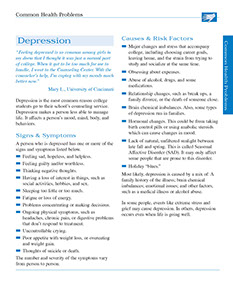
    Depression is the most common reason college students go to their school’s counseling service. Depression makes a person less able to manage life. It affects a person’s mood, mind, body, and behaviors.

    Signs & Symptoms

    The number and severity of the symptoms vary from person to person. A person who is depressed has one or more of the signs and symptoms listed below.

    *  Feeling sad, hopeless, and helpless.

    *  Feeling guilty and/or worthless.

    *  Thinking negative thoughts.

    *  Having a loss of interest in things, such as social activities, hobbies, and sex.

    *  Sleeping too little or too much.

    *  Fatigue or loss of energy.

    *  Problems concentrating or making decisions.

    *  Ongoing physical symptoms, such as headaches, chronic pain, or digestive problems that don’t respond to treatment.

    *  Uncontrollable crying.

    *  Poor appetite with weight loss, or overeating and weight gain.

    *  Thoughts of suicide or death.

    Causes & Risk Factors

    *  Major changes and stress that accompany college, including choosing career goals, leaving home, and the strain from trying to study and socialize at the same time.

    *  Obsessing about expenses.

    *  Abuse of alcohol, drugs, and some medications.

    *  Relationship changes, such as break ups, a family divorce, or the death of someone close.

    *  Brain chemical imbalances. Also, some types of depression run in families.

    *  Hormonal changes. This could be from taking birth control pills or using anabolic steroids which can cause changes in mood.

    *  Lack of natural, unfiltered sunlight between late fall and spring. This is called Seasonal Affective Disorder (SAD). It may only affect some people that are prone to this disorder.

    *  Holiday “blues.”

    Most likely, depression is caused by a mix of: A family history of the illness; brain chemical imbalances; emotional issues; and other factors, such as a medical illness or alcohol abuse.

    In some people, events like extreme stress and grief may cause depression. In others, depression occurs even when life is going well.

    Treatment

    Treatment includes medicines, psychotherapy, and other therapies that are specific to the cause of the depression. Exposure to bright lights (similar to sunlight) for depression that results from SAD can be helpful. {Note: Some antidepressant medicines can increase the risk for suicidal thoughts and behaviors, especially in children and adolescents. This risk may be higher within the first days to a month after starting the medicine. Persons who take antidepressants should be closely monitored.}

    Questions to Ask

    Self-Care / Prevention

    *  Take medications as prescribed. Get your doctor’s advice before you take over-the-counter herbs, such as St. John’s Wort, especially if you take other medications.

    *  Don’t use illegal drugs. Limit alcohol. These can cause or worsen depression. Drugs and alcohol can also make medicines for depression less effective. Harmful side effects can occur when drugs and/or alcohol are mixed with medicine.

    *  Eat healthy foods. Eat at regular times.

    *  Get regular exercise.

    *  Talk to someone who will listen to the tensions and frustrations you are feeling.

    *  Try not to isolate yourself. Be with people you trust and feel safe with, even though you feel down.

    *  Do things you enjoy. Do something that lets you express yourself. Draw. Paint. Write your thoughts in a diary or journal.

    *  Relax. Listen to soft music, take a warm bath or shower. Do relaxation exercises.

    *  Avoid stressful situations or taking on added commitments when you feel depressed.

    *  Keep an emergency number handy (e.g., crisis hotline, trusted friend’s number, etc.) in case you feel desperate.

    Feeling better takes time. Don’t expect to just “snap out” of your depression.

    To Help A Friend Who Is Depressed

    *  Help your friend get an appropriate diagnosis. Make an initial appointment with a professional and offer to take your friend.

    *  Do not ignore remarks about suicide. Report them, immediately, to a student advisor, teacher, or health care provider.

    *  Be aware of the type of medication your friend needs to take and when it should be taken. If necessary, alert your friend’s health care provider about any side effects that you notice.

    *  Be supportive. Depression is no different from any other physical illness. It requires patience, understanding, love, and encouragement. Encourage your friend to continue with treatment and to see his or her health care provider if there is no improvement.

    *  Listen with care. Point out your friend’s successes and attributes when he or she feels worthless, helpless, or down about the future. Helping your friend see previous successes can help give the confidence needed to continue with treatment. Your friend doesn’t need you to tell him or her what to do. Listening is very helpful.

    *  Encourage your friend to go out and do things with you or with others, such as to see a movie or to do things your friend enjoyed in the past. Don’t push, though, or make too many demands.

    *  Seek support from organizations that deal with depression.

    Resources

    Your school’s Student Counseling Service or Student Mental Health Service. (Normally, these services are no cost to you.)

    International Foundation for Research and Education on Depression (IFRED)

    www.ifred.org

    Mental Health America (MHA)

    800.969.6642

    www.mentalhealthamerica.net

    National Mental Health Consumers’ Self-Help Clearinghouse

    800.553.4539

    www.mhselfhelp.org

    Student Self-Care book by the American Institute for Preventive Medicine. www.HealthyLife.com. All rights reserved.

    © American Institute for Preventive Medicine

  • Depression 2

    Women’s Health

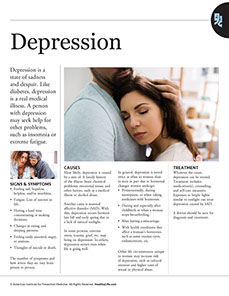
    Close up of women's face as she leans on man chest for support.

    Depression is a state of sadness and despair. Like diabetes, depression is a real medical illness. A person with depression may seek help for other problems, such as insomnia or extreme fatigue.

    Signs & Symptoms

    *  Feeling sad, hopeless, helpless, and/or worthless.

    *  Fatigue. Loss of interest in life.

    *  Having a hard time concentrating or making decisions.

    *  Changes in eating and sleeping patterns.

    *  Feeling easily annoyed, angry, or anxious.

    *  Thoughts of suicide or death.

    The number of symptoms and how severe they are vary from person to person.

    Causes

    Most likely, depression is caused by a mix of: A family history of the illness; brain chemical problems; emotional issues; and other factors, such as a medical illness or alcohol abuse.

    Another cause is seasonal affective disorder (SAD). With this, depression occurs between late fall and early spring due to a lack of natural sunlight.

    In some persons, extreme stress, trauma, grief, etc. may bring on depression. In others, depression occurs even when life is going well.

    In general, depression is noted twice as often in women than in men in part due to hormonal changes women undergo:

    *  Premenstrually, during menopause, or when taking medicines with hormones.

    *  During and especially after childbirth or when a woman stops breastfeeding.

    *  After having a miscarriage.

    *  With health conditions that affect a woman’s hormones, such as some ovarian cysts, endometriosis, etc.

    Other life circumstances unique to women may increase risk of depression, such as cultural stressors and higher rates of sexual or physical abuse.

    Treatment

    Whatever the cause, depression can be treated. Treatment includes medication(s), counseling, and self-care measures. Exposure to bright lights similar to sunlight can treat depression caused by SAD.

    A doctor should be seen for diagnosis and treatment.

    Questions to Ask

    Self-Care / Prevention

    *  Take medications as prescribed. Get your doctor’s advice before you take over-the-counter herbs, like St. John’s Wort, especially if you take other medications.

    *  Don’t use illegal drugs. Limit alcohol. These can cause or worsen depression. Drugs and alcohol can also make medicines for depression less effective. Harmful side effects can happen when alcohol and/or drugs are mixed with medicine.

    *  Eat healthy foods. Eat at regular times. Don’t skip meals or binge on junk food. Limit caffeine and sugary foods.

    *  Try not to isolate yourself. Be with people you feel safe with even though you feel down.

    *  Do something you enjoy. Do things that let you express yourself. Write, paint, etc.

    *  Exercise regularly.

    *  Relax. Listen to soft music, take a warm bath or shower. Do relaxation exercises. Meditation can help you deal with depression.

    *  Keep an emergency number handy (e.g., crisis hotline, trusted friend’s number, etc.) in case you feel desperate.

    Resources

    Women's Self-Care book by the American Institute for Preventive Medicine. www.HealthyLife.com. All rights reserved.

    © American Institute for Preventive Medicine

  • 4 Warning Signs Of Teen Depression

    SELF-CARE CORNER

    Image of teen girl depressed.

    Withdrawn. Irritable. Sleepy. This could describe almost any teenager, but these are also symptoms of teen depression.

    Teen depression sometimes gets overlooked because it doesn’t always look like depression in adults. For example, sadness is a core feature of most depression and what most people associate with depression, according to Dr. Ken Duckworth, medical director of the National Alliance on Mental Illness. Many teens also experience other symptoms-parents might miss these warning signs.

    1.Sleep disturbance.“Many adolescents sleep until noon on a Saturday, but if you notice a change in their sleep or their sleep is irregular even more than before, that’s something to worry about,” Dr. Duckworth says.

    2.Social changes.“Adolescents are typically very focused on social connections,” he says. “If they’re not interested in their social network and they want to quit sports, pay attention to that.”

    3.Physical symptoms.Some teens demonstrate their emotional distress through physical symptoms, such as headaches, stomach aches, weakness, and body aches.

    4.Substance abuse.Some depressed teens use drugs and alcohol to change how they’re feeling. Abusing drugs and alcohol also increases the risk for depression or worsening depression.

    © American Institute for Preventive Medicine