Tag: menu

  • Put Your Menu On A Diet

    Nutrition

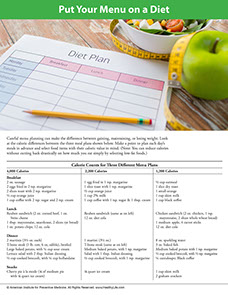
    Careful menu planning can make the difference between gaining, maintaining, or losing weight. Look at the caloric differences between the three meal plans shown below. Make a point to plan each day’s meals in advance and select food items with their caloric value in mind. (Note: You can reduce calories without cutting back drastically on how much you eat simply by selecting low-fat foods.)

    Page from A Year of Health Hints book by the American Institute for Preventive Medicine. www.HealthyLife.com. All rights reserved.

    © American Institute for Preventive Medicine

  • Tips For Dining Out Without Pigging Out

    Nutrition

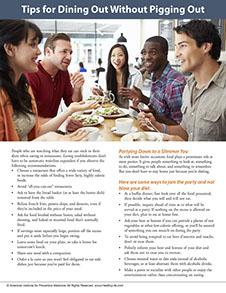
    Image of friends eating out.

    People who are watching what they eat can stick to their diets when eating in restaurants. Eating establishments don’t have to be automatic waistline expanders if you observe the following recommendations.

    *  Choose a restaurant that offers a wide variety of food, to increase the odds of finding fewer fatty, highly caloric foods.

    *  Avoid “all-you-can-eat” restaurants.

    *  Ask to have the bread basket (or at least the butter dish) removed from the table.

    *  Refuse french fries, potato chips, and desserts, even if they’re included in the price of your meal.

    *  Ask for food broiled without butter, salad without dressing, and baked or steamed food that’s normally fried.

    *  If servings seem especially large, portion off the excess and put it aside before you begin eating.

    *  Leave some food on your plate, or take it home for tomorrow’s lunch.

    *  Share one meal with a companion.

    *  Order a la carte so you won’t feel obligated to eat side dishes just because you’ve paid for them.

    Here are some ways to join the party and not blow your diet.

    *  At a buffet dinner, first look over all the food presented, then decide what you will and will not eat.

    *  If possible, inquire ahead of time as to what will be served at a party. If nothing on the menu is allowed on your diet, plan to eat at home first.

    *  Ask your host or hostess if you can provide a platter of raw vegetables or other low-calorie offering, so you’ll be assured of something you can munch on during the party.

    *  To avoid being tempted to eat hors d’oeuvres and snacks, don’t sit near them.

    *  Politely inform your host and hostess of your diet and ask them not to coax you to overeat.

    *  Choose mineral water or diet soda instead of alcoholic beverages, or at least alternate them with alcoholic drinks.

    *  Make a point to socialize with other people or enjoy the entertainment rather than concentrating on eating.

    Partying Down to a Slimmer You

    As with most festive occasions, food plays a prominent role at most parties. It gives people something to look at, something to do, something to talk about, and something to remember. But you don’t have to stay home just because you’re dieting.

    Page from A Year of Health Hints book by the American Institute for Preventive Medicine. www.HealthyLife.com. All rights reserved.

    © American Institute for Preventive Medicine

  • Plan Your Week

    Healthylife® Weigh

    Part 3

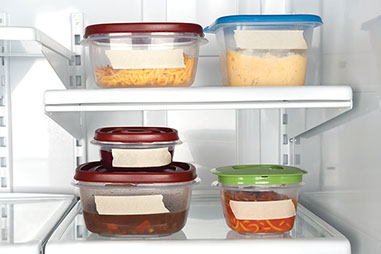
    Leftovers in the refrigerator.

    Plan about a half hour for writing your weekly meal plan and grocery list the first time. The more you plan, the easier it will become and the less time it will take.

    1. Check what you have at home. See what needs to be used up in your pantry, refrigerator, or freezer.

    2. Write down ideas, rather than specific recipes. (For example, “chicken and vegetables” or “broccoli soup.”) Find recipes after you have finished your plan. Some meals, like breakfast, may be easier to keep the same every day.

    3. Plan for meals to have leftovers. Plan to make extra food items that can be used for another meal. For example, make a double batch of quinoa to use in a casserole one day and a soup two days later.

    *  Have dinner leftovers at lunch the next day to further save on time.

    *  Freeze extra dinner servings in individual-serving freezer bags. Thaw and cook or microwave for a quick meal.

    © American Institute for Preventive Medicine

  • Plan Your Week 2

    Healthylife® Weigh

    Menus & Recipes

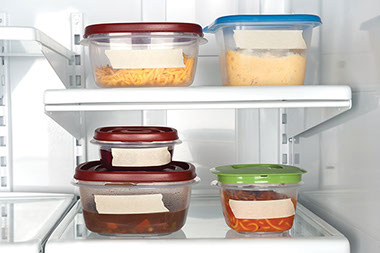
    Leftovers in the refrigerator.

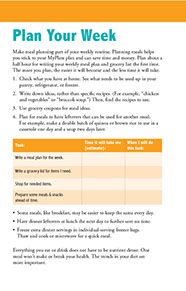
    Make meal planning part of your weekly routine. Planning meals helps you stick to your MyPlate plan and can save time and money. Plan about a half hour for writing your weekly meal plan and grocery list the first time. The more you plan, the easier it will become and the less time it will take.

    1. Check what you have at home. See what needs to be used up in your pantry, refrigerator, or freezer.

    2. Write down ideas, rather than specific recipes. (For example, “chicken and vegetables” or “broccoli soup.”) Then, find the recipes to use.

    3. Use grocery coupons for meal ideas.

    4. Plan for meals to have leftovers that can be used for another meal. For example, make a double batch of quinoa or brown rice to use in a casserole one day and a soup two days later.

    *  Some meals, like breakfast, may be easier to keep the same every day.

    *  Have dinner leftovers at lunch the next day to further save on time.

    *  Freeze extra dinner servings in individual-serving freezer bags. Thaw and cook or microwave for a quick meal.

    Everything you eat or drink does not have to be nutrient dense. One meal won’t make or break your health. The trends in your diet are more important.

    © American Institute for Preventive Medicine

  • Eat Out, Eat Healthy: Here’S How

    HEALTHY EATING

    Image of sign that says 'Eating Out'

    Many people find that eating at restaurants can be hard on the diet. Restaurants usually offer an array of high-fat, high-sugar, and deep fried foods that can be tough to resist. But, eating out doesn’t have to be off limits.

    Before choosing what to eat, you need to decide where to eat. One of the best ways to stay on the healthy track is to do some research first. Many restaurants offer calorie counts and other nutrition information on their website. Check out which foods fall within your diet with regards to calories and fat. This can help you steer clear of foods that may seem healthy, such as certain salads, but are actually loaded with calories.

    And, making changes to dishes is a good way to get exactly what you want. Think about whether the restaurant:

    *  Will allow you to make substitutions without hassle or extra cost

    *  Uses healthier cooking methods, such as broiling, grilling, and baking instead of frying

    Once you’ve chosen your place, it’s time to pick your plate. Follow these guidelines for a healthy and enjoyable meal:

    *Don’t be afraid to ask questions.Ask the server about how a dish is prepared and what comes with it. Does it come with butter or oil? Can these items be placed on the side or taken off completely?

    *Eat slowly and watch portion sizes.Many restaurant portions are big enough for two meals. Consider splitting your meal with another person if this is allowed. Or, ask the waiter to box half of your meal right away.

    *If possible, ask for no salt to be added to your food.And, just say “no” to the salt shaker on the table.

    *Skip the pre-meal bread that often spoils your diet and appetite.Ask for no bread to be brought to the table.

    *Choose foods that taste good without being fried, such as grilled chicken, seafood, and fresh vegetables.

    *Watch out for drinks.Many beverages, such as lemonade, juices, and alcoholic drinks, are high in calories. Stick to water and drink plenty of it before and during the meal. This may help stave off hunger.

    *Be creative with dessert.Don’t look at the tempting dessert menu. Instead, ask for a bowl of fresh fruit if you’re craving something sweet. Or, keep sugar-free mints or gum with you to pop in your mouth after dinner.

    Source: American Diabetes Association
    © American Institute for Preventive Medicine

  • Menu Secrets

    HEALTHY EATING

    Image of women at a resturant talking to the waitor about the menu.

    When dining out, two things that affect your menu choices the most are what you see on the menu and how you imagine it will taste.

    But what you order may have less to do with what you want and more to do with a menu’s layout and descriptions, according to a Cornell study in the International Journal of Hospitality Management.

    First,any food item that attracts attention (with bold, highlighted or colored font or set apart in a text box) makes us more likely to order that food item rather than the item listed next to it. “In most cases, these are the least healthy items on the menu,” said lead author, Brian Wansink, author of Slim by Design: Mindless Eating Solutions for Everyday Life.

    Second,menu names with descriptive items sell better and lead you to believe that they taste better. The researchers cite a study where they changed the names of restaurant menu items to make them more descriptive; the seafood filet became Succulent Italian Seafood Filet and red beans and rice became Cajun Red Beans and Rice. Sales of these items went up by 28%, and they were rated as tastier, even though the recipe was identical. Diners were also willing to pay an average of 12% more money for a menu item with a descriptive name.

    The best solutionto healthier restaurant dining may be an easy one. “Just ask your server,” said Wansink, “Ask, ‘What are your two or three lighter  entrées that get the most compliments?’ or ‘What’s the best thing on the menu if a person wants a light dinner?’”

    Eating Out Tip

    Before you choose restaurants, check out their websites. Read menu options and nutrition information, if provided, to help you make healthy choices. When you are at a restaurant, ask if you can make healthier substitutes, such as having a vegetable in place of French fries.

    © American Institute for Preventive Medicine