Tag: milk

  • Easy Ways To Tolerate Milk

    Nutrition

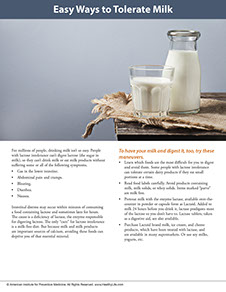
    For millions of people, drinking milk isn’t so easy. People with lactose intolerance can’t digest lactose (the sugar in milk), so they can’t drink milk or eat milk products without suffering some or all of the following symptoms.

    *  Gas in the lower intestine.

    *  Abdominal pain and cramps.

    *  Bloating.

    *  Diarrhea.

    *  Nausea.

    Intestinal distress may occur within minutes of consuming a food containing lactose and sometimes lasts for hours. The cause is a deficiency of lactase, the enzyme responsible for digesting lactose. The only “cure” for lactose intolerance is a milk-free diet. But because milk and milk products are important sources of calcium, avoiding these foods can deprive you of that essential mineral.

    To have your milk and digest it, too, try these maneuvers.

    *  Learn which foods are the most difficult for you to digest and avoid them. Some people with lactose intolerance can tolerate certain dairy products if they eat small portions at a time.

    *  Read food labels carefully. Avoid products containing milk, milk solids, or whey solids. Items marked “parve” are milk free.

    *  Pretreat milk with the enzyme lactase, available over-the-counter in powder or capsule form as Lactaid. Added to milk 24 hours before you drink it, lactase predigests most of the lactose so you don’t have to. Lactase tablets, taken as a digestive aid, are also available.

    *  Purchase Lactaid brand milk, ice cream, and cheese products, which have been treated with lactase, and are available in many supermarkets. Or use soy milks, yogurts, etc.
    Page from A Year of Health Hints book by the American Institute for Preventive Medicine. www.HealthyLife.com. All rights reserved.

    © American Institute for Preventive Medicine

  • Dairy

    Healthylife® Weigh

    Part 2

    Dairy products.

    The dairy group includes milk and foods made from milk. Dairy provides calcium, vitamin D (milk), healthy fats, and protein. Milk alternatives (such as those made from soy) are included if they are fortified with calcium.

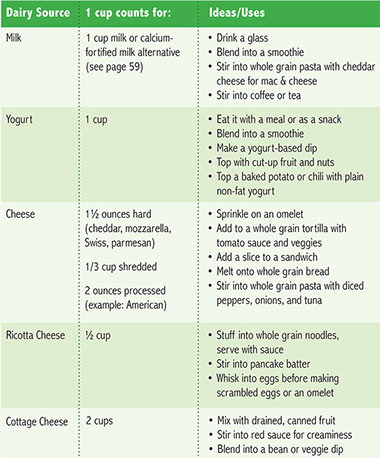
    Chart showing dairy sources and ideas.

    Dairy Alternatives

    Many people avoid lactose-containing milk due to an intolerance or preference. Lactose is the sugar in milk that causes digestive problems if you are lactose intolerant. You can obtain many of the nutrients found in milk by eating or drinking lactose-free dairy or fortified dairy alternatives.

    Tips for Reducing Problems with Lactose

    You may be able to consume dairy by having it a different way.

    *  Choose smaller servings of dairy at each meal or snack.

    *  Consume dairy with other foods to slow the digestive process.

    *  Experiment with different dairy products. You may have problems with milk, but are okay with cultured milk products like yogurt.

    *  Take lactase enzyme tablets or drops to help you digest the lactose.

    Dairy alternatives include soy milk, almond milk, rice milk, cashew milk, oat milk, and coconut milk. These milks and products made with them (like yogurt) count toward your daily needs if they are fortified with calcium.

    Calcium

    Calcium is needed for strong bones and teeth. It is also needed for your:

    *  Heart to beat

    *  Nerves to react

    *  Blood to clot

    *  Muscles to flex

    *  Body cells to stick together

    If you cannot tolerate dairy, you can also obtain calcium from these foods:

    *  Calcium-fortified juices, cereals, and breads

    *  Tofu, tempeh, and other fortified soy products

    *  Small bones in canned fish (sardines, salmon with bones)

    *  Leafy greens (collard and turnip greens, kale, bok choy)

    Calcium-fortified foods and beverages may not provide the other nutrients found in dairy products. Try to fulfill your dairy group needs from dairy most of the time.

    © American Institute for Preventive Medicine
  • Dairy 2

    Healthylife® Weigh

    Menus & Recipes

    Dairy products.

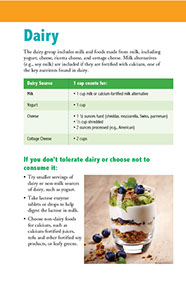
    The dairy group includes milk and foods made from milk, including yogurt, cheese, ricotta cheese, and cottage cheese. Milk alternatives  (e.g., soy milk) are included if they are fortified with calcium, one of the key nutrients found in dairy.

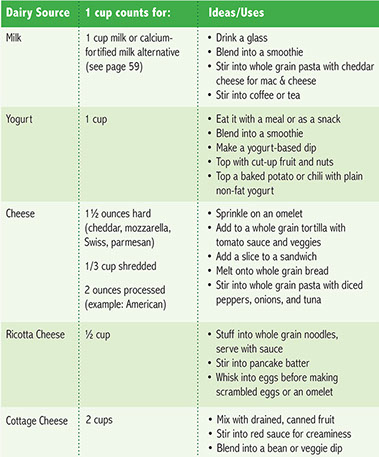
    Chart showing dairy sources and ideas.

    If you don’t tolerate dairy or choose not to consume it:

    *  Try smaller servings of dairy or non-milk sources of dairy, such as yogurt.

    * Take lactose enzyme tablets or drops to help digest the lactose in milk.

    * Choose non-dairy foods for calcium, such as calcium-fortified juices, tofu and other fortified soy products, or leafy greens.

    © American Institute for Preventive Medicine