SUCCESS OVER STRESS

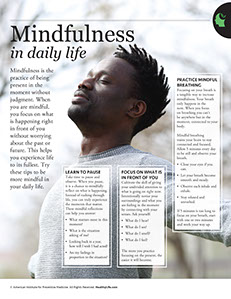
Mindfulness is the practice of being present in the moment without judgment. When you are mindful, you focus on what is happening right in front of you without worrying about the past or future. This helps you experience life to its fullest. Try these tips to be more mindful in your daily life.
Learn to pause
Take time to pause and observe. When you pause, it is a chance to mindfully reflect on what is happening. Instead of rushing through life, you can truly experience the moments that matter. These mindful reflections can help you answer:
* What matters most in this moment?
* What is the situation asking of me?
* Looking back in a year, how will I wish I had acted?
* Are my feelings in proportion to the situation?
Focus on what is in front of you
Cultivate the skill of giving your undivided attention to what is going on right now. Intentionally notice your surroundings and what you are feeling in the moment by connecting with your senses. Ask yourself:
* What do I hear?
* What do I see?
* What do I smell?
* What do I feel?
The more you practice focusing on the present, the easier it will become.
Practice mindful breathing
Focusing on your breath is a tangible way to increase mindfulness. Your breath only happens in the now. When you focus on breathing you can’t be anywhere but in the moment, connected to your body.
Mindful breathing trains your brain to stay connected and focused. Allow 5 minutes every day to be still and observe your breath.
* Close your eyes if you can.
* Let your breath become smooth and steady.
* Observe each inhale and exhale.
* Stay relaxed and unrushed.
If 5 minutes is too long to focus on your breath, start with one or two minutes and work your way up.
© American Institute for Preventive Medicine