Tag: mobility

  • Exercise Your Feet

    BE FIT

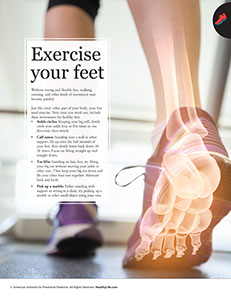
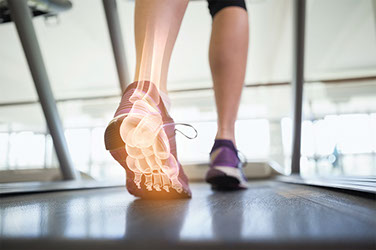
    Close up of feet walking on treadmill, with an overlapping illustration of a foot skeleton.

    Without strong and flexible feet, walking, running, and other kinds of movement may become painful.

    Just like every other part of your body, your feet need exercise. Next time you work out, include these movements for healthy feet:

    *Ankle circles:Keeping your leg still, slowly circle your ankle four or five times in one direction, then switch.

    *Calf raises:Standing near a wall or other support, lift up onto the ball mounds of your feet, then slowly lower back down 10-20 times. Focus on lifting straight up and straight down.

    *Toe lifts:Standing on bare feet, try lifting your big toe without moving your ankle or other toes. Then keep your big toe down and lift your other four toes together. Alternate back and forth.

    *Pick up a marble:Either standing with support or sitting in a chair, try picking up a marble or other small object using your toes.

    © American Institute for Preventive Medicine

  • Stay Fit For Life By Getting Flexible

    BE FIT

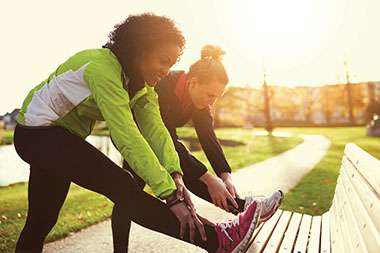
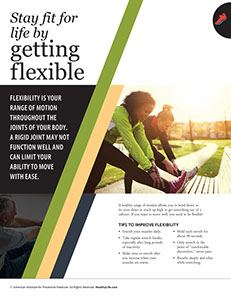
    Two women stretching legs on bench.

    Flexibility is your range of motion throughout the joints of your body. A rigid joint may not function well and can limit your ability to move with ease.

    A healthy range of motion allows you to bend down to tie your shoes or reach up high to get something out of a cabinet. If you want to move well, you need to be flexible!

    Tips to improve flexibility

    *  Stretch your muscles daily.

    *  Take regular stretch breaks, especially after long periods of inactivity.

    *  Make time to stretch after you exercise when your muscles are warm.

    *  Hold each stretch for about 90 seconds.

    *  Only stretch to the point of “comfortable discomfort,” never pain.

    *  Breathe deeply and relax while stretching.

    © American Institute for Preventive Medicine

  • Tips For Exercise After Knee Replacement

    BE FIT

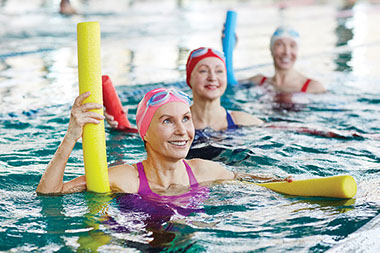
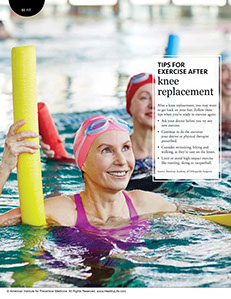
    Three older women doing water exercises.

    After a knee replacement, you may want to get back on your feet. Follow these tips when you’re ready to exercise again:

    *  Ask your doctor before you try any new exercise.

    *  Continue to do the exercises your doctor or physical therapist prescribed.

    *  Consider swimming, biking and walking, as they’re easy on the knees.

    *  Limit or avoid high-impact exercise like running, skiing or racquetball.

    Source: American Academy of Orthopaedic Surgeons

    © American Institute for Preventive Medicine

  • Benefits Of Walking

    Fitness

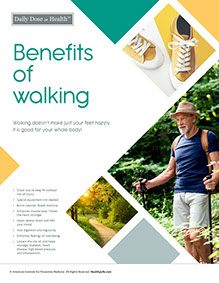
    Couple hiking through trees with walking sticks.

    Walking doesn’t make just your feet happy. It is good for your whole body!

    *  Great way to keep fit without risk of injury.

    *  Special equipment not needed.

    *  Burns calories. Builds stamina.

    *  Enhances muscle tone. Makes the heart stronger.

    *  Helps relieve stress and lifts your mood.

    *  Aids digestion and regularity.

    *  Enhances feelings of well-being.

    *  Lowers the risk of, and helps manage, diabetes, heart disease, high blood pressure, and osteoporosis.

    Page from HealthyLife Weigh book by the American Institute for Preventive Medicine. www.HealthyLife.com. All rights reserved.

    © American Institute for Preventive Medicine

  • Get Flexible!

    Fitness

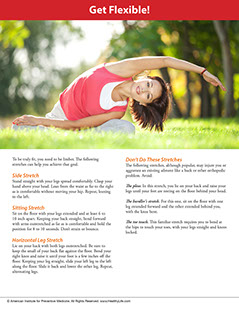
    To be truly fit, you need to be limber. The following stretches can help you achieve that goal.

    Side Stretch

    Stand straight with your legs spread comfortably. Clasp your hand above your head. Lean from the waist as far to the right as is comfortable without  moving your hip. Repeat, leaning to the left.

    Sitting Stretch

    Sit on the floor with your legs extended and at least 6 to 10 inch apart. Keeping your back straight, bend forward with arms outstretched as far as is comfortable and hold the position for 8 to 10 seconds. Don’t strain or bounce.

    Horizontal Leg Stretch

    Lie on your back with both legs outstretched. Be sure to keep the small of your back flat against the floor. Bend your right knee and raise it until your foot is a few inches off the floor. Keeping your leg straight, slide your left leg to the left along the floor. Slide it back and lower the other leg. Repeat, alternating legs.

    Don’t Do These Stretches

    The following stretches, although popular, may injure you or aggravate an existing ailment like a back or other orthopedic problem. Avoid:

    The plow. In this stretch, you lie on your back and raise your legs until your feet are resting on the floor behind your head.

    The hurdler’s stretch. For this one, sit on the floor with one leg extended forward and the other extended behind you, with the knee bent.

    The toe touch. This familiar stretch requires you to bend at the hips to touch your toes, with your legs straight and knees locked.

    Page image from A Year of Health Hints book by the American Institute for Preventive Medicine. www.HealthyLife.com. All rights reserved.

    © American Institute for Preventive Medicine

  • Aging In Place For Older Adults

    FAMILY LIFE

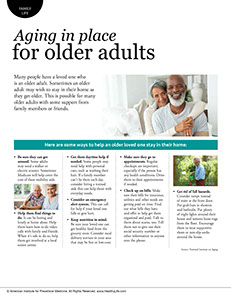
    Smiling, happy older couple.

    Many people have a loved one who is an older adult. Sometimes an older adult may wish to stay in their home as they get older. This is possible for many older adults with some support from family members or friends.

    Here are some ways to help an older loved one stay in their home:

    *Be sure they can get around.Some adults may need a walker or electric scooter. Sometimes Medicare will help cover the cost of these mobility aids.

    *Help them find things to do.It can be boring and lonely at home alone. Help them learn how to do video calls with family and friends. When it’s safe to do so, help them get involved at a local senior center.

    *Get them daytime help if needed.Some people may need help with personal care, such as washing their hair. If a family member can’t be there each day, consider hiring a trained aide that can help them with everyday needs.

    *Consider an emergency alert system.This can call for help if your loved one falls or gets hurt.

    *Keep nutrition in mind.Be sure your loved one can get healthy food from the grocery store. Consider meal delivery services in your area that may be free or low-cost.

    *Make sure they go to appointments.Regular checkups are important, especially if the person has any health conditions. Drive them to their appointments if needed.

    *Check up on bills.Make sure their bills for insurance, utilities and other needs are getting paid on time. Find out what bills they have and offer to help get them organized and paid. Talk to them about scams, too. Tell them not to give out their social security number or other information to anyone over the phone.

    *Get rid of fall hazards.Consider ramps instead of stairs at the front door. Put grab bars in showers and bathtubs. Put plenty of night lights around their house and remove loose rugs from the floor. Encourage them to wear supportive shoes or non-slip socks around the house.

    Source: National Institute on Aging

    © American Institute for Preventive Medicine

  • Arthritis

    Bone & Muscle Problems

    Arthritis refers to over 100 disorders that affect the joints or areas around the joints. It is a common chronic health problem and occurs in people of all ethnic groups. In the U.S., arthritis is the most common cause of disability.

    The risk for arthritis increases with aging. More than 1 in 5 adults has arthritis, but 300,000 children have some form of it, too. Arthritis is more common in women than men.

    Rheumatoid Arthritis (RA)

    This type is chronic disease that affects the linings of the joints. Most often, RA affects many joints. The disease may also attack tissues in the skin, lungs, eyes, and blood vessels. Persons of all ages, including children, can have RA. It is much more common in women than in men. For some people, symptoms of RA are constant. For others, symptoms are mild sometimes, but get worse (flare up) at other times.

    Signs & Symptoms

    Warmth, redness, pain, and swelling around the joints. Often, the swelling affects the wrist and finger joints closest to the hand.

    *  Joint swelling sometimes affects other joints, such as the neck, shoulders, elbows, hips, knees, ankles, and feet.

    *  Swelling of the joints occurs on both sides of the body, such as both wrists.

    *  Pain and stiffness last for more than 30 minutes in the morning or after a long rest.

    *  Fatigue and not feeling well in general

    *  Fever occurs sometimes.

    Anxiety, depression, and feeling helpless are common problems for people with RA.

    Causes

    With RA, the body’s immune system attacks its own joints and sometimes other body organs. What causes this abnormal response is not known. Things that may contribute to RA include:

    *  Family history of the disease

    *  Factors in the environment. An example is heavy smoking.

    *  Hormones. In women with RA, it is common for the disease to go into remission during pregnancy. Symptoms increase, though, after the baby is born. It is also more likely for women to develop RA in the year after a pregnancy.

    *  An infection from a virus or bacteria, but no single organism has been found to be the cause.

    Osteoarthritis

    This is the most common type. It is also called “wear and tear” arthritis. With this type, the cartilage in joints gets worn out. Chips and cracks form in the cartilage. This allows the ends of bones to rub together. Growths called spurs also form. This type of arthritis is common in joints that bear weight (knees and hips).

    Signs & Symptoms

    Joint pain and stiffness, especially after being inactive or overusing a joint

    *  Knobby growths on finger joints

    *  Loss of motion in joints

    *  Joint tenderness and swelling can occur.

    Causes

    *  Aging joints

    *  Wear and tear on joints. Also, people who are more than 10 pounds overweight put greater stress on joints that bear weight (knees and hips).

    *  Joint injury and overuse

    *  Family history of arthritis

    Juvenile Rheumatoid Arthritis (JRA)

    This type affects persons age 16 and younger. With JRA, joint stiffness and swelling (that causes soreness, redness, warmth, and/or pain) last 6 weeks or longer.

    There are 3 kinds of JRA:

    *  The most common kind is one in which 4 or fewer joints are affected. These are usually large joints, such as the knees. Eye problems are also common with this type of JRA. Some children outgrow joint problems by the time they become adults, but may continue to have eye problems.

    *  A second kind affects 5 or more joints. These are usually small joints, such as ones in the hands and feet and the same ones on both sides of the body. Large joints can also be affected.

    *  A third kind affects joints and internal organs, such as the heart, liver, lymph nodes, and spleen. A skin rash and a fever are also present.

    Gout

    Gout is most common in men over 30 years of age. Less common in women, it usually occurs after menopause.

    Signs & Symptoms

    *  Sudden, intense pain in a joint, usually in a big toe, wrist, knee, or elbow

    *  Swollen joint

    *  The joint area is red or purple in color, feels warm, and is tender to the touch.

    *  Sometimes, fever and chills

    Symptoms can last many hours to a few days.

    Causes

    Gout occurs when crystals from high blood uric acid (a body waste product) deposit in joints and/or soft tissues. The body’s immune system treats these crystals like a foreign substance. This leads to swelling and pain.

    Ankylosing Spondylitis (AS)

    This type of arthritis is more common in men than in women. It usually begins between the ages of 17 and 35.

    Signs & Symptoms

    *  Early signs are stiffness and a dull pain in the lower back and buttocks.

    *  Mild fever and general ill feeling may occur.

    *  Over time, the stiffness and pain become chronic and spread up the spine and into the neck. The shoulders, hips, and other areas of the body can also be affected.

    *  In some persons, joints fuse together. This causes a stiff, bent posture.

    *  Red, painful, and watery eyes. Blurred vision can occur and eyes can be sensitive to bright lights.

    Causes

    Genetic factors play a big role. Having frequent gastrointestinal infections or an inflammatory bowel disease, such as Crohn’s disease or ulcerative colitis, is also a factor.

    How It Is Diagnosed

    To diagnose arthritis, your doctor or health care provider does these things:

    *  Asks you to describe your symptoms and does a physical exam.

    *  Asks if you have had any physical stresses or injuries.

    *  Examines joints and areas around them.

    The tests below may also be needed.

    *  Blood and urine tests.

    *  X-rays and MRIs.

    *  Taking a fluid sample from a joint. The fluid is examined.

    Tests also help diagnose or rule out other arthritis-related problems. Examples are:

    *  Lyme disease. This is an infection from a deer tick bite.

    *  Other auto-immune diseases, such as fibromyalgia and lupus (the systemic kind).

    Self-Care

    Exercise

    Exercise has many benefits:

    *  It increases energy, flexibility, and stamina.

    *  It helps protect joints from further stress.

    *  It improves posture.

    *  It keeps muscles and bones strong.

    *  It improves general health and promotes a sense of well-being.

    The type and amount of exercise you should do depends on the type of arthritis you have and your needs. Follow your doctor’s or health care provider’s advice. {Note: You can find exercise programs recommended by the Arthritis Foundation fromwww.arthritis.org/programs.php.}

    In general, you will be advised to do three types of exercise:

    1.  Stretching Exercises. Examples are reaching exercises, tai chi, and yoga. These loosen up stiff joints and make them more flexible. They improve or maintain range of motion.

    2.  Mild Strengthening Exercises. Examples are lifting 1 to 2 pound weights and using an exercise resistance band. These help build or keep muscle strength. Strong muscles help support and protect joints. Joint movement improves as muscles get stronger.

    3.  Low-Impact Aerobics. Examples are walking, biking, swimming, and water aerobics. These exercises strengthen the heart and lungs and help control weight. They also give you more energy and build your ability to be active longer.

    After a few months of regular exercise, most people have less pain. In time, people who exercise daily find it easier to move their joints without pain.

    Exercise Tips

    *  Discuss exercise plans with your doctor or health care provider. He or she may refer you to an exercise specialist.

    *  Do exercises you like.

    *  Choose exercises that use all affected joints.

    *  Choose a regular time and place to exercise.

    *  Your exercise routine does not have to be a formal one. Try to fit more activity into your daily routine. If you can, take the stairs, not the elevator. Walk or ride a bike instead of driving.

    *  Start your program slowly. Progress slowly, too.

    *  Keep movements slow and gentle.

    *  Do shorter exercise sessions throughout the day.

    *  Start each exercise period with a 5-minute warm-up. End each session with a 5-minute cool-down.

    *  You should be able to speak and not be out of breath while you exercise.

    *  Stop exercising if a joint is swollen, painful, or red.

    *  It may help to apply heat to sore joints before you exercise and cold packs after.

    *  Be careful to avoid injury.

    *  Rest when you need to. Rest your joints after activities.

    *  Focus on freedom of movement.

    *  Be patient.

    Ways to Relieve Pain

    *  Apply moist heat for 15 to 20 minutes, 3 times a day. Use warm towels or hot packs or take warm baths or showers.

    *  Use cold treatment 10 to 15 minutes at a time. This helps stop pain and reduces swelling. Use ice packs, cold packs, or frozen vegetables wrapped in a towel.

    If you have Raynaud’s disease, you should not use cold treatment. Cold makes this condition worse.

    *  Use water therapy to decrease pain and stiffness.

    – Pool exercises. Find out if local pools and health centers have water exercise classes for people with arthritis.

    – Whirlpool baths

    *  Do relaxation exercises to release the tension in your muscles. Doing this helps reduce pain.

    *  Apply over-the-counter creams and lotions that block the pain. Use one with capsaicin. Ones with methyl salicylate should be used with your doctor’s guidance. Using too much can lead to a salicylate overdose.

    *  Take medications as prescribed.

    Medical Care

    Reasons to Call Doctor/ Provider

    *  A joint is painful, tender, red, or warm.

    *  You can’t move a joint normally.

    *  Joints are very stiff, especially in the morning.

    *  A fever, chills, severe sweating, or a rash occurs with other arthritis symptoms.

    *  You can’t use one or more joints.

    *  Severe pain occurs in the big toe or severe pain and swelling occur in one or more joints.

    *  Joint pain or stiffness keeps you from doing normal activities or your arthritis worsens.

    Medicines

    *  Over-the-counter or prescribed pain relievers. These include acetaminophen and nonsteroidal anti-inflammatory drugs (NSAIDs). NSAIDs reduce inflammation, too. Your doctor may prescribe an NSAID cream.

    *  Over-the-counter supplements. Examples are glucosamine and chondroitin. Follow your doctor’s advice about using these.

    *  Corticosteroids. These slow down the immune system. They help a lot with swelling, but have many side effects. They can be given in pill form, in an IV, or injected right into the affected joint area.

    *  Medicines to treat gout. One type lowers the amount of uric acid the body makes. Another type gets the kidneys to excrete more uric acid.

    *  Hyaluronic acid injections. These can relieve pain for osteoarthritis of the knee. They may be given if other treatments don’t help.

    *  Biologic agents. These block steps in the body’s inflammation process. They help stop arthritis from getting worse.

    *  Disease modifying antirheumatic drugs (DMARDs) may be prescribed for rheumatoid arthritis. These reduce inflammation and slow down or suppress the immune system. They can help relieve pain, too.

    *  Other medicines as needed. Examples are ones for depression, anxiety, osteoporosis and/or to assist with sleep.

    Splints

    Your health care provider may have you wear a splint over the affected joint(s). This helps rest the joint.

    Mobilization Therapies

    *  Traction (gentle, steady pulling)

    *  Massage

    *  Manipulation (using the hands to restore normal movement to stiff joints)

    When done by someone trained in these methods, these can help control pain and increase joint motion and muscle and tendon flexibility.

    Acupuncture

    A person trained in this medical field places special needles in certain sites. The needles stimulate deep sensory nerves that tell the brain to release natural painkillers (endorphins).

    Surgery

    In most cases, surgery is not needed. Damaged joints can be repaired or be replaced with joints made from plastic and metal. Total hip and knee replacements are examples. Surgery can also remove damaged tissue in a joint.

    Resources

    Arthritis Foundation

    800.283.7800

    www.arthritis.org

    National Institute of Arthritis and Musculoskeletal and Skin Diseases (NIAMS)

    877.22.NIAMS (226.4267)

    www.niams.nih.gov
    Arthritis brochure by the American Institute for Preventive Medicine. www.HealthyLife.com. All rights reserved.

    © American Institute for Preventive Medicine

  • Healthy Aging

    Mature Health: Over Age 50

    Grandparents playing with 2 young grandkids.

    Physical activity is a cornerstone of healthy aging. Studies show people who exercise regularly live longer and may live better, without pain or disability.

    If you exercise on a regular basis, good for you! Keep it up! If not, now is the time to start. Check with a doctor before you begin an exercise program. Choose activities you can do and enjoy. Start out slowly and progress slowly. Some exercise is better than no exercise.

    Research shows that eating a Mediterranean-style diet has both physical and mental health benefits that support healthy aging. This eating style includes plenty of vegetables and fruit, whole grains, healthy fats, more fish and less processed foods.

    Staying mentally active is linked to physical and mental health and may reduce the risk of Alzheimer’s disease. Find ways to lower stress and increase emotional well-being.

    Exercise your memory and your mind. Continue to learn new things. Read. Join a club.

    Health at Home Lifetime book by the American Institute for Preventive Medicine. www.HealthyLife.com. All rights reserved.

    © American Institute for Preventive Medicine

  • Multiple Sclerosis

    Brain & Nervous System

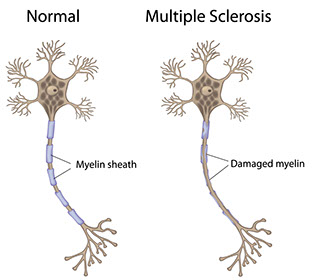
    Multiple Sclerosis (MS) is a chronic disease of the brain and spinal cord. With MS, a covering that protects nerves (myelin) and the nerves are damaged or destroyed. Over time, scar tissue forms along the damaged myelin. Nerves can’t send signals like they should. As a result, movement, sensation, etc. are impaired or lost.

    Illustration showing multiple sclerosis.

    Signs & Symptoms

    *  Fatigue.

    *  Feelings of pins and needles. Numbness. Leg stiffness.

    *  Poor coordination. Unsteady gait. Impaired movement.

    *  Bladder problems.

    *  Blurred vision. Double vision. Loss of vision in one eye.

    *  Depression. Mild problems with memory, learning, etc.

    *  Swallowing problems.

    Early signs and symptoms may be mild and present for years before MS is diagnosed.

    Symptoms vary from person to person. They may last for hours or weeks. They can vary from day to day and can come and go with no set pattern.

    Some persons have only a few symptoms over the course of the disease. For others, symptoms continue and/or worsen with time. Most persons with MS get symptom flare-ups (relapses) that are followed by partial or complete recoveries (remissions).

    Causes

    The exact cause of MS is not known. It may be due to a number of factors. These include: A virus, genetics, and an immune system problem. Toxins, trauma, poor nutrition, and other factors may also play a role. Things known to come before the onset of MS include: Overwork; fatigue, the postpartum period for women; acute infections; and fevers. Multiple sclerosis is more common in:

    *  Women than in men.

    *  Caucasians than in Hispanics or African Americans. It is rare among Asians and certain other ethnic groups.

    *  Adults between the ages of 20 and 50. Young children, teens, and older adults can also have MS.

    *  People who are born and live up to at least age 15 years old in places farther from the equator. These include North America, Europe, and Southern Australia.

    Treatment

    There is no cure yet for MS, but most people with it live a normal life span. Treatment for MS includes:

    *  Prescribed medication to lessen the number and severity of flare-ups and to slow the progression of the disease. Research favors early treatment with this type of medicine.

    *  Short-term courses of IV or oral corticosteroids. These reduce inflammation during MS flare-ups.

    *  Medications to control and treat MS symptoms. Treating infections, when present.

    *  Physical and occupational therapy.

    *  Counseling. Support groups.

    *  Clinical trails. Accesswww.clinicaltrials.gov.

    Questions to Ask

    Self-Care / Prevention

    *  Follow your doctor’s guidelines for home care.

    *  Maintain a normal routine at work and at home. Avoid activities that lead to fatigue or put too much physical stress on the body. Get plenty of rest.

    *  Manage emotional stress.

    *  Avoid the heat and sun. Don’t take hot showers or baths. Increased body temperature can cause symptoms. Cool baths or swimming in a pool may improve symptoms by lowering body temperature.

    *  Have body massages to help maintain muscle tone.

    *  Treat a fever as soon as it occurs.

    *  Get regular exercise. Physical therapy may be helpful.

    *  Get counseling, if needed.

    *  Get a seasonal flu shot every year and other vaccines as advised.

    *  If you smoke, quit!

    Resources

    Multiple Sclerosis Foundation

    888.MS.FOCUS (673.6287)

    www.msfocus.org

    National Multiple Sclerosis Society

    800.FIGHT.MS (344.4867)www.nationalmssociety.org

    Healthier at Home book by the American Institute for Preventive Medicine. www.HealthyLife.com. All rights reserved.

    © American Institute for Preventive Medicine

  • Stretching And Rehabilitation

    Healthylife® Weigh

    Part 5

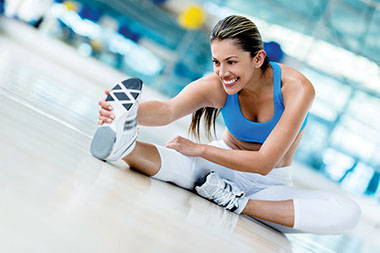
    Smiling women stretching.

    These exercises make your body more flexible. This helps you prevent injury during exercise and everyday activities. Stretching can also help you relax and is a tool for stress management. Tips:

    *  Stretch all muscle groups. Induce mild tension (not pain or burn) for 10 to 30 seconds.

    *  Don’t bounce while stretching. Make movements slow and controlled.

    *  Breathe slowly. Inhale while stretch is released. Exhale when moving into the stretch.

    *  Stretch after each cardio or resistance training workout.

    *  Stretch as a stand-alone workout or as a way to wind down at the end of the day.

    Examples of Stretching Exercises:

    Shoulder Shrug: Shrug your shoulders up toward your head. Then lower them. Repeat 4 times. Slowly circle your shoulders forward 8 times and then backward 8 times.

    Hamstring Stretch: Sit on the floor with your right leg straight. Bend your left leg and touch your foot against your straight leg. Stretch forward to touch the toes of your right foot. Hold for 4 counts. Then do this on the other side.

    © American Institute for Preventive Medicine