Tag: moderation

  • Potatoes: Diet Friend Or Foe?

    HEALTHY EATING

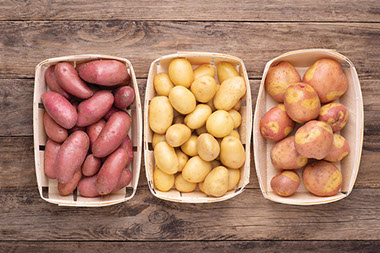
    Three baskets filled with potatoes.

    Perhaps you’ve heard the old saying that a potato isn’t a vegetable, it’s a starch. Actually, a potato is a starchy vegetable, so it’s both!

    Are potatoes healthy?

    Potatoes are higher in starch and calories than other vegetables. But that doesn’t mean you should never eat them. Like any food, enjoy potatoes in moderation. Try to eat a variety of fruits and vegetables each day.

    Potatoes supply a good amount of nutrients and can help you feel full. One medium potato has 110 calories and is a good source of:

    *  Potassium (more than a banana)

    *  Vitamin C

    *  Vitamin B6

    *  Fiber

    Eat them all-natural

    Potatoes may get an unhealthy reputation because they’re often fried or dressed with high-fat toppings like butter and sour cream. Enjoy potatoes baked or microwaved with a small amount of butter or olive oil and  salt-free seasoning or herbs.

    Source: United States Department of Agriculture

    © American Institute for Preventive Medicine

  • Boost Your Exercise With Caffeine

    BE FIT

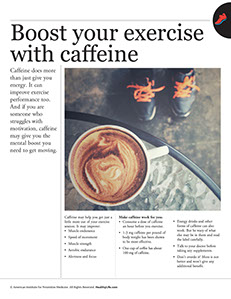
    Caffeine does more than just give you energy. It can improve exercise performance too. And if you are someone who struggles with motivation, caffeine may give you the mental boost you need to get moving.

    Caffeine may help you get just a little more out of your exercise session. It may improve:

    *  Muscle endurance

    *  Speed of movement

    *  Muscle strength

    *  Aerobic endurance

    *  Alertness and focus

    Make caffeine work for you:

    *  Consume a dose of caffeine an hour before you exercise.

    *  1-3 mg caffeine per pound of body weight has been shown to be most effective.

    *  One cup of coffee has about 100 mg of caffeine.

    *  Energy drinks and other forms of caffeine can also work. But be wary of what else may be in them and read the label carefully.

    *  Talk to your doctor before taking any supplements.

    *  Don’t overdo it! More is not better and won’t give any additional benefit.

    © American Institute for Preventive Medicine

  • 5 Reasons To Limit Alcohol

    Substance Use & Abuse

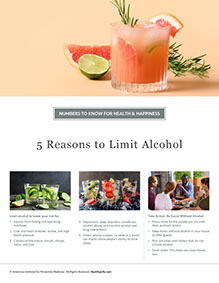
    Cocktail drink with slices of grapefruit and lime.

    Limit alcohol to lower your risk for:

    1.  Injuries from falling and operating machines

    2.  Liver and heart diseases, stroke, and high blood pressure

    3.  Cancers of the breast, mouth, throat, colon, and liver

    4.  Depression, sleep disorders, unsafe sex, alcohol abuse, and harmful alcohol and drug interactions

    5.  Motor vehicle crashes. As little as 2 drinks can impair some people’s ability to drive safely.

    Take Action: Be Social Without Alcohol

    *  Focus more on the people you are with than alcoholic drinks.

    *  Keep drinks without alcohol in your house to offer guests.

    *  Plan activities with others that do not include alcohol.

    *  Drink water. This helps you save money, too.

    Page from HealthyLife Weigh book by the American Institute for Preventive Medicine. www.HealthyLife.com. All rights reserved.

    © American Institute for Preventive Medicine

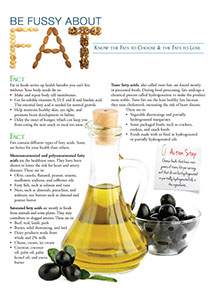
  • Be Fussy About Fat

    Nutrition

    Image of oilve oil and green olives in a clear bowl.

    Know the Fats to Choose & the Fats to Lose.

    Fact:

    Fat in foods serves up health benefits you can’t live without. Your body needs fat to:

    *  Make and repair body cell membranes.

    *  Get fat-soluble vitamins A, D, E and K and linoleic acid. This essential fatty acid is needed for normal growth.

    *  Help maintain healthy skin, eye sight, and promote brain development in babies.

    *  Delay the onset of hunger, which can keep you from eating the next snack or meal too soon.

    Fats contain different types of fatty acids. Some are better for your health than others.

    Monounsaturated and polyunsaturated fatty acids are the healthiest ones. They have been shown to lower the risk for heart and artery diseases. These are in:

    *  Olive, canola, flaxseed, peanut, sesame, sunflower, soybean, and safflower oils

    *  Fatty fish, such as salmon and tuna

    *  Nuts, such as almonds, pistachios, and walnuts; nut butters such as almond and peanut butter

    Saturated fatty acids are mostly in foods from animals and some plants. They may contribute to clogged arteries. These are in:

    *  Beef, veal, lamb, pork

    *  Butter, solid shortening, and lard

    *  Dairy products made from whole and 2% milk

    *  Cheese, cream, ice cream

    *  Coconut, coconut oil, palm oil, palm kernel oil, and cocoa butter

    Trans fatty acids, also called trans fats, are found mostly in processed foods. During food processing, fats undergo a chemical process called hydrogenation to make the product more stable. Trans fats are the least healthy fats because they raise cholesterol, increasing the risk of heart disease. These are in:

    *  Vegetable shortenings and partially hydrogenated margarines

    *  Some packaged foods, such as crackers, cookies, and snack foods

    *  Foods made with or fried in hydrogenated or partially hydrogenated oils

    Action Step

    Choose foods that have zero grams of trans fat per serving and that do not list hydrogenated or partially hydrogenated oils in the ingredients.
    Page from Ways to Well-Being book by the American Institute for Preventive Medicine. www.HealthyLife.com. All rights reserved.

    © American Institute for Preventive Medicine

  • Eat Out Without Filling Out

    Nutrition

    Order wisely and remember portion control.

    In today’s busy world, more and more meals are being eaten away from home. With some advanced planning, self-control and wise choices, dining out can still be a pleasant and healthy experience. Before you go to a restaurant, check out its menu and nutrition information online. Choose a place to eat that offers healthy options. If you can’t preplan, opt for foods lower in calories and high in nutrients.

    Go for it.

    *  Green leafy salads and veggies

    *  Chicken, turkey, fish, and lean meats. Choose ones that are broiled, grilled, steamed, poached, roasted, or baked

    *  Pasta dishes with red, marinara or primavera sauce

    *  Foods made with yogurt, broth, or mustard sauces

    *  Apple slices or fruit parfaits instead of French fries

    Avoid it.

    *  Anything creamy, fried, crispy, breaded, battered, or au gratin (with cheese)

    *  Sauces or soups with lots of butter, cream, or cheese

    *  Thick or creamy salad dressings

    *  Most casserole dishes

    *  Value, deluxe, or supersized meals

    *  Double and triple-decker burgers or 12-ounce steaks

    Healthy Eating Out Tips

    *  Split a meal or ask for a take-out box and pack it up before you dig in. Most restaurant meals are generous to a fault.

    *  Even at dinner, ask for a lunch-sized portion.

    *  Drink water or low-fat milk. Soda and other sugary drinks are wasted calories.

    *  Limit alcohol. Choose wine over mixed cocktails that have added calories.

    *  If you have dessert, order fresh fruit. Or share a dessert with someone.

    *  Have it your way. Ask that foods be prepared without added fats and salt.

    Action Step

    If your eyes are craving dessert, wait at least 15 minutes after you finish your meal. This allows your body to decide if it is actually still hungry.

    Page from Ways to Well-Being book by the American Institute for Preventive Medicine. www.HealthyLife.com. All rights reserved.

    © American Institute for Preventive Medicine

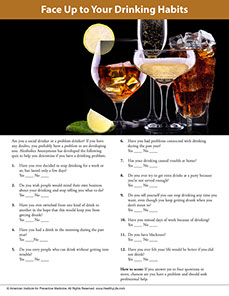
  • Face Up To Your Drinking Habits

    Substance Use & Abuse

    Are you a social drinker or a problem drinker? If you have any doubts, you probably have a problem or are developing one. Alcoholics Anonymous has developed the following quiz to help you determine if you have a drinking problem.

    1.  Have you ever decided to stop drinking for a week or so, but lasted only a few days?  Yes ____ No ____

    2.  Do you wish people would mind their own business about your drinking and stop telling you what to do?  Yes ____ No ____

    3.  Have you ever switched from one kind of drink to another in the hope that this would keep you from getting drunk?  Yes ____ No ____

    4.  Have you had a drink in the morning during the past year?  Yes ____No ____

    5.  Do you envy people who can drink without getting into trouble?  Yes ____ No ____

    6.  Had problems connected with drinking during the past year?  Yes ____ No ____

    7.  Has your drinking caused trouble at home?  Yes ____ No ____

    8.  Do you ever try to get extra drinks at a party because you’re not served enough?

    Yes ____      No ____

    9.  Do you tell yourself you can stop drinking any time you want, even though you keep getting drunk when you don’t mean to?  Yes ____ No ____

    10. Have you missed days of work because of drinking?  Yes ____ No ____

    11. Do you have blackouts?  Yes ____ No ____

    12. Have you ever felt your life would be better if you did not drink?  Yes ____ No ____

    How to score: If you answer yes to four questions or more, chances are you have a problem and should seek professional help.

    Page from A Year of Health Hints book by the American Institute for Preventive Medicine. www.HealthyLife.com. All rights reserved.

    © American Institute for Preventive Medicine

  • Portion Control

    Weight Control

    Size matters.

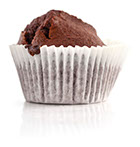
    Image of a small muffin size from 20 years ago.
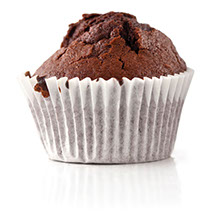
    Image of large muffin served today.

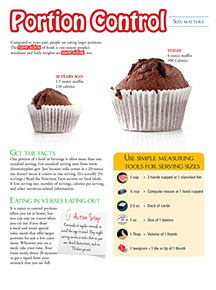
    Compared to years past, people are eating larger portions. The super-sizing of foods is one reason people’s waistlines and body weights are super-sizing , too.

    20 years ago:

    1.5 ounce muffin

    210 calories

    Today:

    4 ounce muffin

    500 Calories

    Get the facts

    One portion of a food or beverage is often more than one standard serving. Get standard serving sizes fromwww.choosemyplate.gov. Just because soda comes in a 20-ounce size doesn’t mean it counts as one serving. (It’s actually 2½ servings.) Read the Nutrition Facts section on food labels. It lists serving size, number of servings, calories per serving, and other nutrition-related information.

    Eating in verses eating out

    It is easier to control portions when you eat at home, but you can stay on course when you eat out if you share a meal and avoid special value meals that offer larger portions for just a few cents more. Wherever you eat a meal, take your time. Your brain needs about 20 minutes to get a signal from your stomach that you are full.

    Use simple measuring tools for serving sizes:

    1 cup = 2 hands cupped or 1 clenched fist

    ½ cup = Computer mouse or 1 hand cupped

    2-3 oz. =  Deck of cards

    1 oz. = Size of 1 domino

    1 Tbsp. = Volume of 1 thumb

    1 teaspoon = 1 die or tip of 1 thumb

    Action Step

    Eat meals at regular intervals to avoid the urge to snack. Buy single-serving snacks or make them on your own. Avoid distractions, such as TV when you eat.

    Page from Ways to Well-Being book by the American Institute for Preventive Medicine. www.HealthyLife.com. All rights reserved.

    © American Institute for Preventive Medicine

  • The Buzz About Alcohol

    WELL-BEING

    Image of lemon water.

    Drinking at social events or bars and the ease that a little buzz provides make it hard to limit yourself when friends gather around a pitcher of beer. Dennis Donovan, director of the Alcohol and Drug Abuse Institute at the University of Washington, has advice for how to drink moderately-or not at all.

    *Count your drinks.In many cases, people lose track of how much they’ve had. This is especially true when sharing a pitcher of beer and someone refills the glass.

    *Know a standard serving size.Large wine glasses, higher alcohol content in some beers, and generous liquor pours in mixed drinks make the “I only had one!” claim questionable.

    *One drink, one hour.Most people’s bodies can process about one drink per hour. Pace yourself to one drink an hour or so, and every hour or two you might take a drink “off” and have water or another non-alcoholic beverage instead. Also, make sure to eat.

    *Ginger ale looks like a cocktail.Teetotalers not wanting to attract attention or questions can stick to ginger ale or other non-alcoholic drinks that look like cocktails.

    *Say no.Firmly, confidently turn down drinks and become resistant to social pressure and arm-twisting. Practice saying: “No, I’ve reached my limit” or “I’m not drinking tonight.”

    © American Institute for Preventive Medicine

  • Yes, You Can Eat Chocolate

    HEALTHY EATING

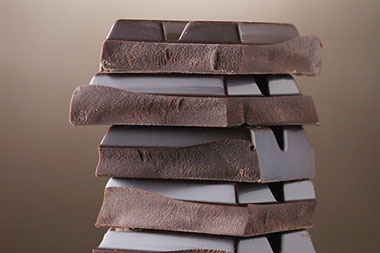
    Image of chocolate pieces stacked on top of each other.

    Although actual health benefits of eating chocolate are still being studied, the NIH News in Health reports that you can eat some types of chocolate in moderation:

    *  Eat as dark a chocolate as you can. Darker chocolate may help lower blood pressure.

    *  Choose dark chocolate instead of less healthy treats such as ice cream or candy.

    *  Avoid white and milk chocolates. Also avoid filled chocolate, such as truffles.

    *  Make hot chocolate with unsweetened cocoa, water, or nonfat milk, and a little added sugar.

    *  Watch your total calories because chocolate has a lot of them.

    © American Institute for Preventive Medicine

  • Coffee And Tea

    Healthylife® Weigh

    Part 3

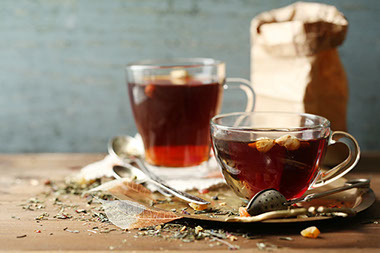
    Herbal tea.

    Coffee and tea drinks made with added ingredients can be a major source of sugar and saturated fat in your diet. The calories can also add up, pushing you over what your body needs for the day and not leaving enough room for nutrient-dense foods. Without anything added, coffee and tea drinks have fewer than 5 calories.

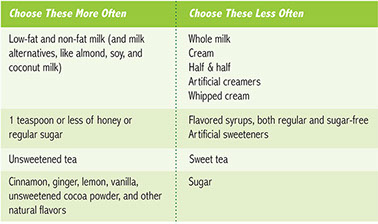
    Example chart of what to choose and not choose.

    If your favorite coffee or tea drink has more add-ins from the column on the right, save this drink for a special treat. Or, start to gradually cut back on how much of these you add to your drink. You can get used to new tastes. You may even like the new version better!

    Different teas can have a lot of natural flavor and sweetness. Experiment with lemon, chai, chamomile, fruit, and herbal teas.

    © American Institute for Preventive Medicine