HEALTHY EATING
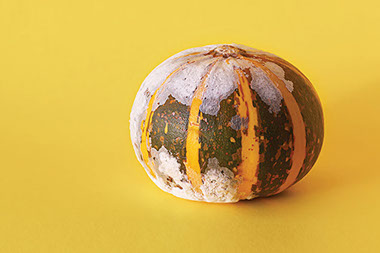
All foods can collect mold over time. Have you ever found moldy food and wondered if it was safe to eat? It depends on the food.
What is mold?
Molds are tiny, microscopic fungi. They have threadlike roots that can invade soil, plants and yes, the food we eat. They may look like fur or fuzzy green patches. Sometimes mold looks like white dust.
Some molds can be dangerous to people. They can cause allergic reactions and breathing problems. Other molds can produce poisonous substances called mycotoxins.
Roots go deep
Mold’s roots can be hard to see and can be deep in the food. Moldy foods may also have bacteria in them that you can’t see.
By the time you see mold on the surface of food, the mold roots may have already invaded it. So if you try to cut off the “bad part,” you could still be eating some mold. But there’s good news: You can save a few foods that have small amounts of mold on them.
Can you eat moldy food?
Some hard foods are safe to eat if you see mold on the surface. This is because the mold roots can’t invade them. But you have to remove the mold you can see before eating. A few foods you can eat include:
* Firm or hard fruits and vegetables, such as carrots, bell peppers and cabbage.
* Hard cheeses, such as cheddar, provolone, parmesan and Swiss.
* Hard salami and dry-cured country hams.
Here’s how you can remove the mold and eat these foods safely:
1. Cut at least one inch around and below the mold spot.
2. Don’t touch the mold with your knife.
3. Discard the entire area you cut away.
4. Wash your hands.
Other fruits, vegetables, cheese, breads and meats aren’t safe to eat if you see mold. Throw them away.
Source: United States Department of Agriculture
© American Institute for Preventive Medicine