Tag: money

  • Avoid Holiday Debt

    Financial Health

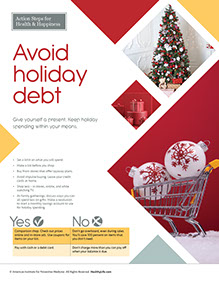
    Small, mini shopping cart with 2 ornaments inside cart.

    Give yourself a present. Keep holiday spending within your means.

    *  Set a limit on what you will spend.

    *  Make a list before you shop.

    *  Buy from stores that offer layaway plans.

    *  Avoid impulse buying. Leave your credit cards at home.

    *  Shop less – in stores, online, and while watching TV.

    *  At family gatherings, discuss ways you can all spend less on gifts. Make a resolution to start a monthly savings account to use for holiday spending.

    *  Comparison shop. Check out prices online and in-store ads. Use coupons for items on your list.

    *  Pay with cash or a debit card.

    *  Don’t go overboard, even during sales. You’ll save 100 percent on items that you don’t need.

    *  Don’t charge more than you can pay off when your balance is due.

    ays to Well-Being book by the American Institute for Preventive Medicine. www.HealthyLife.com. All rights reserved.

    © American Institute for Preventive Medicine

  • Find Unclaimed Money

    WELL-BEING

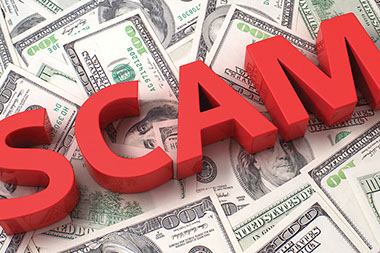
    Image of the word 'Scam' spread across money.

    Uncle Sam may actually owe you money. How? If the government owes you money, and you do not collect it, it becomes unclaimed money. This can happen because of bank or credit union closures, investment funds, pensions, tax refunds, or savings bonds, among others.

    But before you assume that there has to be unclaimed money out there for you, beware, says USA.gov, a government information website.

    There are people out there who will contact you, claim to be the government, saying they will send you unclaimed money for a fee. This is a scam. Legitimate government agencies will not contact you about unclaimed money or assets.

    Right now, there is no single government site for finding unclaimed money by name, social security number, or state. You need to visit each site separately and perform a search.

    After searching, if you are owed funds, there will be instructions and steps to follow to collect your money.

    For more information on unclaimed money, or other government resources, visitUSA.gov.

    © American Institute for Preventive Medicine

  • Managing Financial Stress

    FINANCIAL HEALTH

    Image of hands holding money.

    Do finances keep you awake at night? If so, you’re not alone. More than 75 percent of Americans say money is a big source of stress, according to the American Psychological Association (APA).

    Although we can’t always change our financial problems right away, we can learn to cope with this type of stress. This can help you stay healthier and learn to deal with challenges in a positive way.

    If you’re stressed about money, try these tips:

    *Remain calm and make a plan.It can be easy to get caught up in the panic of the moment when a problem arises. A sudden expense needed for an emergency or stories about a “bad economy” in the news can make things feel hopeless. Instead, think about small steps you can take now to improve your budget. This may be writing down a few specific ways you can cut back on expenses. Or, look at your past spending and make a plan to cut back on things you can do without for now.

    *Look at the positive side of being thrifty.Eating meals at home instead of at a restaurant can be a fun family bonding time. Have everyone help prepare the meal or pick out their favorite dish for the weekly menu. Can’t afford a fitness membership? Exercise with a family member or friend at home and make it fun.

    *Be proud of progress.If you saved $5 by making your coffee at home rather than buying it at a coffee shop, that’s a step in the right direction. Think about the little ways you can save money and how they add up over time. These small successes can get you to your goal.

    *If you can’t pay your bills, ask for help.Banks, utilities and credit card companies will often give you extra time to pay if you’re in a financial crisis. It doesn’t hurt to call and ask.

    *Identify unhealthy behaviors.If you deal with stress by drinking alcohol, smoking or gambling, this will often make matters worse. Not only do these habits cost more money, but they can cost you your health, job and relationships. Healthy ways to cope with stress include exercise, deep breathing, eating a balanced diet, listening to music or calling a friend. If you need help with unhealthy behaviors, ask your doctor or look into community support groups.

    Source: American Psychological Association

    © American Institute for Preventive Medicine