Tag: monitoring

  • Do You Live With A Sleepwalker?

    SELF-CARE CORNER

    Young women sleepwalking.

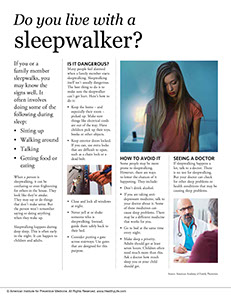
    If you or a family member sleepwalks, you may know the signs well. It often involves doing some of the following during sleep:

    *  Sitting up

    *  Walking around

    *  Talking

    *  Getting food or eating

    When a person is sleepwalking, it can be confusing or even frightening for others in the house. They look like they’re awake. They may say or do things that don’t make sense. But the person won’t remember saying or doing anything when they wake up.

    Sleepwalking happens during deep sleep. This is often early in the night. It can happen to children and adults.

    Is it dangerous?

    Many people feel alarmed when a family member starts sleepwalking. Sleepwalking itself isn’t usually dangerous. The best thing to do is to make sure the sleepwalker can’t get hurt. Here’s how to do it:

    *  Keep the home – and especially their room – picked up. Make sure things like electrical cords are out of the way. Have children pick up their toys, books or other objects.

    *  Keep exterior doors locked. If you can, use extra locks that are difficult to open, such as a chain lock or a dead bolt.

    *  Close and lock all windows at night.

    *  Never yell at or shake someone who is sleepwalking. Instead, guide them safely back to their bed.

    *  Consider putting a gate across stairways. Use gates that are designed for this purpose.

    How to avoid it

    Some people may be more prone to sleepwalking. However, there are ways to lower the chances of it happening. They include:

    *  Don’t drink alcohol.

    *  If you are taking anti-depressant medicine, talk to your doctor about it. Some of these medicines can cause sleep problems. There may be a different medicine that works for you.

    *  Go to bed at the same time every night.

    *  Make sleep a priority. Adults should get at least seven hours. Children often need much more than this. Ask a doctor how much sleep you or your child should get.

    Seeing a doctor

    If sleepwalking happens a lot, talk to a doctor. There is no test for sleepwalking. But your doctor can check for other sleep problems or health conditions that may be causing sleep problems.

    Source: American Academy of Family Physicians

    © American Institute for Preventive Medicine

  • Protect Yourself From Identity Theft

    Financial Health

    Manage and minimize misuse of your personal information

    Consumers lose billions of dollars every year to crooks who steal their identity and money through fraud. Avoid becoming a victim.

    Keep your personal information safe and secure:

    *  Put your Social Security card, Medicare card, military ID, and passport in a secure place, unless you need to use them. Memorize your social security number (SSN). Lock your purse or wallet in a safe place at work. Or carry your wallet with you.

    *  Shred or cut up bank statements, checks, credit card applications, expired charge cards, medical and insurance forms, and prescription labels you no longer need before throwing them away. Otherwise, keep them locked up. You can opt out of credit card offers received in the mail atwww.optoutprescreen.comor by calling (888) 567-8688.

    *  Use passwords and PIN numbers to protect your credit card and bank accounts, your smartphone, and all computer devices. Choose passwords with upper and lower case letters, numbers, and symbols. Nix using common items like your house numbers, phone number, and last four digits of your SSN.

    *  Install and regularly update anti-virus and anti-spyware on your smartphone and computer devices.

    *  Use only secure sites online when you need to give financial or personal information. These have Web addresses with “https” or “shttp” or show a lock symbol.

    *  When you are away, have someone you trust pick up your mail or have the post office hold it for you.

    Avoid scams:

    *  Do not give your social security number or bank account numbers to persons in emails or on the phone.

    *  Don’t wire money to strangers, to sellers who insist on wire transfers for payment, or to anyone who claims to be a relative or family friend in an emergency who wants to keep the request a secret.

    *  Check your credit card, medical bill, and bank statements when you receive them in the mail or online. Report charges you did not make to the company right away.

    *  To help avoid ATM theft, use machines inside banks and ones you are familiar with. Don’t use machines that have extra items, even brochure holders, that could be cameras or that say they are “card cleaners.”

    Action Step

    Request a free copy of your credit report once every 12 months from three nationwide consumer reporting companies – Equifax, Experian, and TransUnion. Call (877) 322-8228. Check the reports for accuracy.

    Ways to Well-Being book by the American Institute for Preventive Medicine. www.HealthyLife.com. All rights reserved.

    © American Institute for Preventive Medicine

  • Take These Small Steps To Manage Diabetes

    MEDICAL NEWS

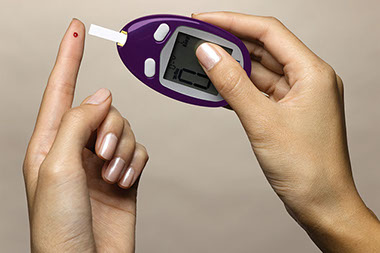
    Close up image of female hands taking a sugar glucose reading.

    Nearly 26 million Americans have diabetes, and more than a quarter of them do not know it. Left untreated, diabetes can lead to serious problems such as heart disease, stroke, kidney disease, blindness, and loss of limbs.

    An estimated 79 million adults have pre-diabetes, a condition that places them at increased risk for developing type 2 diabetes and heart disease.

    Even if you know what to do to improve your health, figuring out how to do it and fitting it into your daily routine can be a big challenge. Making changes in how you care for your health is a matter of trying and learning.

    The National Diabetes Education Program suggests you make a plan and take small, but important steps to help you reach your goal:

    *  Think about what is important to you and your health.

    *  What changes are you willing and able to make (such as testing your blood glucose, exercising, planning diabetes-friendly meals and snacks)?

    *  Decide what steps will help you reach your health goals (such as talking with your doctor about your blood glucose goal, taking a tour of the grocery store with a diabetes educator, learning how to make healthier meals).

    *  Choose one goal to work on first. Start this week. Pick one change you can start to make right now.

    *  Don’t give up. It’s common to run into some problems along the way. If things don’t go as planned, think about other ways to reach your goal.

    © American Institute for Preventive Medicine

  • The Lowdown On High Blood Pressure

    MEDICAL NEWS

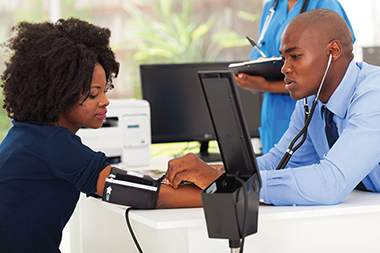
    Image of women having her blood pressure checked.

    Because 1 in 3 American adults suffers from high blood pressure, regular and accurate blood pressure checks are important for correctly diagnosing and treating hypertension (the medical term for high blood pressure).

    Dr. Robert Zelis, a cardiologist at Penn State Milton S. Hershey Medical Center, says there are three groups of people who may want to consider checking blood pressure on their own, in addition to having it measured at their annual physical exam.

    *  The first is those with so-called “white-coat hypertension.” These are patients who get so worked up about being in a doctor’s office that their readings will always be high there.

    *  The second is those who already take medication to control their blood pressure and need to monitor how it’s working.

    *  The third is those who suffer from chronic conditions such as diabetes or high cholesterol or who have risk factors such as obesity, smoking, or a strong family history of hypertension.

    Whether a blood pressure check is done at the doctor’s office or at home, it’s important to follow the same procedure:

    *  Make sure the blood pressure cuff is large enough and easy to use.

    *  Sit in a chair with a straight back, with both feet flat on the floor. Your legs should not be crossed.

    *  Make sure your arm is supported on something such as a table or armrest.

    *  Don’t take a measurement with the cuff placed on top of clothing. Bare skin is best.

    *  Wait 30 seconds after sitting down before you take your measurement.

    *  Take a second reading 30 seconds after you have finished the first to confirm your initial results.

    *  Take the measurements at the same time of day.

    *  Record your results to spot patterns.

    © American Institute for Preventive Medicine

  • Bleeding

    Pregnancy & Prenatal Care

    Pregnant women sometimes have light spotting. That’s when a tiny bit of blood leaks from the vagina or the surface of the cervix. It may happen after a vaginal exam. It may also happen after sex. If the blood starts out pink or red and turns dark brown, it is not active bleeding. This is not usually a problem. But let your health care provider know when there is any bleeding. He or she will decide what to do. Bleeding can be a sign of a problem if:

    *  The blood is bright red.

    *  Pain or cramps are present, too.

    *  The bleeding is heavy. Heavy means the bleeding soaks a sanitary pad.

    *  The spotting keeps going on.

    Causes

    Before the 20th week, bleeding could be, but is not always, a sign of miscarriage. Other causes of bleeding include:

    *  Loss of the mucus plug

    *  Kidney infection

    *  Preterm labor

    *  Placenta previa and other problems called vasa previa and marginal previa

    *  Placenta abruptio

    *  Swollen cervix

    Placenta Previa

    The placenta carries oxygen and food to the baby. In most pregnancies, the placenta attaches high in the uterus. In placenta previa, it attaches low, over the cervix. The lower uterus stretches during late pregnancy. Parts of the placenta tear from the wall. That causes bleeding.

    Placenta previa is rare. It happens in only 1 in 200 pregnancies. Its cause is not known. Falls and injuries are not factors. Symptoms of placenta previa are:

    *  Bright red vaginal bleeding. This could start as early as the 24th week. Often, it starts during the 34th or 35th week.

    *  Usually, there is no pain or cramping.

    A woman may not know that she has placenta previa until bleeding happens. Then an ultrasound test can show the problem.

    Women with placenta previa have to spend a lot of time in bed. Bed rest may last late into the pregnancy. Bed rest gives the baby time to grow. It prevents stress to the uterus. The goal is to keep blood loss down. A lot of blood loss means danger for both mother and baby. In severe cases, the mother may have to go to the hospital for treatment.

    In some cases, the bleeding stops, but the placenta blocks the cervix. The mother will need a Cesarean section (C-section) delivery if the placenta completely blocks the cervix. The mother may need a C-section if the placenta only partly blocks the cervix. When this happens, the mother may have more bleeding after she delivers the baby.

    {Note: Some pregnant women may have a “low lying placenta.” This means the placenta lies at the bottom of the uterus (not higher where it should be). An ultrasound can show a “low lying” placenta. If it is found before the 24th week, the placenta can move upward and out of the way of the cervix. If so, there is no longer a problem.}

    Placenta Abruptio

    There is a right time for delivery of the placenta. That’s after the baby is born. But sometimes it happens another way. The placenta starts to leave the wall of the uterus too early. It starts before the baby is born. This can happen whether the placenta is attached high or low.

    Placenta abruptio happens in about 1 in 200 pregnancies. Some cases are more serious than others. Causes might be high blood pressure or a serious blow to the belly. An older mother may be more apt to have placenta abruptio. So are women who use cocaine during pregnancy. Symptoms of placenta abruptio are:

    *  Bright red vaginal bleeding

    *  Severe pain in the abdomen. The pain lasts. It doesn’t come and go.

    There are no tests for placenta abruptio. Even ultrasound may not show it. Regular prenatal visits help. The health care provider looks for blood in the mother’s vagina. The provider finds out if the uterus is tender.

    Women with placenta abruptio need to go to the hospital right away. Some women can have a vaginal delivery. That’s if labor begins on its own and the baby is healthy. Otherwise, a C-section is done. The mother may be given blood.

    Questions to Ask

    Self-Care / Prevention

    *  Watch closely for bleeding. If you see any, call your health care provider.

    *  Rest in bed for light bleeding.

    *  Avoid doing things that could injure you. Examples: heavy lifting, hard exercise. Don’t do work, sports, or exercises that could give you a blow to the belly.

    *  Wear a special seat belt when you drive. You can get one that protects a pregnant woman’s belly.

    *  Don’t smoke.

    *  Don’t be exposed to other people’s smoke.

    *  Follow your health care provider’s advice about sex. You may be told to:

    – Avoid sex.

    – Use extra caution during sex:

    – Your partner can focus on more gentle touching.

    – Limit how deeply the penis enters the vagina. Use positions that help control the depth.

    Prenatal Self-Care book by the American Institute for Preventive Medicine. www.HealthyLife.com. All rights reserved.

    © American Institute for Preventive Medicine

  • Bleeding 2

    First Aid

    Most adults can donate a pint of blood without harmful side effects, but losing a quart of blood, quickly, can lead to shock and even death. In a child, losing a pint (or less depending on the child’s size) can put the child in extreme danger.

    Signs & Symptoms

    For External Bleeding

    *  A skin wound.

    *  Dark red blood gushes or flows from veins.

    *  Bright red blood spurts from arteries.

    *  Blood oozes from capillaries. The bleeding usually clots off by itself.

    For Internal Bleeding

    *  Vomiting or coughing up true, red blood. This includes blood-tinged sputum.

    *  A bruise on the skin of the chest or abdomen, especially if it is in a place where no blow was struck.

    *  Fractured ribs.

    *  Dizziness. Fainting. Weakness.

    *  Lethargy. Excessive sleepiness. Mental status changes. These can occur with trauma to the head, even if it is mild.

    *  Fast pulse. Cold, moist skin.

    *  Stools contain bright red blood or are black (not due to taking iron).

    Causes

    For External Bleeding

    *  Abrasions (scraped skin). Lacerations (cut skin with jagged edges). Punctures.

    *  Knife, gunshot, or other wounds can graze or penetrate the skin. These can damage internal blood vessels and body organs.

    *  Injury wounds.

    For Internal Bleeding

    *  A bruise. This is bleeding from and damage to tissues beneath the skin.

    *  Damage to blood vessels and/or internal structures. This includes a blunt injury that does not break the skin, a bleeding ulcer, and an aneurysm.

    *  Bleeding disorders.

    Taking blood-thinning drugs can result in both internal and external bleeding.

    Treatment

    When bleeding occurs, the goal is to find the source, stop or lessen the bleeding, and help the body cope with the loss of blood.

    *  For severe bleeding, treatment includes first aid measures and emergency medical care.

    *  For minor bleeding, treatment depends on the cause and other medical conditions present.

    *  Bleeding disorders need to be treated by a doctor.

    Questions to Ask

    Self-Care / First Aid

    For Severe Bleeding

    *  Without delay, apply direct pressure to the wound using a sterile dressing or clean cloths. {Note: If the cut is large and the edges of it gape open, pinch the edges of the wound while you apply pressure.}

    *  Call 9-1-1 or take the person to nearest hospital emergency department.

    *  Do not remove an object that is stuck in a wound. Pack it in place with padding. Put tape around the padding so it doesn’t move.

    *  If bleeding continues before getting medical help, put extra cloths, etc. on top of existing ones. Keep putting pressure on the wound until bleeding stops or until medical help takes over.

    *  The most important thing to do is to apply direct pressure on the bleeding site. Some health experts advise to do these things, too, if needed:

    – Elevate the wounded area higher than heart level while applying pressure. Do this if no bone is broken.

    – Apply pressure to a “pressure point” if bleeding still continues after 15 to 20 minutes of direct pressure. Use the pressure point closest to the bleeding site that is between the wound and the heart. (See Pressure Points.)

    *  Don’t apply a tourniquet except to save a life.

    *  While giving first aid for bleeding, keep looking for signs of shock.

    For an Amputation

    *  Control bleeding.

    *  Wrap the severed part in a clean, dry (not wet) cloth or sterile gauze. Place the wrapped part in a plastic bag or other waterproof container. Put these on a bed of ice. Do not submerge the severed part in cold water or ice.

    For Bleeding from the Scalp

    *  Use a ring pad to apply pressure around the edges of the wound, not on the wound. Make a ring pad (shaped like a doughnut) with a bandage of narrow, long strips of cloth. Start with one end of the narrow bandage and wrap it around all four fingers on one hand until you form a loop. Leave a long strip of the bandage material to weave in and around the loop so it doesn’t unravel.

    Healthier at Home book by the American Institute for Preventive Medicine. www.HealthyLife.com. All rights reserved.

    © American Institute for Preventive Medicine

  • Cholesterol Health

    Heart & Circulation Problems

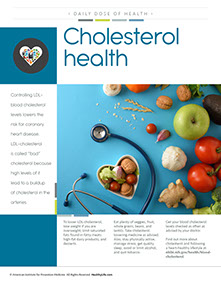
    Heart shape plate filled with walnuts, tomatoes, apple, garlic, etc.

    Controlling LDL-blood cholesterol levels lowers the risk for coronary heart disease. LDL-cholesterol is called “bad” cholesterol because high levels of it lead to a buildup of cholesterol in the arteries.

    To lower LDL-cholesterol, lose weight if you are overweight; limit saturated fats found in fatty meats high-fat dairy products, and desserts.

    Eat plenty of veggies, fruit, whole grains, beans, and lentils. Take cholesterol lowering medicine as advised. Also, stay physically active, manage stress, get quality sleep, avoid or limit alcohol, and quit tobacco.

    Get your blood cholesterol levels checked as often as advised by your doctor.

    Find out more about cholesterol and following a heart-healthy lifestyle atnhlbi.nih.gov/health/blood-cholesterol.

    Health at Home Lifetime book by the American Institute for Preventive Medicine. www.HealthyLife.com. All rights reserved.

    © American Institute for Preventive Medicine

  • Diabetes

    Diabetes Education

    Diabetes is too much sugar (glucose) in the blood. Glucose needs to get into the cells to be used for energy. Insulin is the hormone needed for glucose to get from the blood into the cells. Diabetes results when no insulin is made, not enough insulin is made, or the body does not use insulin well.

    Types of Diabetes

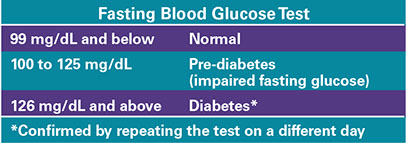
    One test used to diagnose diabetes is a fasting blood glucose test.

    Overweight and obese adults between ages 40 and 70 years old should be tested for adnormal blood sugar levels and type 2 diabetes. Follow your doctor’s advice for screening tests for diabetes.

    Type 1

    With this type, the pancreas gland makes no insulin or very small amounts. Often, the pancreas has fewer cells that make insulin. This type most often occurs in children and young adults. It can happen at any age, though.

    Type 2

    With this type, the pancreas does not make enough insulin or the body does not use insulin the right way. Often, this occurs in persons who are overweight and/or who don’t exercise. Modest weight loss and moderate physical activity can delay or help prevent type 2 diabetes.

    Pre-diabetes

    With this type, blood glucose levels are higher than normal, but not high enough to be diagnosed with diabetes. Many people with pre-diabetes develop type 2 diabetes within 10 years. Modest weight loss and moderate physical activity can delay or help prevent type 2 diabetes.

    Gestational

    This type occurs during pregnancy. It usually ends when the pregnancy ends. It does, though, increase the risk for the mother to get diabetes in the future. The mother will need follow-up blood sugar checks.

    Signs & Symptoms

    In the U.S., about 27 percent of people with diabetes do not know they have it. They may not have symptoms. According to the American Diabetes Association, some signs and symptoms of diabetes are:

    *  Urinating often

    *  Unusual thirst

    *  Extreme hunger

    *  Unusual weight loss

    *  Extreme fatigue

    *  Being very cranky

    *  Blurry vision

    If you have any of these symptoms, see your doctor. In type 1 diabetes, symptoms tend to come on quickly. In type 2, symptoms tend to come on more slowly. You can even have diabetes without any symptoms.

    A screening test can detect diabetes early. Early treatment may reduce other health problems related to diabetes.

    Diabetes has no cure, but it can be controlled. Goals are to keep blood sugar levels between 70 and 130 mg/dL before meals; and less than 180 mg/dL two hours after starting a meal.

    Health Problems Related to Diabetes

    When diabetes is left untreated or not treated well, you are at an increased risk for these health problems:

    *  Heart disease

    *  Stroke

    *  Poor circulation

    *  Foot problems

    *  Infections in general and slow healing of wounds and infections

    *  Yeast infections, especially in women

    *  Kidney and eye problems. This includes blindness.

    *  Gangrene. Sometimes this is so severe that the affected limb must be amputated.

    Risk Factors

    Discuss your risk for diabetes with your doctor or health care provider.

    For Type 2 Diabetes

    *  Your mother, father, brother, and/or sister has or had diabetes.

    *  You are overweight. You are not physically active.

    *  You are age 45 or older.

    *  You are female with a past history of gestational diabetes and/or you had at least one baby who weighed more than 9 pounds.

    *  You come from ethnic groups that are more prone to diabetes: African Americans, Latinos, Native Americans, Asian Americans, and Pacific Islanders.

    For Type 1 Diabetes

    *  You have a family history of type 1 diabetes.

    *  You had a virus that has injured the pancreas gland or a problem that has destroyed cells in the pancreas gland that make insulin.

    Medical Care

    Medication

    Diabetes pills. These are prescribed when diet and exercise are not enough to control your blood sugar. Types include:

    *  Ones that delay or block the breakdown of starches and some sugars (e.g., acarbose).

    *  Ones that help your body release more insulin (e.g., glyburide and tolbutamide).

    *  Ones that lower blood sugar without helping your body make more insulin (e.g., metformin).

    Insulin. There are different types based on how fast and over how many hours they work. People with type 1 diabetes need insulin. Some persons with type 2 diabetes need insulin. It can be given through:

    *  Insulin injections (shots)

    *  Insulin pump therapy

    Other medicines, as needed, to control blood pressure, blood cholesterol levels, etc.

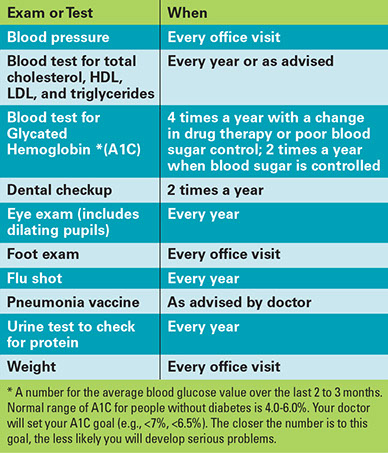
    Exams & Tests

    If you have diabetes, have exams and tests, as advised. In general, diabetics should have the following:

    Self-Care

    Keep Track of Your Blood Glucose

    *  Test your blood sugar, as advised. People with type 1 diabetes may be told to test before each meal and at bedtime. People with type 2 diabetes may be told to test every other day or daily and at certain times.

    *  Keep a log of your blood sugar results. Note any reasons that could help explain why your blood sugar is higher or lower than usual. Share this log with your health care provider.

    Foot Care

    *  Check your feet every day. Let your health care provider know of any problems (swelling, redness, other color changes, ingrown toenails, corns, and foot injuries). Use a mirror to look at the bottom of your feet.

    *  Keep your feet clean.

    *  Wear shoes and slippers that fit your feet well. Don’t go barefoot, indoors or outdoors.

    *  Cut nails straight across and not too close to the skin. Have a foot doctor cut your toenails, if advised.

    Skin Care

    To reduce the risk of skin problems and infections:

    *  Keep your skin clean. Bathe or shower, daily, with warm water and a mild soap.

    *  Apply lotion to your skin to keep it moist.

    *  Protect your skin from damage.

    – Avoid cuts, scrapes, punctures, etc. If you get a skin injury, treat it right away. Keep it clean and cover the area with a clean, dry bandage. Call your doctor if the injury does not start to heal in a day or two or if you notice signs of infection (redness, swelling, pus, throbbing, and pain).

    – Avoid sunburn. Use a “broad spectrum” sunscreen, with an SPF of 15 or higher.

    – Wear gloves in cold weather and when you do work that may injure your hands.

    Diet

    In general, you may be advised to:

    *  Lose weight if you are overweight.

    *  Eat meals at regular times.

    *  Follow a meal plan for breakfast, lunch, dinner, and snacks. You may be told to count carbohydrates. Books, booklets, and food labels list carbohydrate amounts.

    *  Have 20 to 35 or more grams of dietary fiber per day. Fiber is in bran, whole-grain breads and cereals, fresh fruits and vegetables, beans and peas, and seeds.

    *  Strictly limit saturated and trans fats. To do this, choose nonfat dairy products; very lean meats (and in small amounts); and limit all animal and “hydrogenated fats.”

    *  Limit alcohol. Follow your doctor’s or health care provider’s advice.

    Exercise

    Regular exercise helps control your weight and blood sugar. It also lowers your blood cholesterol, blood pressure, and risk of heart disease. Exercise may also reduce the amount of medicine you need to take for your diabetes and make you feel better.

    *  If told to, test your blood glucose before and after exercise.

    *  When you exercise, have with you a carbohydrate source, such as fruit juice, hard candies, or glucose gel or tablets. For each of these, take the amount as advised by your health care provider.

    *  Find out if you should also carry a glucagon emergency kit. Your doctor needs to prescribe this. You and persons you exercise with should learn how to use this.

    Diabetic Emergencies

    Hypoglycemia (Low Blood Sugar)

    This can happen if you: Skip or don’t finish meals or snacks or wait too long to eat; exercise more than usual; and/or take excess diabetes medicine or insulin.

    Symptoms

    *  Shaky feeling. Weakness. Dizziness.

    *  Rapid pulse. Shallow breathing.

    *  Sweating. Cold, clammy skin.

    *  Sudden blurred or double vision

    *  Numbness or tingling around the mouth and lips

    *  Sudden mood changes. Confusion.

    *  Faintness. You may pass out.

    What to Do

    If you can, check your blood sugar. If it is lower than the level set by your health care provider, such as 70 mg/dL, have 15 grams of a “fast acting” carbohydrate. Examples are:

    *  1/2 cup (4 ounces) fruit juice or regular (not diet) pop

    *  5 or 6 regular (not sugar-free) hard candies

    *  4 teaspoons of sugar or honey

    *  6 to 10 gumdrops or jelly beans

    *  3 glucose tablets (or the number your health care provider advises). Drug stores sell these.

    *  1 cup (8 ounces) of milk

    *  If you don’t feel better after 15 minutes, take the same amount of sugar source again. If you still don’t feel better, call your doctor.

    *  If a person with diabetes passes out, can’t swallow, or can’t be roused, get emergency care. Use a prescribed emergency glucagon kit to inject glucagon. If there is no glucagon, rub sugar or any type of sweet paste, such as cake frosting, inside the person’s mouth. Call for emergency medical care. Do not give insulin, food, or liquids.

    Hyperglycemia (High Blood Sugar)

    This can happen if you: Get sick; eat too much; don’t do your normal exercises; don’t take your insulin or your diabetes pills or don’t take enough of them.

    Symptoms

    *  Extreme thirst

    *  Urinating often

    *  Nausea

    *  Acting cranky

    *  Dry, itchy skin

    *  Feeling very sleepy

    *  Blurred vision

    What to Do

    *  Check your blood sugar. Follow your doctor’s advice for your blood sugar level. If it is over 240 mg/dL or if you are sick, you may be told to check your urine for ketones. Call your doctor right away if your urine shows moderate or large amounts of ketones.

    *  Follow your treatment plan more closely.

    High Blood Sugar with Ketones in the Blood

    This is a serious condition. It can result in a coma. It occurs in persons who have type 1 diabetes. It is called diabetic ketoacidosis (DKA).

    Early Symptoms

    *  Intense thirst. Dry mouth.

    *  High blood glucose levels

    *  Urinating often

    *  Positive urine ketone tests

    Later Symptoms

    *  Tiredness. Dry, flushed skin.

    *  Nausea and/or vomiting

    *  “Fruity” breath odor

    *  Hard time breathing. Usually short, deep breaths.

    *  Lethargy. Can’t be roused.

    What to Do

    *  Call your doctor right away for advice.

    *  If you can’t reach your doctor, get to a hospital emergency department right away.

    High Blood Glucose without Ketones

    This is called hyperosmolar hyperglycemic nonketonic syndrome (HHNS). It occurs most often in persons who have type 2 diabetes. It usually comes after another illness, such as the flu, that caused dehydration. If it is not treated, seizures, coma, and even death can occur.

    Symptoms

    *  Dehydration. This may be the only symptom.

    Warning Signs of HHNS

    These occurred days or weeks before HHNS.

    *  Extreme thirst

    *  Very high blood glucose levels (over 600 mg/dL)

    *  High fever

    *  May have vision loss

    *  Sleepiness or confusion

    What to Do

    *  Drink water

    *  Get to a hospital emergency department right away.

    Resources

    American Diabetes Association

    800.DIABETES (342.2383)

    www.diabetes.org

    National Institute of Diabetes and Digestive and Kidney Diseases (NIDDK)

    www.niddk.nih.gov

    Diabetes brochure by the American Institute for Preventive Medicine. www.HealthyLife.com. All rights reserved.

    © American Institute for Preventive Medicine

  • Gestational Diabetes

    Pregnancy & Prenatal Care

    A pregnant woman can have diabetes. If she didn’t have it before the pregnancy, it’s called gestational diabetes. (Gestational refers to pregnancy.) It can begin any time during pregnancy. It usually begins in the last half, though. It goes away after the baby is born. But the woman has a greater risk of getting diabetes later.

    Symptoms

    *  Feeling very tired

    *  Rapid weight gain

    *  Feeling very thirsty

    *  Having to pass urine often

    Also, a sign for gestational diabetes is when the baby gets too big during the pregnancy.

    All pregnant women should be screened for diabetes. Screening happens through urine and blood tests. Those are part of routine prenatal health care visits.

    Causes

    Any pregnant woman can develop gestational diabetes. But risk factors may be:

    *  Obesity before pregnancy

    *  High blood pressure before pregnancy

    *  Having a baby that weighed more than 9 pounds at birth in the past

    *  Having a stillbirth in the past

    *  Having a child with a birth defect in the past

    *  Being older than 25

    *  Being pregnant with more than one baby

    Treatment

    Special problems can be avoided with treatment. Without treatment, the baby can get too big. The mother may not be able to have a vaginal birth. Other problems are preeclampsia and preterm birth. Preterm birth is when the baby is born 3 or more weeks before the due date. There can also be delivery problems. But a woman with gestational diabetes can have a healthy baby. She needs proper medical care, though.

    Blood sugar must be controlled. This is done through:

    *  Special diet from the health care provider

    *  Exercises from the health care provider

    *  Insulin shots, in some cases, when diet and exercise are not enough. Insulin is a hormone. Among other things, it keeps blood sugar from getting too high. The provider teaches how to do the shots. The provider teaches the mother how to check her own blood sugar. It is important to do what the provider requests.

    *  Having prenatal visits more often. The provider checks the mother’s daily blood sugar record. Tests are done to see how the baby is doing.

    *  Extra care at delivery

    {Note: The baby should be checked for low blood sugar a day or so after birth.}

    Questions to Ask

    Self-Care / Prevention

    If you get diabetes during pregnancy:

    *  Follow the diet and exercise plan your health care provider or dietitian gives you.

    *  Drink at least 8 to 10 cups of fluids a day. Drink enough for your thirst. Limit ones with a lot of sugar. Examples: all kinds of sodas, fruit drinks and juices.

    *  Get plenty of rest when you feel tired.

    *  If you are told to do so, test your blood sugar levels at home. Your health care provider will tell you how. Keep a daily record of the results.

    *  After you have your baby, get your blood sugar checked when your doctor tells you to.

    {Note: Some pregnant women need to give themselves insulin shots at home. If your provider says you need to, you will be shown how. Be sure to give the insulin correctly. It’s an important way of taking care of yourself and your baby.}

    Prenatal Self-Care book by the American Institute for Preventive Medicine. www.HealthyLife.com. All rights reserved.

    © American Institute for Preventive Medicine