Tag: motivation

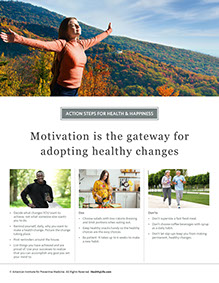
  • Motivation Is The Gateway For Adopting Healthy Changes

    Weight Control

    Female standing outside with arms open taking in the fresh air.

    *  Decide what changes YOU want to achieve, not what someone else wants you to do.

    *  Remind yourself, daily, why you want to make a health change. Picture the change taking place.

    *  Post reminders around the house.

    *  List things you have achieved and are proud of. Use your successes to realize that you can accomplish any goal you set your mind to.

    Dos

    *  Choose salads with low-calorie dressing and limit portions when eating out.

    *  Keep healthy snacks handy so the healthy choices are the easy choices.

    *  Be patient. It takes up to 6 weeks to make a new habit.

    Don’ts

    *  Don’t supersize a fast food meal.

    *  Don’t choose coffee beverages with syrup as a daily habit.

    *  Don’t let slip-ups keep you from making permanent, healthy changes.

    Page from HealthyLife Weigh book by the American Institute for Preventive Medicine. www.HealthyLife.com. All rights reserved.

    © American Institute for Preventive Medicine

  • New Year, New You

    Weight Control

    Smiling man.

    Take action now to reach your resolution to lose weight.

    *  Set an exercise goal you can reach. For example, by the end of this month, I will walk at least 20 minutes a day, five days a week.

    *  When you reach a goal, give yourself a nonfood reward, such as a new workout video or a new lunch bag.

    *  Substitute water for sweetened beverages.

    *  Eat fruits and veggies for snacks instead of candy, chips, and cookies.

    Action Step:Chew food slowly to give your body time to send a signal to your brain that you’ve had enough. You’ll enjoy your food more and eat less.

    Choose foods that won’t sabotage your goals.

    Page from HealthyLife Weigh book by the American Institute for Preventive Medicine. www.HealthyLife.com. All rights reserved.

    © American Institute for Preventive Medicine

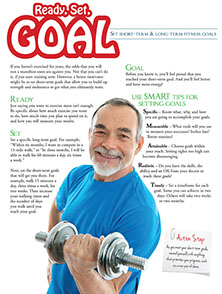
  • Ready, Set, Goal

    Fitness

    Set short-term & long-term fitness goals.

    If you haven’t exercised for years, the odds that you will run a marathon soon are against you. Not that you can’t do it, if you start training now. However, a better motivator might be to set short-term goals that allow you to build up strength and endurance to get what you ultimately want.

    Ready

    Just saying you want to exercise more isn’t enough. Be specific about how much exercise you want to do, how much time you plan to spend on it, and how you will measure your results.

    Set

    Set a specific long-term goal. For example, “Within six months, I want to compete in a 15-mile walk,” or “In three months, I will be able to walk for 60 minutes a day, six times a week.”

    Next, set the short-term goals that will get you there. For example, walk 15 minutes a day, three times a week, for two weeks. Then increase your walking times and the number of days you walk until you reach your goal.

    Goal

    Before you know it, you’ll feel proud that you reached your short-term goal. And you’ll feel better and have more energy!

    Use SMART tips for setting goals

    *  Specific – Know what, why, and how you are going to accomplish your goals.

    *  Measurable – What tools will you use to measure your successes? Inches lost? Better stamina?

    *  Attainable – Choose goals within your reach. Setting sights too high can become discouraging.

    *  Realistic – Do you have the skills, the ability and an OK from your doctor to reach these goals?

    *  Timely – Set a timeframe for each goal. Some you can achieve in two days. Others will take two weeks or two months.

    Action Step

    As you meet your short-term goals, reward yourself with anything that promotes your progress, such as a new pair of shoes.

    Page image from the Ways to Well-Being book by the American Institute for Preventive Medicine. www.HealthyLife.com. All rights reserved.

    © American Institute for Preventive Medicine

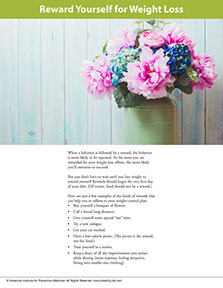
  • Reward Yourself For Weight Loss

    Weight Control

    When a behavior is followed by a reward, the behavior is more likely to be repeated. So the more you are rewarded for your weight-loss efforts, the more likely you’ll continue to succeed.

    But you don’t have to wait until you lose weight to reward yourself Rewards should begin the very first day of your diet. (Of course, food should not be a reward.)

    Here are just a few examples of the kinds of rewards that can help you to adhere to your weight-control plan.

    *  Buy yourself a bouquet of flowers.

    *  Call a friend long-distance.

    *  Give yourself some special “me” time.

    *  Try a new cologne.

    *  Get your car washed.

    *  Have a low-calorie picnic. (The picnic is the reward, not the food.)

    *  Treat yourself to a movie.

    *  Keep a diary of all the improvements you notice while dieting (more stamina, feeling attractive, fitting into smaller-size clothing).

    Page from A Year of Health Hints book by the American Institute for Preventive Medicine. www.HealthyLife.com. All rights reserved.

    © American Institute for Preventive Medicine

  • Set A Resolution That Works For You

    BE FIT

    Image of young women jogging in the winter.

    “What’s your New Year’s resolution?” It’s a question many people hear – and ask – when Jan. 1 approaches. But, after a couple of weeks of hard work, life often interferes and that resolution gets forgotten.

    But what if you could stick with that resolution this year? Try these tips from the American Diabetes Association:

    *Be realistic.Rather than push yourself to do several major things, pick just one – such as walking.

    *Be specific.For instance, write down how often you will work out (5 days a week for 30 minutes) or that you will eat fruit instead of sweets. Schedule it in your calendar so other things are less likely to interfere.

    *Get back on track after setbacks.If you slip up, forgive yourself and start new tomorrow. Don’t abandon your healthy goals because of one mistake.

    Good health is a great goal to work towards – at New Year’s or any time of the year.

    © American Institute for Preventive Medicine

  • Thinking About Changing

    WELL-BEING

    Image of young man working at a warehouse.

    Do you want to lose weight, quit smoking, eat healthier, get fit, manage stress, drink less alcohol? First, ask yourself:  Are you ready to change?

    Meg Baker, director of Employee Wellness at the University of Alabama at Birmingham, says while the focus on self-improvement is good, you must be ready to make a change in order to actually do so. To help prepare for any lifestyle change, Baker offers some tips:

    *  Develop small, short-term goals that will fit into your schedule. Make them realistic.

    *  Consider the benefits and reasons for the change.

    *  Talk to a family member, friend, or coworker about goals. Sharing your goals with others will increase the likelihood of your staying committed to a new gym regimen or stop smoking plan, and they may want to join you.

    “If the new behavior has lost its luster, switch things up,” Baker said. “Variety is the key to life and can keep you from getting burned out. Spice things up by changing your normal exercise routine, finding new healthy recipes online, or joining a new exercise class.”

    © American Institute for Preventive Medicine

  • Want To Quit? Start Here

    WELL-BEING

    Image of broken cigarette and nicotine gum.

    There’s no one right way to quit smoking. Some people find that they just quit on their own. Others use medical treatments to help. If you’re thinking about quitting, you have several options:

    *  Attend support groups or counseling

    *  Get your doctor’s advice and support

    *  Choose medicines that contain nicotine and help with nicotine addiction, including patches, gum, lozenges, inhalers and nasal spray. Some are available in stores and others need a prescription.

    *  Find a prescription medicine that doesn’t contain nicotine and still helps a person quit smoking.

    *  Go cold turkey: stop completely, all at once, without any help.

    *  Slowly decrease the amount of cigarettes smoked each day until you stop altogether.

    Counseling and medicine together may be more helpful than using just one method. Sometimes, you may need to try a few different approaches to find the one that works for you.

    Get free quitting help by phone

    If you’d like to talk with someone about quitting, call 1-800-QUIT-NOW (1-800-784-8669). This service is FREE and may include support and advice, a quit plan, free or discounted medications and other resources.

    Free quitting help online

    For those with a computer or tablet, help with quitting is just a few clicks away. Smokefree.gov offers a number of resources to help people quit smoking. There are tools and tips, information and support throughout the process of quitting.

    Source: Centers for Disease Control and Prevention, National Institutes of Health

    Reasons to quit smoking

    Quitting smoking isn’t easy. But, it means you will start to become healthier within just minutes of quitting. Take a look at the benefits of quitting:

    *  20 minutes after quitting: Blood pressure and heart rate gets lower.

    *  12 hours after quitting: Carbon monoxide levels in the blood go back to normal.

    *  2 weeks to 3 months after quitting: Lungs start to work better and blood circulation gets better.

    *  1 to 9 months after quitting: Lungs can handle mucus and recover from infections more easily. This means less coughing and shortness of breath.

    *  1 year after quitting: The risk of a heart attack drops dramatically. The increased risk of heart disease is cut in half.

    *  2 to 5 years after quitting: Risk of a stroke is now the same as a non-smoker.

    *  5 years after quitting: Risk of several cancers is slashed in half. This includes cancers of the bladder, mouth, throat and esophagus.

    *  10 years after quitting: Risk of lung cancer decreases by half. Risk of cancer of the voice box and pancreas drop.

    *  15 years after quitting: The risk of heart disease drops to that of a non-smoker.

    Don’t forget about benefits to your appearance. Yellowed teeth and fingers can become a thing of the past, as well as bad breath and smoke odors on clothes and in hair. Tobacco also causes wrinkling of the skin and tooth loss, so quitting can mean better skin and a brighter smile.

    It’s never too late to quit. Quitting at any age can extend a person’s life, reduce or eliminate health problems, and lower the risk of dying from smoking-related diseases.

    Source: American Cancer Society

    © American Institute for Preventive Medicine

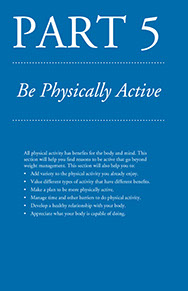
  • Do Activities You Enjoy

    Healthylife® Weigh

    Part 5

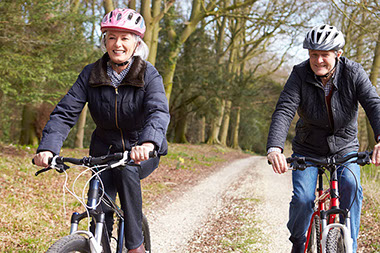
    Older couple riding bikes.

    Answer these questions.

    *  What activities have I been good at before?

    *  What activities do I enjoy doing?

    *  What equipment do I have or can I use?

    *  What outcomes do I want to achieve?

    *  What activities am I physically able to do?

    © American Institute for Preventive Medicine

  • Find Reasons To Care About Physical Activity

    Healthylife® Weigh

    Part 5

    Elderly couple jogging.

    Being physically active helps you manage your weight. When you engage in physical activity, you burn calories. The more intense the activity, the more calories you burn. However, all exercise boosts your metabolism. Exercise builds muscle, the biggest fat burner in the body. Even in a state of rest, muscle burns calories efficiently (you’ll still be experiencing the benefits of your morning workout in the afternoon). Losing weight can slow your metabolism, but exercise can balance this effect.

    There are many other reasons to be active that may motivate you. Being physically active may help you live out the values you identified in Part 1.

    © American Institute for Preventive Medicine

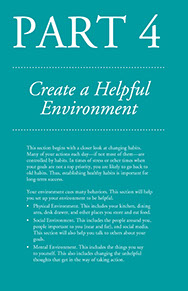
  • Use Social Media For Support

    Healthylife® Weigh

    Part 4

    People using social media.

    Today’s social world goes beyond the people you see on a daily basis. From Facebook to Twitter, Instagram to Snapchat, social media may be a big part of your life. Perhaps you follow friends, family, sports and entertainment personalities, or online groups and message boards.

    Social media can be a powerful, positive part of your healthy lifestyle change. What you read, see, and hear can affect your mood, knowledge, what you think is normal, and how you feel about yourself. It can also be negative and make it harder for you to reach your goals.

    Positive ways to use social media:

    *  Follow friends, nutritionists, and food bloggers who promote positive, healthy body and mind messages.

    *  Un-follow or block individuals who tend to post negative comments or who engage in arguments on social media.

    *  Share what inspires and motivates you on social media.

    *  Instead of reading or listening to short clips of news, read more investigative and thorough articles that make you think. Use this as food for thought on your next walk or in a discussion.

    *  Explore websites that bring people who share a common interest together. Join an outdoor adventure club or social group on MeetUp! (www.meetup.com).

    *  Support your friends and family who you see working to make changes in their lives, whether in health or another area of life.

    *  Follow friends, bloggers, or magazines that share ideas for meals, snacks, or workouts.

    *  Share what challenges you face and ask for support from friends & family.

    *  Share your goals to improve accountability.

    *  Note how much time you spend on social media sites. Could this time be spent planning a grocery list, going for a quick walk, or getting to bed earlier?

    Follow & Subscribe

    Tune into positive influencers on social media. Subscribe to recipe-packed magazines and blogs. Find new information, colorful ideas, and inspiring people to help you stay motivated and find social support.

    Magazines (and corresponding websites):

    *  Clean Eating (www.cleaneating.com)

    *  Eating Well (www.eatingwell.com)

    *  Cooking Light (www.cookinglight.com)

    *  Vegetarian Times (even if you’re not a vegetarian, this magazine provides great plant-based meal and snack ideas!)(www.vegetariantimes.com)

    *  Experience Life (www.experiencelifemag.com)

    Blogs & Social Media Accounts

    Pinterest (www.pinterest.com) – Think of Pinterest as a picture-book guide to meal plans, recipes, printables, workout ideas, and inspiration. This site offers much more than tips for healthy eating, but here are some search terms to get you started: “clean eating” “healthy recipes” “healthy (food item, like stir fry or quiche)” or “easy workouts.”

    @SproutedKitchen (Twitter, Instagram) andwww.sproutedkitchen.com– Whole foods inspiration and recipes

    @Veggieful (Twitter, Instragam)- Ideas for incorporating more fiber-rich, plant-based foods into your diet

    @Skinnytaste (Twitter, Instagram) andwww.skinnytaste.com– A healthy take on many easy, familiar recipes

    Content and advertising in these publications and websites may or may not reflect the opinion of the American Institute for Preventive Medicine or that of its Medical Review Board.

    Filter Your Social Media

    *  Who or what do I want to start following?

    *  Who or what do I need to stop following?

    *  How can I reduce the time I spend on social media?

    Comparing Yourself to Others

    Avoid physical comparisons with others. You will never look exactly like someone else. Instead, look at the qualities you admire in others.

    *  Who is someone I admire? What values does this person show by their actions? Underline the values you want to have yourself (e.g., sense of adventure).

    *  What actions can I take to start living one of those values?

    © American Institute for Preventive Medicine