Tag: motivation

  • What Are You Waiting For?

    Healthylife® Weigh

    Part 5

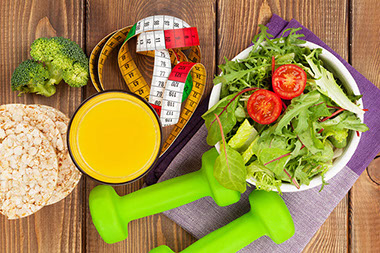
    Healthy salad, fitness weights, and tape measure.

    “I will start eating healthier foods when my spouse decides to also change.”

    This exact scenanio may not apply to you. However, perhaps you are also putting off making a change. Complete each statement with excuses you catch yourself making.

    *  I will start a daily exercise routine when…

    *  I will start eating breakfast when…

    *  I will meet my daily recommendation for vegetables when…

    *  I will drink enough water every day when…

    Reflect. What did you write after “when” in the prompts above? Does “I” come first? Or, does another person or thing?

    © American Institute for Preventive Medicine

  • 3 Ways To Find Joy At Work

    WORK LIFE

    Image of co-workers talking and smiling.

    Your job is a part of your life. But if you’re less than happy with it, your health could take a hit. The U.S. Surgeon General states that mental and emotional well-being are critical to your overall health. Not to mention, if you find ways to be happy at work, you may find more success and satisfaction with your career. Here are a few ways to make work more enjoyable each day:

    1.Think about your motivation.Write down two reasons why you go to work each day. Look at those reasons each day to remind yourself why you’re doing it.

    2.Take note of daily progress.Big or small, think about something good that you did at work each day. Congratulate yourself for achievements or ways you’ve improved in certain areas or abilities.

    3.Find healthy outlets.Sometimes work stress can’t be avoided. If you can accept the fact that stress will happen, the next step is to find a way to cope. Find a fun new hobby, take a class, go for a walk, or try meditation.

    © American Institute for Preventive Medicine

  • A Shoulder To Lean On

    BE FIT

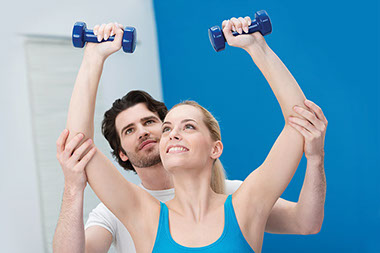
    Image of women and trainer exercising the shoulders.

    Shoulder injuries are common. Why? Because of improper exercise technique, say exercise experts at the American Council on Exercise (ACE), and because people commonly over-train one or two deltoid muscles while neglecting others.

    Strength-training routines are typically dominated by exercises that train only the front of the shoulder, which is actually comprised of three distinct muscles. So ACE looked into the most effective exercises for strengthening the overall shoulder and preventing injury.

    The result? Researchers from the University of Wisconsin, LaCrosse shrugged their shoulders when asked to pick the top exercise. Results showed there is not one best exercise that completely works all muscles of the shoulders.

    Instead, for best results, exercisers should perform the dumbbell shoulder press to target the front, and either the 45-degree incline row or the seated rear lateral raise for the rear. Ask your gym’s expert to show you these techniques.

    69% of people will experience a shoulder injury at some point in their lives, according to the NIH.

    © American Institute for Preventive Medicine

  • Are Fitness Trackers Worth The Hype?

    BE FIT

    Image of women with a fitness tracker.

    Fitness bands, also called wearable health trackers, have become a popular trend in the last few years. Millions of these devices have been sold, but can they help you get healthy?

    What they do

    Most fitness trackers have features that act like a pedometer, counting your steps and other physical activity. Their features vary widely, however. Some trackers simply tell you how many steps you take in a day. Others are designed to be worn during exercise, such as running, and may track your distance and show your route. Other trackers are waterproof and designed to be worn when swimming.

    Many trackers also record quality and length of sleep. Because they have a movement sensor, they can determine how many times you woke and when you were in deep sleep.

    Most of them are designed to be used with an app on your smartphone, where you can see how you’re doing and make improvements where needed.

    Improving health with a tracker

    It can be helpful to know how many steps you take and how well you’ve slept. But keep in mind that these devices aren’t perfect. For instance, if you walk while pushing a stroller, a tracker worn on your wrist may not count your steps because your arms aren’t swinging.

    Sleep tracking can also be helpful, but won’t be a magic fix. Some trackers assume you’re in a deep sleep because you don’t move around. But, some people just naturally move less during the night, even if their sleep quality isn’t great. This may lead to incorrect information that makes you think you’re sleeping better than you actually are.

    Your body may be the best gauge when it comes to your health. When you don’t sleep well, you’ll feel sluggish. And you can easily keep track of any exercise you do with a fitness diary or a simple notebook. As for step counting, these devices are helpful, but an old-fashioned pedometer can work just as well.

    Alternatives to fitness trackers

    If you don’t have – or want – one of these devices, there are still ways you can get healthy with technology. Many apps that work with a smartphone can help you track movements and sleep, and others help you manually record things like mood, stress levels, and menstrual cycles. These require you to carry your smartphone with you, but don’t use any wearable devices.

    © American Institute for Preventive Medicine

  • Beat Procrastination At Work

    WORK LIFE

    Illustration of man with head down on messy desk.

    Do you put off doing tasks and find yourself scrambling at the last minute? You could be procrastinating. Try the tips below to break the habit.

    Break large tasks down into smaller pieces.

    Rather than trying to do the entire project, start with one piece. This can make a large project less overwhelming and more realistic.

    Get motivated.

    Think about how pleased you’ll be when it’s done. Focus on the positive aspects of your job, and why you do what you do. This may help you get the energy to tackle difficult tasks.

    Try rewards.

    Commit to getting the project done a few days early. When you do, treat yourself after work. Examples of positive rewards may be your favorite meal or a fun activity you enjoy.

    Source: American Psychological Association

    © American Institute for Preventive Medicine

  • Exercise Benefits Outweigh The Struggle At Any Age

    BE FIT

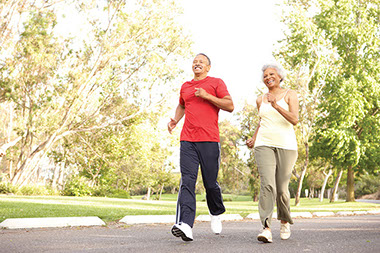
    Image of older couple on a brisk walk.

    The more you age, the more you need exercise to stay independent and healthy, said Dr. Keith Veselik, director of primary care at Loyola University Health System. “Around age 35 is when our muscle mass and resting metabolism starts to decrease. When this happens our bodies require more, not less exercise to manage our caloric intake. When this starts to happen, we can eat the same things, do the same things and may gain 3 pounds a year. That’s 30 pounds in a decade,” he said.

    Dr. Veselik said the best workout program balances heart healthy exercise, strength training, and flexibility. He recommends an hour of cardiovascular exercise 4 days a week, 2 days of strength training for 30 minutes, and balance and flexibility exercises such as stretching, yoga or pilates, 1 to 2 times a week.

    In your 50s:

    *  Muscle and joint aches and pains start becoming more apparent, so get creative about how to keep up cardiovascular exercise that is easy on the joints but gets the heart rate up (hint: swimming, biking, or running on softer surfaces).

    *  Cardiovascular exercise also helps to fight many of the most common and deadly medical concerns, including heart disease, asthma, and COPD.

    *  Don’t go from doing nothing to running a marathon. Talk to your doctor, ask about risk factors, and together create a plan that’s right  for you.

    *  If back pain occurs, protect your back by building strong core muscles and make sure you are lifting heavy objects correctly.

    In your 60s:

    *  Balance and strength should be a major focus. Many people are scared of breaking a hip, which can limit independence.

    *  Bones aren’t as strong and both men and women become more prone to osteoporosis.

    *  Add balance and leg strengthening exercises to increase flexibility, as well as balance to help prevent accidental falls. Weight-bearing exercise is crucial to bone health and keeping bone density strong.

    *  If arthritis develops at this age, exercise can help you cope. Swimming or aquatic classes are especially good.

    *  Walking is a great form of exercise. Just make sure you get your heart rate up.

    In your 70s and beyond:

    To combat seniors’ biggest worry, dementia, know that exercise is the only thing that is proven to prevent Alzheimer’s disease. And many of the major risk factors for dementia – high blood pressure, high cholesterol and diabetes can be countered with exercise.

    © American Institute for Preventive Medicine

  • How To Make The Grade This School Year

    FAMILY LIFE

    Image of a group of school children.

    Start talking about the upcoming school year. Listen closely for fears or concerns, advises Dr. Amie Duncan of Cincinnati Children’s Hospital. “It is important that parents listen to and respond to their child’s potential anxieties about the new school year, especially if they are making a big transition such as from an elementary school to a middle school. It is perfectly normal to experience first day jitters,” she said. These feelings can be relieved with some of these suggestions.

    Preschoolers and kindergartners need to know what will happen.

    *  Visit the school together. Let them play on the playground, walk through the classroom, and meet new teachers.

    *  Go on a school shopping trip for a backpack and supplies. Assign a school prep area at home for supplies and lunchboxes.

    *  Tuck a small family picture in a backpack or lunch.

    *  Set bedtime and wake-up routines 4 weeks before school starts.

    *  Be positive and excited for the new school year.

    Elementary and middle-school children will need to adjust to new beginnings.

    *  Expect that your child may want trendy or “cool” school supplies.

    *  Take a quick trip to school before classes start to help find classrooms, lockers, the cafeteria, and the bus drop-off location.

    *  Right from the start, help your child get and stay organized. Choose places to store their backpack and a distraction-free area to complete homework.

    *  Talk to your child about high-risk behaviors, such as drinking, drug use, and sexual activity. Have this talk early and often.

    *  Encourage your child to choose to take part in at least one school club, sport, or other activity outside of school hours.

    *  Don’t hesitate to make an appointment with the school counselor right away if you have concerns about how your child is adjusting to school. Keep the lines of communication open.

    High schoolers need and thrive on positive reinforcement.

    *  Help your teen set realistic goals on how to earn the best grades and complete assignments.

    *  Stay organized. Buy a daily planner and teach your teen how to use it correctly or teach them how to organize their schedule with a tablet computer or laptop.

    *  Encourage your teen to get involved in at least one extracurricular activity or sport because it will help them meet people.

    *  Continue to support and encourage good study habits with regular homework/study times. Search for ways to offer positive support.

    *  Ask about what’s going on in your child’s life. (Use open-ended questions, rather than those that require only a “yes” or “no” response). Be an active listener without judging your child.

    *  Stay involved in your child’s school life and you will know what is going on, and how they are doing.
    © American Institute for Preventive Medicine