Tag: Movement & Mobility

  • Step Up To A Longer Life

    WELL-BEING

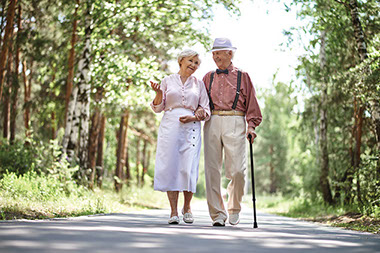
    Elderly couple walking.

    Could something as simple as walking help you live longer? Some recent research says it’s possible. Here’s what to know:

    1.  Researchers had 17,000 older women wear a device each day to count their steps.

    2.  They tracked the women for four years.

    3.  Those who took between 4,400 and 7,500 steps each day were less likely to die during those four years.

    4.  Walking more than 7,500 steps is also good for your health!

    Researchers said this is helpful for people who may think that 10,000 steps is overwhelming. Try to walk 4,400 steps or more each day, and you could see some important health benefits.

    Sources: Journal of the American Medical Association, National Institutes of Health

    © American Institute for Preventive Medicine

  • Take That First Step

    Fitness

    Smiling women walking with walking sticks.

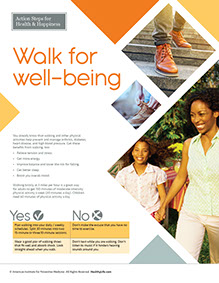
    Walking is one of the most beneficial, and safest, exercises you can do. That makes walking a great way to start if you’re just beginning an exercise routine. It’s also ideal for weight loss. And, it’s a great way to exercise with friends! Set a target for the number of steps you want to walk each day or week. Over time, you can increase the number of steps, or the intensity, by walking faster or including hills. Aim for at least 150 minutes of exercise each week.

    Be More Earth-Friendly

    Motor vehicles are responsible for significant amounts of greenhouse gas emissions in the U.S. Choose to walk rather than drive to help reduce air pollution and greenhouse gases.

    Page from HealthyLife Weigh book by the American Institute for Preventive Medicine. www.HealthyLife.com. All rights reserved.

    © American Institute for Preventive Medicine

  • Be Strong At Any Age

    BE FIT

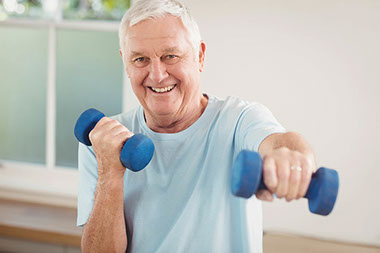
    Older man using weights.

    When you think of exercise, do you think of going for a run or taking an aerobics class? Those are great cardio workouts. But there is more to fitness than just cardio.

    Strong is healthy

    Strength training or lifting weights is a big part of being healthy and fit. Many people don’t do strength training because they don’t want to “bulk up.” Older adults might skip it because they think it’s only for younger people who are more muscular.

    You won’t get big bodybuilder muscles from doing strength training. That is, unless you train hard with that goal in mind. And many older adults can safely do strength training and find that they love how it makes them feel.

    If you do regular strength exercises, you will get a stronger body and better quality of life at any age. No bodybuilder is needed!

    Research shows that strength training can lower the risk of heart disease and other health conditions. It also helps you stay independent as you get older. Older adults who do strength training may find that everyday tasks are much easier. This can include things like getting out of a chair or climbing stairs.

    Strong is good for the mind

    The benefits of a strong body don’t stop at the muscles. Research also shows that strength training may reduce the effects of post traumatic stress disorder (PTSD). It can also help boost self-esteem.

    You can start today

    If you don’t have equipment, like weights, you can use things around the house, like soup cans. You can also use your own body weight. Think push-ups, planks and other similar exercises. They use your body weight and gravity to build muscles.

    A good way to start is with an exercise video or online class. You don’t have to go to a gym. But before you start, talk to your doctor. Ask if a new exercise program is safe for you. Talk about things you should or should not do to stay safe and help avoid injury.

    Give strength training a chance. You may find that it makes you feel better than you thought possible! A diet with adequate protein can help build muscle at any age and even promote healing. Talk to your doctor if you plan to make major diet changes.

    Source: National Institutes of Health

    © American Institute for Preventive Medicine

  • Workout Wear 101

    BE FIT

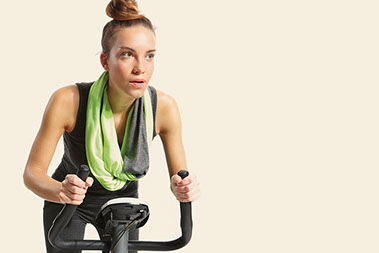
    Women riding stationary bike.

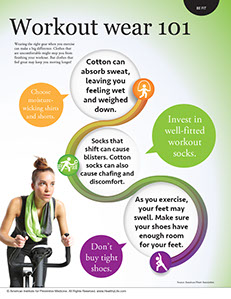
    Wearing the right gear when you exercise can make a big difference. Clothes that are uncomfortable might stop you from finishing your workout. But clothes that feel great may keep you moving longer!

    *  Choose moisture-wicking shirts and shorts. Cotton can absorb sweat, leaving you feeling wet and weighed down.

    *  Invest in well-fitted workout socks. Socks that shift can cause blisters. Cotton socks can also cause chafing and discomfort.

    *  Don’t buy tight shoes. As you exercise, your feet may swell. Make sure your shoes have enough room for your feet.

    Source: American Heart Association

    © American Institute for Preventive Medicine

  • Test Your Fitness Level

    Fitness

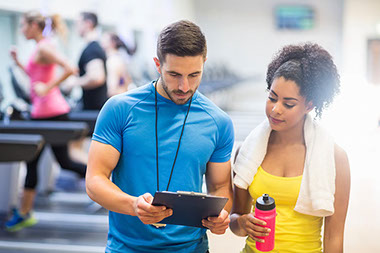
    Image of women talking to her fitness trainer.

    How do you measure the success of your fitness program? By how much weight you lose? How many inches you trim off your waistline or hips? How well you sleep at night? How energetic you feel?

    These are all worthwhile criteria. Another way to evaluate your fitness level-and assess your progress-is to keep track of your resting heart rate (that is, your pulse rate when you’re least active).

    The idea is, the lower your resting heart rate, the better shape your heart is in. So as you become more fit, your resting heart rate should drop.

    Here’s how to measure it.

    1.  Take your pulse as soon as you wake up in the morning, before you get out of bed.

    2.  Count the number of beats for 10 seconds and multiply by six. This will give you your pulse in beats per minute.

    3.  Repeat the following morning. Then calculate the average of the two. (That is, add the two numbers together and divide by two.) This is your resting heart rate.

    Calculate your resting heart rate every three months, as conditioning takes some time to have an effect.

    Take the “Talk Test”

    No, this isn’t a suggestion that you audition to guest host “The Tonight Show.” It’s just a simple way for you to tell if you’re overdoing it when you exercise. If you’re too out of breath to comfortably carry on a conversation with another person as you dance, run, or slam-dunk your way to fitness, you’re probably working too hard and should slow down. (On the other hand, you should be working hard enough to break a mild sweat.) And of course, any unusual sign of physical distress (such as chest discomfort, pain of any kind, or dizziness) is a signal to slow down to a stop.

    Page image from A Year of Health Hints book by the American Institute for Preventive Medicine. www.HealthyLife.com. All rights reserved.

    © American Institute for Preventive Medicine

  • Benefits Of Stretching

    BE FIT

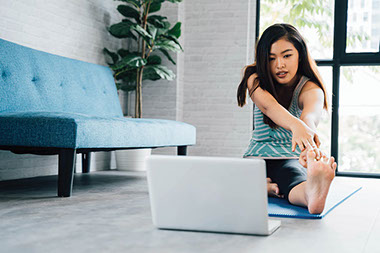
    Women stretching.

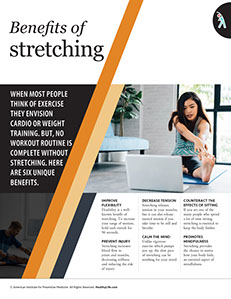
    When most people think of exercise they envision cardio or weight training. But, no workout routine is complete without stretching. Here are six unique benefits.

    Improve flexibility

    Flexibility is a well-known benefit of stretching. To increase your range of motion, hold each stretch for 90 seconds.

    Prevent injury

    Stretching increases blood flow to joints and muscles, decreasing stiffness and reducing the risk of injury.

    Decrease tension

    Stretching releases tension in your muscles, but it can also release mental tension if you take time to be still and breathe.

    Calm the mind

    Unlike vigorous exercise which pumps you up, the slow pace of stretching can be soothing for your mind.

    Counteract the effects of sitting

    If you are one of the many people who spend a lot of time sitting, stretching is essential to keep the body limber.

    Promotes mindfulness

    Stretching provides the chance to notice how your body feels, an essential aspect of mindfulness.

    © American Institute for Preventive Medicine

  • Zone Minutes Explained

    BE FIT

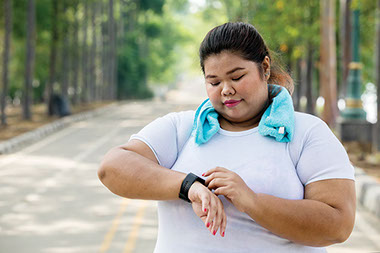
    Women looking at watch before exercising.

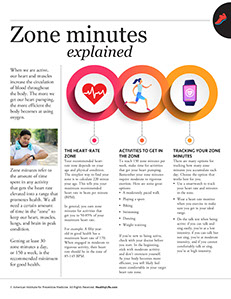
    When we are active, our heart and muscles increase the circulation of blood throughout the body. The more we get our heart pumping, the more efficient the body becomes at using oxygen.

    Zone minutes refer to the amount of time spent in any activity that gets the heart rate elevated into a range that promotes health. We all need a certain amount of time in the “zone” to keep our heart, muscles, lungs, and brain in peak condition.

    Getting at least 30 zone minutes a day, or 150 a week, is the recommended minimum for good health.

    The heart-rate zone

    Your recommended heart-rate zone depends on your age and physical condition. The simplest way to find your zone is to calculate 220 minus your age. This tells you your maximum recommended heart rate in beats per minute (BPM).

    In general, you earn zone minutes for activities that get you to 50-85% of your maximum heart rate.

    For example: A fifty-year-old in good health has a maximum heart rate of 170. When engaged in moderate to vigorous activity, their heart rate should be in the zone of 85-145 BPM.

    Activities to get in the zone

    To reach 150 zone minutes per week, make time for activities that get your heart pumping. Remember your zone minutes require moderate to vigorous exertion. Here are some great options:

    *  A moderately paced walk

    *  Playing a sport

    *  Biking

    *  Swimming

    *  Dancing

    *  Weight training

    If you’re new to being active, check with your doctor before you start. In the beginning, stick with moderate activity and don’t overexert yourself. As your body becomes more efficient, you will likely feel more comfortable in your target heart rate zone.

    Tracking your zone minutes

    There are many options for tracking how many zone minutes you accumulate each day. Choose the option that works best for you.

    *  Use a smartwatch to track your heart rate and minutes in the zone.

    *  Wear a heart rate monitor when you exercise to make sure you get in your ideal range.

    *  Do the talk test when being active: if you can talk and sing easily, you’re at a low intensity; if you can talk but not sing, you’re at moderate intensity, and if you cannot comfortably talk or sing, you’re at high intensity.
    © American Institute for Preventive Medicine

  • Time To Get Physical

    Fitness

    Get fit and stay fit.

    “Fitness: if it came in a bottle, everybody would have a great body.”

    – Cher

    Having six pack abs doesn’t come from drinking a six pack, and you don’t need to have six pack abs to be fit. Get fit by making exercise and healthy eating a regular part of your life.

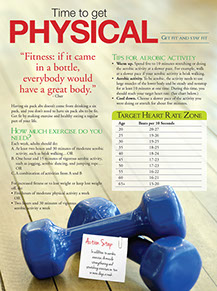
    How much exercise do you need?

    Each week, adults should do:

    A.  At least two hours and 30 minutes of moderate aerobic activity, such as brisk walking…OR

    B.  One hour and 15 minutes of vigorous aerobic activity, such as jogging, aerobic dancing, and jumping rope…OR

    C.  A combination of activities from A and B

    For increased fitness or to lose weight or keep lost weight off, do:

    *  Five hours of moderate physical activity a week…OR

    *  Two hours and 30 minutes of vigorous aerobic activity a week

    Tips for aerobic activity

    *  Warm up. Spend five to 10 minutes stretching or doing the aerobic activity at a slower pace. For example, walk at a slower pace if your aerobic activity is brisk walking.

    *  Aerobic activity. To be aerobic, the activity needs to use large muscles of the lower body and be steady and nonstop for at least 10 minutes at one time. During this time, you should reach your target heart rate. (See chart on this page.)

    *  Cool down. Choose a slower pace of the activity you were doing or stretch for about five minutes.

    Target Heart Rate Zone

    Age

    20

    25

    30

    35

    40

    45

    50

    55

    60

    65+

    Beats per 10 Seconds

    20-27

    19-26

    19-25

    18-25

    18-24

    17-23

    17-23

    16-22

    16-21

    15-20

    Action Step

    In addition to aerobic exercise, do muscle strengthening and stretching exercises on two or more days a week.

    Page image from the Ways to Well-Being Book by the American Institute for Preventive Medicine. www.HealthyLife.com. All rights reserved.

    © American Institute for Preventive Medicine

  • Burn Calories Without Trying

    BE FIT

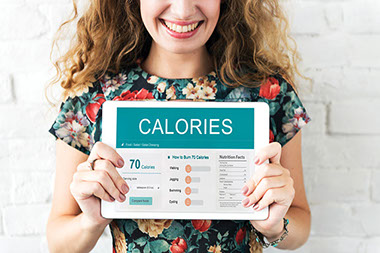
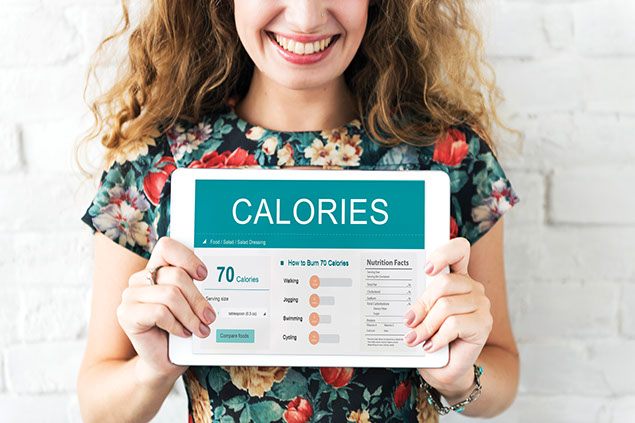
    Image of women holding up tablet with calorie tracking.

    When you’re not exercising, you can still burn extra calories! Use little ways to get more fit every day.

    Don’t make things convenient.

    Take the stairs instead of the elevator. Park farther away from your destination and walk. Use your bike instead of a car for quick grocery store runs. Put your favorite snack foods in the basement, rather than on the main floor near the TV.

    Get up.

    Take a short break every hour if you sit at a desk. Get up, move your arms and legs or even do a few jumping jacks. Use a hands-free headset so you can get up and walk or lift weights while you’re on the phone. Have a meeting? See if you can stand during part of it or even have a walking meeting.

    Sneaky exercises.

    Do some isometric exercises if you sit a lot. Try squeezing your glute muscles and knees together for eight counts, holding for five seconds then release. Do this every couple of hours.

    Move whenever you can. Walk in place instead of standing still.

    © American Institute for Preventive Medicine

  • Boost Your Exercise With Caffeine

    BE FIT

    Caffeine does more than just give you energy. It can improve exercise performance too. And if you are someone who struggles with motivation, caffeine may give you the mental boost you need to get moving.

    Caffeine may help you get just a little more out of your exercise session. It may improve:

    *  Muscle endurance

    *  Speed of movement

    *  Muscle strength

    *  Aerobic endurance

    *  Alertness and focus

    Make caffeine work for you:

    *  Consume a dose of caffeine an hour before you exercise.

    *  1-3 mg caffeine per pound of body weight has been shown to be most effective.

    *  One cup of coffee has about 100 mg of caffeine.

    *  Energy drinks and other forms of caffeine can also work. But be wary of what else may be in them and read the label carefully.

    *  Talk to your doctor before taking any supplements.

    *  Don’t overdo it! More is not better and won’t give any additional benefit.

    © American Institute for Preventive Medicine