Tag: Movement & Mobility

  • Exercise Your Feet

    BE FIT

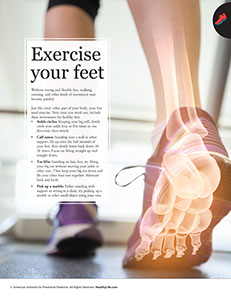
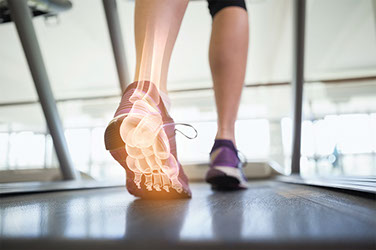
    Close up of feet walking on treadmill, with an overlapping illustration of a foot skeleton.

    Without strong and flexible feet, walking, running, and other kinds of movement may become painful.

    Just like every other part of your body, your feet need exercise. Next time you work out, include these movements for healthy feet:

    *Ankle circles:Keeping your leg still, slowly circle your ankle four or five times in one direction, then switch.

    *Calf raises:Standing near a wall or other support, lift up onto the ball mounds of your feet, then slowly lower back down 10-20 times. Focus on lifting straight up and straight down.

    *Toe lifts:Standing on bare feet, try lifting your big toe without moving your ankle or other toes. Then keep your big toe down and lift your other four toes together. Alternate back and forth.

    *Pick up a marble:Either standing with support or sitting in a chair, try picking up a marble or other small object using your toes.

    © American Institute for Preventive Medicine

  • Commit To Be Fit 2

    Fitness

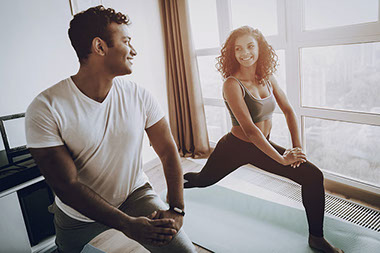
    Couple stretching.

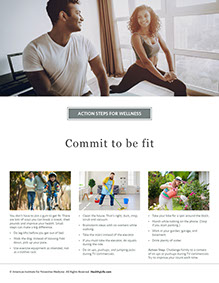
    You don’t have to join a gym to get fit. There are lots of ways you can break a sweat, shed pounds and improve your health. Small steps can make a big difference.

    *  Do leg lifts before you get out of bed.

    *  Walk the dog. Instead of slowing Fido down, pick up your pace.

    *  Use exercise equipment as intended, not as a clothes rack.

    *  Clean the house. That’s right, dust, mop, scrub and vacuum.

    *  Brainstorm ideas with co-workers while walking.

    *  Take the stairs instead of the elevator.

    *  If you must take the elevator, do squats during the ride.

    *  Do sit ups, pushups, and jumping jacks during TV commercials.

    *  Take your bike for a spin around the block.

    *  March while talking on the phone. (Stop if you start panting.)

    *  Work in your garden, garage, and basement.

    *  Drink plenty of water.

    Action Step:Challenge family to a contest of sit ups or pushups during TV commercials. Try to improve your count each time.

    Page from HealthyLife Weigh book by the American Institute for Preventive Medicine. www.HealthyLife.com. All rights reserved.

    © American Institute for Preventive Medicine

  • Find The Energy To Exercise

    BE FIT

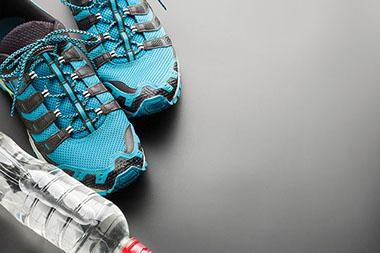
    Image of athletic shoes and a bottle of water.

    Too tired to work out? Try these tips to boost energy and get moving.

    1.  Move around. At work, try to switch between sitting and standing. Doing too much of one or the other may leave you feeling drained.

    2.  Sip lots of water. Starting in the morning, drink water and keep drinking it throughout the day. This can keep energy levels from sinking in the afternoon.

    3.  Eat healthy carbs. Choose whole grains, fruits and vegetables, such as carrots.

    4.  Watch your breathing. Slow, deep breaths can relax and energize you throughout the day.

    © American Institute for Preventive Medicine

  • Eating For Peak Performance

    Fitness

    Image of oat cereal with fresh fruit.

    No pill or magic formula can instantly turn you into a super-athlete. But eating right can help you perform at your best.

    Carbohydrates-from bread, pasta, potatoes, and fruit-provide energy for vigorous activity. So active people need to replenish this fuel frequently.  Don’t expect to get a quick energy boost from a snack you eat just before starting out, though.  Instead, consuming a high-carbohydrate food like skim milk and a banana, whole wheat bread, or an orange an hour or two before a workout acts like a time-release capsule of energy.

    Because you lose electrolytes (potassium, sodium, magnesium, and calcium) in sweat during vigorous activity, drink plenty of water and eat foods that are rich in these minerals. Almost all fruits and vegetables are rich in potassium, but potatoes, bananas, orange juice, winter squash, cantaloupe, sweet potatoes, and cooked beans are especially high. Sodium is rarely lost in quantities greater than amounts you would normally consume, so you don’t need to worry about getting extra.

    Page image from the A Year of Health Hints book by the American Institute for Preventive Medicine. www.HealthyLife.com. All rights reserved.

    © American Institute for Preventive Medicine

  • Get Into Zone 2

    BE FIT

    Close up of man using smart watch with heart beat showing at 96 bpm.

    Zone 2 is one of the five cardiac heart rate zones, ranging from 1 (gentle warm-up) to 5 (maximum effort). In zone 2, your heart rate is moderately elevated, but you’re not out of breath.

    Zone 2 exercise is beneficial because it strengthens the heart and lungs. This makes your body more efficient, capable, and energetic. Here’s how to get started with zone 2:

    *  Calculate your zone 2 heart rate range.

    – 220 – age = MAX heart rate.

    – Zone 2 is 60-80% of your max.

    – MAX heart rate x 0.6 and 0.8 = zone 2 range.

    *  Choose an aerobic activity you enjoy, such as walking, jogging, biking, swimming, or rowing.

    *  Wear a heart rate monitor and get started.

    *  Once your heart rate reaches zone 2, adjust your intensity to stay in that range.

    *  Aim for 30 minutes to 1 hour of zone 2 training several times each week.

    © American Institute for Preventive Medicine

  • Find Your Fitness Personality

    Fitness

    Body type isn’t the only trait that determines which activities are best for you, though. You’ve probably already given some thought to what you’d like, based on whether you prefer to do activities alone or in a group; competitive or noncompetitive activities, or outdoor or indoor activities.

    Finding a fitness activity that suits your personality is also a big factor in how much you’ll enjoy exercise and stick with it long enough to reap the benefits. Do any of the following descriptions of fitness personalities sound like you? If so, read the “hint for success” that pertains to each one.

    The Weekend Warrior

    The weekend warrior is sedentary throughout the work week and binges on exercise or sports over the weekend. Hint: Add minimal activity (even as little as 15 minutes twice per week) during the week to help condition your heart and lungs, sustain muscular endurance, and prevent strains or injuries on the weekend.

    The Fanatic

    The fanatic thinks that if a moderate exercise is good, then a lot is better. He or she always tries to work out a little more, a lot harder, or more intensely than others, and feels anxious and irritable if he or she misses a workout. Hint: Fitness should be a pleasure, not an addiction or ball and chain.

    The Social Butterfly

    The social butterfly has difficulty sticking with a solo fitness program, and loves to chat and mingle with other participants in a group. Hint: Don’t always depend on group activities or other people to enable you to meet your fitness goals. Be willing to go it alone if you must.

    The Cannonball

    The cannonball jumps into a fitness program with a burst of energy and determination but loses enthusiasm a few weeks later. Hint: Don’t try to do too much, too soon, or you’ll probably burn out after 2 or 3 weeks. It takes 10 to 12 weeks to start to see the results of your efforts.

    The Flipper

    The flipper dabbles in one activity, then quickly abandons it for another, and is related to the cannonball. Sometimes he or she may remain inactive for long intervals between flurries of activity. Hint: Real fitness results from consistent efforts, over the long term.

    The Analyst

    The analyst loves exercise gadgets and equipment. He or she reads lots of fitness books and magazines and likes to talk about the benefits of exercise. Hint: This is not a problem if you actually pursue the activities you’re learning about. But remember, the important thing is to get out and move.

    Page image from A Year of Health Hints book by the American Institute for Preventive Medicine. www.HealthyLife.com. All rights reserved.

    © American Institute for Preventive Medicine

  • Getting Fit In Less Time

    BE FIT

    Women on treadmill looking at watch.

    Have you heard of interval training for exercise? You may have assumed this type of exercise is only for athletes. However, people of almost all fitness levels can use it.

    Interval training means you add short bursts of more intense activities into your regular exercise routine. How fast and how long you do your intervals is completely up to you. This can be as simple as 10 seconds of running and then 4 minutes of walking. If that’s not possible, alternate brisk walking with slower walking.

    Intervals don’t have to be more than a few seconds. One of the biggest advantages is that you don’t need any special equipment to get started!

    Why should I do it?

    The American College of Sports Medicine (ACSM) says interval training has several benefits, including:

    *  Burn more calories: Even if you can only do short intervals, you’re still burning more calories than if you hadn’t done the intervals at all.

    *  Most of your time: Many people can’t find time for longer workouts. Instead, use the time you have to work harder with intervals.

    *  Boost mood: Exercise releases endorphins. These are feel-good chemicals in the brain. More vigorous exercise may release more endorphins than only doing light exercise.

    *  Fight boredom: Doing the same exercises all the time can lead to boredom. But, mixing it up with intervals can help keep you interested.

    *  More aerobic fitness: Higher intensity will improve your cardio fitness. With time and practice, you’ll be able to exercise harder and longer.

    For beginners

    *  Choose a distance if you don’t want to count or use a stopwatch. For instance, jog or walk briskly to the next tree or driveway.

    *  If using equipment like an elliptical machine or bike, alternate faster bouts of that exercise with your usual pace.

    Interval training can be done at your fitness level. But, don’t be too aggressive at first because you could get an injury. While you want to get your heart pumping, you don’t want to make it so hard that you can’t stick with it.

    Studies suggest that interval training can be safe and helpful to most people. Ask your doctor before starting a new exercise plan to be sure it’s right for you.

    Source: American College of Sports Medicine
    © American Institute for Preventive Medicine

  • Move Your Way

    Fitness

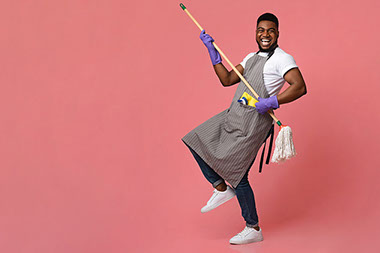
    Man wearing apron and cleaning gloves, using a broom stick as a guitar.

    The key to moving more is finding and doing activities you really enjoy. Dancing, walking, gardening…if it moves you and makes you happy, it works! When you do move, work toward 20 minutes a day of moderate to vigorous levels of movement. Regular physical activity helps with weight management and improving cardiovascular health. Add some weighted hand gloves for increased resistance and to build muscle while you move.

    Be More Earth-Friendly

    Want to help the earth while exercising? Plogging – or picking up trash while you jog or walk – is one way you can do your part to keep your community, and the environment, clean.

    Page from HealthyLife Weigh book by the American Institute for Preventive Medicine. www.HealthyLife.com. All rights reserved.

    © American Institute for Preventive Medicine

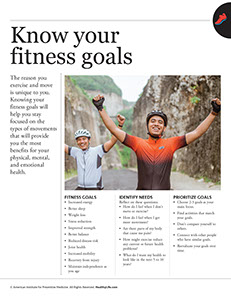
  • Know Your Fitness Goals

    BE FIT

    Two men with hands in the air sitting on bikes.

    The reason you exercise and move is unique to you. Knowing your fitness goals will help you stay focused on the types of movements that will provide you the most benefits for your physical, mental, and emotional health.

    Fitness goals

    *  Increased energy

    *  Better sleep

    *  Weight loss

    *  Stress reduction

    *  Improved strength

    *  Better balance

    *  Reduced disease risk

    *  Joint health

    *  Increased mobility

    *  Recovery from injury

    *  Maintain independence as you age

    Identify needs

    Reflect on these questions:

    *  How do I feel when I don’t move or exercise?

    *  How do I feel when I get more movement?

    *  Are there parts of my body that cause me pain?

    *  How might exercise reduce any current or future health problems?

    *  What do I want my health to look like in the next 5 to 10 years?

    Prioritize goals

    *  Choose 2-3 goals as your main focus.

    *  Find activities that match your goals.

    *  Don’t compare yourself to others.

    *  Connect with other people who have similar goals.

    *  Reevaluate your goals over time.

    © American Institute for Preventive Medicine

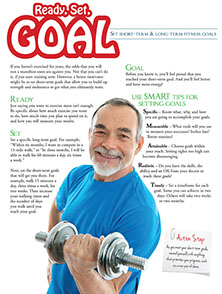
  • Ready, Set, Goal

    Fitness

    Set short-term & long-term fitness goals.

    If you haven’t exercised for years, the odds that you will run a marathon soon are against you. Not that you can’t do it, if you start training now. However, a better motivator might be to set short-term goals that allow you to build up strength and endurance to get what you ultimately want.

    Ready

    Just saying you want to exercise more isn’t enough. Be specific about how much exercise you want to do, how much time you plan to spend on it, and how you will measure your results.

    Set

    Set a specific long-term goal. For example, “Within six months, I want to compete in a 15-mile walk,” or “In three months, I will be able to walk for 60 minutes a day, six times a week.”

    Next, set the short-term goals that will get you there. For example, walk 15 minutes a day, three times a week, for two weeks. Then increase your walking times and the number of days you walk until you reach your goal.

    Goal

    Before you know it, you’ll feel proud that you reached your short-term goal. And you’ll feel better and have more energy!

    Use SMART tips for setting goals

    *  Specific – Know what, why, and how you are going to accomplish your goals.

    *  Measurable – What tools will you use to measure your successes? Inches lost? Better stamina?

    *  Attainable – Choose goals within your reach. Setting sights too high can become discouraging.

    *  Realistic – Do you have the skills, the ability and an OK from your doctor to reach these goals?

    *  Timely – Set a timeframe for each goal. Some you can achieve in two days. Others will take two weeks or two months.

    Action Step

    As you meet your short-term goals, reward yourself with anything that promotes your progress, such as a new pair of shoes.

    Page image from the Ways to Well-Being book by the American Institute for Preventive Medicine. www.HealthyLife.com. All rights reserved.

    © American Institute for Preventive Medicine