Tag: Movement & Mobility

  • A Prescription For Exercise?

    BE FIT

    Image of couple walking through woods.

    Many doctors recommend exercise to help with weight loss, strength and well-being. But, an exercise program may do even more than that. Research shows that exercise can help with certain health conditions. In fact, many people are now getting a “prescription” for exercise from their doctor.

    Fibromyalgia:Several studies support using exercise as a treatment for fibromyalgia pain. Fibromyalgia can cause chronic pain and fatigue. These symptoms may improve when a person exercises regularly.

    Depression:Depression is one of the most common mental health disorders in the U.S. Some studies have found that getting regular exercise helps with mild to moderate depression. This may be because exercise releases the brain’s “feel-good” chemicals. Exercise may also help support other brain functions, which help with depression.

    Osteoporosis:Osteoporosis causes bones to become weaker or more brittle. But, regular exercise can help strengthen muscles and bones, which lowers the risk of breaking bones or falling. Often, people with osteoporosis get good results by doing a combination of aerobic and weight training exercises.

    Arthritis:Exercise is considered the best non-drug option for treating pain and stiffness from arthritis. Walking and water exercise are usually good choices. Plus, exercise can help you maintain a healthy weight which helps to reduce pressure on your weight-bearing joints.

    Hard work pays off

    It can be hard to get up and exercise when you have a health condition, especially one that causes pain or fatigue. But, the evidence shows that the extra effort may be well worth it!

    Always talk to your doctor before beginning any exercise program. Exercise alone may not be enough to treat some health problems. But, it may make you feel better and may be a good “natural” option to try. It can be used along with other treatments, such as medication or therapy.

    © American Institute for Preventive Medicine

  • Best Exercise For People With Diabetes

    BE FIT

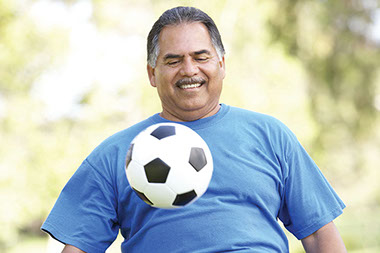
    Image of middle-aged Hispanic man playing with a soccer ball.

    The best exercise for anyone with diabetes may be a notch above a casual walk, according to Jamie Cooper, assistant professor of nutritional sciences at Texas Tech University.

    “A person should exercise to the point when they’re breathing a little bit harder and sweating a little bit-then they know they’re working more intensely,” Cooper said.

    The type of exercise really doesn’t matter as long as you’re moving and getting some exercise on a regular basis. Finding something you enjoy and are motivated to do is probably more important than a specific type of exercise to treat diabetes.

    “It’s not something you just do once a month or for a couple of weeks and quit. It has to be something you adapt into your new, healthier lifestyle and do on a regular basis,” Cooper said.

    © American Institute for Preventive Medicine

  • Set A Resolution That Works For You

    BE FIT

    Image of young women jogging in the winter.

    “What’s your New Year’s resolution?” It’s a question many people hear – and ask – when Jan. 1 approaches. But, after a couple of weeks of hard work, life often interferes and that resolution gets forgotten.

    But what if you could stick with that resolution this year? Try these tips from the American Diabetes Association:

    *Be realistic.Rather than push yourself to do several major things, pick just one – such as walking.

    *Be specific.For instance, write down how often you will work out (5 days a week for 30 minutes) or that you will eat fruit instead of sweets. Schedule it in your calendar so other things are less likely to interfere.

    *Get back on track after setbacks.If you slip up, forgive yourself and start new tomorrow. Don’t abandon your healthy goals because of one mistake.

    Good health is a great goal to work towards – at New Year’s or any time of the year.

    © American Institute for Preventive Medicine

  • Commit To Be Fit

    BE FIT

    Image of middle-aged women with dumb bells.

    How are those resolutions going about now? You can make a renewed commitment to yourself and your health anytime. Here’s advice from Life Time Fitness to move forward:

    *Create a vision statement.Make your resolution a commitment and create a vision statement that projects clear personal investment and connects directly to your happiness and health. Once you’ve created your personal vision, you can identify what goals will get you there.

    *Don’t assume you know how to exercise.Many people who exercise think they know what to do when they walk into a gym, but it is common to use poor form, train at an inappropriate intensity, or choose the wrong exercises for your needs. A well-planned program using proper exercise technique will prove much more successful. Sit down with a well-qualified and certified personal trainer to talk about your exercise program to start on the right track.

    *Test your readiness.Ask yourself how ready you are to make an actual change. If your vision is health-based and you’ve made the goal of working out every morning of the week, ask yourself (on a scale of 1 to 10 with 10 being absolutely positive) how likely you’ll be able to commit and achieve that task and identify barriers that might get in the way. If your readiness is 7 or above, you’re ready to embark on your vision. If it’s below 7, change or revise your goal until you’re confident enough to know you’ll succeed. Small steps to succeed are better than big steps to fail.

    *Junk the junk.Don’t think you can stick to your diet while keeping junk food in the house. Make a commitment to get rid of all the foods that don’t promote health. Instead, fill your kitchen with good choices.

    *Put it on the fridge.Laminate it, frame it or post it on your mirror. The goal is to have your resolution statement somewhere where you will see it often as a reminder of what you are working toward. If you’re a social person, share it.

    © American Institute for Preventive Medicine

  • Simple Workouts For Beginners

    BE FIT

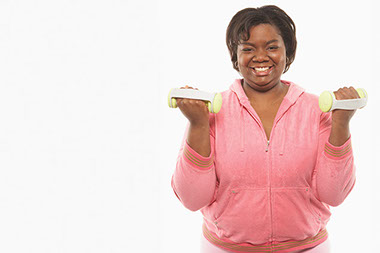
    Image of young African American women with dumb bells.

    Anyone can exercise and enjoy its healthy perks! Here’s how to get started:

    *Check with your doctor first.If you haven’t exercised in the past or have health conditions, ask your doctor for tips before you start.

    *Get your arms and legs moving.This means you’ll get your heart pumping too. Choices include walking, running, swimming, biking or dancing.

    *Warm up for five to ten minutes.Try gentle stretches, and start at a slower pace for these few minutes.

    *Aim for 30-60 minutes of activity each time.Break it up into smaller amounts of time if needed. For instance, two 15-minute walks can be done instead of one 30-minute walk.

    *Don’t overdo it.If you don’t feel well, or you have pain or nausea, stop.

    *Try strength training.Working your muscles with weights, or at-home exercises like push-ups, squats, and sit-ups can help your bones and muscles stay strong. Ask a trainer at the gym or your doctor for help if you’re not sure what’s safe for you.

    *Cool down when you’re finished.Don’t stop exercising suddenly. Instead, slow down for the last five to ten minutes. Follow up with more stretching while your muscles are warm.

    Source: American Academy of Family Physicians

    © American Institute for Preventive Medicine

  • Every Step Helps

    BE FIT

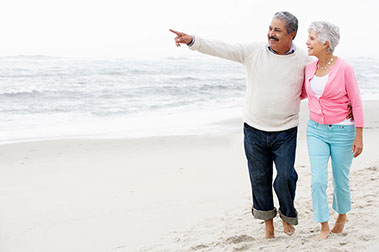
    Image of older Hispanic couple walking on the beach.

    You know exercising is great for you, but it’s hard to find time to do it. If going to the gym sounds impossible, why not walk? Research says that walking for just 30 minutes each day will improve your health. For those who are really short on time, you can even break those 30 minutes up. Walk for 10 minutes, three times a day – and you’re getting health benefits.

    The National Institutes of Health says regular exercise like walking can:

    *  Improve high blood pressure

    *  Lower your risk of heart disease

    *  Strengthen muscles and bones

    *  Improve type 2 diabetes

    *  Give you more energy

    *  Help you manage stress

    *  Reduce feelings of depression

    With exercise, every step helps. You don’t need fancy equipment or even a gym membership to get healthier – and you can start today.

    © American Institute for Preventive Medicine

  • Staying Active With A Disability

    BE FIT

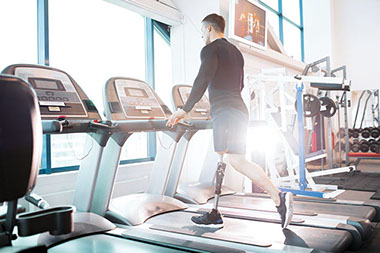
    Image of disabled man on treadmill.

    Most of us know that exercise is great for our health. But, if you or someone in your family has a disability, exercise can feel like a difficult task. Not only do you have to find time and energy to do it, but you need to worry about accessibility, too.

    Make sure your doctor gives you the okay before you begin any exercise program.

    It can be frustrating when your favorite activity doesn’t seem to work for you. But, some extra research may be worth the effort. These tips can help you get started:

    *  Check into races. There are many 5K, 10K and longer races that are accessible to people with many types of disabilities. And, many of them raise money for charitable causes. This may also help motivate your family to get out and train for a race and have fun together. Be sure to ask in advance about accessibility to be sure it will work for you.

    *  Get outside and do what you love. Have outside time a few times a week. This can be as simple as throwing a ball in the yard, going to an accessible playground, gardening or playing with the hose or sprinkler on a hot day.

    *  Ditch the car for short trips. If you live near a town, consider walking to the store for an errand. If this isn’t realistic, get some miles in at a mall or shopping center. Park at one end and visit the shops all the way at the other end.

    *  Modify your sports. Many sports can be fun and challenging with some minor changes. Walking instead of running for soccer, using a larger or softer ball for volleyball, or omitting the net in tennis may make the game work for you.

    *  Try low impact activities. Joining an aquatic exercise program or using rowing machines are two great activities for those who have joint limitations.

    Activities for people with disabilities

    Check with the following organizations to see who offers adaptive programs and activities:

    *  Your city or county recreation department

    *  Local YMCA or YWCA

    *  Boy Scouts or Girl Scouts councils

    *  Nearby high schools, colleges and universities

    *  Chamber of Commerce

    *  Center for Independent Living (CIL)

    *  National and State parks (many have paved hiking trails)

    Finally, talk with your doctor or health care provider about your desire to get active. They may have resources to help you get started. Join support groups with people who have disabilities like yours and use the power of community to find out about fun and active things you can do.

    Sources: The National Center on Health, Physical Activity and Disability (NCHPAD), U.S. Department of Health and Human Services
    © American Institute for Preventive Medicine

  • Exercise Benefits Outweigh The Struggle At Any Age

    BE FIT

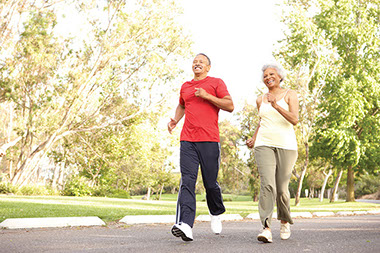
    Image of older couple on a brisk walk.

    The more you age, the more you need exercise to stay independent and healthy, said Dr. Keith Veselik, director of primary care at Loyola University Health System. “Around age 35 is when our muscle mass and resting metabolism starts to decrease. When this happens our bodies require more, not less exercise to manage our caloric intake. When this starts to happen, we can eat the same things, do the same things and may gain 3 pounds a year. That’s 30 pounds in a decade,” he said.

    Dr. Veselik said the best workout program balances heart healthy exercise, strength training, and flexibility. He recommends an hour of cardiovascular exercise 4 days a week, 2 days of strength training for 30 minutes, and balance and flexibility exercises such as stretching, yoga or pilates, 1 to 2 times a week.

    In your 50s:

    *  Muscle and joint aches and pains start becoming more apparent, so get creative about how to keep up cardiovascular exercise that is easy on the joints but gets the heart rate up (hint: swimming, biking, or running on softer surfaces).

    *  Cardiovascular exercise also helps to fight many of the most common and deadly medical concerns, including heart disease, asthma, and COPD.

    *  Don’t go from doing nothing to running a marathon. Talk to your doctor, ask about risk factors, and together create a plan that’s right  for you.

    *  If back pain occurs, protect your back by building strong core muscles and make sure you are lifting heavy objects correctly.

    In your 60s:

    *  Balance and strength should be a major focus. Many people are scared of breaking a hip, which can limit independence.

    *  Bones aren’t as strong and both men and women become more prone to osteoporosis.

    *  Add balance and leg strengthening exercises to increase flexibility, as well as balance to help prevent accidental falls. Weight-bearing exercise is crucial to bone health and keeping bone density strong.

    *  If arthritis develops at this age, exercise can help you cope. Swimming or aquatic classes are especially good.

    *  Walking is a great form of exercise. Just make sure you get your heart rate up.

    In your 70s and beyond:

    To combat seniors’ biggest worry, dementia, know that exercise is the only thing that is proven to prevent Alzheimer’s disease. And many of the major risk factors for dementia – high blood pressure, high cholesterol and diabetes can be countered with exercise.

    © American Institute for Preventive Medicine

  • The Aerobic Mile

    BE FIT

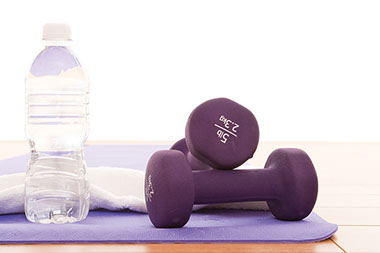
    Image of water bottle, towel and dumb bells on a mat.

    How much exercise do you need? The answer is 30 minutes most days of the week, according to government guidelines. But you can calculate your own fitness level by using the aerobic mile as your guideline.

    An aerobic mile, simply, is how much energy you expend jogging one mile. Okay, you don’t want to jog. But you can burn the same number of calories by doing other exercises. Here are some examples of activities you can do to equal one aerobic mile:

    *  Walking one mile at any pace

    *  Bicycling at a moderate pace for 12 minutes

    *  Vigorous rowing for 12 minutes

    *  Swimming for 24 minutes

    *  Tennis for 20 minutes (11 if your game is vigorous)

    *  Weight training at a moderate pace for 15 minutes

    *  Easy gardening for one hour

    *  Aerobic exercise to music, easy pace for 20 minutes

    Beginning exercisers should strive to achieve the equivalent of 6 aerobic miles a week. Those with good fitness levels can move up to 10 hours a week. High fitness levels are achieved with 15 aerobic miles each week, according to ACSM Guidelines for Exercise Testing.

    © American Institute for Preventive Medicine

  • Exercise Is Healthy For Your Mind

    BE FIT

    Image of older Asian couple brisk walking.

    Regular exercise offers many health benefits. You may already know it helps you stay strong and healthy, and can help you lose weight. It can also help prevent heart disease, diabetes, arthritis, and other diseases. But exercise is doing good for another vital organ in your body: your brain.

    Studies are now showing that regular aerobic exercise can help your brain work better. This includes:

    * Better memory

    * Ability to switch tasks

    * Ability to plan activities and stay organized

    * Possible reduced risk of Alzheimer’s disease

    Although researchers don’t know exactly why exercise helps the mind, there are some possibilities. It increases blood supply to the brain, and helps it form connections. These connections are responsible for forming memories and thinking about future activities. Exercise also improves an area of the brain that remembers and learns.

    Source: National Institute on Aging

    © American Institute for Preventive Medicine