Tag: Movement & Physical Fitness

  • Crossfit Faq

    BE FIT

    Man in gym working out.

    CrossFit is a high-intensity strength and conditioning workout. It emphasizes dynamic exercises such as Olympic lifting, plyometrics, and kettlebells.

    Who can do CrossFit?

    CrossFit can be modified for a variety of ages and fitness levels. There are even CrossFit classes for kids and seniors.

    Is CrossFit safe?

    Because CrossFit is a high-intensity form of exercise, it may not be the best choice for everyone. Check with your doctor to make sure CrossFit is right for you.

    What are the benefits of CrossFit?

    Regular CrossFit workouts can build strength and improve cardiovascular endurance. It counts towards your recommended 150 minutes of moderate to vigorous-intensity exercise.

    Are there risks to CrossFit?

    Any form of high-intensity exercise carries the potential for injury. To reduce your risk, get clearance from your doctor first and remember to increase gradually.
    © American Institute for Preventive Medicine
  • Make Your Summer Workout Easier

    BE FIT

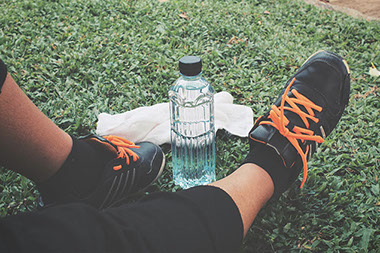
    Feet wearing tennis shoes and a bottle of water on grass.

    You can still enjoy a productive workout during the warmer months. Try these tips:

    1.Start early with water.Don’t wait to start drinking water right before you exercise. Drink water throughout the day to keep your body hydrated. Then, drink additional water during and after your workout.

    2.Go indoors when heat and humidity are too high.Don’t try to brave extreme weather with an outdoors workout. Heat exhaustion and heat stroke are dangerous and can happen to anyone. On heat advisory days, take your workout indoors.

    3.Wear the right clothes.Choose light-colored clothing that is made for sweating and workouts. Many new, lighter fabrics will keep sweat and moisture away, which makes you feel cooler. Cotton clothing is best suited for low-humidity weather conditions.

    4.Shun the midday sun.In the summer, limit or avoid heavy workouts from 10 a.m. to 4 p.m. The sun and temperatures will be hottest during these times. Instead, go out early in the morning or in the evening.

    Source: Academy of Nutrition and Dietetics

    © American Institute for Preventive Medicine

  • Move For Mental Health

    BE FIT

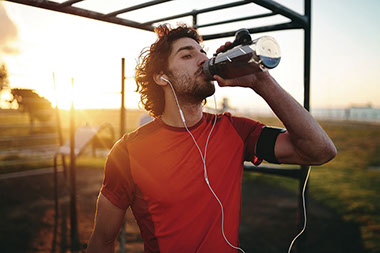
    Man in workout clothes, drinking water with headphones on.

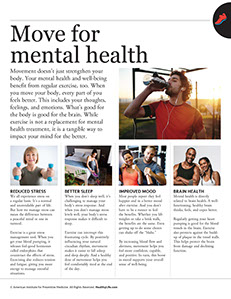
    Movement doesn’t just strengthen your body. Your mental health and well-being benefit from regular exercise, too. When you move your body, every part of you feels better. This includes your thoughts, feelings, and emotions. What’s good for the body is good for the brain. While exercise is not a replacement for mental health treatment, it is a tangible way to impact your mind for the better.

    Reduced stress

    We all experience stress on a regular basis. It’s a normal and unavoidable part of life. But how we manage stress can mean the difference between a peaceful mind or one in turmoil.

    Exercise is a great stress management tool. When you get your blood pumping, it releases feel-good hormones called endorphins that counteract the effects of stress. Exercising also reduces tension and fatigue, giving you more energy to manage stressful situations.

    Better sleep

    When you don’t sleep well, it’s challenging to manage your body’s stress response. And when you don’t manage stress levels well, your body’s stress response makes it difficult to sleep.

    Exercise can interrupt this frustrating cycle. By positively influencing your natural circadian rhythm, movement makes it easier to fall asleep and sleep deeply. And a healthy dose of movement helps you feel comfortably tired at the end of the day.

    Improved mood

    Most people report they feel happier and in a better mood after exercise. And you don’t have to be a runner to feel the benefits. Whether you lift weights or take a brisk walk, the benefits are the same. Even getting up to do some chores can shake off the “blahs.”

    By increasing blood flow and alertness, movement helps you feel more confident, capable, and positive. In turn, this boost in mood supports your overall sense of well-being.

    Brain Health

    Mental health is directly related to brain health. A well-functioning, healthy brain thinks, feels, and copes better.

    Regularly getting your heart pumping is good for the blood vessels in the brain. Exercise also protects against the build-up of plaque in the vessel walls. This helps protect the brain from damage and declining function.

    © American Institute for Preventive Medicine
  • Get Fit For A Cause

    Fitness

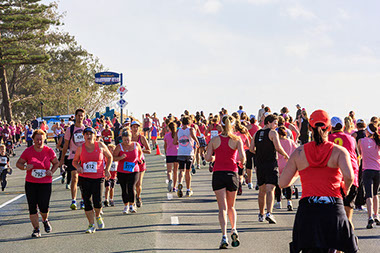
    People running a marathon for charity.

    Join a charity walk, run, or bike ride.

    If you are struggling to find a reason to get off your duff and exercise, go online and find a cause that interests you – Alzheimer’s disease, animal welfare, breast cancer, heart disease, multiple sclerosis, etc. Chances are there is a fitness-related fund-raiser in your area that will inspire you to get fit and soothe your soul.

    Don’t sign on the dotted line just yet.

    *  Pick a cause and/or activity (cycling, running, dance-a-thon) that will keep you interested.

    *  Find out the minimum amount of money you need to raise to participate. If you can’t afford it, are you willing to ask friends, family and co-workers to donate?

    *  Ask the organization how much of your actual donation goes to the cause, stays in your community, and is used to pay salaries of employees?

    *  Do a background check (www.guidestar.com) on the organization to make sure it’s legitimate.

    *  Find out how much training is involved. Do you have the time and devotion to stick with it?

    Volunteer.

    If you’re not interested in fund-raising or can’t commit to the extensive training needed to prepare for a marathon or a three-day walk, there are other ways you can still give to your community and get fit in the process.

    *  Volunteer at an area food bank that needs help picking up and delivering donations.

    *  Mow the lawn of an elderly neighbor every week.

    *  Become a sports coach for the local school or recreation department.

    *  Take part in community cleanup days.

    *  Help build a home for a needy family.

    *  Shovel snow off the sidewalks of family, friends, or neighbors who are not able to do this strenuous task.

    Action Step

    Fitness is also about the mind and the spirit. Find something to do that satisfies your desire to be fit, as well as your passion to make a positive difference in your community.

    Page image from Ways to Well-Being book by the American Institute for Preventive Medicine. www.HealthyLife.com. All rights reserved.

    © American Institute for Preventive Medicine
  • Walk Your Way To Fitness

    Fitness

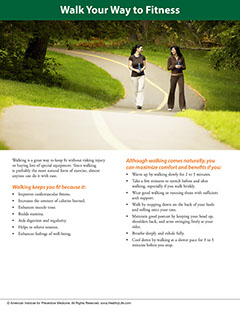
    Image of couple power walking.

    Walking is a great way to keep fit without risking injury or buying lots of special equipment. Since walking is probably the most natural form of exercise, almost anyone can do it with ease.

    Walking keeps you fit because it:

    *  Improves cardiovascular fitness.

    *  Increases the amount of calories burned.

    *  Enhances muscle tone.

    *  Builds stamina.

    *  Aids digestion and regularity.

    *  Helps to relieve tension.

    *  Enhances feelings of well-being.

    Although walking comes naturally, you can maximize comfort and benefits if you:

    *  Warm up by walking slowly for 2 to 3 minutes.

    *  Take a few minutes to stretch before and after walking, especially if you walk briskly.

    *  Wear good walking or running shoes with sufficient arch support.

    *  Walk by stepping down on the back of your heels and rolling onto your toes.

    *  Maintain good posture by keeping your head up, shoulders back, and arms swinging freely at your sides.

    *  Breathe deeply and exhale fully.

    *  Cool down by walking at a slower pace for 3 to 5 minutes before you stop.

    Page image from A Year of Health Hints book by the American Institute for Preventive Medicine. www.HealthyLife.com. All rights reserved.

    © American Institute for Preventive Medicine
  • Different Shoes For Different Sports

    BE FIT

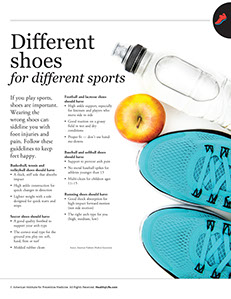
    Pair of shoes with apple and water bottle.

    If you play sports, shoes are important. Wearing the wrong shoes can sideline you with foot injuries and pain. Follow these guidelines to keep feet happy.

    Basketball, tennis and volleyball shoes should have:

    *  A thick, stiff sole that absorbs impact

    *  High ankle construction for quick changes in direction

    *  Lighter weight with a sole designed for quick starts and stops

    Soccer shoes should have:

    *  A good quality footbed to support your arch type

    *  The correct stud type for the ground you play on: soft, hard, firm or turf

    *  Molded rubber cleats

    Football and lacrosse shoes should have:

    *  High ankle support, especially for linemen and players who move side to side

    *  Good traction on a grassy field in wet and dry conditions

    *  Proper fit – don’t use hand-me-downs

    Baseball and softball shoes should have:

    *  Support to prevent arch pain

    *  No metal baseball spikes for athletes younger than 13

    *  Multi-cleats for children ages 11-15

    Running shoes should have:

    *  Good shock absorption for high-impact forward motion (not side motion)

    *  The right arch type for you (high, medium, low)

    Source: American Podiatric Medical Association

    © American Institute for Preventive Medicine
  • Move Outside The Exercise Box

    BE FIT

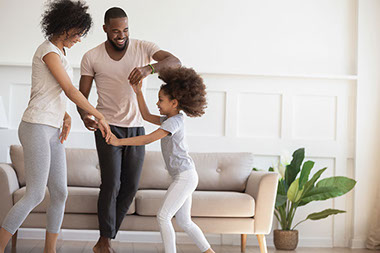
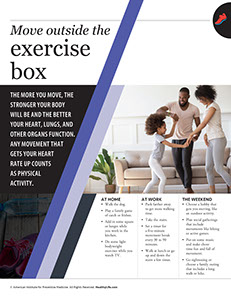
    Family dancing around.

    The more you move, the stronger your body will be and the better your heart, lungs, and other organs function. Any movement that gets your heart rate up counts as physical activity.

    At home

    *  Walk the dog.

    *  Play a family game of catch or frisbee.

    *  Add in some squats or lunges while you work in the kitchen.

    *  Do some light bodyweight exercises while you watch TV.

    At work

    *  Park farther away to get more walking time.

    *  Take the stairs.

    *  Set a timer for a five-minute movement break every 30 to 90 minutes.

    *  Walk at lunch or go up and down the stairs a few times.

    The weekend

    *  Choose a hobby that gets you moving, like an outdoor activity.

    *  Plan social gatherings that include movements like hiking or active games.

    *  Put on some music and make chore time fun and full of movement.

    *  Go sightseeing or choose a family outing that includes a long walk or hike.

    © American Institute for Preventive Medicine
  • Rucking For Beginners

    BE FIT

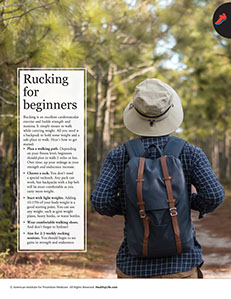
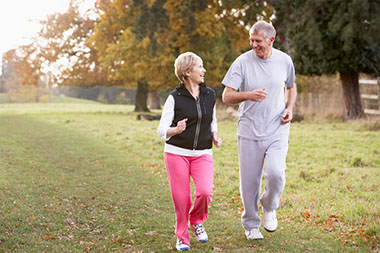
    Rucking is an excellent cardiovascular exercise and builds strength and stamina. It simply means to walk while carrying weight. All you need is a backpack to hold some weight and a safe place to walk. Here’s how to get started:

    *  Plan a walking path. Depending on your fitness level, beginners should plan to walk 2 miles or less. Over time, up your mileage as your strength and endurance increase.

    *  Choose a sack. You don’t need a special rucksack. Any pack can work, but backpacks with a hip belt will be most comfortable as you carry more weight.

    *  Start with light weights. Adding 10-15% of your body weight is a good starting point. You can use any weight, such as gym weight plates, heavy books, or water bottles.

    *  Wear comfortable walking shoes. And don’t forget to hydrate!

    *  Aim for 2-3 weekly rucking sessions. You should begin to see gains in strength and endurance.

    © American Institute for Preventive Medicine
  • Get Flexible!

    Fitness

    To be truly fit, you need to be limber. The following stretches can help you achieve that goal.

    Side Stretch

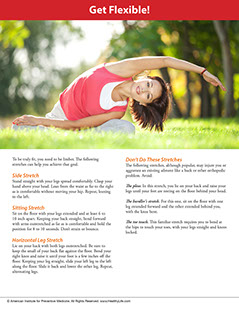
    Stand straight with your legs spread comfortably. Clasp your hand above your head. Lean from the waist as far to the right as is comfortable without  moving your hip. Repeat, leaning to the left.

    Sitting Stretch

    Sit on the floor with your legs extended and at least 6 to 10 inch apart. Keeping your back straight, bend forward with arms outstretched as far as is comfortable and hold the position for 8 to 10 seconds. Don’t strain or bounce.

    Horizontal Leg Stretch

    Lie on your back with both legs outstretched. Be sure to keep the small of your back flat against the floor. Bend your right knee and raise it until your foot is a few inches off the floor. Keeping your leg straight, slide your left leg to the left along the floor. Slide it back and lower the other leg. Repeat, alternating legs.

    Don’t Do These Stretches

    The following stretches, although popular, may injure you or aggravate an existing ailment like a back or other orthopedic problem. Avoid:

    The plow. In this stretch, you lie on your back and raise your legs until your feet are resting on the floor behind your head.

    The hurdler’s stretch. For this one, sit on the floor with one leg extended forward and the other extended behind you, with the knee bent.

    The toe touch. This familiar stretch requires you to bend at the hips to touch your toes, with your legs straight and knees locked.

    Page image from A Year of Health Hints book by the American Institute for Preventive Medicine. www.HealthyLife.com. All rights reserved.

    © American Institute for Preventive Medicine
  • Working In Exercise While At Work

    Fitness

    Move more, even when you sit.

    Chances are you don’t have one of those newfangled treadmill desks in your office. That shouldn’t stop you from adding exercise into your work schedule. If you get breaks, use them to march up and down the stairs or walk around the building a few times. Or, go into an empty conference room and pound out some pushups. While you probably won’t get enough of a workout for one day’s needs, short stints of exercise add up.

    Don’t just stand there.

    Waiting for the coffee to brew? Burst into a 60-second aerobic routine that includes side stepping or marching in place. Or, squat and stand as the copy machine spits out your papers. And, perhaps just to freak out co-workers, strike a warrior pose in the break room. See if you can hold it for a minute without talking (or laughing).

    Do sitting-down-on-the-job exercises.

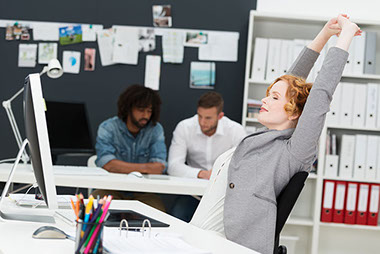
    Women sitting at desk, stretching arms above her head.

    From a seated position, you can:

    *  Tighten your abs and buttocks with periodic squeezes.

    *  Push shoulder blades toward each other and hold to stretch your back.

    *  Stretch both arms over your head. Reach, reach, reach.

    *  Extend your legs in front of you and hold.

    *  Extend your legs, than draw your knees to your chest. Repeat and feel the burn in your abs.

    *  Turn your head to the left, torso to the right, hold. Repeat on the other side.

    *  Extend your arms straight out and move them slowly around in smaller to larger circles, forward then backward.

    *  Place both hands on your chair arms and slowly lift your bottom.

    Action Step

    Put a sticky note in your workspace that reminds you to stretch, bend, and move throughout your workday. Use exercise options offered to you at work.

    Page image from Ways to Well-Being book by the American Institute for Preventive Medicine. www.HealthyLife.com. All rights reserved.

    © American Institute for Preventive Medicine