Tag: Movement & Physical Fitness

  • Hey, Want To Improve Your Balance?

    SELF-CARE CORNER

    Image of older women balancing on one leg while bending over half way.

    Everyone wants to prevent falls and improve balance, at any age. NIH in Health offers these daily exercises to steady your balance (and you could do these while talking on the phone or at work too):

    *  Stand on one leg at a time for a minute. Slowly increase the time. Try to balance with your eyes closed or without holding on to anything.

    *  Stand on your toes for a count of 10, and then rock back on your heels for a count of 10.

    *  Move your hips in a big circle to the left, and then to the right. Do not move your shoulders or feet. Repeat 5 times.

    © American Institute for Preventive Medicine

  • Ride Your Bike To Work

    BE FIT

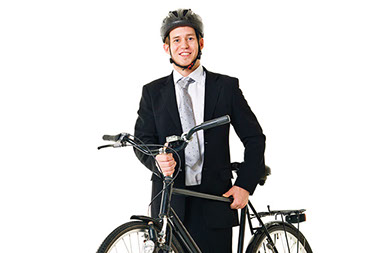
    Image of young man in a business suit with a bike and helmet on.

    Think of the money you’ll save on gas, train fare, and parking. If you live within 10 miles of your work, find solutions to overcome these popular excuses:

    *Not safe:Use less congested roads if rush-hour traffic clogs the main streets.

    *Have to dress nicely at work:Drive to work one day each week and leave a week’s worth of clean clothes.

    *No place to shower:To clean up, use a deodorant soap and washcloth in the restroom.

    *No secure place to park my bike:Check for a storage closet or furnace room, or stash your bike with a friend who lives nearby or at a bike shop.

    *I’d have to ride in the dark:Wear light-colored, reflective clothing, attach lights and reflectors and use a route that’s lit by streetlights.

    *Hate riding in cold and rainy weather:If it’s pouring or sleeting, leave the bike at home.

    *Too far:Drive part way and cycle the rest. Look for a park-and-ride commuter lot.

    Source: Bicycling magazine’s 1,000 All-Time Best Tips

    © American Institute for Preventive Medicine

  • Wallet-Friendly Workouts

    BE FIT

    Image of bike in the field.

    Finances are one of the biggest reasons people don’t join a gym. A monthly gym membership fee can take a big bite out of a budget, but that doesn’t mean you should throw in the towel on exercise.

    You can get all of the benefits of exercise at little to no cost with these tips:

    *  Use home items as workout tools. Instead of buying weights, use canned goods or fill used gallon jugs with water or sand.

    *  Put gravity to work for you. Many resistance exercises use only your body weight and gravity to help you get stronger. Think push-ups, squats, crunches, leg lifts, and arm raises.

    *  Use the stairs in your home for a step training workout. Or, use a low, sturdy step stool. Play music while stepping.

    *  Borrow fitness DVDs from your library, or look for used ones at garage sales.

    *  Utilize community resources. Some fitness centers, senior centers, and community programs offer free or low-cost fitness classes. Local hotels or schools may have a minimal fee to swim in the pool at select times. Walk a local walking path or step through a scenic park for fresh air and fitness.

    *  Consider used items. Many people will sell their used bikes, weight machines, treadmills, and other equipment at a fraction of the cost of a new item. Stop by local yard sales or look for local “yard sale” groups on social media.

    *  Try just shoes and an app. If you already have a smart phone, there are many free or low-cost fitness apps available to keep you motivated. Lace up your walking shoes and start tracking your progress with the app to keep you motivated and on track. YouTube also offers a variety of workout programs that allow you to exercise at home.

    © American Institute for Preventive Medicine

  • Be Physically Active

    Healthylife® Weigh

    Part 5

    Group of friends outside exercising.

    All physical activity has benefits for the body and mind. This section will help you find reasons to be active that go beyond weight management. This section will also help you to:

    *  Add variety to the physical activity you already enjoy.

    *  Value different types of activity that have different benefits.

    *  Make a plan to be more physically active.

    *  Manage time and other barriers to do physical activity.

    *  Develop a healthy relationship with your body.

    *  Appreciate what your body is capable of doing.

    HealthyLife® Weigh

    QUICK LINKS: PART 5

    Current Exercise Habits

    Find Reasons to Care About Physical Activity

    Mental Health

    Energy, Learning, Focus

    Physical Health

    Exercise and Sleep

    Reduce Sit-Time

    Do Activities You Enjoy

    Types of Physical Activity

    Cardio Training

    Resistance Training

    Stretching & Rehabilitation

    Yoga

    Massage

    Avoid Injury

    Appreciate the Journey

    Set Fitness Goals

    Plan Physical Activity

    Tackle Limitations

    Injury and Disability

    Manage Your Time

    Set Up for Success

    What Are You Waiting For?

    Responsibility for Change

    Create “If, Then” Plans

    Exercise and Eating

    Eating and Body Image

    How Do You View Your Body?

    Identify Disordered Eating

    Review and Prepare

    © American Institute for Preventive Medicine
  • Commit To Be Fit

    BE FIT

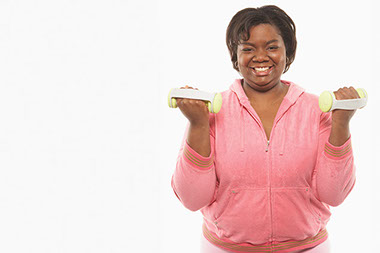
    Image of middle-aged women with dumb bells.

    How are those resolutions going about now? You can make a renewed commitment to yourself and your health anytime. Here’s advice from Life Time Fitness to move forward:

    *Create a vision statement.Make your resolution a commitment and create a vision statement that projects clear personal investment and connects directly to your happiness and health. Once you’ve created your personal vision, you can identify what goals will get you there.

    *Don’t assume you know how to exercise.Many people who exercise think they know what to do when they walk into a gym, but it is common to use poor form, train at an inappropriate intensity, or choose the wrong exercises for your needs. A well-planned program using proper exercise technique will prove much more successful. Sit down with a well-qualified and certified personal trainer to talk about your exercise program to start on the right track.

    *Test your readiness.Ask yourself how ready you are to make an actual change. If your vision is health-based and you’ve made the goal of working out every morning of the week, ask yourself (on a scale of 1 to 10 with 10 being absolutely positive) how likely you’ll be able to commit and achieve that task and identify barriers that might get in the way. If your readiness is 7 or above, you’re ready to embark on your vision. If it’s below 7, change or revise your goal until you’re confident enough to know you’ll succeed. Small steps to succeed are better than big steps to fail.

    *Junk the junk.Don’t think you can stick to your diet while keeping junk food in the house. Make a commitment to get rid of all the foods that don’t promote health. Instead, fill your kitchen with good choices.

    *Put it on the fridge.Laminate it, frame it or post it on your mirror. The goal is to have your resolution statement somewhere where you will see it often as a reminder of what you are working toward. If you’re a social person, share it.

    © American Institute for Preventive Medicine
  • High-Intensity Workouts Aren’T Always Best

    BE FIT

    Image of women running during sunset.

    High-intensity workouts aren’t always best

    When it comes to exercise, is harder and longer always better? No, according to two studies recently published in the academic journal, Heart.

    The first study found that those who performed the most strenuous daily exercise were more than twice as likely to die of a heart attack or stroke. The second study found that men who exercised intensely for more than five hours a week were more likely to develop an irregular heartbeat later in life.

    So what’s the best exercise to do? Strive for moderate intensity exercise. You develop a fast heart rate while doing this type of exercise, but you should still be able to talk while doing the activity.

    Moderate exercise = longer life

    Studies show if you do seven hours of moderate intensity exercise each week, you will lower your risk of dying early by 40 percent. This is compared with those who exercise 30 minutes or less per week. If seven hours a week is too much for you, aim for 150 minutes per week. This amount of exercise also produces similar benefits.

    Before you start any exercise program, talk with your doctor about what’s best for you.

    Source: CDC and World Health Organization

    © American Institute for Preventive Medicine
  • Run For Your Life

    BE FIT

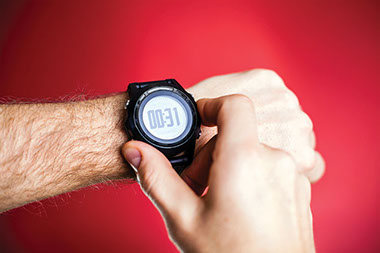
    Image of man's wrist with stop watch on.

    Vigorous exercise is good for your health, but too much can do more harm than good to your heart.

    Limit your exercise to a maximum daily dose of between 30 and 50 minutes, say researchers in an editorial published in Heart.

    The idea that more and more high-intensity exercise, such as marathons, can only do you good is a myth, say the cardiologists from St. Luke’s Mid America Heart Institute in Kansas City.

    Routine moderate physical activity will add years to your life and life to your years, but running too far, too fast, for too many years may speed your race to the finish line of life, they said.

    If you must train for a marathon, do just one or a few and then cut back to a safer, healthier exercise pattern.

    © American Institute for Preventive Medicine

  • Watch List For Winter Weather Activities

    BE FIT

    Image of women with skis.

    Winter weather doesn’t have to derail your exercise routine, says a Saint Louis University exercise expert. As you adjust to darker days, colder temperatures, and slippery surfaces, it’s important to be mindful of safety issues that come with the territory of winter workouts.

    “A change in weather should bring a change to your mindset. As temperatures get colder, it’s important for athletes to adjust their routines,” said Dr. Tony Breitbach, director of athletic training education.

    Dr. Breitbach offers the following tips to avoid injury during winter months:

    *Watch what you wear.Dress in layers for outside exercise. Next to your skin, wear a  breathable wicking material, not cotton because it retains sweat. Next, add a thermal layer of fleece or cotton to keep in heat. Use a third, outer layer as a cover. As you start to heat up, you’ll be able to peel off layers to manage your comfort level.

    *Watch for pain.Your furthest extremities are the first to be affected by the cold. If you get pain or tingling in your ears, fingers, or toes, it’s time to go inside to warm up.

    *Watch your hydration.Staying well-hydrated is another concern during cold winter months due to dry air and indoor heat. Drink plenty of fluids, but be sure to avoid caffeine and alcohol-based beverages, which also lead to dehydration.

    *Watch for hazards.Use caution when running after dark. Wear light-colored, reflective clothing so drivers can see you.

    *Watch out for overuse.Winter weather can limit outdoor exercise options such as running in the park, golfing, and swimming. So be careful to avoid over-doing it with one activity. Working out on hard, unforgiving surfaces like gym floors or concrete can worsen any over-use issues you have. Think outside the gym. Be creative; try ice-skating, cross-country skiing, or a yoga class.

    © American Institute for Preventive Medicine

  • 13 Reasons Why Walking Works

    BE FIT

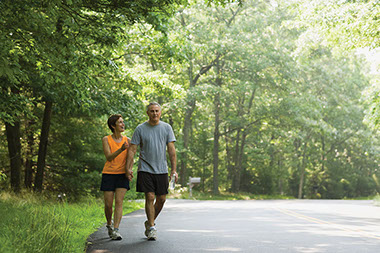
    Image of middle-age couple walking.

    1. Safest exercise on earth

    2. Simple exercise for people who haven’t been exercising

    3. Families can walk together

    4. Social interaction is possible (walk and talk)

    5. Sparks creativity (take along a notebook and pen or a camera)

    6. Improves endurance

    7. Ideal for weight loss

    8. Strengthens bones

    9. Tones legs

    10. Perfect for exploring

    11. Reduces stress

    12. Very inexpensive (no special equipment required, just shoes)

    13. Can be done anytime, anywhere, and for life! Your life!

    From Walk the Four Seasons by walking guru Robert Sweetgall, Creative Walking, Inc.,www.creativewalking.com, who has walked across the USA 7 times.

    © American Institute for Preventive Medicine

  • Don’T Let Shin Splints Stop You

    BE FIT

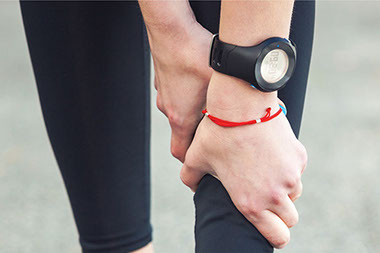
    Close up images of hands holding shins in pain.

    If you’ve ever felt aching or shooting pain up the front of your lower legs after running, it could be shin splints. Though it’s usually not serious, it can be painful enough to stop even the most dedicated exerciser.

    If you get shin splints, try these tips:

    *Switch to lower impact exercise.Until the pain goes away, try swimming, biking, or using an elliptical machine, so you put less pressure on your legs.

    *Wear proper shoes.If you’ve had the same running shoes for years, it may be time for a new pair. Support wears down over time, causing pain in the feet and legs. Make sure you have enough support under the arch and heel areas.

    *Ice the area.Apply ice packs for up to 20 minutes at a time, a few times a day, to help with pain.

    If the pain doesn’t go away, see your doctor. Sometimes shin splints may be a sign of a small bone break or inflammation of tendons in the legs.

    Source: American Academy of Orthopedic Surgeons

    © American Institute for Preventive Medicine