Tag: Movement & Physical Fitness

  • How Does Your Heart ‘Rate’?

    BE FIT

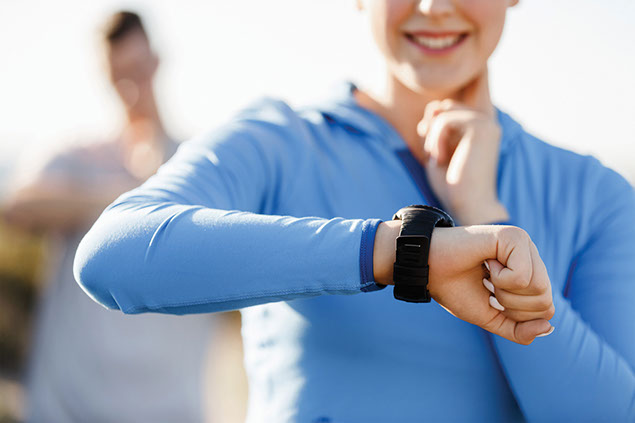
    Image of female checking heart rate.

    When it comes to getting a good workout, no two people are alike. Age, health status, fitness level, and many other factors can play a role in how hard you can – or should – exercise.

    Your target heart rate can tell you if you’re exercising hard enough to burn calories, but not too hard. Your target heart rate is how fast you want your heart to beat during exercise.

    You can find your target heart rate by following these steps:

    1. Get a stopwatch or use a watch or clock that has a second hand.

    2. Periodically during exercise, put two fingers on a pulse point. This can be the inside of your wrist on the thumb side, the inside of your elbow, or the side of your neck.

    3. Count how many times your heart beats in 60 seconds.

    Next, find your age in the chart and see if your heart rate is within the target heart rate zone listed. If it’s higher than the zone, take your workout down to an easier level. If it’s below, you may be able to exercise a little harder.

    Chart of Target Heart Rate Zone.

    If you’re just starting out with exercise, aim for the lower end of the range. After a few weeks, you can gradually work up to a higher heart rate within the zone.

    People who have heart conditions or other health problems should discuss any exercise or fitness activities with their doctor before starting. Certain medications that treat heart and blood pressure disease can cause a lower heart rate. Discuss your medications with your physician before trying to reach your maximum heart rate.

    Heart rate and blood pressure explained

    Heart rate and blood pressure are not the same thing. Blood pressure is the force of blood moving through your body. Heart rate or pulse is simply the number of times your heart beats per minute.

    A faster heart rate does not necessarily mean your blood pressure is rising. When the heart rate speeds up, blood vessels get bigger, allowing more blood to move through. This means many people can safely raise their heart rate during exercise without affecting their blood pressure.

    Talk to your doctor about blood pressure and get it checked yearly. Most people with high blood pressure can and should exercise with their doctor’s approval.

    Source: American Heart Association

    © American Institute for Preventive Medicine

  • Safe On 2 Wheels

    BE FIT

    Image of women on bike.

    Cycling is a good form of exercise. But with more than 1.4 million injuries reported in 2012 according to the Consumer Product Safety Commission, riders need to be safety conscious before hitting the pavement (literally).

    The American Academy of Orthopaedic Surgeons offers cycling safety rules:

    *  Use a bicycle that is the proper size.

    *  Make sure you are fit enough to ride before you  start pedaling.

    *  Change riding positions to reduce stress on pressure points on your body and avoid overstressing muscles.

    *  Always wear a helmet approved by the American National Standards Institute (ANSI). It should fit  snugly but comfortably and not obstruct vision.

    *  Check your bicycle’s mechanical components regularly (brakes, tires, gears).

    *  Follow traffic signs and lights. Signal your turns   so drivers can anticipate your actions.

    *  Ride in the direction of traffic. Be aware of all surroundings.

    *  Use caution on uneven or slippery surfaces.

    *  Do not listen to music with head phones, talk on  your phone, text or do anything else that can   obstruct your hearing and vision.

    *  Avoid loose clothing. Wear padded gloves and appropriate footwear. Never wear flip flops. Use padded cycling shorts for longer rides.

    *  At night, wear bright fluorescent colors; make sure to have rear reflectors. Both a working tail light and headlight should be visible from 500 feet away.

    © American Institute for Preventive Medicine
  • Will Ab Exercises Shrink Your Belly?

    BE FIT

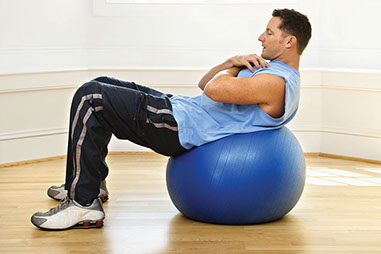
    Image of man using a fitness ball to do ab exercises.

    Sit-ups and crunches can give you stronger ab muscles. But, do they give you a leaner and slimmer belly?

    Experts say that toning and strengthening your core is an important part of being fit. Your ab muscles help support your body and back. They help you reach things off a shelf, throw a ball, climb a ladder, and other everyday tasks. Weak ab muscles can lead to back pain and other injuries.

    But ab exercises alone will not give you a flat belly. To get a slimmer middle, you must burn calories and fat through aerobic exercise. The Centers for Disease Control and Prevention recommends 150 minutes per week of moderate aerobic activity. This includes walking, biking, dancing, and other activities that raise your heart rate. These exercises, along with a healthy diet, can help you lose overall body fat. This will help shrink your middle and improve your health.

    © American Institute for Preventive Medicine

  • 5 Things To Know About Yoga

    BE FIT

    Image of women in yoga position.

    Yoga typically combines physical postures, breathing exercises, and meditation or relaxation. Researchers are studying how yoga may be used to help improve health and to learn more about its safe use. If you’re thinking about practicing yoga, here are 5 things you should know from the National Center for Complementary and Alternative Medicine:

    1. Studies suggest that yoga may be beneficial for a number of conditions. Recent studies in people with chronic low-back pain suggest that a carefully adapted set of yoga poses can help reduce pain and improve function. Other studies also suggest that practicing yoga (as well as other forms of regular exercise) might have other health benefits such as reducing heart rate and blood pressure, and may also help relieve anxiety and depression.

    2. Research suggests that yoga is not helpful for asthma, and studies looking at yoga and arthritis have had mixed results.

    3. Yoga is generally considered to be safe in healthy people when practiced appropriately. However, people with high blood pressure, glaucoma, or sciatica, and women who are pregnant should modify or avoid some yoga poses.

    4. Practice safely and mindfully. Everyone’s body is different, and yoga postures should be modified based on individual abilities. Inform your instructor about any medical issues you have, and ask about the physical demands of yoga.

    5. Talk to your doctor about any complementary health practices you use, including yoga. Give them a full picture of what you do to manage your health. This will help ensure coordinated and safe care.

    © American Institute for Preventive Medicine
  • Every Step Helps

    BE FIT

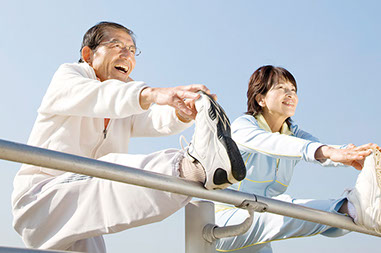
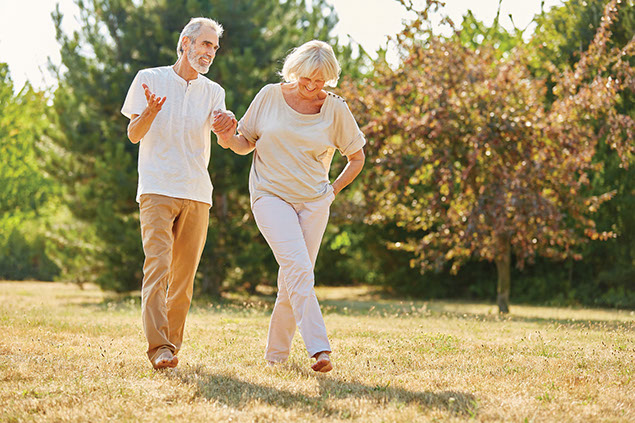
    Image of older Hispanic couple walking on the beach.

    You know exercising is great for you, but it’s hard to find time to do it. If going to the gym sounds impossible, why not walk? Research says that walking for just 30 minutes each day will improve your health. For those who are really short on time, you can even break those 30 minutes up. Walk for 10 minutes, three times a day – and you’re getting health benefits.

    The National Institutes of Health says regular exercise like walking can:

    *  Improve high blood pressure

    *  Lower your risk of heart disease

    *  Strengthen muscles and bones

    *  Improve type 2 diabetes

    *  Give you more energy

    *  Help you manage stress

    *  Reduce feelings of depression

    With exercise, every step helps. You don’t need fancy equipment or even a gym membership to get healthier – and you can start today.

    © American Institute for Preventive Medicine

  • How Physical Activity Works

    BE FIT

    Image of couple using dumb bells.

    No, this is not another article about why you should be active. This information tells you how exercise works to keep you healthier.

    The concept to understand is called overload. And according to the government’s Physical Activity Guidelines for Americans, overload is the physical stress placed on your body when your physical activity is greater in amount or intensity than usual.

    The body responds and adapts to these stresses (say, a Zumba class). For example, aerobic activity places stress on your heart and lungs and muscles. Your lungs are required to move more air and the heart pumps more blood and delivers it to working muscles. This increase in demand increases the efficiency of your lungs, heart, your entire circulatory system, and your muscles.

    Muscle-strengthening exercise overloads muscles and bones in the same way-making them stronger.

    Also tied to the idea of overload is the principle of progression. Once you reach a certain fitness level, you progress to higher levels of physical activity by continued overload and adaptation. These small and progressive changes help your body adapt to the additional stresses while minimizing your risk of injury.

    © American Institute for Preventive Medicine

  • Set A Resolution That Works For You

    BE FIT

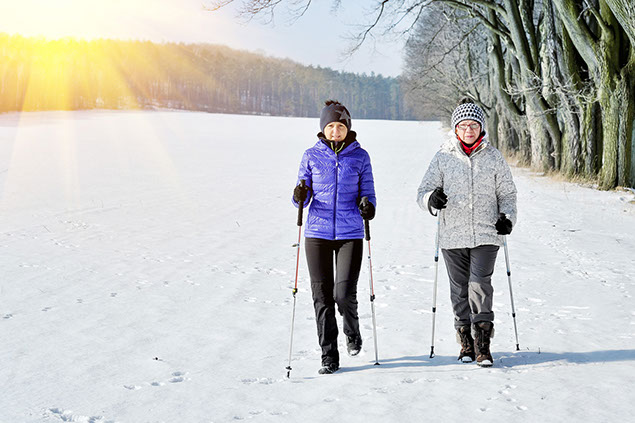
    Image of young women jogging in the winter.

    “What’s your New Year’s resolution?” It’s a question many people hear – and ask – when Jan. 1 approaches. But, after a couple of weeks of hard work, life often interferes and that resolution gets forgotten.

    But what if you could stick with that resolution this year? Try these tips from the American Diabetes Association:

    *Be realistic.Rather than push yourself to do several major things, pick just one – such as walking.

    *Be specific.For instance, write down how often you will work out (5 days a week for 30 minutes) or that you will eat fruit instead of sweets. Schedule it in your calendar so other things are less likely to interfere.

    *Get back on track after setbacks.If you slip up, forgive yourself and start new tomorrow. Don’t abandon your healthy goals because of one mistake.

    Good health is a great goal to work towards – at New Year’s or any time of the year.

    © American Institute for Preventive Medicine

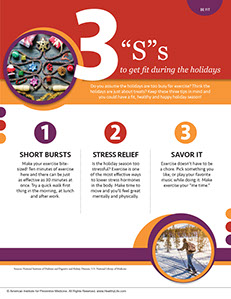
  • 3 “S”S To Get Fit During The Holidays

    BE FIT

    Jump roap shaped into a christmas tree with ornaments and fitness gear.

    Do you assume the holidays are too busy for exercise? Think the holidays are just about treats? Keep these three tips in mind and you could have a fit, healthy and happy holiday season!

    1.  Short bursts: Make your exercise bite-sized! Ten minutes of exercise here and there can be just as effective as 30 minutes at once. Try a quick walk first thing in the morning, at lunch and after work.

    2.  Stress relief: Is the holiday season too stressful? Exercise is one of the most effective ways to lower stress hormones in the body. Make time to move and you’ll feel great mentally and physically.

    3.  Savor it: Exercise doesn’t have to be a chore. Pick something you like, or play your favorite music while doing it. Make exercise your “me time.”

    Sources: National Institute of Diabetes and Digestive and Kidney Diseases, U.S. National Library of Medicine

    © American Institute for Preventive Medicine
  • A Shoulder To Lean On

    BE FIT

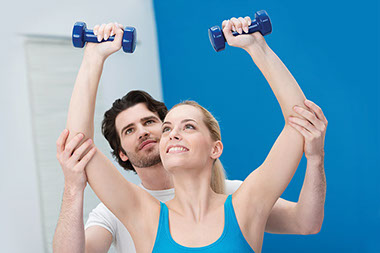
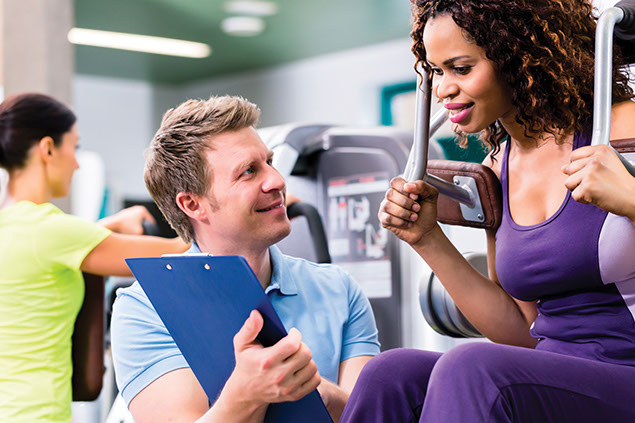
    Image of women and trainer exercising the shoulders.

    Shoulder injuries are common. Why? Because of improper exercise technique, say exercise experts at the American Council on Exercise (ACE), and because people commonly over-train one or two deltoid muscles while neglecting others.

    Strength-training routines are typically dominated by exercises that train only the front of the shoulder, which is actually comprised of three distinct muscles. So ACE looked into the most effective exercises for strengthening the overall shoulder and preventing injury.

    The result? Researchers from the University of Wisconsin, LaCrosse shrugged their shoulders when asked to pick the top exercise. Results showed there is not one best exercise that completely works all muscles of the shoulders.

    Instead, for best results, exercisers should perform the dumbbell shoulder press to target the front, and either the 45-degree incline row or the seated rear lateral raise for the rear. Ask your gym’s expert to show you these techniques.

    69% of people will experience a shoulder injury at some point in their lives, according to the NIH.

    © American Institute for Preventive Medicine

  • Exercise Addiction: Are You At Risk?

    BE FIT

    Image of female in fitness attire.

    Many women think that with achieving a fabulous figure like fashion models comes happiness, wealth, and the ideal mate. They will often exercise to a dangerous point in pursuit of “their dream body,” say Dr. Julia Samton, a neuropsychiatrist, and Certified Personal Trainer Franci Cohen who speak out about the dangers of pushing yourself past your limit.

    “For some girls, this desire for that picture-perfect life can lead to exercise addiction-the beginning of this quest for perfection,” says Dr. Samton.

    Typical symptoms of someone who is letting exercise take over her (or his) life:

    *Intention effects.The amount of exercise or length of exercise sessions is longer than originally intended.

    *Time.Large amounts of time are spent exercising and conflict with other areas of life.

    *Continuance.The person will continue to exercise even with persistent physical or psychological issues that are made worse from exercising, such as a recurring injury.

    “The biggest red flag,” according to Dr. Samton, “would be when exercise starts to interfere with one’s occupational, social, and overall functioning. It’s at this point that treatment is recommended.”

    “Cognitive behavioral therapy can be helpful, but seeking a therapist with experience in exercise addiction is crucial. For extreme cases, there are inpatient treatment facilities,” says Dr. Samton.

    © American Institute for Preventive Medicine