Tag: Movement & Physical Fitness

  • How To Stretch The Right Way

    BE FIT

    Image of an older Asian couple stretching.

    Do you skip stretching after your workout because you don’t have time? This may be a mistake: stretching can have benefits for flexibility, range of motion, and blood flow to the muscles, according to the American Academy of Family Physicians. But to reap these rewards, stretching needs to be done correctly. Be sure you follow these tips:

    *Never stretch cold muscles.If you haven’t been moving, it’s not a good time to stretch. The best time is right after your workout, or at least after a 5-10 minute warm-up.

    *Don’t bounce.Use smooth, slow, controlled movements. Bouncing can actually harm muscles.

    *Breathe.Be sure you’re breathing in and out, and not holding your breath.

    *Hold it.A good stretch should last at least 30 seconds, and you may want to hold some for up to 60 seconds.

    *Stretch until you feel it, but don’t go too far.Stretching should feel good, not painful. If it hurts, back off the stretch until it’s comfortable, then hold.

    If you have a strained muscle, sprain, or other injury, talk with your doctor before stretching or starting any exercise. People with chronic conditions, such as diabetes, arthritis, and heart disease, should also seek their doctor’s advice on the safest exercises for them.

    © American Institute for Preventive Medicine

  • Shin Splints Can Sidetrack Your Running Routine

    BE FIT

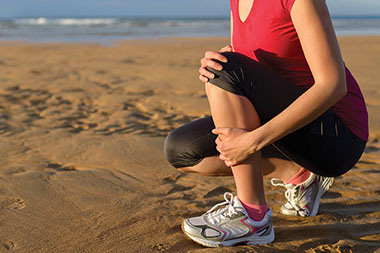
    Image of women holding her shin.

    If shin splints are keeping you from making the most of your runs this spring, you’re not alone. Shin splints-pain in the front of the lower legs-is common among those who exercise regularly. This ailment especially affects runners.

    According to Dr. Matthew Silvis, associate professor of family medicine and orthopedics at Penn State Hershey, shin splints are among the most common complaints in spring for people back on the road or trail after a long winter.

    The term shin splints generally refers to pain and soreness along the shinbone, or tibia, the largest bone of the lower leg. The pain comes from overuse of the muscles and tendons around the bone. Added or unusual stress on and around the shinbone causes it to become inflamed and sore.

    If you’re already dealing with shin splints, icing the area can help. So can taking an over-the-counter anti-inflammatory medicine if needed for pain. Wait to return to your activity until you’re pain-free for 2 weeks.

    The fix

    Give the body time to adjust when changing an exercise routine. Doing too much too soon can bring on shin splints. If untreated, a more serious injury-stress fracture-can result. Stress fractures-tiny cracks in the bone-usually come from overuse. To avoid this:

    *  Gradually increase the amount or intensity of a workout to avoid too much stress on the legs.

    *  Follow a regular, gentle stretching routine that includes the calves. Keeping the muscles around the shinbone flexible can help prevent  shin splints.

    *  Wear well-fitting, supportive athletic shoes. And replace them every 300 to 500 miles.

    *  Balance running workouts with other training that isn’t as stressful on the legs. Examples are cycling, cross-training, and swimming.

    © American Institute for Preventive Medicine
  • Avoid A Walking Injury

    BE FIT

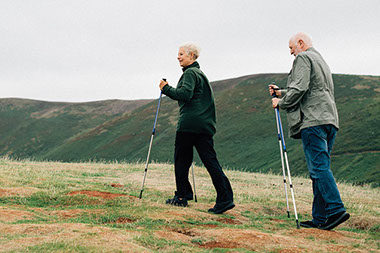
    Older couple hiking using walking sticks.

    Walking is great exercise – but an injury will leave you sidelined. Keep your walks safe and healthy with these tips.

    Get the right shoes.

    Comfortable, supportive shoes are a must. Experts recommend getting new walking shoes after walking for 300 – 500 miles in them. If your shoes are uncomfortable or show signs of wear, toss them. A new pair is an investment in your health.

    Don’t do too much.

    If you haven’t exercised in a while, start off slow. Walking for just a few minutes may be enough at first. Increase your distance by  10% each week. Doing too much, too soon can cause painful shin splints or other injuries.

    Prevent blisters.

    Synthetic fiber socks may help you prevent blisters. Cotton socks can trap moisture and cause rubbing. If you have diabetes or nerve problems, see a doctor if you get blisters or sores on your feet.

    Know your knees.

    If your knees hurt when you walk, talk to your doctor. Knee pain can be caused by arthritis, damaged ligaments and other health problems.

    If you don’t have any health issues, you may need a new pair of shoes. In some cases, doing stretches or leg strengthening exercises can help. Some people find that soft ground like grass is easier on their joints. Walking on concrete may cause more pain.

    Be aware.

    Newer hybrid and electric cars are very quiet. Don’t rely on hearing alone when crossing the street. Stop and look both ways. If you’re using headphones, keep them turned down low. This helps protect your hearing and helps you hear people, animals or cars nearby.

    Source: American Heart Association

    © American Institute for Preventive Medicine
  • Abs: The Core Of A Healthy Body

    BE FIT

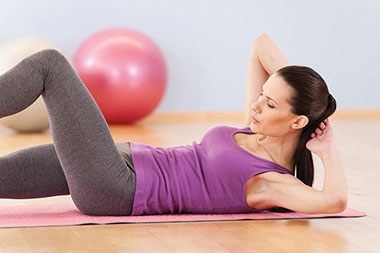
    Image of women doing abdominal exercises.

    Strong abdominal muscles can do more than just make you look slimmer. Healthy ab muscles can help you improve posture and alleviate back pain. For those who thought ab exercises were only for achieving a “six pack,” it’s time to discover all the benefits of a strong midsection.

    Your abdominal muscles are part of the body’s core muscles, which support your entire body when you sit, stand and move. For those who don’t like sit-ups or can’t get on the floor, there are other options to strengthen and tone these important muscles. In fact, “vertical” core exercises may be even more effective than sit-ups.

    Try this standing core exercise that’s suitable for beginners:

    *  Stand facing a wall. Place your feet shoulder-width apart and push your hands against the wall.

    *  Bend your knee and bring your leg toward the wall. Keep the other foot flat on the floor at all times.

    *  Step your leg across the other one in front. Then, step the same leg out to the side.

    *  Bend the knee again and open your leg to the outside, using your hip. Then, swing the leg to the inside.

    Repeat these exercises with the other leg. Concentrate on keeping your abs tight each time you lift and move your leg. Try to repeat them several times, and increase the number of reps as you get stronger.

    Source: American College of Sports Medicine

    © American Institute for Preventive Medicine
  • Exercise Benefits Outweigh The Struggle At Any Age

    BE FIT

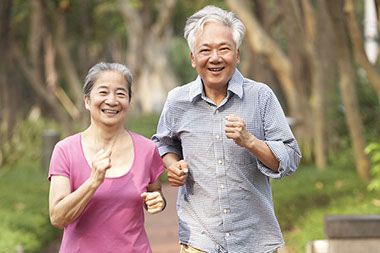
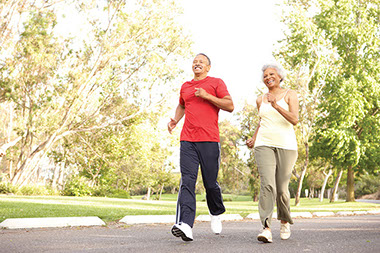
    Image of older couple on a brisk walk.

    The more you age, the more you need exercise to stay independent and healthy, said Dr. Keith Veselik, director of primary care at Loyola University Health System. “Around age 35 is when our muscle mass and resting metabolism starts to decrease. When this happens our bodies require more, not less exercise to manage our caloric intake. When this starts to happen, we can eat the same things, do the same things and may gain 3 pounds a year. That’s 30 pounds in a decade,” he said.

    Dr. Veselik said the best workout program balances heart healthy exercise, strength training, and flexibility. He recommends an hour of cardiovascular exercise 4 days a week, 2 days of strength training for 30 minutes, and balance and flexibility exercises such as stretching, yoga or pilates, 1 to 2 times a week.

    In your 50s:

    *  Muscle and joint aches and pains start becoming more apparent, so get creative about how to keep up cardiovascular exercise that is easy on the joints but gets the heart rate up (hint: swimming, biking, or running on softer surfaces).

    *  Cardiovascular exercise also helps to fight many of the most common and deadly medical concerns, including heart disease, asthma, and COPD.

    *  Don’t go from doing nothing to running a marathon. Talk to your doctor, ask about risk factors, and together create a plan that’s right  for you.

    *  If back pain occurs, protect your back by building strong core muscles and make sure you are lifting heavy objects correctly.

    In your 60s:

    *  Balance and strength should be a major focus. Many people are scared of breaking a hip, which can limit independence.

    *  Bones aren’t as strong and both men and women become more prone to osteoporosis.

    *  Add balance and leg strengthening exercises to increase flexibility, as well as balance to help prevent accidental falls. Weight-bearing exercise is crucial to bone health and keeping bone density strong.

    *  If arthritis develops at this age, exercise can help you cope. Swimming or aquatic classes are especially good.

    *  Walking is a great form of exercise. Just make sure you get your heart rate up.

    In your 70s and beyond:

    To combat seniors’ biggest worry, dementia, know that exercise is the only thing that is proven to prevent Alzheimer’s disease. And many of the major risk factors for dementia – high blood pressure, high cholesterol and diabetes can be countered with exercise.

    © American Institute for Preventive Medicine

  • If You Have A Cold, Should You Exercise?

    BE FIT

    Image of women sick in bed.

    Yes and no. Moderate exercise (30 minutes a day, on most, if not all, days of the week) actually lowers your risk for respiratory infections, said David C. Nieman from the American College of Sports Medicine. But prolonged, intense exercise, on the other hand, can weaken your immune system and allow viruses to gain a foothold and spread. If you’re already sick with a respiratory infection (common cold or flu), approach exercise cautiously during your illness. To help you decide whether to hit the gym or stay in bed, Dr. Nieman says this:

    DOexercise moderately if your cold symptoms are confined to your head. If you’re dealing with a runny nose or sore throat, moderate exercise is okay. Intense exercise can be continued a few days after symptoms go away (in cases of the common cold).

    DON’Tsweat out your illness. Exercise during an illness does NOT help cure it.

    DOstay in bed if your illness has spread beyond your head. Respiratory infections, fever, swollen glands, and extreme aches and pains all indicate that you should rest up, not work out.

    DON’Tjump back in too soon. If you’re recovering from a more serious bout of cold or flu, gradually ease back into exercise after at least 2 weeks of rest.

    “In general, if your symptoms are from the neck up, go ahead and take a walk,” said Dr. Nieman. “But if you have a fever or general aches and pains, rest up and let your body get over the illness.”

    © American Institute for Preventive Medicine
  • Simple Workouts For Beginners

    BE FIT

    Image of young African American women with dumb bells.

    Anyone can exercise and enjoy its healthy perks! Here’s how to get started:

    *Check with your doctor first.If you haven’t exercised in the past or have health conditions, ask your doctor for tips before you start.

    *Get your arms and legs moving.This means you’ll get your heart pumping too. Choices include walking, running, swimming, biking or dancing.

    *Warm up for five to ten minutes.Try gentle stretches, and start at a slower pace for these few minutes.

    *Aim for 30-60 minutes of activity each time.Break it up into smaller amounts of time if needed. For instance, two 15-minute walks can be done instead of one 30-minute walk.

    *Don’t overdo it.If you don’t feel well, or you have pain or nausea, stop.

    *Try strength training.Working your muscles with weights, or at-home exercises like push-ups, squats, and sit-ups can help your bones and muscles stay strong. Ask a trainer at the gym or your doctor for help if you’re not sure what’s safe for you.

    *Cool down when you’re finished.Don’t stop exercising suddenly. Instead, slow down for the last five to ten minutes. Follow up with more stretching while your muscles are warm.

    Source: American Academy of Family Physicians

    © American Institute for Preventive Medicine

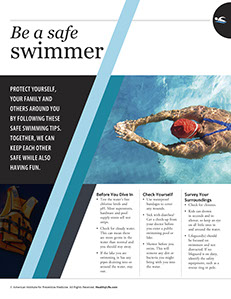
  • Be A Safe Swimmer

    BE FIT

    Bird eye view of female swimming.

    Protect yourself, your family and others around you by following these safe swimming tips. Together, we can keep each other safe while also having fun.

    Before You Dive In

    *  Test the water’s free chlorine levels and pH. Most superstores, hardware and pool supply stores sell test strips.

    *  Check for cloudy water. This can mean there are more germs in the water than normal and you should stay away.

    *  If the lake you are swimming in has any pipes draining into or around the water, stay out.

    Check Yourself

    *  Use waterproof bandages to cover any wounds.

    *  Sick with diarrhea? Get a check-up from your doctor before you enter a public swimming pool or lake.

    *  Shower before you swim. This will remove any dirt or bacteria you might bring with you into the water.

    Survey Your Surroundings

    *  Check for closures.

    *  Kids can drown in seconds and in silence, so keep an eye on all little ones in and around the water.

    *  Lifeguard(s) should be focused on swimmers and not distracted. If no lifeguard is on duty, identify the safety equipment, such as a rescue ring or pole.

    © American Institute for Preventive Medicine

  • Are Fitness Trackers Worth The Hype?

    BE FIT

    Image of women with a fitness tracker.

    Fitness bands, also called wearable health trackers, have become a popular trend in the last few years. Millions of these devices have been sold, but can they help you get healthy?

    What they do

    Most fitness trackers have features that act like a pedometer, counting your steps and other physical activity. Their features vary widely, however. Some trackers simply tell you how many steps you take in a day. Others are designed to be worn during exercise, such as running, and may track your distance and show your route. Other trackers are waterproof and designed to be worn when swimming.

    Many trackers also record quality and length of sleep. Because they have a movement sensor, they can determine how many times you woke and when you were in deep sleep.

    Most of them are designed to be used with an app on your smartphone, where you can see how you’re doing and make improvements where needed.

    Improving health with a tracker

    It can be helpful to know how many steps you take and how well you’ve slept. But keep in mind that these devices aren’t perfect. For instance, if you walk while pushing a stroller, a tracker worn on your wrist may not count your steps because your arms aren’t swinging.

    Sleep tracking can also be helpful, but won’t be a magic fix. Some trackers assume you’re in a deep sleep because you don’t move around. But, some people just naturally move less during the night, even if their sleep quality isn’t great. This may lead to incorrect information that makes you think you’re sleeping better than you actually are.

    Your body may be the best gauge when it comes to your health. When you don’t sleep well, you’ll feel sluggish. And you can easily keep track of any exercise you do with a fitness diary or a simple notebook. As for step counting, these devices are helpful, but an old-fashioned pedometer can work just as well.

    Alternatives to fitness trackers

    If you don’t have – or want – one of these devices, there are still ways you can get healthy with technology. Many apps that work with a smartphone can help you track movements and sleep, and others help you manually record things like mood, stress levels, and menstrual cycles. These require you to carry your smartphone with you, but don’t use any wearable devices.

    © American Institute for Preventive Medicine

  • Exercise Is Healthy For Your Mind

    BE FIT

    Image of older Asian couple brisk walking.

    Regular exercise offers many health benefits. You may already know it helps you stay strong and healthy, and can help you lose weight. It can also help prevent heart disease, diabetes, arthritis, and other diseases. But exercise is doing good for another vital organ in your body: your brain.

    Studies are now showing that regular aerobic exercise can help your brain work better. This includes:

    * Better memory

    * Ability to switch tasks

    * Ability to plan activities and stay organized

    * Possible reduced risk of Alzheimer’s disease

    Although researchers don’t know exactly why exercise helps the mind, there are some possibilities. It increases blood supply to the brain, and helps it form connections. These connections are responsible for forming memories and thinking about future activities. Exercise also improves an area of the brain that remembers and learns.

    Source: National Institute on Aging

    © American Institute for Preventive Medicine